
Frozen Shoulder Treatment in Gurgaon: Causes, Symptoms & Expert Care
Imagine waking up one morning to find that reaching for the alarm clock sends a sharp, electric jolt of pain down your upper arm. Or perhaps you have noticed that over the last few months, fastening a seatbelt, hooking a bra, or reaching for a wallet in your back pocket has become increasingly difficult, not because of weakness, but because your shoulder simply refuses to move past a certain point.
If this sounds familiar, you may be experiencing Frozen Shoulder, medically known as Adhesive Capsulitis.
In Gurgaon, you can get the best treatment for frozen shoulders by Dr. Ramkinkar Jha, top orthopaedic surgeon in Gurgaon. With a combination of advanced diagnostics, specialized physiotherapy, and modern medical interventions, he can help “thaw” your shoulder and restore your freedom of movement much faster.
Book a Consultation with Dr. Ramkinkar Jha, Leading Orthopaedic Surgeon in Gurgaon
Understanding the Condition: What Exactly is Frozen Shoulder?
Frozen Shoulder is a condition that can feel baffling and isolating. You haven’t fallen, you haven’t broken a bone, yet your shoulder feels “locked” in a painful stiffness that disrupts your sleep and your daily life. While many people are told that a frozen shoulder “just goes away on its own,” the reality is that without proper frozen shoulder treatment, the journey to recovery can take up to three years.
To understand why your shoulder is frozen, we must first look at the anatomy of this incredible joint. The shoulder is a “ball-and-socket” joint made up of three bones:
- The Humerus (Upper arm bone)
- The Scapula (Shoulder blade)
- The Clavicle (Collarbone)
Holding this joint together is a strong, flexible connective tissue known as the shoulder capsule. In a healthy shoulder, this capsule is like a loose, well-oiled sleeve. It has folds and slack that allow you to lift your arm above your head, rotate it outwards, and reach behind your back without resistance. Inside this capsule, synovial fluid keeps the joint lubricated and moving smoothly.
Physiology of a “Freeze”
In Frozen Shoulder (Adhesive Capsulitis), a cascade of inflammation causes this capsule to thicken, stiffen, and contract.
- Thickening: The flexible tissue becomes fibrous and tough.
- Adhesions: Thick bands of scar tissue form between the joint surfaces.
- Loss of Fluid: The lubricating synovial fluid decreases significantly.
Result: Imagine wearing a shirt that has shrunk five sizes in the wash. The fabric is so tight against your skin that you cannot raise your arm, no matter how hard you try. This is what happens to the shoulder capsule. It tightens around the humeral head, physically restricting movement and causing severe pain when stretched. You must consult a top frozen shoulder specialist in Gurgaon for the best treatment and results.
Causes and Risk Factors of Frozen Shoulder
One of the most crucial aspects of frozen shoulder is that the exact cause is often unknown (idiopathic). However, medical research has identified strong correlations with specific health conditions and demographics.
1. Systemic Diseases
The link between diabetes and frozen shoulder is undeniable.
While frozen shoulder affects about 2% to 5% of the general population, it affects 10% to 20% of people with diabetes. It is believed that uncontrolled blood sugar levels can cause collagen (a protein in your connective tissue) to become “sticky” through a process called glycosylation. This makes the capsule prone to stiffening.
Other conditions that affect are Thyroid disorders (Hypothyroidism and Hyperthyroidism), Parkinson’s disease, and cardiac disease also increase risk.
2. Post-Traumatic or Post-Surgical Immobilization
The shoulder operates on a “use it or lose it” principle. If you have kept your arm still for a prolonged period due to:
- A rotator cuff tear,
- A fracture (broken arm or collarbone),
- Recovery from surgery (like a mastectomy or heart surgery),
- A stroke,
In these cases, the capsule can begin to tighten from lack of movement. This is why Dr. Ramkinkar Jha emphasizes early, gentle mobilization after any shoulder injury.
3. Age and Gender
Frozen shoulder condition is rarely seen in people under 40. The peak onset is between 40 and 60 years of age. Also, women are more likely to develop frozen shoulder than men, possibly due to hormonal changes during menopause affecting connective tissue elasticity.
Frozen Shoulder Symptoms: The Three Stages
Unlike other orthopedic conditions that are consistent, frozen shoulder signs and symptoms evolve through three distinct phases. Recognizing which stage you are in is crucial for determining the right treatment plan.
Stage 1: The “Freezing” Stage (Painful Phase)
- Duration: Typically lasts 6 weeks to 9 months.
- Symptoms: This is usually the most painful stage. You will feel a diffuse, dull ache in the shoulder that becomes sharp when you move the arm.
- Night Pain: A hallmark sign is pain that worsens at night, specifically when lying on the affected side, often causing severe sleep deprivation.
- Mobility: Range of motion starts to become limited, but pain is the dominant feature.
Stage 2: The “Frozen” Stage (Stiff Phase)
- Duration: Lasts 4 to 6 months (sometimes up to a year).
- Symptoms: Interestingly, the sharp, constant pain often improves or diminishes during this phase.
- The Challenge: While it hurts less, the stiffness becomes profound. The shoulder capsule has fully thickened. Daily activities, such as washing your hair, putting on a coat, reaching for a ticket at a parking garage, become impossible with the affected arm. The shoulder feels “stuck.”
Stage 3: The “Thawing” Stage (Recovery Phase)
- Duration: Lasts 6 months to 2 years.
- Symptoms: The capsule slowly begins to loosen. Range of motion gradually returns, and function improves.
- Outcome: Without treatment, some patients regain full motion, while others are left with permanent residual stiffness.
Diagnosis and Medical Evaluation
Diagnosing adhesive capsulitis requires a skilled orthopedic eye, as it is often mistaken for rotator cuff tendonitis or bursitis. At our clinic in Sector 71 or at Artemis Hospital in Gurgaon, Dr. Ramkinkar Jha, Frozen Shoulder Specialist in Gurgaon, conducts a thorough evaluation for frozen shoulder.
How is frozen shoulder diagnosed?
1. The Physical Examination
This is the “gold standard” for diagnosis of frozen shoulder. Dr. Jha will perform a specific test comparing Active vs. Passive Range of Motion:
- Active: You try to lift your arm yourself.
- Passive: You relax, and the doctor tries to lift your arm for you.
In conditions like a rotator cuff tear, you might not be able to lift your arm (due to weakness/pain), but the doctor can lift it for you. In Frozen Shoulder, the doctor cannot move the arm either, because the joint capsule physically won’t stretch. It feels like hitting a hard stop.
2. Imaging Tests
- X-rays: Frozen shoulder does not show up on X-rays. However, we take them to rule out arthritis, bone spurs, or tumors.
- MRI (Magnetic Resonance Imaging): An MRI allows us to see the soft tissues. It can confirm thickening of the coracohumeral ligament and joint capsule volume reduction. Crucially, it helps us ensure there isn’t a hidden rotator cuff tear complicating the diagnosis.
Treatment Options for Frozen Shoulder
The goal of treatment for frozen shoulder in Gurgaon by Dr Ramkinkar Jha is to reduce pain and restore motion. The approach depends heavily on which “stage” of the disease you are in. Dr. Ramkinkar Jha advocates for a stepped-care approach, starting with the least invasive methods. More than 90% of patients dealing with frozen shoulder recover with non-surgical treatments.
Medications
- Non-steroidal anti-inflammatory drugs (NSAIDs) like ibuprofen or naproxen help manage the baseline ache and inflammation.
- Corticosteroid Injections: This is a cornerstone of treatment during the “Freezing” stage.Usually, a potent anti-inflammatory (cortisone) is injected directly into the glenohumeral joint. This can drastically reduce the inflammation that is causing the freezing process, offering rapid pain relief.
Hydrodilatation (Joint Distension)
If medications and physiotherapy are not giving adequate relief, hydrodilatation may be advised as the next line of treatment. It is a minimally invasive, daycare procedure performed under ultrasound guidance to ensure accuracy and safety. During the procedure, a controlled amount of sterile saline mixed with a corticosteroid and local anesthetic is injected into the shoulder joint.
The injected fluid creates gentle pressure inside the joint, which helps stretch the tight joint capsule and release adhesions. This controlled expansion reduces stiffness and improves joint mobility by “ballooning” the capsule from within.
Many patients experience noticeable improvement in pain and range of motion soon after the procedure. When combined with guided physiotherapy, hydrodilatation can accelerate recovery and help restore shoulder function more effectively in cases of frozen shoulder.
Physiotherapy
Once the pain is under control, physical therapy is essential. This involves specific stretching exercises to elongate the tight capsule. Note: Aggressive physical therapy during the painful “freezing” stage can sometimes make the condition worse, which is why expert guidance is needed.
It is highly crucial to consult with the orthopedic surgeon as the first step for accurate diagnosis and proper treatment.
Surgical Treatment
While nearly 90% of frozen shoulder cases improve with medication and physiotherapy, some cases become refractory, meaning stiffness persists despite 6–12 months of treatment. In such situations, surgical treatment may be required to restore shoulder range of motion.
There are two main procedures used in modern orthopaedic practice, often performed together for better results:
- Manipulation Under Anesthesia (MUA) is a non-invasive procedure performed under general anesthesia. Since the muscles are fully relaxed, the surgeon gently moves the shoulder through controlled motions to break the tight scar tissue and stiff joint capsule. This helps release the “frozen” shoulder and immediately improves movement.
- Arthroscopic Capsular Release (Keyhole Surgery), also known as arthroscopic lysis of adhesions, is considered the gold standard for severe frozen shoulder. Through two or three tiny incisions, an arthroscope (small camera) is inserted to view the joint. Using specialized instruments, the surgeon precisely cuts the thickened capsule, performs capsulotomy, releases the rotator interval, and removes inflamed tissue (synovectomy) if needed. This method allows accurate treatment while reducing the risk of injury to surrounding structures.
- In many cases, a combined or hybrid approach is used. The surgeon first performs arthroscopic capsular release to safely cut tight tissues, followed by gentle manipulation to ensure full range of motion.
After surgery, maintaining movement is crucial. A nerve block may be given to control pain for 12–24 hours. Immediate rehabilitation starts the next day to prevent new scar tissue formation. Most patients notice significant improvement and can lift their arm overhead within 24 hours after surgery.
Recovery, Rehabilitation, and Lifestyle Management
Whether you undergo surgery or stick to conservative care, recovery from frozen shoulder is a partnership between you and your doctor.
Rehabilitation Protocol
Post-procedure (especially after MUA or Arthroscopy), immediate physical therapy is critical to maintain the motion achieved during surgery. If you don’t move it, the scar tissue can reform.
Essential Home Exercises for Frozen Shoulder
Consult the doctor before starting these to ensure safety for your stage.
- Pendulum Stretch: Lean forward, letting your affected arm hang like a pendulum. Swing it in small circles using gravity. This moves the joint without engaging the muscles.
- The Towel Stretch: Hold a towel behind your back in a horizontal position. Use your good arm to pull the affected arm gently upward.
- Finger Walk: Face a wall three-quarters of an arm’s length away. Reach out and touch the wall at waist level. Slowly “walk” your fingers up the wall as high as you can, hold for a count of 10, and walk back down.
- Cross-Body Reach: Use your good arm to lift your affected arm at the elbow and bring it up and across your body, exerting gentle pressure to stretch the shoulder.
Lifestyle Tips for Frozen Shoulder
- Sleep Hygiene: Avoid sleeping on the affected shoulder. If you sleep on your back, place a pillow under the affected arm to keep the shoulder in a neutral position.
- Heat Application: Apply a heating pad or take a warm shower for 10-15 minutes before doing your exercises to loosen the tissues.
- Ice Application: Apply an ice pack for 10-15 minutes after exercises to calm any inflammation.
Struggling with Joint Pain, Sports Injury, or Arthritis?
Why Choose Dr. Ramkinkar Jha for the treatment of Frozen Shoulder?
When searching for the best doctor for frozen shoulder in Gurugram, experience and empathy matter. Dr. Ramkinkar Jha is a distinguished Orthopedic Surgeon known for his expertise in joint preservation and arthroscopy.
- Expert Diagnosis: Misdiagnosis is common in shoulder pain. Dr. Jha’s precise clinical evaluation ensures you are treated for the correct condition.
- Patient-Centric Approach: We understand that chronic pain is exhausting. Our team provides not just medical treatment, but encouragement and support throughout the long recovery process.
- Advanced Techniques: From ultrasound-guided hydrodilatation to complex arthroscopic releases, Dr. Jha utilizes the latest technology to ensure the best outcomes with the least downtime.
- Accessible Locations: With hospital and clinic in Sector 51 and Sector 71 in Gurgaon respectively, we are conveniently located for patients across Gurgaon and the NCR region.
International Patients – Frozen Shoulder Treatment in Gurgaon
India has emerged as a global leader in orthopedic healthcare, offering world-class treatment at a fraction of the cost found in the US or UK. For patients seeking frozen shoulder treatment in Gurgaon, we offer dedicated International Patient Support
- Virtual Consultations: Send us your MRI reports and medical history for a preliminary video assessment before you travel.
- Cost-Effective Care: Access affordable frozen shoulder surgery in Gurgaon and rehabilitation packages without compromising on quality or hygiene.
- Complete Support: Our team assists with medical visa invitations, accommodation arrangements near the clinic, and airport transfers.
Take the First Step Toward a Pain-Free Shoulder
Do not let a “frozen” shoulder put your life on hold. Whether you are in the painful early stages or the frustrating stiff stages, there are solutions available.
Book Your Consultation with Dr. Ramkinkar Jha Today.
Regain your reach. Restore your motion. reclaim your life.

Dr Ramkinkar Jha's Medical Content Team
Dr. Ramkinkar Jha’s medical content team specialises in producing accurate, clear, and patient-focused orthopaedic content. With a strong foundation in clinical knowledge and expertise in technical writing and SEO, the team translates complex orthopaedic and musculoskeletal information into reliable, easy-to-understand resources. Their work helps patients make informed healthcare decisions while reflecting Dr. Jha’s commitment to high-quality, expert care in joint replacement, trauma, sports injuries, and advanced orthopaedic treatments.
This content is reviewed by Dr. Ramkinkar Jha
Related Blogs
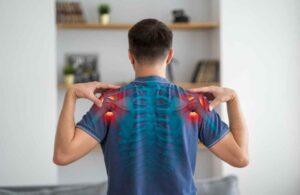
Frozen Shoulder – Causes, Symptoms & Modern Treatments – Dr Ramkinkar Jha
Frozen shoulder, also known as adhesive capsulitis, is a condition where the shoulder joint becomes stiff…
Read Article → WhatsApp