
Sports Injuries Treatment in Gurgaon: Causes, Symptoms & Expert Care
For an athlete or an active individual, the body is a high-performance machine. However, pushing your limits sometimes leads to injury. Whether it is a sudden twist on the football field, a nagging pain from tennis, or an awkward landing during a morning jog, Sports Injuries can physically and mentally set you back.
Whether you are a professional athlete or a “weekend warrior,” an injury can be a defining moment. It changes your stability, your confidence, and your ability to move freely. While some can be treated at home, others require specialized medical intervention to prevent long-term joint damage or chronic pain. Is Sports Injuries serious? It depends on the severity, but leaving even minor injuries untreated can lead to Sports Injuries complications like chronic joint pain, instability, or early-onset osteoarthritis if not managed correctly.
Dr. Ramkinkar Jha is a leading Sports Injury Specialist in Gurgaon. Using a combination of advanced diagnostics, regenerative medicine, and minimally invasive arthroscopic surgery, he helps patients return to their peak performance levels safely and effectively.
Book a Consultation with Dr. Ramkinkar Jha, Leading Orthopaedic Surgeon in Gurgaon
Understanding the Condition: What are Sports Injuries?
Sports Injuries refer to any injuries during physical activity, exercise or athletic competition that affect the musculoskeletal system which comprise the network of muscles, tendons, ligaments, bones, and cartilage. Understanding the types of Sports Injuries is the first step toward recovery.
Generally, Sports Injuries types fall into two categories based on their onset:
- Acute Injuries: These happen suddenly due to a specific impact or traumatic event. Examples include a sprained ankle from an awkward landing, a dislocated shoulder from a fall, or a fracture from a collision.
- Chronic (Overuse) Injuries: These develop gradually over time. They result from repetitive wear and tear on the body tissues. They develop gradually and are often caused by poor technique or overtraining. Examples include Tennis Elbow, Shin Splints, or stress fractures.
Knowing the difference between types of Sports Injuries helps in determining the right course of action.
Comprehensive List of Common Sports Injuries
1. Knee Injuries
The knee is the most commonly injured joint in sports due to its complex structure and weight-bearing role.
- ACL Tear (Anterior Cruciate Ligament): A tear in the ligament that stabilizes the knee, often caused by sudden stops or changes in direction.
- Meniscus Tear: Damage to the C-shaped cartilage that acts as a shock absorber between the shinbone and thighbone.
- PCL Tear (Posterior Cruciate Ligament): A tear in the back of the knee, usually from a direct blow (e.g., falling on a bent knee).
- MCL/LCL Sprains: Injuries to the collateral ligaments on the sides of the knee.
- Runner’s Knee (Patellofemoral Pain Syndrome): Dull pain around the front of the kneecap, common in runners and cyclists.
- Jumper’s Knee (Patellar Tendinitis): Inflammation of the tendon connecting the kneecap (patella) to the shinbone.
- Iliotibial (IT) Band Syndrome: Pain on the outer side of the knee caused by friction of the IT band against the thigh bone.
2. Shoulder Injuries
Shoulder injuries are prevalent in overhead sports like tennis, cricket, swimming, and volleyball.
- Rotator Cuff Tear: A tear in the group of muscles and tendons that keep the shoulder ball in its socket.
- Shoulder Impingement: When the shoulder blade rubs against the rotator cuff, causing pain during lifting.
- Shoulder Dislocation: The upper arm bone pops out of the cup-shaped socket that is part of the shoulder blade.
- SLAP Tear (Labral Tear): An injury to the ring of cartilage (labrum) that surrounds the shoulder socket.
- Clavicle (Collarbone) Fracture: A break in the collarbone, often from a fall or direct impact.
3. Foot and Ankle Injuries
These injuries are common in sports involving running, jumping, or quick pivoting.
- Ankle Sprain: Stretching or tearing of the ligaments that support the ankle (Inversion/Eversion sprains).
- Achilles Tendinitis: Inflammation of the Achilles tendon at the back of the heel.
- Achilles Tendon Rupture: A complete tear of the Achilles tendon, often accompanied by a loud “pop.”
- Plantar Fasciitis: Inflammation of the thick band of tissue across the bottom of the foot, causing heel pain.
- Stress Fractures: Tiny cracks in the foot bones (metatarsals) caused by repetitive force, often from running on hard surfaces.
- Turf Toe: A sprain of the main joint of the big toe, common in football players.
4. Elbow and Arm Injuries
Frequent in racquet sports and throwing sports.
- Tennis Elbow (Lateral Epicondylitis): Pain on the outer part of the elbow caused by overuse of forearm muscles.
- Golfer’s Elbow (Medial Epicondylitis): Pain on the inner part of the elbow.
- UCL Injury (Tommy John Injury): A tear in the Ulnar Collateral Ligament, common in throwers (cricket/baseball).
- Little League Elbow: A growth plate injury in the elbow of young throwers.
5. Leg and Hip Injuries
- Hamstring Strain: A pull or tear in the muscles at the back of the thigh, common in sprinters.
- Groin Pull: Strain of the adductor muscles in the inner thigh.
- Shin Splints (Medial Tibial Stress Syndrome): Pain along the shin bone (tibia), common in new runners.
- Quadriceps Strain: A tear in the muscles at the front of the thigh.
- Hip Bursitis: Inflammation of the fluid-filled sac (bursa) on the outside of the hip.
- Hip Labral Tear: Damage to the cartilage ring lining the hip socket.
6. Head, Neck, and Back Injuries
- Concussion: A mild traumatic brain injury caused by a blow to the head, resulting in dizziness or confusion.
- Herniated Disc: When the soft cushion between vertebrae slips out, pressing on nerves (common in weightlifting).
- Lumbar Strain: Lower back muscle injury caused by heavy lifting or sudden twisting.
- Stinger/Burner: A nerve injury in the neck and shoulder common in contact sports like rugby or football.
Sports Injuries Causes and Risk Factors
Why do these injuries occur? The Sports Injuries causes are often a mix of environmental factors and personal habits. Understanding Sports Injury causes is the key to preventing them. Most injuries occur when the force applied to a body part is greater than what it can structurally withstand.
Common Sports Injuries risk factors include:
- Improper Technique: Lifting weights incorrectly or using poor form puts stress on the wrong joints.
- Overtraining: Pushing the body beyond its limits without rest leads to fatigue.
- Inappropriate Gear: Wearing worn-out shoes or skipping protective pads.
- Skipping Warm-ups: Cold muscles are less flexible and prone to tearing.
- Hard Surfaces: Running on concrete increases impact shock.
- Lack of Conditioning: Being in poor physical health before starting a high-intensity sport.
- Anatomical Factors: Such as leg length discrepancy or flat feet.
- Age: Tendons and ligaments become less flexible as we age.
Sports Injuries Symptoms: When to See a Doctor
The Sports Injuries signs and symptoms vary depending on whether the injury happened suddenly (Acute) or developed over time (Chronic). Recognizing these early signs of Sports Injuries ensures you get the right help before the condition worsens.
Acute Sports Injuries Symptoms (Sudden Onset)
These occur immediately after a fall, collision, or awkward landing.
- Sudden, severe pain that forces you to stop activity immediately.
- Extreme swelling or bruising that appears rapidly within minutes or hours.
- Inability to place weight on the injured leg, knee, ankle, or foot.
- Visible deformity, where a bone or joint looks misshapen or out of place.
- A loud “pop” or “snap” heard or felt at the moment of impact.
- Joint locking or inability to move the limb through its full range of motion.
Chronic Sports Injuries Signs and Symptoms (Overuse)
These develop gradually due to repetitive stress or poor technique.
- Pain during activity that may improve with rest but returns with exercise.
- Persistent dull ache when the body is at rest or while sleeping.
- Intermittent swelling that increases after a workout or at the end of the day.
- Stiffness and tightness, particularly in the morning or at the start of a warm-up.
- Point tenderness, or sharp pain when touching a specific bone or muscle area.
How to detect Sports Injuries early? Listen to your body. If you feel a sharp pain or a persistent dull ache that doesn’t go away with rest, these are early signs of Sports Injuries.
Also, if pain persists for more than 48 hours despite rest, or if you feel instability in a joint (it “gives way”), you require a professional Sports Injuries medical evaluation.
Diagnosis and Medical Evaluation
How is Sports Injuries diagnosed? Dr. Ramkinkar Jha uses a comprehensive approach to ensure no underlying damage is missed.
Sports Injuries diagnosis involves:
- Physical Examination: The doctor checks for tenderness, swelling, and instability. This is the first step of the sports injuries medical evaluation.
- Imaging:
- X-rays: To rule out fractures or dislocations.
- MRI: The gold standard sports injuries tests for visualizing soft tissues like ligaments and tendons.
- CT Scan: For complex bone injuries.
Treatment Options for Sports Injuries
Sports Injuries treatment ranges from simple home care to complex surgeries. Can Sports Injuries be cured? Yes, with the right Sports Injuries management plan, most athletes return to their pre-injury level of play.
Sports Injuries treatment depends on the severity. Dr. Jha prioritizes conservative methods whenever possible but offers advanced treatment options for Sports Injuries when needed.
1. Non-Surgical Management (Conservative)
Standard Sports Injuries management includes:
- R.I.C.E. Therapy: Rest, Ice, Compression, and Elevation.
- Medication: Non-steroidal anti-inflammatory drugs (NSAIDs) to manage pain.
- Immobilization: Using slings, braces, or casts to protect the area during healing.
- Physiotherapy: Customized exercises to restore strength, flexibility, and balance.
- Regenerative Medicine: PRP injections for chronic issues.
2. Surgical Treatment for Sports Injuries
If sports injuries treatment options like rest and physio fail, or if there is a complete tear, surgery may be needed. Dr. Jha specializes in Sports Injuries Treatment in Gurgaon using Arthroscopy. For severe cases, Dr. Ramkinkar Jha, the best doctor for Sports Injuries in Gurgaon, utilizes advanced treatment options for Sports Injuries:
- Arthroscopic Surgery (Keyhole Surgery): A minimally invasive procedure using tiny incisions and a camera. It is used for ACL reconstruction, meniscus repairs, and rotator cuff surgery.
- Regenerative Medicine: Using Platelet-Rich Plasma (PRP) or stem cell therapy to accelerate the natural healing of tendons and ligaments.
- Fracture Fixation: Using specialized plates and screws to ensure bones heal in the correct alignment.
Sports Injuries Prognosis, Prevention and Home Care
The prognosis of Sports Injuries is generally excellent with timely care. While the term survival rate of Sports Injuries is rarely applicable (as they are not fatal), the “return-to-sport” rate is very high with modern medicine.
Sports Injuries prevention strategies:
- Warm up and cool down properly.
- Cross-train to avoid overuse.
- Hydrate to prevent muscle cramps.
- Wear proper equipment.
- Listen to your body and do not “play through the pain.”
Home Care Tips for Sports Injuries Patients
For immediate relief in sports injury cases, use the R.I.C.E. method:
- Rest: Stop activity immediately.
- Ice: Apply ice packs for 20 minutes (not directly on skin).
- Compression: Bandage the area to reduce swelling.
- Elevation: Keep the injured area raised.
Also,
- Avoid heat and alcohol for the first 72 hours (as they increase swelling).
- Gently move joints within a pain-free range to prevent stiffness.
- Follow your prescribed physiotherapy routine diligently.
Struggling with Joint Pain, Sports Injury, or Arthritis?
Why Choose Dr. Ramkinkar Jha for Treatment of Sports Injuries in Gurgaon?
When your mobility and athletic performance are on the line, you need the best treatment. As the best doctor for Sports Injuries in Gurgaon, Dr. Ramkinkar Jha combines surgical precision with a deep understanding of athletic biomechanics.
- Elite Sports-Specific Expertise: Treatment plans are not generic; they are tailored to the specific demands of your sport, whether it is cricket, football, running, or tennis.
- Advanced Minimally Invasive Techniques: Dr Ramkinkar Jha specialize in arthroscopic (keyhole) surgery, ensuring smaller incisions, less pain, and a faster return to the field.
- “Save the Joint” Philosophy: Our priority is joint preservation—repairing and regenerating natural tissue (meniscus/cartilage) rather than replacing it whenever possible.
- Comprehensive Return-to-Play Protocols: Dr Jha doesn’t just fix the injury; he guides you through holistic rehabilitation to ensure you regain peak strength, agility, and confidence.
- State-of-the-Art Facilities: Dr. Jha practices at a leading Sports Injuries hospital in Gurgaon, Artemis Hospital, equipped with high-definition imaging and robotic surgical tools.
International Patients – Sports Injury Treatment in Gurgaon
India is a global destination for orthopaedic excellence. Dr. Ramkinkar Jha provides seamless Sports Injuries treatment in Gurgaon for international patients, delivering world-class outcomes with premium care.
Why International Patients Trust Dr Ramkinkar Jha:
- Cost-Effective Excellence: Access top-tier Sports Injuries treatment in Gurgaon, including advanced implants and arthroscopy, at a fraction of the cost compared to the US, UK, or Europe.
- End-to-End Concierge Support: We handle the logistics, including medical visa assistance, airport transfers, and accommodation arrangements for you and your family.
- Zero Waiting Time: Priority appointment scheduling and surgery planning to minimize your stay in India.
- Global Continuity of Care: Your recovery doesn’t end when you fly home. We provide dedicated post-op virtual care via video consultations to monitor your rehabilitation.
Looking for the best Sports Injuries specialist in Gurgaon?
Don’t let an injury end your sports season. Contact us today for a world-class medical evaluation.

Dr Ramkinkar Jha's Medical Content Team
Dr. Ramkinkar Jha’s medical content team specialises in producing accurate, clear, and patient-focused orthopaedic content. With a strong foundation in clinical knowledge and expertise in technical writing and SEO, the team translates complex orthopaedic and musculoskeletal information into reliable, easy-to-understand resources. Their work helps patients make informed healthcare decisions while reflecting Dr. Jha’s commitment to high-quality, expert care in joint replacement, trauma, sports injuries, and advanced orthopaedic treatments.
This content is reviewed by Dr. Ramkinkar Jha
Related Blogs
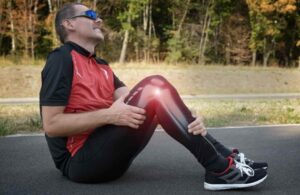
Top 5 Common Sports Injuries and How to Prevent Them – Dr Ramkinkar Jha
Sports are a great way to stay fit and active, but injuries can sometimes get…
Read Article → WhatsApp