A torn meniscus doesn’t always mean surgery, or just rest. What decides the right meniscus tear treatment is where the tear sits and how much blood supply that zone gets.
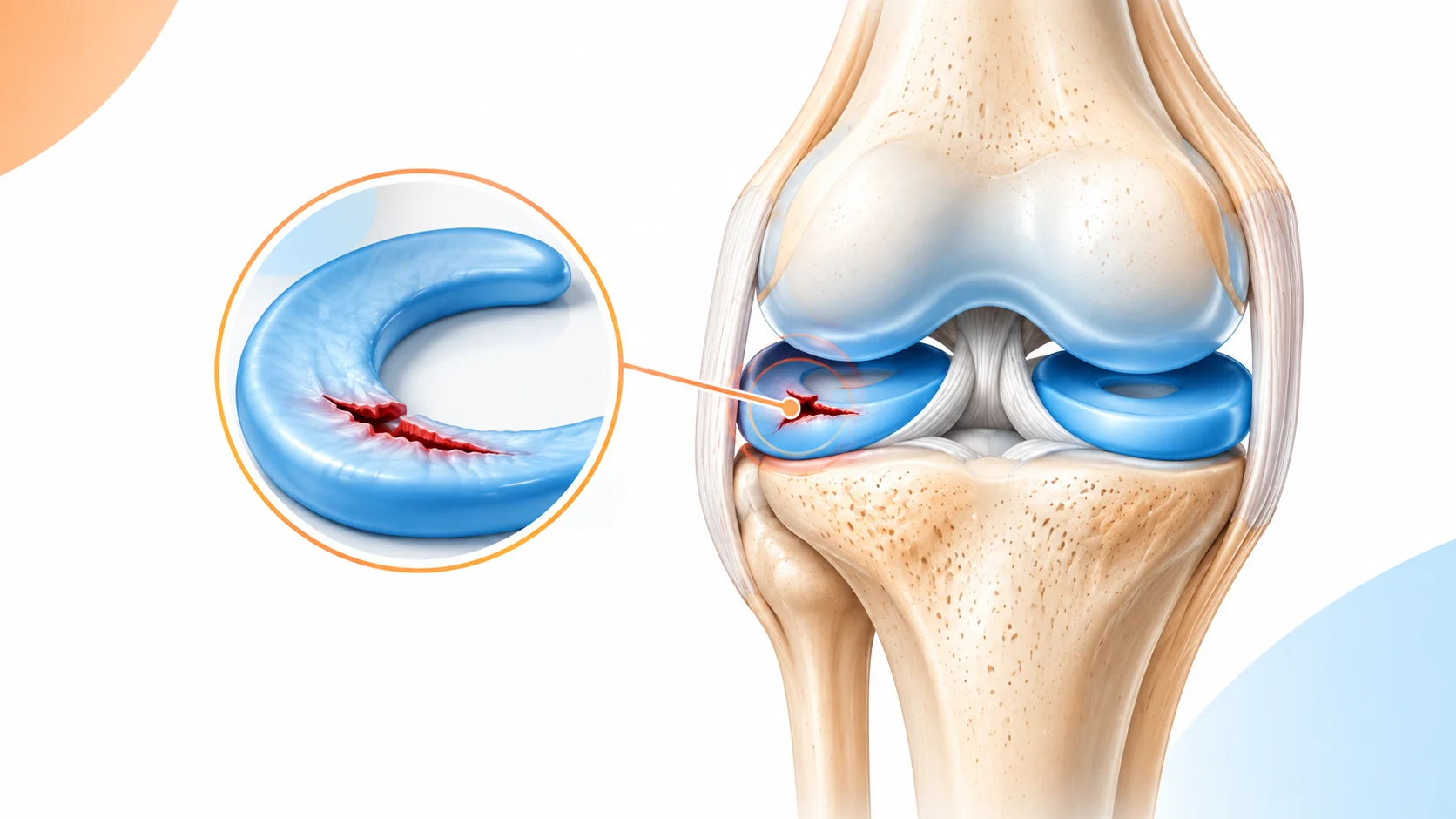
If you notice a sharp pain through your knee, like something is “stuck” inside, or a dull, aching pain along the inner side of your knee that swells up after a long walk, if your knee feels unstable, locks up, or clicks painfully, you are likely suffering from a Meniscus Tear.
While common, this is a complex injury that requires precise intervention. Dr. Ramkinkar Jha, a renowned Meniscus Tear specialist in Gurgaon, offers world-class care focused on “Joint Preservation.” Using state-of-the-art diagnostic tools and minimally invasive arthroscopic techniques, Dr. Jha prioritizes saving your natural meniscus whenever possible to prevent future arthritis and restore your active lifestyle, ultimately providing one of the best services for meniscus tear treatment in Gurgaon.
Fill out the form below and our team will get back to you with 24-48 hours.
medical_services
Personalized Care
medical_services
Advanced Treatment Approaches
Meniscus is a cartilage present in the knee joint that absorbs shock, distributes body weight and provides stability around the joint.
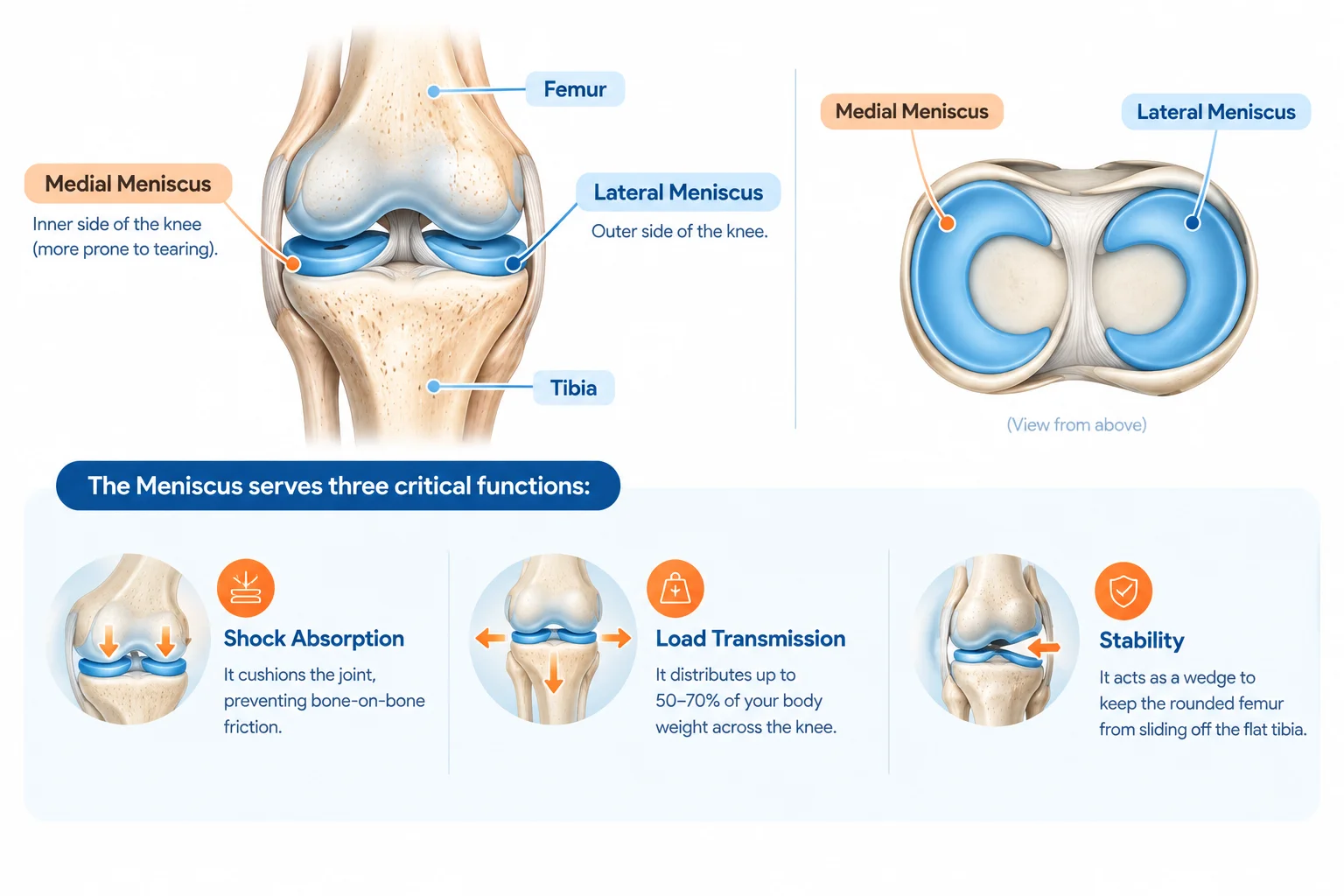
To understand Meniscus Tear causes and treatment, we must understand the anatomy of the knee. The knee is not a simple hinge; it is a complex weight-bearing joint involving the femur (thigh bone) and tibia (shin bone). Sitting between these bones are two tough, rubbery and wedge-shaped pieces of fibrocartilage called the menisci:
- Medial Meniscus: Located on the inner side of the knee (more prone to tearing). If this suffers tear, its called medial meniscus tear.
- Lateral Meniscus: Located on the outer side of the knee. If this suffers tear, its called lateral meniscus tear.
The Meniscus serves three critical functions:
- Shock Absorption: It cushions the joint, preventing bone-on-bone friction.
- Load Transmission: It distributes up to 50-70% of your body weight across the knee.
- Stability: It acts as a wedge to keep the rounded femur from sliding off the flat tibia.
A torn meniscus can quietly weaken the knee’s balance or bring movement to a sudden halt.
The “Zones” of the Meniscus (Crucial to know for treatment)
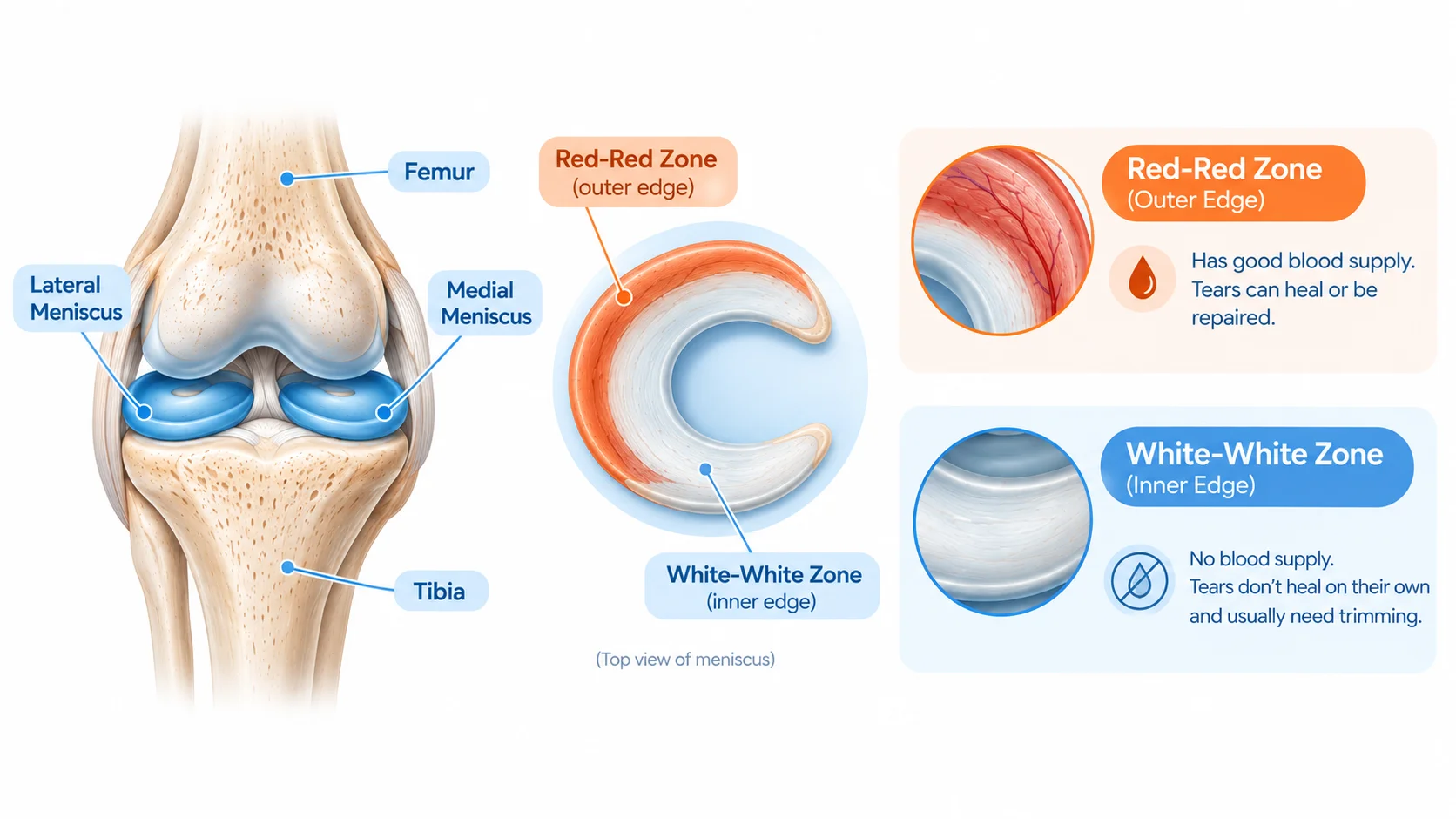
Not all tears are the same. The meniscus has two distinct zones based on blood supply, which dictates the meniscus tear treatment plan:
- The Red-Red Zone (Outer Edge): This area has a rich blood supply. Tears here have the potential to heal naturally or with surgical repair.
- The White-White Zone (Inner Edge): This area lacks blood supply (“avascular”). Tears here cannot heal on their own and typically require trimming (meniscectomy).
A Meniscus Tear can occur in anyone, but the cause usually falls into two categories based on the tissue.
Acute (Traumatic) Tears
- Acute meniscus tears occur due to a sudden twisting or pivoting motion of the knee while the foot remains firmly planted on the ground.
- They are commonly seen in athletes and physically active individuals under the age of 40.
Activities such as deep squatting, heavy lifting, or high-impact sports like football, cricket, and basketball significantly increase the risk. In many cases, traumatic meniscus tears may also occur along with injuries to other knee structures like Anterior Cruciate Ligament (ACL).
Degenerative (Chronic) Tears
- These account for a large percentage of Meniscus Tears patients over the age of 40.
- With aging, the meniscus gradually loses water content, making the cartilage weaker and more brittle.
- As a result, even simple everyday activities such as getting out of a car, stepping off a curb, or kneeling can cause the weakened meniscus to tear.
The symptoms of meniscus tear depend on the type and location of the tear and often worsens over 24-48 hours. Common Meniscus Tear Signs and Symptoms are:
- Localized Pain: Sharp pain along the joint line (either inner or outer knee).
- Swelling: Fluid accumulates, knee becomes puffy and stiff.
- Mechanical Locking: A hallmark symptom: A loose flap of torn cartilage gets caught in the hinge of the knee, patient cannot fully straighten the leg.
- Giving Way: Knees unstable or buckling under weight.
- Audible Pop: A popping sound at the moment of injury.
- Limited Range of Motion: Inability to bend or flex the knee fully.
A precise diagnosis is critical to distinguish a tear from other knee issues like tendonitis. Dr. Ramkinkar Jha utilizes a comprehensive Meniscus Tear medical evaluation protocol.
Physical Examination (Specialized Clinical Tests)
Following maneuvers are performed to diagnose torn meniscus:
- McMurray Test: Rotating the knee while extending it to check for a “clunk” or pain.
- Joint Line Tenderness: Palpating the gap between bones to pinpoint the tear location.
- Thessaly Test: Having the patient stand on one leg and twist to check for pain.
Advanced Imaging
- X-Rays: How is Meniscus Tear diagnosed if cartilage doesn’t show on X-rays? We use them to rule out fractures and check for bone spurs (arthritis).
- MRI (Magnetic Resonance Imaging): This is the gold standard for Meniscus Tear diagnosis. It provides a high-resolution map of the soft tissue, revealing the types of Meniscus Tear (Bucket-handle, Radial, Horizontal, or Complex) and helping determine if the tear is repairable.
Dr. Ramkinkar Jha believes in “Save the Meniscus” philosophy. The choice of treatment depends on the tear’s size, type, location (Red vs. White zone), and the patient’s activity level.
Meniscus Tear Surgery
Arthroscopic Meniscus Repair (Gold Standard Treatment)
This surgery is performed using knee arthroscopy, a minimally invasive technique where tiny instruments are inserted through small incisions (about 3–4 mm).
- Advanced suturing techniques such as “all-inside” or “inside-out” repair systems are used to securely anchor the torn cartilage.
- It is used when the tear is located in the “red-red” or “red-white” vascular zones
- The goal is to stitch the torn edges of the meniscus back together
It preserves the natural shock absorber of the knee, allows tissue to heal naturally and significantly reduces the risk of early osteoarthritis.
Arthroscopic Partial Meniscectomy
Also minimally invasive, the surgeon during this process carefully removes only the damaged or unstable portion of the meniscus and preserves as much healthy tissue as possible.
- This process is used if the tear occurs in the “white-white” avascular zone, where blood supply is absent and healing is unlikely.
- This provides immediate relief from torn meniscus symptoms
Recovery is typically rapid, and many patients are able to walk on the same day with gradual return to normal activities.
Meniscus Root Repair
Meniscus root repair is an arthroscopic procedure that reattaches the torn root back to the bone using sutures and fixation techniques.
A meniscus root tear occurs when the meniscus detaches from its attachment point on the bone. This can significantly affect the knee’s ability to distribute weight and absorb shock.
Repairing the root is extremely important because untreated root tears can lead to rapid cartilage damage and early arthritis. Early surgical repair helps restore the meniscus’s normal function and protects the knee joint in the long term.
Meniscus tear Non- Surgical Treatments
Apart from the surgical options, for small, stable tears or degenerative tears in the “white zone” where surgery might not offer additional benefits, conservative care is the first line of defense. The following are some of the non-surgical treatment approaches for meniscus tears:
- R.I.C.E. Protocol: Rest, Ice, Compression, and Elevation to manage acute swelling.
- NSAIDs: Anti-inflammatory medications to reduce pain.
- Specialized Physiotherapy: A targeted program to strengthen the quadriceps and hamstrings. A strong muscle envelope can compensate for a torn meniscus by stabilizing the joint.
- Intra-articular Injections:
- Corticosteroids: Potent anti-inflammatories for rapid pain relief.
- PRP (Platelet-Rich Plasma): Injecting the patient’s own growth factors to stimulate healing in vascular zones.
- Viscosupplementation: Hyaluronic acid injections to lubricate the joint.
Meniscus tear recovery time typically ranges from 4-6 weeks after meniscectomy to 3-6 months after meniscus repair surgery. Recovery depends entirely on which treatment path was taken. Meniscectomy and meniscus repair follow very different healing timelines and post-surgical care is just as important as the procedure itself.
Prognosis of Meniscus Tear
Meniscus tear recovery time can range from a few weeks to several months, depending on whether the torn tissue was repaired or removed.
- Meniscectomy: Patients typically walk without support within 2-3 days and return to sports in 4-6 weeks.
- Meniscus Repair: Requires a stricter protocol to protect the stitches. Patients may use crutches for 3-4 weeks, with a return to sports in 4-6 months. The long-term benefit is a healthier knee joint.
The trade-off is simple: meniscectomy gets you back on your feet faster, while repair takes patience but protects the knee for years to come.
Home Care Tips for Meniscus Tear Patients
Alongside medical treatment, a few simple home care habits can speed up healing and lower the risk of re-injury.
- Ice Application: Essential for the first week to control Meniscus Tear symptoms post-surgery.
- Early Movement: Gentle bending exercises (as advised) prevent stiffness.
- Adherence: Strictly following the Meniscus Tear prevention protocols for re-injury is vital.
None of these replace medical care, but done consistently, they make the difference between a smooth recovery and a setback.
Fill out the form below to schedule your appointment with Dr. Ramkinkar Jha, trusted Orthopaedic Surgeon in Gurgaon
verified
Expert care for knee, hip & shoulder problems
tibia
Advanced joint replacement & arthroscopy treatments
medical_services
Personalized treatment plans for lasting pain relief
calendar_clock
Appointment confirmation within 24–48 hours
When it comes to knee health, choosing the right specialist is crucial. Contact Dr. Ramkinkar Jha for meniscus tear treatment for accurate diagnosis, advanced treatment, and personalized care. His expertise in sports injuries and minimally invasive knee procedures ensures that patients receive effective treatment focused on long-term joint preservation.
- 20+ years of experience in orthopaedics and knee injury management
- Expertise in sports medicine and advanced arthroscopic knee procedures
- Uses high-definition arthroscopic cameras and modern radiofrequency technology for precise treatment
- Focus on a “save the meniscus” approach to preserve natural knee function
- Personalized treatment plans to avoid unnecessary surgery whenever possible
- Experienced in managing complex meniscus and ligament injuries
- Minimally invasive techniques that support faster recovery and less pain
- Consultation available at most accessible locations in Gurgaon, CK Birla Hospital, Gurgaon, Sector 51 and Orthopedics & Sports Injury Clinic, Sector 71.
If knee pain, locking, or swelling is affecting your daily movement or sports, an accurate diagnosis is the first step. Dr. Ramkinkar Jha will assess your knee, review your imaging, and recommend treatment based on the tear, your activity level, and long-term joint health.
For international patients, you can share your MRI for a virtual second opinion before travelling. Our team can also assist with medical visas, airport transfers, and accommodation. To discuss your symptoms or treatment options, book an appointment with Dr. Jha today.



 WhatsApp