
Osteoarthritis Treatment in Gurgaon
Every step you take puts force equivalent to 1.5 times your body weight through your knees. Over decades, that accumulates. For millions of Indians, this gradual wear eventually crosses a threshold, and what starts as morning stiffness becomes persistent joint pain that makes climbing stairs, walking to the market, or standing in the kitchen feel like an ordeal.
Osteoarthritis is the most common joint disease in India, affecting an estimated 15 crore people, with the knee being the most frequently involved joint, followed by the hip, shoulder, and ankle.
Dr. Ramkinkar Jha, Director, Department of Orthopaedics at CK Birla Hospital, Gurugram, approach is graded, evidence-based, and transparent, from structured physiotherapy and injections in early disease, to corrective osteotomy and joint replacement surgery when medically indicated.
Book a Consultation with Dr. Ramkinkar Jha, Leading Orthopaedic Surgeon in Gurgaon
What Is Osteoarthritis?
Osteoarthritis is a degenerative joint disease in which the cartilage, the smooth, rubbery tissue that cushions the ends of bones inside a joint, gradually breaks down. As cartilage wears away, bones begin to rub against each other, causing pain, swelling, stiffness, and loss of joint mobility.
Unlike rheumatoid arthritis, which is an autoimmune condition, osteoarthritis is primarily a mechanical and degenerative process. It does not simply affect cartilage; over time, it also triggers changes in the underlying bone, the joint lining (synovium), and the surrounding ligaments and muscles.
The result is a joint that becomes progressively less functional, often accompanied by chronic pain and, in advanced stages, visible deformity.
Which Joints Are Affected by Osteoarthritis?
Osteoarthritis can affect any synovial joint in the body. The most commonly involved joints include:
- Knee osteoarthritis: It is the most prevalent form, particularly in Indian women after menopause. The repetitive impact of walking, squatting, and climbing places continuous mechanical stress on the knee, accelerating cartilage wear. Bilateral knee osteoarthritis, where both knees are affected, is common and significantly restricts daily mobility.
- Hip osteoarthritis causes deep groin or thigh pain that worsens with walking and makes it difficult to sit, rise from chairs, or climb stairs. It is often confused with lower back problems, leading to delayed diagnosis.
- Shoulder osteoarthritis typically develops after prior injuries, rotator cuff tears, or repetitive overhead activity. It causes aching pain with lifting and progressive restriction of arm movement.
- Ankle osteoarthritis is less common but highly disabling. It usually follows previous ankle fractures or repeated sprains, and causes pain with weight-bearing and walking on uneven ground.
- Hand and finger osteoarthritis causes bony swellings (Heberden’s and Bouchard’s nodes) at finger joints, pain with gripping, and reduced hand strength, particularly troublesome for women in their 50s and 60s.
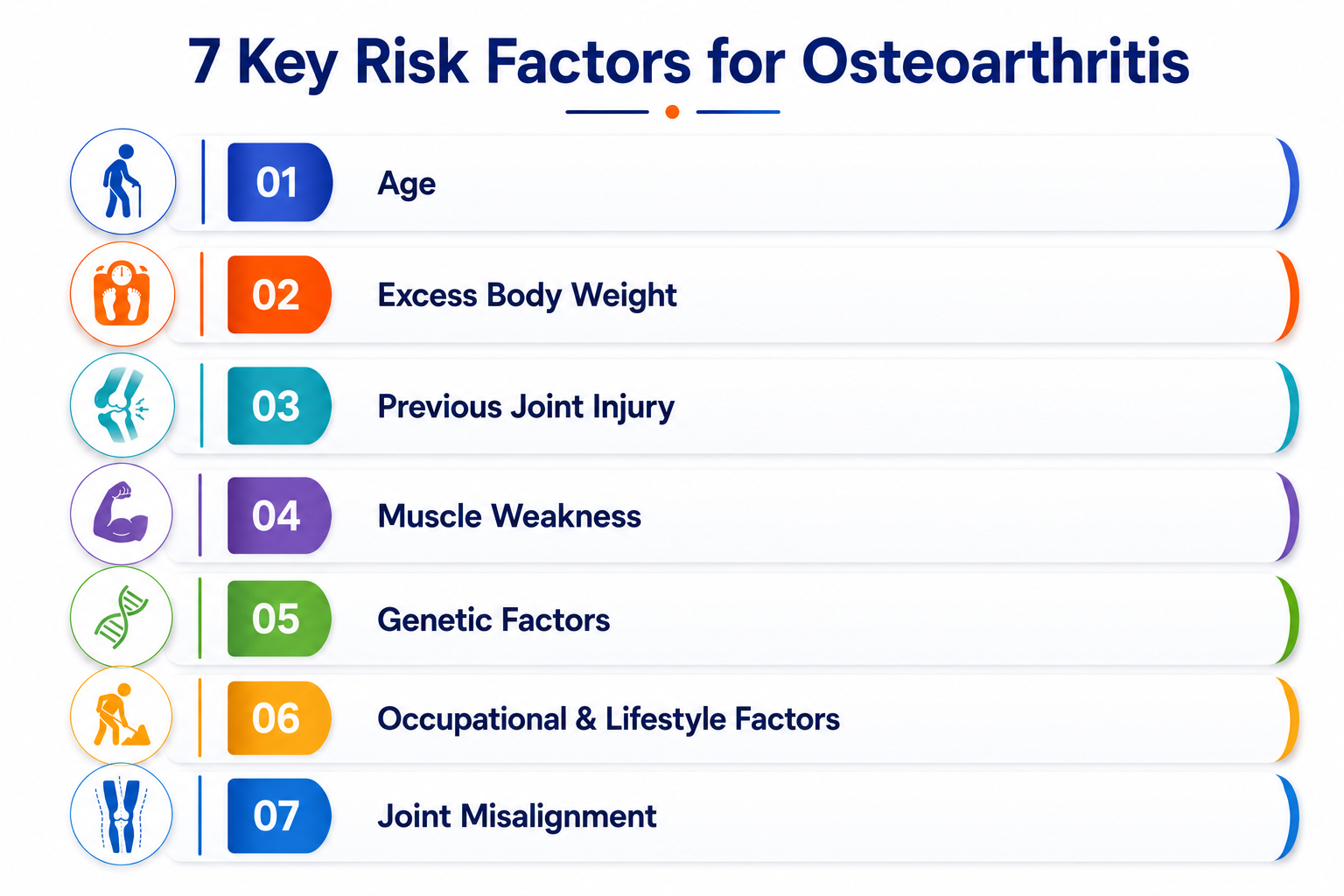
Osteoarthritis Causes and Risk Factors
Osteoarthritis causes include:
Symptoms of Osteoarthrits
Osteoarthritis symptoms usually develop gradually, progressing from mild discomfort to persistent pain over time.
Early signs:
- Morning stiffness easing within 30 minutes
- Joint pain after walking, stairs, or sitting cross-legged
- Deep aching pain relieved by rest
- Mild occasional swelling
As it worsens:
- Pain even at rest or at night
- Recurrent swelling
- Grinding or clicking during movement
- Reduced joint movement and stiffness
- Joint instability or “giving way”
- Visible knee deformity or bowing
See an orthopaedic specialist if:
- Pain lasts over 4-6 weeks despite rest or painkillers
- Swelling keeps returning
- Symptoms affect walking, work, or sleep
- Joint pain suddenly worsens
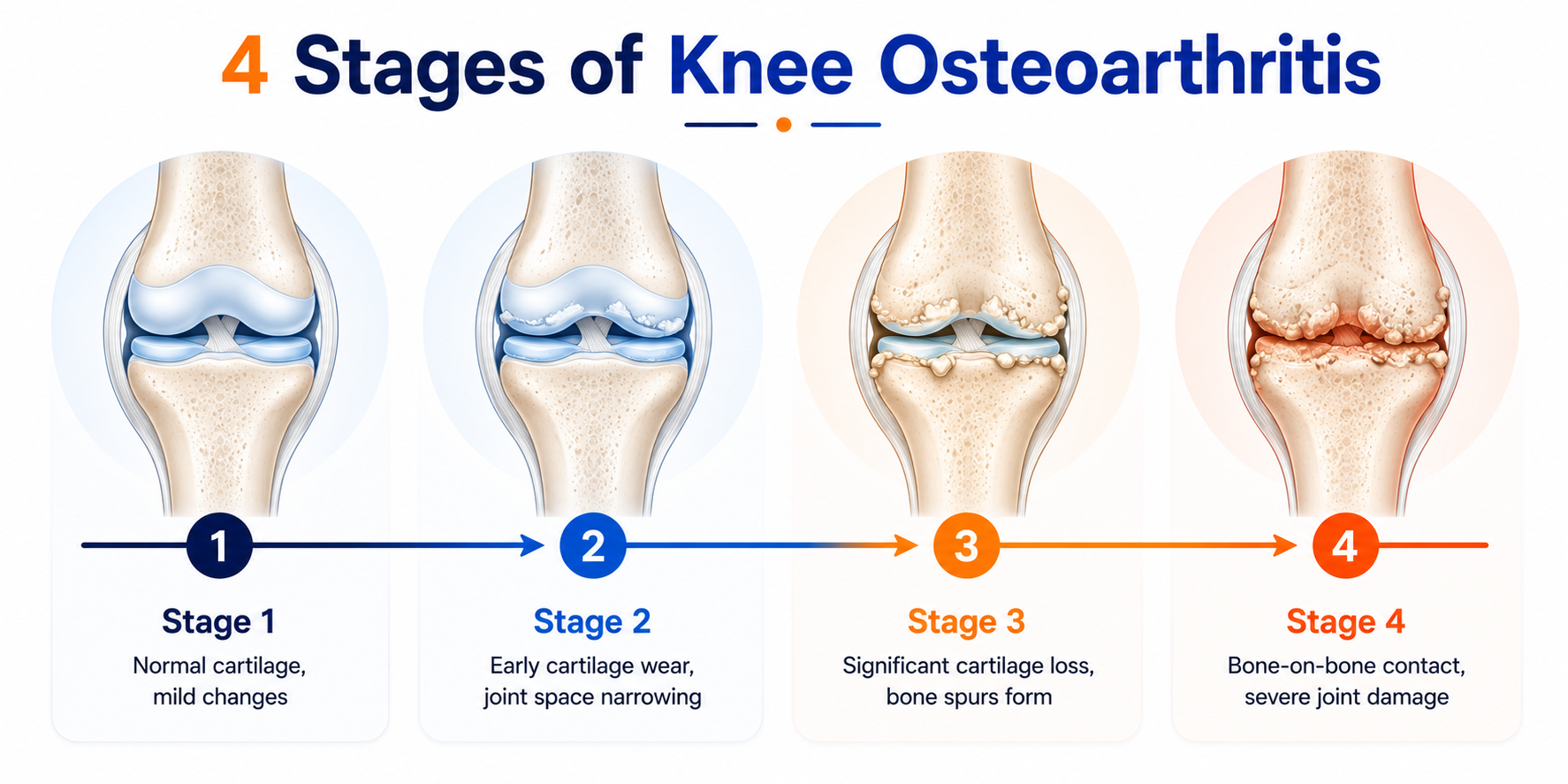
Stages of Osteoarthritis
Osteoarthritis is graded on a scale of 1 to 4 (Kellgren-Lawrence grading system), based on X-ray findings and clinical symptoms. Understanding your stage helps determine the most appropriate treatment approach.
Osteoarthritis Diagnosis
Osteoarthritis is diagnosed through a combination of clinical assessment and imaging. An accurate diagnosis establishes not just whether OA is present, but how advanced it is, which compartments of the joint are affected, and whether other conditions are contributing to the pain.
- Clinical assessment involves a detailed history of symptoms, functional limitations, and prior injuries, alongside a physical examination of joint alignment, range of motion, swelling, tenderness, and gait pattern.
- X-rays remain the primary imaging tool for assessing OA severity. They show joint space narrowing, osteophyte formation, subchondral sclerosis, and bone deformity, all hallmarks of advancing OA.
- MRI is used when cartilage damage, meniscal pathology, or other soft tissue conditions need to be assessed alongside OA, particularly in younger patients or when surgical planning is required.
- Blood tests are not diagnostic for OA but help exclude inflammatory arthritis such as rheumatoid arthritis or gout, which may co-exist or mimic OA.
What Is the Best Treatment for Osteoarthritis?
The best treatment for osteoarthritis is a graded, personalised plan that matches the intervention to the severity of the disease. There is no single answer.
Physiotherapy and Exercise
Physiotherapy is the foundation of osteoarthritis treatment at every stage. A structured programme of muscle-strengthening (particularly the quadriceps, hip abductors, and core), range-of-motion exercises, and low-impact aerobic activity reduces pain, improves joint stability, and slows disease progression.
Research consistently shows that supervised exercise therapy is as effective as NSAIDs for pain relief in mild-to-moderate knee OA, with far fewer side effects. Swimming, cycling, and walking on flat surfaces are particularly well-suited. High-impact activities like running or jumping are modified or avoided during active flares.
Weight Management
Reducing body weight is one of the most impactful, evidence-backed interventions for knee and hip osteoarthritis. A 10% reduction in body weight has been shown to reduce knee pain scores by up to 50% in overweight patients with OA.
Diet and Nutrition
An osteoarthritis-friendly diet reduces systemic inflammation and supports healthy joint function. Key dietary principles include:
- An anti-inflammatory diet rich in fruits, vegetables, whole grains, legumes, and oily fish (omega-3 fatty acids) helps reduce joint inflammation.
- Vitamin D and calcium from dairy, fortified foods, and moderate sunlight exposure support bone health and may slow OA progression. Vitamin D deficiency is common in India and worsens joint degeneration.
- Limiting refined sugar, processed foods, and trans fats, which promote systemic inflammation.
- Adequate protein intake supports the muscle mass needed to protect joints.
- Turmeric (curcumin) has demonstrated modest anti-inflammatory effects in several studies and is safe to include as a dietary addition.
A dietitian’s guidance alongside your orthopaedic care can meaningfully support OA management.
Medications
Pain relief medications help manage symptoms during flares and enable patients to participate in physiotherapy. These include:
- Paracetamol Topical NSAIDs (diclofenac gel) applied directly to the joint, effective for knee OA with fewer gastrointestinal side effects than oral NSAIDs.
- Oral NSAIDs (ibuprofen, naproxen) for moderate pain, used with caution in older patients or those with kidney or gastrointestinal concerns.
- Duloxetine, a nerve-modulating agent used in patients with chronic OA pain who have not responded to standard medications.
Long-term medication use is monitored carefully and is not a substitute for addressing underlying disease.
Joint Injections
When pain persists despite physiotherapy and medication, targeted joint injections may provide meaningful relief. Injections include:
- Corticosteroid injections
- Hyaluronic acid (viscosupplementation) injections
- PRP (Platelet-Rich Plasma) therapy
Corrective Osteotomy (Joint Preservation Surgery)
For younger patients (typically under 60) with early-to-moderate OA confined to one side of the knee and associated with limb malalignment, a high tibial osteotomy (HTO) can redistribute weight to the healthier cartilage, relieving pain and potentially delaying or preventing the need for joint replacement by many years. This is a joint-preserving procedure; the patient’s own joint is maintained. For a more detailed account, go through Corrective Osteotomy in Gurgaon.
Arthroscopy for Associated Joint Problems
In selected patients, arthroscopy may help address mechanical problems, such as loose cartilage fragments or coexisting meniscal tears, that contribute to symptoms. Arthroscopy alone does not treat OA, but it may be appropriate when a specific mechanical cause of symptom exacerbation is identified.
Joint Replacement Surgery
When osteoarthritis is advanced (Stage 3-4), joint replacement surgery offers the most reliable and durable solution for restoring function and eliminating pain. During the procedure, damaged cartilage and bone surfaces are replaced with precisely fitted implants that recreate smooth, pain-free joint movement.
- Knee replacement: The most commonly performed joint replacement procedure in India, is available as partial (unicompartmental) or total knee replacement depending on the extent of disease.
- Hip replacement is highly effective for hip OA, with over 90% of patients reporting significant pain relief and functional improvement at 10 years.
- Shoulder replacement (total shoulder arthroplasty or reverse shoulder replacement) addresses end-stage shoulder OA with excellent outcomes for pain and overhead function.
- Ankle and foot surgery is available for end-stage ankle osteoarthritis unresponsive to conservative care.
- Robotic-assisted joint replacement uses computer-guided robotic arms to achieve implant positioning accuracy beyond what is possible with conventional techniques, reducing the risk of misalignment, improving longevity of the implant, and enabling faster recovery.
Struggling with Joint Pain, Sports Injury, or Arthritis?
Osteoarthritis Treatment Cost in Gurgaon
Osteoarthritis treatment cost in Gurgaon ranges from ₹1000 per physiotherapy session to ₹4,50,000 or more for joint replacement surgery, depending entirely on the stage of disease and the treatment required.
Several factors influence the total cost of treatment:
- Stage of osteoarthritis: Early-stage OA managed with physiotherapy and injections costs a fraction of surgical treatment
- Joint involved: Knee, hip, and shoulder replacements each carry different implant and surgical costs
- Implant type and brand: Domestic versus imported implants vary in price and biomechanical properties
- Procedure type: Partial versus total joint replacement, or joint preservation versus replacement
- Hospital room category: General ward, semi-private, or private room affects the overall bill
- Duration of hospital stay: Most joint replacements require 3-5 days; complex or revision cases may be longer
A detailed written cost estimate is provided following clinical evaluation and imaging review. Most health insurance policies cover joint replacement surgery when medically indicated.
For a detailed breakdown, see: Knee Replacement Surgery Cost in Gurgaon
Why Choose Dr. Ramkinkar Jha for Osteoarthritis Treatment in Gurgaon?
When it comes to osteoarthritis treatment in Gurgaon, Dr. Ramkinkar Jha is one of Delhi NCR’s most trusted orthopaedic surgeons for patients seeking expert joint care, a staged and honest treatment approach, and the full spectrum of options.
- 20+ Years of Experience: 12,000+ orthopaedic procedures, including complex joint replacements, revision surgeries, and joint preservation procedures across the knee, hip, shoulder, ankle, and wrist.
- Global Fellowship Training: MBBS Gold Medallist, MS (Orthopaedics) from AIIMS New Delhi, MCh with Distinction from the University of Edinburgh. Trained in joint replacement and arthroscopy across the UK, Singapore, Hong Kong, Switzerland, and Malaysia.
- Evidence-Based, Honest Practice: Surgery is recommended only when non-surgical options have been appropriately tried and the clinical picture justifies it. No patient is pushed toward unnecessary intervention.
- Robotic Joint Replacement Available: CK Birla Hospital is equipped with robotic-assisted surgical technology for precisely implanted, longer-lasting joint replacements.
- Nationally Recognised: Indian Excellence Award (2022) for Best Orthopaedic Surgeon. Dr. APJ Abdul Kalam Health Award (2023) for Service Excellence in Joint Replacement.
- Transparent Communication: Diagnosis, treatment plan, expected outcomes, and costs are explained clearly before any decision is made. Every patient and family is involved and informed.
Book a Consultation for Osteoarthritis Treatment in Gurgaon
If joint pain, morning stiffness, or reduced mobility is limiting your daily life, the right time to seek an expert evaluation is now, not when the pain becomes unbearable.
What to bring to your consultation:
- Recent X-rays or MRI scans and reports
- Previous medical records, discharge summaries, or investigation reports
- List of current medications
- Health insurance documents, if applicable
- Your specific questions and concerns about your joint health
Dr. Jha will guide you through an accurate diagnosis, explain what stage your condition is at, and outline the full range of treatment options, from physiotherapy through to surgery if required, with complete transparency on costs and recovery timelines.
Frequently Asked Questions
What is the best treatment for osteoarthritis of the knee? expand_more
The best treatment for knee osteoarthritis depends on the stage of disease. solution. Treatment is always individualised, what works best is determined after a clinical assessment and imaging review.
Can osteoarthritis be cured? expand_more
Osteoarthritis cannot currently be cured or reversed in terms of cartilage restoration. However, it can be effectively managed to reduce pain, improve joint function, and slow progression.
Is physiotherapy effective for osteoarthritis? expand_more
Yes. Physiotherapy and structured exercise are among the most evidence-backed treatments for osteoarthritis at all stages.
What are the best foods to eat with osteoarthritis? expand_more
A diet rich in anti-inflammatory foods, vegetables, fruits, whole grains, legumes, oily fish (omega-3s), turmeric, and ginger supports joint health and reduces inflammation. Calcium and vitamin D-rich foods maintain bone strength.
How do I book an appointment with Dr. Ramkinkar Jha? expand_more
You can book a consultation with Dr. Ramkinkar Jha directly through the appointment form on this page. Outstation and international patients may share MRI reports and medical records in advance via the contact form for a preliminary review before their visit.

Dr Ramkinkar Jha's Medical Content Team
Dr. Ramkinkar Jha’s medical content team specialises in producing accurate, clear, and patient-focused orthopaedic content. With a strong foundation in clinical knowledge and expertise in technical writing and SEO, the team translates complex orthopaedic and musculoskeletal information into reliable, easy-to-understand resources. Their work helps patients make informed healthcare decisions while reflecting Dr. Jha’s commitment to high-quality, expert care in joint replacement, trauma, sports injuries, and advanced orthopaedic treatments.
This content is reviewed by Dr. Ramkinkar Jha
Related Conditions

Periprosthetic Joint Infection (PJI) Treatment in Gurgaon
Many patients seeking Periprosthetic Joint Infection Treatment in Gurgaon initially assume that pain, stiffness or swelling is a normal part of post-surgical…
Hip Osteoarthritis Treatment in Gurgaon
Hip osteoarthritis is one of the most common reasons adults in India experience persistent groin and thigh pain, stiffness after sitting,…
Related Blogs
10 Best Knee Strengthening Exercises for Stronger Knees
There’s a moment everyone with knee trouble knows: the pause right before standing up from…
Read Article →
Osteoporosis Treatment: Medicines, Diet, Exercise & Prevention
It usually starts quietly. A slight stoop in the shoulders that wasn’t there a few…
Read Article →
विटामिन डी की कमी के लक्षण: हड्डियों और जोड़ों पर असर
विटामिन डी की कमी के सबसे आम लक्षण हैं: हड्डियों और जोड़ों में दर्द, मांसपेशियों में…
Read Article → WhatsApp