
Orthopaedic Implants: Types, Benefits, Costs & What Patients Must Know
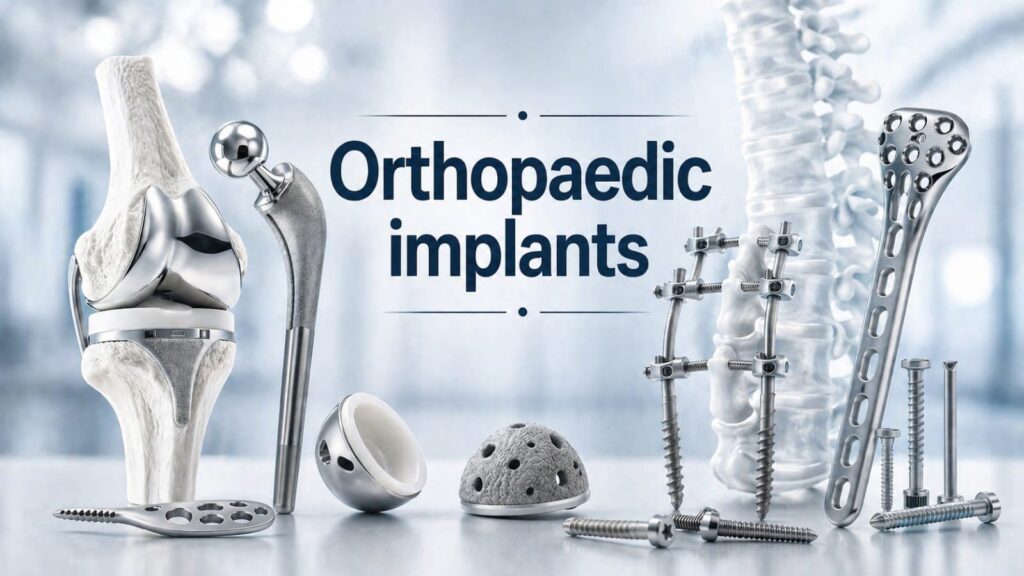
Orthopaedic implants are biocompatible devices used to replace, stabilise, or support bones and joints affected by injury, arthritis, or degeneration. In Gurgaon, treatments using modern implants help patients regain mobility, reduce pain, and return to daily activities with long-lasting outcomes and minimal complications.
Book a Consultation with Dr. Ramkinkar Jha, Leading Orthopaedic Surgeon in Gurgaon
What Are Orthopaedic Implants?
Orthopaedic implants are medical devices that replace, support, or stabilise damaged bones and joints. They restore function lost to arthritis, fractures, or degeneration. Modern implants are biocompatible, your body accepts them without rejection, and they are built to last 15–25 years.
Types of Orthopaedic Implants
The three main categories are joint replacements (hip, knee, shoulder), fracture fixation devices (plates, rods, external fixators), and spinal implants (pedicle screws, disc replacements). Specialised ankle, wrist, and dental implants also exist.
- Joint Replacements are used when arthritis or injury causes severe damage. Hip replacement (arthroplasty) eliminates arthritic pain using titanium or ceramic components. Knee replacement is the most common orthopaedic surgery worldwide, restoring pain-free movement. Shoulder replacement addresses rotator cuff damage and arthritis.
- Fracture Fixation devices include metal plates and screws that hold broken bone fragments in place, intramedullary rods inserted into long bones (femur, tibia, humerus) for immediate stability, and external fixators for complex or contaminated fractures. These allow mobilisation within days, far faster than a cast alone.
- Spinal Implants include pedicle screws and rods for fusion surgery, intervertebral disc replacements that preserve motion while eliminating nerve pain, and vertebral body replacements for fracture or tumour cases.
Specialised options also exist for ankles, wrists, and teeth.
Materials Used in Orthopaedic Implants
Orthopaedic implants are made from titanium, stainless steel, ceramics, or medical-grade polymers, each chosen for specific strength, flexibility, and biocompatibility needs. All carry FDA/CE certification.
- Titanium – lightweight, strong, and integrates naturally with bone. Preferred for hips, knees, and spinal implants.
- Stainless Steel – durable and cost-effective. Standard for fracture plates and screws.
- Ceramics – wear-resistant with low friction. Used for joint surfaces needing long-term durability.
- Medical-grade polymers – flexible liners and spacers that absorb shock in knee and hip replacements.
Benefits of Orthopaedic Implants
Orthopaedic implants relieve chronic pain, restore mobility, improve sleep, and allow return to work and daily activities, with most implants lasting 15–25 years without revision surgery.
The gains go beyond pain relief. Most patients report complete or near-complete elimination of chronic joint pain within weeks. They regain the ability to walk, climb stairs, and exercise. Sleep improves. Work becomes possible again. Many describe it as getting their life back. Modern implants last 15–25 years, meaning most patients never need a second surgery.
Early treatment matters. Waiting allows further joint damage, making surgery more complex and recovery harder.
Risks and Safety of Orthopaedic Implants
Orthopaedic implant surgery is among the safest procedures performed today. Infection occurs in under 1–2% of cases, blood clots are preventable, and serious complications are rare when performed by an experienced surgeon using certified implants.
Joint replacement has one of the highest success rates among surgical procedures. Serious complications are uncommon:
- Infection: Occurs in 1–2% of cases; deep infections occur in <0.5%.
- Implant loosening: Rare with modern designs; manageable with revision surgery if it occurs.
- Blood clots (DVT): Prevented through early mobilisation and blood-thinning medication.
- Allergic reactions: Extremely rare; alternative materials are available.
Risk is minimised by choosing an experienced surgeon, using certified implants, following rehabilitation protocols, and attending regular follow-up appointments.
Orthopaedic Implants Cost in Gurgaon
Orthopaedic implant surgery in Gurgaon ranges from ₹1,00,000+ for fracture fixation to ₹8,00,000+ for spinal fusion.
| Procedure | Implant Cost(Approx) | Total Surgery Cost(Approx) |
|---|---|---|
| Hip Replacement | ₹1,50,000–₹3,00,000 | ₹3,50,000–₹6,00,000 |
| Knee Replacement | ₹80,000–₹2,00,000 | ₹2,50,000–₹5,00,000 |
| Fracture Fixation | ₹15,000–₹60,000 | ₹1,00,000–₹2,50,000 |
| Spinal Fusion | ₹1,00,000–₹3,00,000 | ₹4,00,000–₹8,00,000 |
| Shoulder Replacement | ₹2,00,000–₹3,50,000 | ₹4,00,000–₹7,00,000 |
The costs mentioned are approximate costs of Orthopaedic Implants in Gurgaon.
Struggling with Joint Pain, Sports Injury, or Arthritis?
Recovery Timeline After Orthopaedic Implants
Most patients are discharged within 1–3 days and resume light activities by Week 6. Full recovery and implant integration typically occur between Months 6–12, depending on the surgical procedure and rehabilitation.
- Weeks 1–2: Hospital stay of 1–3 days. Focus on pain management, wound care, and gentle movement with physiotherapy guidance.
- Weeks 3–6: Physiotherapy 2–3 times weekly. Most patients resume light work and self-care.
- Months 3–6: Return to normal daily activities. Physiotherapy frequency decreases as strength builds.
- Months 6–12: Full integration. Return to sports and vigorous activity as cleared by your surgeon.
Lifespan depends on patient age, activity level, implant quality, surgical precision, and commitment to rehabilitation.
Common Questions Regarding Orthopaedic Implants
- Are implants safe for elderly patients? Yes. Patients in their 80s and 90s regularly undergo successful replacements. Age alone is not a contraindication.
- Can implants be removed? Fracture plates can be removed after healing (typically 6–12 months). Joint replacements are permanent unless a serious complication requires revision.
- Will I need a second surgery? Most modern implants last 15–20 years or longer. Revision surgery is well-established and successful if eventually needed.
Why Choose Dr Ramkinkar Jha for Orthopaedic Implants
Dr Ramkinkar uses minimally invasive techniques, FDA/CE-certified implants from premium manufacturers, and tailors each treatment plan to the individual patient’s anatomy and goals. The practice offers transparent pricing, same-day consultations for urgent cases, and rehabilitation support that continues well beyond discharge.

 WhatsApp