
Frozen Shoulder Treatment in Gurgaon
Waking up in the middle of the night because you rolled onto your shoulder. Struggling to reach behind your back to fasten a zip. Finding that lifting your arm above your head is no longer something your shoulder will permit.
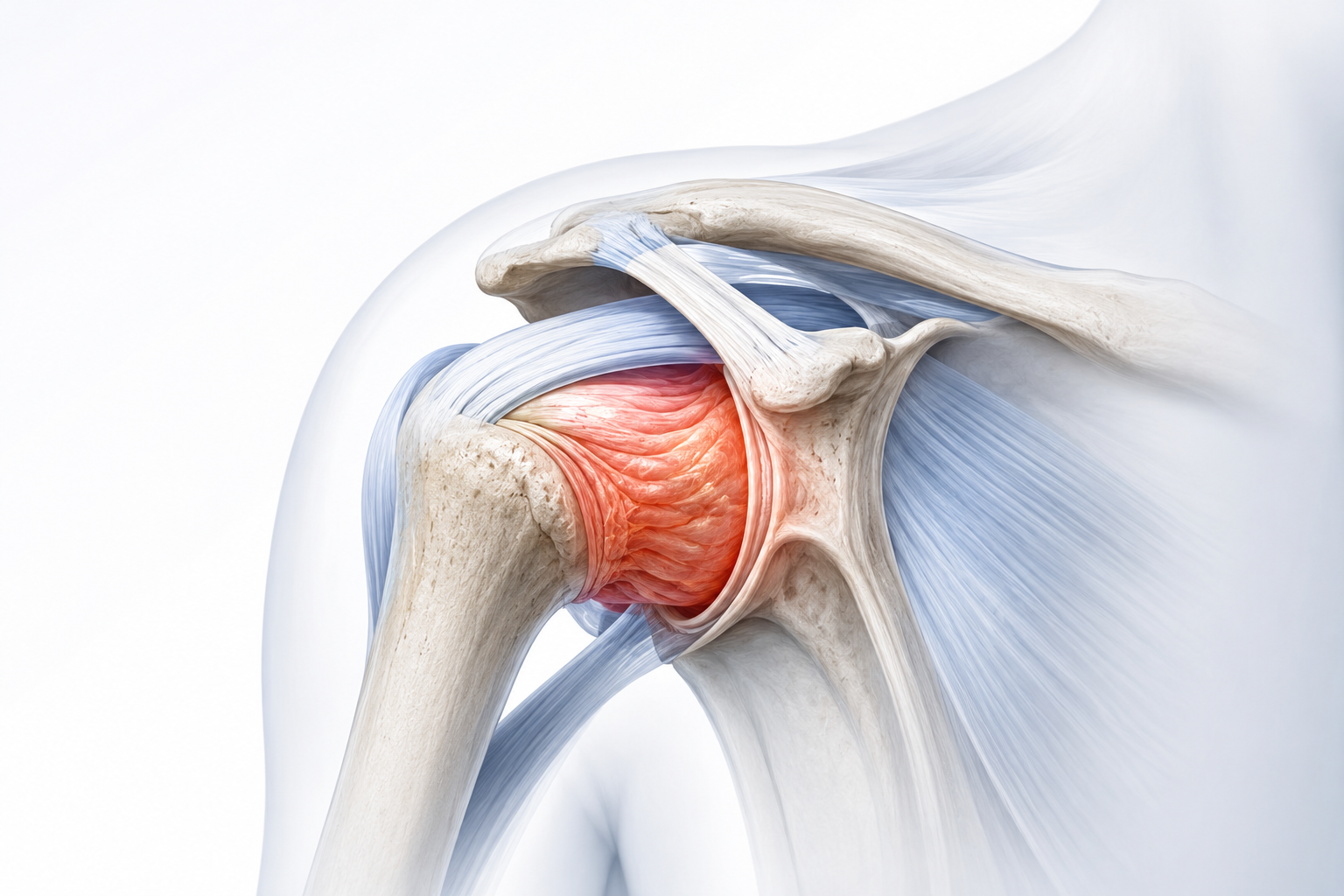
If any of this sounds familiar, you may be living with frozen shoulder, medically known as adhesive capsulitis, a painful, progressive stiffening of the shoulder joint that affects roughly 2-5% of the general population and up to 20% of people with diabetes.
Dr. Ramkinkar Jha, Director of Orthopaedics at CK Birla Hospital, Gurugram, is one of Gurgaon’s most experienced shoulder specialists, with over 1,000 arthroscopy and sports injury procedures performed annually.
Book a Consultation with Dr. Ramkinkar Jha, Leading Orthopaedic Surgeon in Gurgaon
What Is Frozen Shoulder (Adhesive Capsulitis)?
Frozen shoulder (adhesive capsulitis) is a condition in which the shoulder joint capsule, the connective tissue surrounding the joint, becomes thickened, inflamed, and contracted, causing progressive pain and severe restriction of shoulder movement. It is not caused by a structural tear or fracture; the joint itself is anatomically intact, but the capsule has tightened around it like shrunken fabric.
The shoulder is a ball-and-socket joint formed by three bones: the humerus (upper arm), the scapula (shoulder blade), and the clavicle (collarbone). In a healthy shoulder, the surrounding capsule is loose and well-lubricated with synovial fluid, allowing free movement in all directions.
In adhesive capsulitis, a cascade of inflammation causes:
- The capsule thickens and becomes fibrous
- Scar tissue (adhesions) forms between the joint surfaces
- A significant reduction in the lubricating synovial fluid
- Progressive loss of range of motion in all directions, not just one
The result is a shoulder that physically cannot move beyond a certain point, regardless of how much effort you apply.
What Causes Frozen Shoulder?
The most common frozen shoulder cause is idiopathic, meaning it develops without a clear trigger. However, several well-established risk factors significantly increase the likelihood of developing adhesive capsulitis.
- Diabetes: The most consistent risk factor. Frozen shoulder affects 10-20% of people with diabetes compared to 2–5% of the general population.
- Prolonged immobilisation: Keeping the arm still for weeks, following a rotator cuff tear, fracture, stroke, cardiac surgery, or mastectomy, allows the joint capsule to contract from disuse.
- Age and gender: Frozen shoulder almost exclusively affects adults between 40 and 60 years of age. Women are more frequently affected than men, and research from UCSF (2025) is actively investigating whether hormonal changes during perimenopause and menopause contribute to capsule stiffening.
- Thyroid disorders: Both hypothyroidism and hyperthyroidism are independently associated with an elevated risk of adhesive capsulitis.
- Other contributing conditions: Parkinson’s disease, cardiovascular disease, and prolonged psychological stress have also been linked to increased frozen shoulder risk.
Frozen Shoulder Symptoms: What Does It Feel Like?
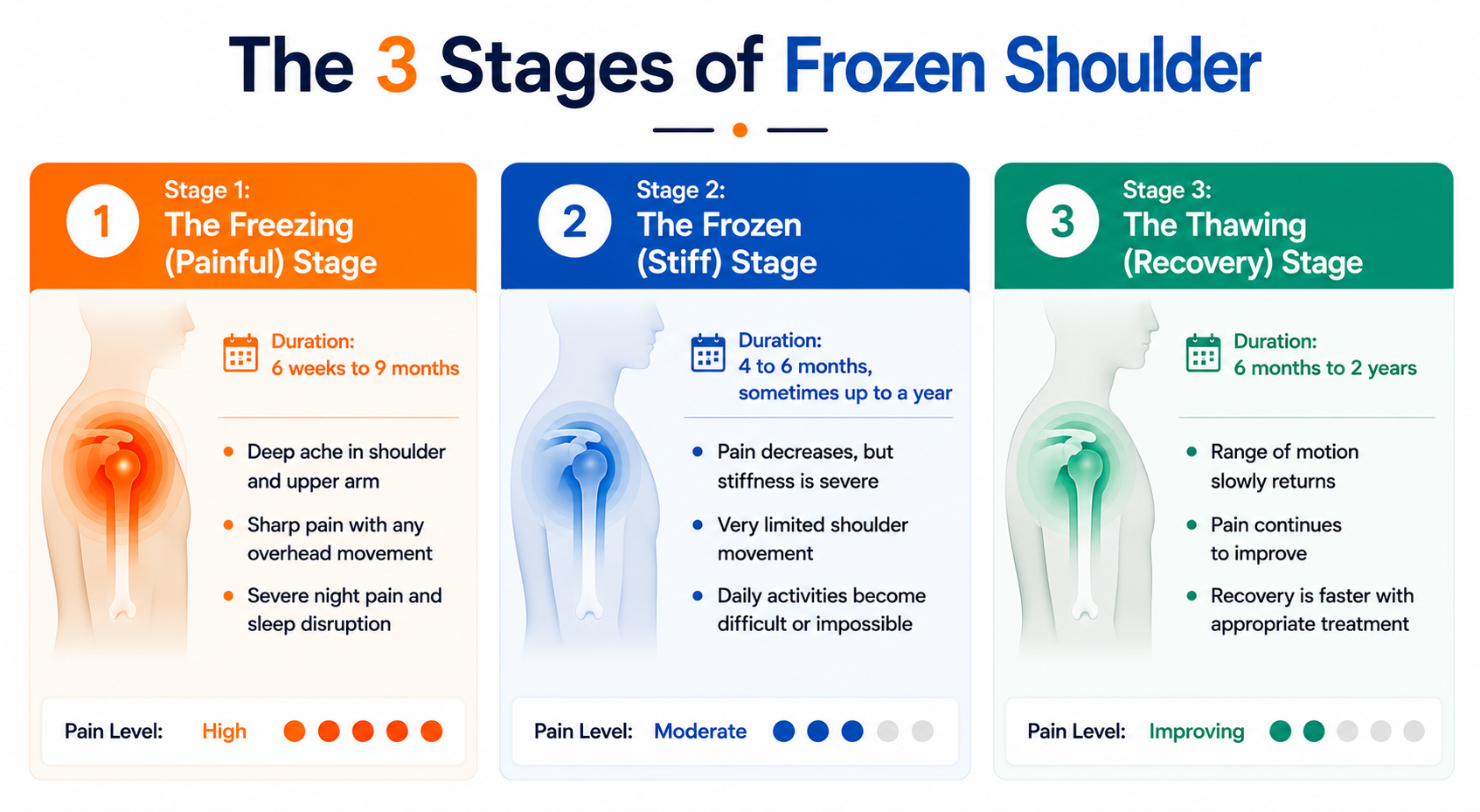
Frozen shoulder symptoms present as a gradual, worsening combination of shoulder pain and stiffness. The defining symptom is restricted movement in all directions, both when you try to move the shoulder yourself and when a doctor attempts to move it for you. Night pain that disturbs sleep, particularly when lying on the affected side, is one of the earliest and most consistent hallmarks.
Symptoms evolve across three distinct stages:
How Is Frozen Shoulder Diagnosed?
Frozen shoulder diagnosis is made through physical examination. The defining diagnostic test is the comparison of active range of motion (you moving the arm) versus passive range of motion (the doctor moving your arm). In frozen shoulder, neither you nor the doctor can move the shoulder freely, as the joint capsule physically limits both. This distinguishes it from conditions like a rotator cuff tear, where the patient cannot lift the arm, but the doctor can.
Dr. Jha conducts a thorough shoulder evaluation that includes:
- Physical examination: Assessment of active and passive range of motion in all planes, forward flexion, abduction, external and internal rotation. A characteristic “hard end-feel” is felt at the limits of passive movement, confirming capsular tightening rather than muscular guarding.
- X-ray: Does not show soft tissue, but is taken to rule out arthritis, bone spurs, and calcification.
- MRI (Magnetic Resonance Imaging): Confirms thickening of the coracohumeral ligament and reduction in joint capsule volume. Critically, MRI helps exclude a concurrent rotator cuff tear, which can coexist with frozen shoulder and requires different management. Learn more about Rotator Cuff Tear Treatment in Gurgaon.
- Ultrasound: Can be used to assess capsular thickness, guide injections, and evaluate associated soft tissue pathology.
Accurate diagnosis is essential. Frozen shoulder is frequently misdiagnosed as rotator cuff tendinitis, bursitis, or shoulder impingement, conditions that require different treatments.
Frozen Shoulder Treatment in Gurgaon
Frozen shoulder treatment depends on the stage of the condition and the severity of your symptoms. The goal is to reduce pain, restore range of motion, and return you to full function as quickly as possible. More than 90% of patients with frozen shoulder recover with non-surgical treatment when managed appropriately.
1. Medications
Oral non-steroidal anti-inflammatory drugs (NSAIDs), such as ibuprofen or naproxen, help manage background pain and reduce inflammation, particularly during the freezing stage. They are most effective when used alongside other interventions, not as a standalone treatment.
2. Corticosteroid Injections
A corticosteroid (cortisone) injection directly into the glenohumeral joint is a cornerstone of treatment during the freezing stage. By delivering a concentrated anti-inflammatory agent to the site of inflammation, it can substantially reduce pain and slow the progression of capsular stiffening. The injection is guided by ultrasound for precision and safety. Most patients experience meaningful pain relief within days to weeks, which then allows physiotherapy to be pursued more effectively.
3. Hydrodilatation (Glenohumeral Joint Distension)
Hydrodilatation is a minimally invasive, day-care procedure in which a controlled volume of sterile saline, corticosteroid, and local anaesthetic is injected into the shoulder joint under ultrasound guidance. The injected fluid creates gentle hydraulic pressure that stretches the contracted capsule and mechanically disrupts adhesions, “ballooning” the joint space from within.
4. Physiotherapy
Physiotherapy is an essential component of frozen shoulder treatment at every stage, though the approach differs depending on the phase. During the freezing (painful) stage, aggressive stretching can worsen inflammation, gentle range-of-motion exercises and pain-modulating techniques are prioritised. During the frozen and thawing stages, progressive stretching, joint mobilisation, and strengthening exercises are used to restore the capsule’s flexibility and shoulder function.
5. Surgical Treatment: When Is It Needed?
Surgery for frozen shoulder is considered when stiffness persists despite 6-12 months of appropriate non-surgical treatment. Two procedures are commonly used, often together.
Manipulation Under Anaesthesia (MUA): With the patient under general anaesthesia and the muscles completely relaxed, the surgeon moves the shoulder through a controlled range of motion to break the tightened scar tissue and stretch the capsule. This immediately improves the range of movement.
Arthroscopic Capsular Release: Through 2-3 tiny keyhole incisions, an arthroscope (camera) is inserted to directly view the joint. Using specialised instruments, the thickened capsule is precisely divided (capsulotomy), the rotator interval is released, and any inflamed tissue is removed (synovectomy).
In many cases, a combined approach is used: arthroscopic capsular release to safely cut tight tissue, followed by gentle manipulation to confirm the full range of movement. A nerve block is placed to provide 12-24 hours of post-operative pain control, and physiotherapy begins the very next day to prevent re-adhesion.
Related procedure: Shoulder Replacement in Gurgaon | Arthroscopy Surgery
Recovery and Rehabilitation After Frozen Shoulder Treatment
Recovery timelines for frozen shoulder vary by treatment type and individual patient factors. For non-surgical treatment, most patients see meaningful improvement within 3-6 months of beginning a structured programme. Surgical patients typically notice immediate improvement in range of motion and return to most daily activities within 4-6 weeks, with ongoing improvement continuing for 3-6 months post-operatively.
General post-treatment milestones:
| Timeframe | What to Expect |
| Days 1-7 (post-injection/hydrodilatation) | Reduced pain; begin physiotherapy |
| Weeks 2-6 | Measurable improvement in range of motion |
| Weeks 4-12 | Return to most daily activities |
| Months 3-6 | Continued strengthening and return to sport/work |
| Post-surgical Day 1 | Begin physiotherapy under guidance |
| Post-surgical Week 1-4 | Significant functional improvement |
| Post-surgical Month 3-6 | Near-complete to full recovery expected |
Recommended home exercises:
- Pendulum stretch: Lean forward, let the arm hang freely, and swing it in small circles using gravity. This mobilises the joint without muscular effort.
- Towel stretch: Hold a towel horizontally behind your back and use the good arm to gently draw the affected arm upward.
- Finger walk: Face a wall, touch it at waist height, and slowly “walk” your fingers upward as far as comfortable. Hold at the top for 10 seconds.
- Cross-body reach: Use the good arm to lift the affected arm at the elbow and draw it gently across the body, stretching the posterior capsule.
Practical lifestyle tips:
- Sleep on your back with a pillow supporting the affected arm in a neutral position; avoid lying on the affected shoulder.
- Apply gentle heat for 10-15 minutes before exercises to warm the tissues.
- Apply ice for 10-15 minutes after exercises to calm any residual inflammation.
Struggling with Joint Pain, Sports Injury, or Arthritis?
Frozen shoulder treatment cost in Gurgaon
The cost of frozen shoulder treatment in Gurgaon depends on the required treatment.
- A corticosteroid injection with ultrasound guidance starts from approximately ₹3,000 to ₹8,000.
- Hydrodilatation (daycare procedure) ranges from approximately ₹15,000 to ₹35,000.
- Arthroscopic capsular release, when required, is covered under the broader arthroscopy pricing; see the Arthroscopy Surgery Cost in Gurgaon page for a detailed breakdown. A written personalised cost estimate is provided after Dr. Jha’s evaluation.
Why Choose Dr. Ramkinkar Jha for Frozen Shoulder Treatment in Gurgaon?
Patients across Gurgaon, Delhi NCR, and internationally choose Dr. Jha for frozen shoulder treatment because of his combination of diagnostic accuracy, technical expertise, and transparent, patient-first communication.
- 20+ years of orthopaedic experience
- Global fellowship training
- Accurate diagnosis first
- Stepped-care philosophy
- Advanced technology is used for the treatment
- Nationally Recognised
- Transparent Costs
Book a Consultation for Frozen Shoulder Treatment in Gurgaon
If you are experiencing persistent shoulder pain, night pain that disrupts your sleep, or a progressive loss of shoulder movement, an expert evaluation is the right next step. Early intervention at any stage shortens the overall recovery journey.
What to bring to your consultation:
- Recent MRI, X-ray, or ultrasound films and reports
- List of current medications
- Details of any previous shoulder treatment or physiotherapy
- Health insurance documents, if applicable
Dr. Jha provides a precise diagnosis, a clear stage-appropriate treatment plan, a realistic recovery timeline, and a transparent cost estimate, all in a single consultation.
Frequently Asked Questions
Does frozen shoulder go away on its own? expand_more
Frozen shoulder can improve over time without treatment, but recovery without intervention typically takes 1.5 to 3 years, and some patients are left with permanent residual stiffness.
Can frozen shoulder come back after treatment? expand_more
Recurrence in the same shoulder is uncommon after complete recovery. However, people who develop frozen shoulder in one shoulder have an estimated 10-20% chance of developing it in the opposite shoulder at some point, particularly if underlying risk factors like diabetes or thyroid disease are not well controlled.
Does physiotherapy alone cure frozen shoulder? expand_more
Physiotherapy is an essential part of frozen shoulder treatment, but it works best when pain is adequately controlled first.
Is frozen shoulder surgery painful? expand_more
Arthroscopic capsular release is performed under general anaesthesia, so there is no pain during the procedure. A nerve block is placed to provide 12–24 hours of post-operative pain relief.
How do I book an appointment with Dr. Ramkinkar Jha? expand_more
You can book a consultation with Dr. Ramkinkar Jha directly through the appointment form on this page. Outstation and international patients may share MRI reports and medical records in advance via the contact form for a preliminary review before their visit.

Dr Ramkinkar Jha's Medical Content Team
Dr. Ramkinkar Jha’s medical content team specialises in producing accurate, clear, and patient-focused orthopaedic content. With a strong foundation in clinical knowledge and expertise in technical writing and SEO, the team translates complex orthopaedic and musculoskeletal information into reliable, easy-to-understand resources. Their work helps patients make informed healthcare decisions while reflecting Dr. Jha’s commitment to high-quality, expert care in joint replacement, trauma, sports injuries, and advanced orthopaedic treatments.
This content is reviewed by Dr. Ramkinkar Jha
Related Blogs
फ्रोजन शोल्डर का इलाज (Frozen Shoulder Ka Ilaj)
सुबह उठते ही कंधे में ऐसी अकड़न कि हाथ ऊपर उठाना मुश्किल हो जाए, या…
Read Article →
Frozen Shoulder – Causes, Symptoms & Modern Treatments – Dr Ramkinkar Jha
Frozen shoulder, also known as adhesive capsulitis, is a condition where the shoulder joint becomes stiff…
Read Article → WhatsApp