
India now performs between 1,50,000 and 2,00,000 knee replacement surgeries every year, yet most patients arrive at their first consultation without a clear picture of the procedure’s cost. They have spent days searching online, calling hospital reception desks, and receiving estimates that vary by lakhs, with no explanation of what drives the difference.
That gap between expectation and reality is one of the most common sources of anxiety for patients already dealing with chronic pain and limited mobility. Cost uncertainty should not be another burden on top of it.
Dr Ramkinkar Jha, Director of Orthopaedics at CK Birla Hospital, Gurugram, follows a policy of written, itemised cost transparency before any procedure is confirmed. With over 20 years of orthopaedic experience and more than 5,000 joint replacements performed, Dr Jha brings precision not only to the operating theatre but to every patient conversation about cost, expectations, and outcomes.
Book a Consultation with Dr. Ramkinkar Jha, Leading Orthopaedic Surgeon in Gurgaon
What Is Knee Replacement Surgery and Why Is It Needed?
The knee is the largest and most load-bearing joint in the human body. It is formed by three bones: the femur (thigh bone), the tibia (shin bone), and the patella (kneecap). A layer of smooth cartilage covers the ends of each bone, allowing frictionless movement. When this cartilage wears away, whether due to osteoarthritis, injury, inflammatory disease, or other causes, bone begins to rub directly against bone. The result is pain, stiffness, swelling, and a progressive loss of the ability to walk, climb stairs, or perform basic daily activities.
Conditions That Lead to Knee Replacement
The most common underlying conditions that eventually require knee replacement surgery include:
- Osteoarthritis:
- Rheumatoid arthritis
- Post-traumatic arthritis
- Severe varus (bow-leg) or valgus (knock-knee) deformity
When Is Knee Replacement Recommended?
Surgery is considered when all of the following conditions are met: the patient has been on a structured course of conservative management for at least six months (physiotherapy, pain medications, injections, and activity modification) without adequate relief; pain is affecting sleep, mobility, and quality of life on a daily basis; and imaging confirms significant joint space narrowing or bone-on-bone contact.
How Much Does Knee Replacement Surgery Cost in Gurgaon?
The single biggest driver of cost variation is implant selection. Standard cemented implants sit at the lower end of the range. Premium posterior-stabilised or high-flex imported implants, which allow greater bending, carry higher costs. Robotic-assisted procedures add a further layer because the technology involved in planning and executing the surgery enables sub-millimetre precision.
Patients who require surgery on both knees can often have both procedures performed in a single admission, reducing combined hospital and anaesthesia costs compared to two separate procedures. Dr Ramkinkar Jha will assess whether simultaneous bilateral replacement is clinically appropriate for your condition.
For revision knee replacement, where a previously implanted joint has failed or worn, costs are higher due to increased surgical complexity, the need for specialised implant components, and longer operating time. Dr Jha is one of Gurgaon’s recognised specialists in revision arthroplasty.
What Does a Knee Replacement Cycle Include?
Understanding what the base procedure fee covers helps you compare costs accurately and avoid unexpected charges later. A standard knee replacement cycle fee includes:
- Pre-surgical clinical assessment: physical examination, assessment of joint range and stability, deformity evaluation
- Diagnostic investigations: weight-bearing X-rays, blood panel, ECG, and anaesthesia fitness review
- Surgeon and anaesthetist fees for the procedure
- Modular operation theatre charges
- Implant and surgical consumables (standard implant)
- Hospital stay: typically three to five days in a standard room
- Post-operative nursing care and wound management
- Inpatient physiotherapy and early mobilisation support
- Standard discharge medications
- Scheduled follow-up consultations per Dr. Ramkinkar Jha’s post-operative protocol
If your clinical assessment indicates any additional procedures, your specialist will discuss these with you and provide a written cost breakdown before anything is added to your plan.
What Factors Affect the Cost of Knee Replacement Surgery?
1. Patient Age, Bone Health, and BMI
Patients with higher BMI or reduced bone density may require additional structural support during surgery, which can affect operating time and implant selection. Younger patients often opt for premium implants given the longer life expectancy required of the joint.
2. Severity of Arthritis and Degree of Deformity
Patients with advanced bow-leg (varus) or knock-knee (valgus) deformity require precise alignment correction as part of the procedure. Complex deformity correction extends operating time and demands greater surgical expertise, both of which are reflected in the cost.
3. Implant Type and Origin
This is the single most significant cost variable. Standard cemented implants offer reliable durability. Premium imported implants, including high-flex designs that allow deeper knee bending and mobile-bearing systems, cost more but may suit patients with higher activity expectations. Dr. Jha selects implants based on your anatomy, age, and lifestyle, not on price alone.
4. Procedure Type: Total vs Partial vs Revision
Total knee replacement covers the full joint surface and is the most common procedure. Partial (unicompartmental) replacement addresses only the damaged compartment and costs less. Revision surgery on a previously implanted joint is the most complex and carries higher costs due to specialised implant systems and extended surgical time.
5. Robotic or Computer-Assisted Navigation
Robotic-assisted knee replacement uses real-time three-dimensional planning to achieve sub-millimetre implant placement. The technology improves alignment accuracy and can extend implant longevity. This precision comes with an additional cost that is priced separately and discussed at consultation.
6. Unilateral vs Bilateral Procedure
Replacing both knees in a single surgical admission (simultaneous bilateral TKR) reduces total hospital and anaesthesia costs compared to two separate procedures. Not all patients are medically suitable for bilateral replacement; Dr. Jha assesses cardiac fitness and overall health before recommending it.
7. Hospital Room Category
Room selection affects the hospital stay component of your total bill. A general ward carries the lowest daily rate; a single deluxe room is higher. The surgical outcome is identical regardless of room choice.
8. Rehabilitation Duration and Post-Discharge Physiotherapy
Structured physiotherapy is essential for a successful recovery. Inpatient physiotherapy is included in the base cycle fee. Post-discharge physiotherapy sessions are billed separately and vary by duration and frequency. Dr Jha’s team will build a rehabilitation plan matched to your recovery pace.
Knee Replacement Surgery Cost Breakdown by Type
The table below provides indicative Gurgaon market ranges for each procedure type.
| Procedure Type | Indicative Gurgaon Market Range | What Drives the Cost |
| Standard Total Knee Replacement (per knee) | ₹3,00,000 – ₹3,75,000 | Standard cemented implant, routine hospital stay |
| Partial (Unicompartmental) Knee Replacement | ₹1,75,000 – ₹2,50,000 | Single-compartment damage only; smaller implant, shorter surgery |
| Premium Implant / High-Flex Knee Replacement | ₹4,00,000 – ₹5,50,000 | Imported premium or high-flex implant for greater bend angle and durability |
| Robotic-Assisted Knee Replacement | ₹4,50,000 – ₹6,50,000+ | Sub-millimetre 3D planning; advanced technology; premium implant typically selected |
| Bilateral Knee Replacement (both knees, single admission) | ₹6,00,000 – ₹9,00,000+ | Two implants; longer OT time; combined hospital stay savings offset part of cost |
| Revision Knee Replacement | ₹5,00,000 – ₹8,00,000+ | Specialised revision implant components; complex surgery to address implant failure or loosening |
These are indicative Gurgaon market ranges based on current clinical cost data. Your personalised cost estimate, specific to your implant choice and clinical requirements, is confirmed in writing at consultation with Dr. Ramkinkar Jha.
Knee Replacement Success Rate by Age
Patient age shapes two connected decisions: whether the timing of surgery is right, and which implant will deliver the best long-term result for that individual’s activity level and bone quality.
| Age Group | Typical Success Rate | Implant Longevity Outlook | Key Consideration |
| Under 55 | 90%+ short-term outcomes | Higher revision risk over a 20+ year lifespan | Premium/high-flex implant is often preferred; thorough non-surgical options review first |
| 55 to 64 | 92%+ excellent outcomes | Good longevity with premium implants; 15–20 years likely | Optimal window; robotic assistance improves alignment for active patients |
| 65 to 74 | 95%+ consistent outcomes | Implant typically outlasts demand; 20+ years in most cases | Most common age group; best overall risk-benefit ratio |
| 75 and above | 95%+ with appropriate fitness screening | Very low revision risk; implant longevity exceeds life expectancy in most cases | Cardiac and metabolic fitness review is critical; standard implants are well suited |
Struggling with Joint Pain, Sports Injury, or Arthritis?
Knee Replacement Process at Dr. Ramkinkar Jha, Gurgaon
Each stage of the process has a clinical purpose and a cost implication. Understanding the sequence helps you know exactly what you are paying for at every step.
Step 1: Initial Consultation and Clinical Assessment
Dr. Jha examines your knee in person, assessing range of motion, joint stability, gait, and deformity. He reviews your medical history, current medications, and pain pattern. This consultation is where the indication for surgery is confirmed and the most suitable procedure type is identified.
Step 2: Pre-Surgical Investigations
Weight-bearing X-rays of both knees and the full lower limb are the most important imaging study. Blood panel, ECG, and chest X-ray confirm medical fitness for surgery. In complex deformity or revision cases, a CT scan may be added for three-dimensional planning. All results are reviewed before the surgical date is confirmed.
Step 3: Anaesthesia and Fitness Review
The anaesthesia team meets you before surgery to discuss options (spinal anaesthesia is standard for most knee replacements), review any cardiac or metabolic risk factors, and confirm the pain management plan for your hospital stay.
Step 4: Surgery Day
The procedure takes approximately 90 minutes for a unilateral TKR. Dr. Jha removes the damaged cartilage and a thin layer of underlying bone from the femur and tibia, prepares the bone ends, and positions the implant components with precision alignment. A medical-grade polyethene bearing surface is placed between the metal components to recreate smooth joint movement. Where robotic assistance is used, the system guides each surgical step against a pre-planned three-dimensional model of your knee.
Step 5: Post-Operative Care and Inpatient Physiotherapy
Most patients begin standing with support within 24 to 48 hours of surgery. The physiotherapy team starts gentle movement exercises on day one. Wound care, pain management, and clot prevention (anticoagulation and compression stockings) are managed as standard. Blood pressure, fluid balance, and the operated knee are monitored throughout the stay.
Step 6: Discharge and Home Recovery Plan
Discharge is typically on day three to five, once the wound is stable, the patient is walking independently with a frame, and pain is adequately controlled on oral medications. You receive a written discharge summary, implant certificate, medication schedule, and a structured home exercise programme before leaving.
Step 7: Follow-Up and Long-Term Monitoring
Scheduled follow-up appointments are built into your care plan. The first review is typically at two weeks (wound check), followed by six weeks, three months, and one year. Long-term implant monitoring is recommended at regular intervals. Patients who return home to another city or country are supported via telemedicine follow-up, where Dr. Jha reviews imaging, progress, and any concerns remotely.
Meet the Specialist Behind Your Knee Replacement
Choosing a surgeon is the most consequential decision in your knee replacement. Technical precision, implant knowledge, and experience with complex cases are not interchangeable between surgeons.
Dr. Ramkinkar Jha — Director, Department of Orthopaedics, CK Birla Hospital, Gurugram
Patients facing knee replacement have one central question: who can I trust to get this right? The answer should be built on verifiable credentials, not marketing claims. Here is what the clinical record shows.
-
5,000+ Joint Replacements and 12,000+ Orthopaedic Surgeries
Volume and outcome consistency are directly correlated in joint replacement surgery. Dr. Jha has performed more than 5,000 joint replacement procedures and over 12,000 orthopaedic surgeries in total, including complex primary and revision knee replacements that require a level of expertise found at very few centres in Gurgaon.
-
Trained at AIIMS New Delhi and the University of Edinburgh
Dr. Jha’s training foundation combines India’s most rigorous orthopaedic programme (AIIMS New Delhi) with post-graduate surgical training in the UK (FRCS, University of Edinburgh) and fellowships across Singapore, Hong Kong, Switzerland, Malaysia, and the Asia-Pacific region. This translates to global best practice applied in a Gurgaon context.
-
Expert in Complex Deformity Correction and Revision Surgery
Patients with severe bow-leg or knock-knee deformity, those who have had a previous knee replacement that has failed, and those with post-traumatic arthritis from old injuries represent the most challenging cases in knee arthroplasty. Dr. Jha’s specialist expertise in these areas means patients who have been told their case is too complex elsewhere have a reliable option in Gurgaon.
-
Written Cost Transparency Before Every Procedure
Every patient receives a written, itemised cost estimate before any procedure is confirmed. There are no verbal assurances and no surprises at discharge. This approach reflects Dr. Jha’s broader commitment to informed consent: patients who understand their treatment make better decisions and recover with greater confidence.
-
International Patient Programme with Tele-Follow-Up
Dr. Jha has treated patients from across India and internationally. A structured international patient programme handles Medical Visa support, remote pre-operative assessment, single-coordinator logistics, and post-discharge tele-follow-up for patients returning home after surgery.
Knee Replacement Surgery for International Patients in Gurgaon
Gurgaon is one of India’s most established medical travel destinations. Its proximity to Indira Gandhi International Airport (IGI), the concentration of internationally trained surgeons, and the significant cost advantage over Western healthcare systems make it the first choice for patients from the UK, UAE, USA, East Africa, Central Asia, and beyond.
Why International Patients Choose Gurgaon for Knee Replacement?
A standard total knee replacement in the UK under private care typically costs between GBP 10,000 and GBP 16,000. In the UAE, costs range from AED 40,000 to AED 80,000. The same procedure in Gurgaon, performed by a surgeon with equivalent or superior training, costs a fraction of those figures, without compromising on implant quality, sterile protocol, or post-operative care standards.
Dr. Ramkinkar Jha operates with internationally benchmarked clinical protocols. Trained at AIIMS New Delhi and the University of Edinburgh, holding FRCS (UK) qualification and fellowships across multiple global orthopaedic centres, Dr. Jha provides every patient with the same evidence-based surgical approach, with additional logistical support tailored to the demands of travelling for surgery.
Cost of Knee Replacement Surgery for International Patients
| Procedure | INR Range | USD (approx.) | GBP (approx.) | AED (approx.) |
| Standard Total Knee Replacement (per knee) | ₹3,00,000–3,75,000 | USD 3,500–4,500 | GBP 2,750–3,500 | AED 12,800–16,500 |
| Robotic-Assisted Knee Replacement | ₹4,50,000–6,50,000+ | USD 5,400–7,800+ | GBP 4,200–6,100+ | AED 19,800–28,600+ |
| Bilateral Knee Replacement | ₹6,00,000–9,00,000+ | USD 7,200–10,800+ | GBP 5,600–8,400+ | AED 26,400–39,600+ |
Currency conversions are approximate and based on current rates. Your personalised written estimate in INR and your preferred currency is confirmed at consultation. Exchange rate fluctuations may affect the final figure in your home currency.
-
Medical Visa (M Visa) Support
International patients travelling to India for knee replacement require a Medical Visa (M Visa). Dr Jha’s team issues the formal Medical Invitation Letter from the treating hospital, which is the primary document required for your M Visa application. The letter includes the patient’s name, treating doctor, hospital details, procedure to be performed, and estimated duration of stay.
M Visas are typically issued for up to one year with multiple-entry facility, allowing patients to return for follow-up if required. One attendant is permitted to travel on a companion visa.
-
Pre-Travel Planning and Remote Pre-Operative Monitoring
You do not need to arrive in Gurgaon before you are medically ready for surgery. Dr. Jha offers pre-operative telemedicine consultations where you can share X-rays, MRI reports, and blood results for review. This allows the clinical assessment and provisional surgical plan to be completed remotely before you travel.
A detailed pre-travel checklist, including which investigations to complete locally, what to bring, and how to plan your hospital admission date, is provided after your remote consultation. Most international patients are admitted for surgery within one to two days of arriving in Gurgaon.
-
Your Dedicated International Patient Coordinator
Every international patient is assigned a single dedicated coordinator from the point of first contact. Your coordinator handles all logistics: cost queries and written estimates, hospital admission paperwork, and accommodation recommendations. You will have your coordinator’s direct contact details from day one. There is no navigating through hospital switchboards or waiting for callbacks. One point of contact, responsive and informed, for the entire duration of your care.
To reach the international patient team directly: Call or WhatsApp +91-9599533443 | Email: orthopedicshub@gmail.com | Website: drramkinkar.com
-
Home Country Insurance Reimbursement
Many international patients carry private health insurance in their home country that includes reimbursement for overseas medical treatment. Dr. Jha’s team provides the full documentation set required for reimbursement claims, including:
- Itemised hospital bill with procedure and implant codes
- Surgeon’s operative notes and discharge summary
- Implant certificate with manufacturer details and model numbers
- Pre-operative investigation reports and imaging
- Post-operative medication and physiotherapy records
We recommend checking your policy’s overseas treatment clause before travel. Your coordinator can assist in preparing a pre-authorisation request to your insurer if required.
-
Tele-Follow-Up After You Return Home
Recovery from knee replacement extends for six to twelve months. Returning home after the initial hospital stay does not mean losing access to your surgeon. Dr. Jha conducts structured remote follow-up appointments via telemedicine at two weeks, six weeks, three months, and one year post-surgery.
Next Steps: Getting a Personalised Cost Estimate
Three things are worth keeping in mind as you take the next step. First, knee replacement costs in Gurgaon range widely depending on implant choice and procedure type, but that range narrows significantly once your clinical assessment is complete. A written estimate removes all ambiguity.
Second, the surgeon you choose determines not just the cost, but the outcome. Dr. Ramkinkar Jha’s 20+ years, 5,000+ joint replacements, FRCS (UK) qualification, and robotic surgical capability represent a standard of care that justifies the investment. Third, you have more financial options than you may realise: private insurance, CGHS, ESIC, Ayushman Bharat, EMI plans, and tax provisions all reduce the out-of-pocket burden for eligible patients.
If you are considering knee replacement and want clarity on the total cost, the next step is to speak directly with Dr. Jha. Book a consultation to receive a personalised cost estimate tailored to your condition, implant selection, and surgical approach.
Frequently Asked Questions: Knee Replacement Surgery Cost in Gurgaon
- How much does knee replacement surgery cost in Gurgaon?
Knee replacement surgery in Gurgaon costs between approximately ₹3,00,000 and ₹3,75,000 per knee for a standard total knee replacement with a reliable cemented implant and routine hospital stay. Premium implant and robotic-assisted procedures range from ₹4,00,000 to ₹6,50,000 or more per knee. Bilateral replacement of both knees in a single admission typically costs between ₹6,00,000 and ₹9,00,000. Your personalised written estimate is confirmed at consultation with Dr. Ramkinkar Jha.
- What is included in the knee replacement surgery fee?
The base knee replacement cycle fee includes pre-surgical assessment, diagnostic investigations, surgeon and anaesthetist fees, modular OT charges, implant and surgical consumables, hospital stay of three to five days in a standard room, post-operative nursing and wound care, inpatient physiotherapy, standard discharge medications, and scheduled follow-up consultations. Any additional procedures are discussed and priced in writing before they are added to your plan.
- Which factors increase the cost of knee replacement?
The key cost drivers are implant type (premium or imported high-flex implants cost more than standard cemented options), surgical approach (robotic-assisted surgery carries a higher cost than conventional surgery), procedure complexity (revision surgery or significant deformity correction adds to operating time and cost), bilateral vs unilateral replacement, and hospital room category. Dr. Jha discusses each variable transparently at the consultation.
- Is knee replacement covered under health insurance in India?
Yes. Most private health insurance policies cover knee replacement as an inpatient surgical procedure, typically after a waiting period of two to four years. Government schemes including CGHS (up to ₹2,00,000 for eligible beneficiaries), ESIC (for organised sector employees), and Ayushman Bharat PM-JAY (full coverage for eligible families; ₹5 lakh annual cover for citizens aged 70+ under the Ayushman Vay Vandana Card) all provide coverage for knee replacement surgery. The hospital’s insurance desk will verify your cashless eligibility before admission.
- What is the success rate of knee replacement surgery in India?
Knee replacement surgery in India carries an overall success rate of 90% to 98% when performed by experienced surgeons using modern implants with structured rehabilitation. More than 90% of implants continue to function well at 15 years, and around 82% remain functional at 25 years. Age at surgery influences long-term revision risk: patients aged 65 to 74 have the best overall risk-benefit ratio, with revision risk below 7%.
- How long does recovery take after knee replacement surgery?
Most patients begin walking with support within 24 to 48 hours of surgery. Hospital stay is typically three to five days. By six weeks, most patients are walking independently and managing stairs. Full recovery, including maximal strength and range of motion, takes between six and twelve months. Recovery is closely guided by Dr. Jha’s physiotherapy protocol at every stage.
- Is Ayushman Bharat applicable for knee replacement?
Yes. Both partial and total knee replacement are covered under Ayushman Bharat PM-JAY for eligible beneficiaries. The scheme covers surgery, implants, hospitalisation, and post-operative care with no additional billing allowed at empanelled hospitals. Since late 2024, all Indian citizens aged 70 and above qualify for PM-JAY benefits regardless of income. Eligibility is verified via Aadhaar-based e-KYC on the official PM-JAY portal at beneficiary.nha.gov.in.
- I am an international patient. What does knee replacement surgery cost, and how do I plan my trip?
International patients can expect total costs for a standard knee replacement in Gurgaon of approximately USD 3,500 to USD 4,500 per knee (GBP 2,750 to GBP 3,500; AED 12,800 to AED 16,500). Robotic-assisted and bilateral procedures are higher. Dr Jha’s team provides pre-operative telemedicine consultations so your assessment is complete before you travel. A Medical Visa (M Visa) invitation letter is issued on request. Each international patient has a single dedicated coordinator who manages cost queries, hospital admissions, accommodation, and airport transfers. Full documentation for home-country insurance reimbursement is provided at discharge. Structured tele-follow-up continues after you return home. Contact: +91-9599533443 or orthopedicshub@gmail.com.

Dr Ramkinkar Jha's Medical Content Team
Dr. Ramkinkar Jha’s medical content team specialises in producing accurate, clear, and patient-focused orthopaedic content. With a strong foundation in clinical knowledge and expertise in technical writing and SEO, the team translates complex orthopaedic and musculoskeletal information into reliable, easy-to-understand resources. Their work helps patients make informed healthcare decisions while reflecting Dr. Jha’s commitment to high-quality, expert care in joint replacement, trauma, sports injuries, and advanced orthopaedic treatments.
This content is reviewed by Dr. Ramkinkar Jha
Related Articles
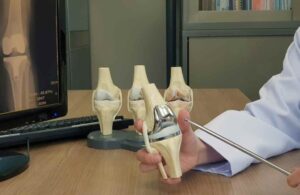
Knee Replacement Surgery – What Patients Should Expect – Dr Ramkinkar Jha
Knee replacement surgery has transformed the lives of millions of patients suffering from severe arthritis and…
Read Article →
Frozen Shoulder – Causes, Symptoms & Modern Treatments – Dr Ramkinkar Jha
Frozen shoulder, also known as adhesive capsulitis, is a condition where the shoulder joint becomes stiff…
Read Article → WhatsApp