
Elbow Replacement Surgery in Gurgaon
Living with severe elbow pain can make even the simplest tasks, like combing your hair, lifting a cup of coffee, or getting dressed, feel impossible. The elbow is a complex hinge joint that allows you to bend, straighten, and rotate your arm. When arthritis or severe injury damages this joint, stiffness and pain can severely impact your quality of life. When medications and physiotherapy stop working, Elbow Replacement surgery offers a reliable solution to eliminate pain and restore function.
At the forefront of joint care in NCR, Dr. Ramkinkar Jha is a leading Elbow Replacement specialist in Gurgaon. With extensive experience in complex joint reconstruction, he provides personalized, evidence-based care to help patients regain the freedom of movement.
This page covers everything you need to know about Elbow Replacement in India, including causes, procedure details, recovery, risks, and costs.
Book a Consultation with Dr. Ramkinkar Jha, Leading Orthopaedic Surgeon in Gurgaon
Understanding Elbow Replacement Surgery
Elbow Replacement, medically known as Total Elbow Arthroplasty, is a surgical procedure where the damaged parts of the humerus (upper arm bone) and the ulna (forearm bone) are removed and replaced with artificial components (prosthetics). These components are made of high-quality metal and medical-grade plastic, linked together to mimic the natural hinge movement of the elbow.
While less common than knee or hip surgeries, Elbow Replacement in Gurgaon is a highly successful procedure, particularly for patients suffering from inflammatory arthritis. The primary goal of the surgery is to relieve disabling pain and improve the range of motion in the arm.
How Elbow Joint Replacement Works
The elbow joint functions as a hinge. In a healthy elbow, smooth cartilage covers the ends of the bones, allowing them to glide easily. In conditions like Rheumatoid Arthritis or after severe trauma, this cartilage wears away, leading to bone-on-bone friction.
During the surgery:
- The damaged bone surfaces are removed.
- Metal stems are inserted into the hollow centers of the arm bones.
- A hinge mechanism connects the two stems to provide stability and movement.
This advanced treatment options for elbow arthritis restores the joint’s function, allowing patients to bend and rotate their arm without pain.
When is Elbow Replacement Surgery Needed?
This surgery is generally reserved for patients whose quality of life is severely affected and who have not found relief through conservative treatments like rest, medication, or steroid injections. Dr. Jha typically recommends Elbow Replacement for the following conditions:
This is the most common reason for elbow replacement. Elbow arthritis treatment is often required because the immune system attacks the joint lining, destroying cartilage and causing severe pain and stiffness.
While less common in the elbow than the knee, age-related wear and tear can degrade the cartilage, causing grinding and pain.
- Post-Traumatic Arthritis
Arthritis can develop years after a severe elbow fracture or dislocation, leading to joint damage.
- Severe Distal Humerus Fractures
In older patients where the bone is shattered and difficult to fix with plates and screws, Elbow Replacement is often the best treatment for elbow arthritis and complex fractures to restore function immediately.
- Failed Previous Elbow Surgery
If earlier surgeries (such as fixation or partial replacement) fail to relieve pain or restore movement, revision elbow replacement may be considered.
- Severe Deformity or Joint Instability
When the elbow becomes severely unstable or deformed, affecting basic movements like bending or lifting light objects.
- Complex or Irreparable Elbow Fractures
Severe fractures—especially in elderly patients with weak bones—may not heal properly. When reconstruction is not possible, elbow replacement provides better stability and function.
Symptoms That Indicate You May Need Surgery
If you are unsure whether you require surgery, look for these signs. Knowing how to diagnose elbow arthritis early can prevent further disability:
- Persistent Pain: Deep ache in the elbow that continues even when you are resting or sleeping.
- Restricted Motion: Inability to fully bend or straighten the arm.
- Instability: The elbow feels like it might “pop out” or give way.
- Locking: The joint gets stuck in one position.
- Daily Difficulty: Trouble bringing a fork to your mouth or buttoning a shirt.
If these symptoms persist, consulting an Elbow Replacement doctor in Delhi or Gurgaon is the next step.
Types of Elbow Replacement Surgery
Dr. Jha evaluates every patient individually to determine the best surgical approach. The main types of Elbow Replacement include:
Total Elbow Replacement
This is the most commonly performed and standard procedure for severe elbow arthritis or extensive joint damage. In this surgery, the damaged surfaces of both the upper arm bone (humerus) and the forearm bone (ulna) are removed and replaced with artificial metal-and-polyethylene components.
Most modern implants are linked (semi-constrained). This means the humeral and ulnar components are connected, providing built-in stability and reducing the risk of dislocation—especially important when the natural ligaments are weak or damaged.
Common indications:
- Advanced Rheumatoid Arthritis
- Severe Osteoarthritis
- Complex distal humerus fractures in elderly patients
- Post-traumatic arthritis
The primary goal of the total elbow replacement is to relieve pain, restore functional movement, and improve quality of life.
Partial Elbow Replacement (Hemiarthroplasty)
In specific cases, only one part of the joint (usually the head of the humerus or radial head) is replaced. Partial replacement is more commonly used for fracture management rather than long-standing arthritis. It helps preserve healthy bone and soft tissue while restoring joint alignment and stability.
Best suited for:
- Younger patients with isolated joint damage
- Specific fracture patterns where the remaining joint surfaces are healthy
Revision Elbow Replacement
Over time, an artificial elbow joint may wear out, loosen, or become unstable. In such cases, a revision elbow replacement is required.
Revision surgery for elbow joint involves:
- Removing the old implant
- Treating bone loss (if present)
- Inserting new, often more specialized components
Revision procedures are technically more complex and require detailed preoperative planning.
Common reasons for revision:
- Implant loosening
- Infection
- Polyethylene wear
- Periprosthetic fracture
Minimally Invasive & Muscle-Sparing Techniques
Whenever possible, Dr. Jha utilizes advanced, minimally invasive and muscle-sparing techniques to reduce soft tissue damage. These approaches aim to:
- Minimize postoperative pain
- Reduce blood loss
- Lower complication risk
- Promote faster recovery and rehabilitation
Dr. Jha utilizes minimally invasive treatment for elbow arthritis techniques whenever possible to spare muscles and speed up healing.
Diagnosis and Preparation for Elbow Replacement
Before surgery, a thorough evaluation is necessary. The treatment guidelines for elbow arthritis involve:
- Physical Exam: Checking range of motion, stability, and muscle strength.
- X-Rays: To visualize the extent of bone loss and joint space narrowing.
- Blood Tests: To ensure you are fit for anesthesia and to rule out active infection.
Step-by-Step Elbow Replacement Procedure
Understanding how Elbow Replacement works can reduce anxiety about the surgery. The procedure typically takes 1.5 to 2 hours:
- Step 1: Anesthesia: General anesthesia is administered so you sleep through the surgery.
- Step 2: Incision: An incision is made at the back of the elbow.
- Step 3: Removing Damaged Bone: The surgeon carefully removes the damaged joint surfaces and prepares the bone canals.
- Step 4: Implant Placement: The metal stems are cemented into the bones and connected with a locking pin.
- Step 5: Closure: The incision is closed with sutures, and a padded dressing and splint are applied to protect the arm.
Struggling with Joint Pain, Sports Injury, or Arthritis?
Recovery After Elbow Replacement
The recovery after Elbow Replacement is a gradual process that prioritizes protecting the new joint while regaining movement.
Hospital Stay
Most patients stay in the hospital for 2 to 3 days. Pain is managed with medication.
Rehabilitation Timeline
- Week 1-2: The arm is kept in a splint. Gentle finger and wrist exercises begin to reduce swelling.
- Week 2-6: The splint is removed for gentle range-of-motion exercises guided by a physiotherapist.
- Month 3: Most patients regain functional range of motion and can perform light daily activities.
Long Term Restrictions
Unlike hip or knee replacements, the elbow is a smaller joint. To ensure the longevity of the implant, patients are usually advised to avoid lifting heavy objects (typically limited to 2–4 kg) for the rest of their lives. This prevents implant loosening.
The recovery time after Elbow Replacement varies, but most patients feel significantly better within 3 months.
Risks and Complications
While generally safe, it is important to understand the risks and complications of Elbow Replacement. Dr. Jha takes every precaution to minimize these:
- Infection: A risk in any surgery, treated with antibiotics.
- Implant Loosening: Over many years, the bond between the metal and bone may weaken.
- Nerve Injury: The ulnar nerve (funny bone nerve) runs close to the surgery site. Temporary numbness can occur but usually resolves.
- Triceps Weakness: As the muscle is moved during surgery, rehabilitation is needed to restore strength.
Patients frequently ask how safe is Elbow Replacement? With an experienced surgeon and modern antibiotics, the success rate of Elbow Replacement is high, providing 10–15 years or more of relief.
Cost of Elbow Replacement Surgery in Gurgaon
India is a global hub for affordable, high-quality orthopaedic care. The cost of elbow arthritis treatment in India is a fraction of the price in Western countries.
The Elbow Replacement cost in India typically ranges between ₹2.5 Lakhs to ₹5.5 Lakhs ($3,000 – $6,500 USD).
Factors affecting elbow replacement cost in India:
- Type of implant used (Imported vs. Indigenous).
- Hospital category and room choice.
- Complexity of the case (primary vs. revision).
- Pre-surgery investigations.
Precise estimation of elbow replacement is only confirmed after the thorough medical evaluation of your case.
Why Choose Dr. Ramkinkar Jha for Elbow Replacement in Gurgaon?
Choosing the best doctor for Elbow Replacement in Gurgaon is critical for a good outcome. Dr. Ramkinkar Jha is trusted for:
- Expertise: Specializes in upper limb and complex joint replacement surgeries.
- Advanced Techniques: Uses the latest cemented and linked implant systems for maximum stability.
- Comprehensive Care: From diagnosis to post-op rehabilitation, he guides you through every step.
- Reputation: Recognized as a top Elbow Replacement specialist in Gurgaon with a track record of successful surgeries.
- Top Facilities: Operates at the Best hospitals for elbow arthritis treatment in Gurgaon, ensuring sterile environments and advanced ICU support.
International Patients – Elbow Replacement Treatment in India
Patients from across the world choose Elbow Replacement in India because of the combination of world-class surgical expertise and affordability. Dr. Jha treats many international patients, offering:
- Cost Savings: Elbow Replacement for international patients in India costs 60-70% less than in the US or UK.
- No Waiting Lists: Immediate scheduling of surgery.
- Full Support: Assistance with medical visas, airport transfers, and accommodation.
- Post-Op Follow-up: Virtual consultations after you return home.
This makes it clear why choose India for Elbow Replacement, you receive premium care without the premium price tag.
Schedule Your Appointment Today
Don’t let elbow pain limit your mobility. If you are looking for the best Elbow Replacement in Delhi or Gurugram, contact Dr. Ramkinkar Jha today.
Frequently Asked Questions
What are the benefits of elbow replacement surgery? expand_more
The main benefits of elbow replacement surgery include significant pain relief and improved elbow movement, helping patients perform daily activities more comfortably.
Are there any side effects of elbow replacement surgery? expand_more
Some patients may experience temporary swelling, stiffness or numbness around the elbow or fingers, which usually improves with rehabilitation and physiotherapy.
What happens if severe elbow arthritis is left untreated? expand_more
Untreated elbow arthritis can lead to worsening pain, reduced joint movement, stiffness and difficulty performing routine activities.
Is any preparation needed before elbow replacement surgery? expand_more
Yes. Preparation may include blood tests, imaging scans, medication review and medical fitness evaluation before surgery.
How can I book an appointment with Dr. Ramkinkar Jha for elbow replacement surgery in Gurgaon? expand_more
You can book a consultation with Dr. Ramkinkar Jha through the appointment form on this page. Patients may also share their X-rays, MRI scans and medical reports for an initial evaluation before visiting.

Dr Ramkinkar Jha's Medical Content Team
Dr. Ramkinkar Jha’s medical content team specialises in producing accurate, clear, and patient-focused orthopaedic content. With a strong foundation in clinical knowledge and expertise in technical writing and SEO, the team translates complex orthopaedic and musculoskeletal information into reliable, easy-to-understand resources. Their work helps patients make informed healthcare decisions while reflecting Dr. Jha’s commitment to high-quality, expert care in joint replacement, trauma, sports injuries, and advanced orthopaedic treatments.
This content is reviewed by Dr. Ramkinkar Jha
Related Blogs
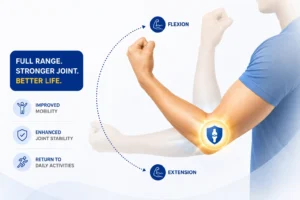
Successful Elbow Reconstruction in a Complex Terrible Triad Injury
A young man from Iraq boarded a flight to India carrying more than just travel…
Read Article →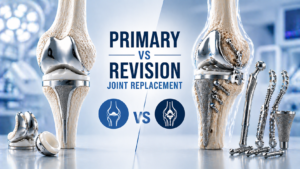
Primary vs Revision Joint Replacement: What Patients Need to Know
Joint replacement surgery has given millions of people their lives back, no more waking up…
Read Article →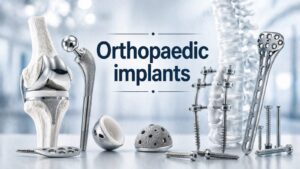
Orthopaedic Implants: Types, Benefits, Costs & What Patients Must Know
Orthopaedic implants are biocompatible devices used to replace, stabilise, or support bones and joints affected…
Read Article → WhatsApp