
Periprosthetic Joint Infection (PJI) Treatment in Gurgaon
Many patients seeking Periprosthetic Joint Infection Treatment in Gurgaon initially assume that pain, stiffness or swelling is a normal part of post-surgical recovery rather than a possible sign of infection. However, persistent pain, swelling, redness, wound drainage, or fever after joint replacement surgery are often not a normal part of recovery and instead may be early signs of joint replacement infection.
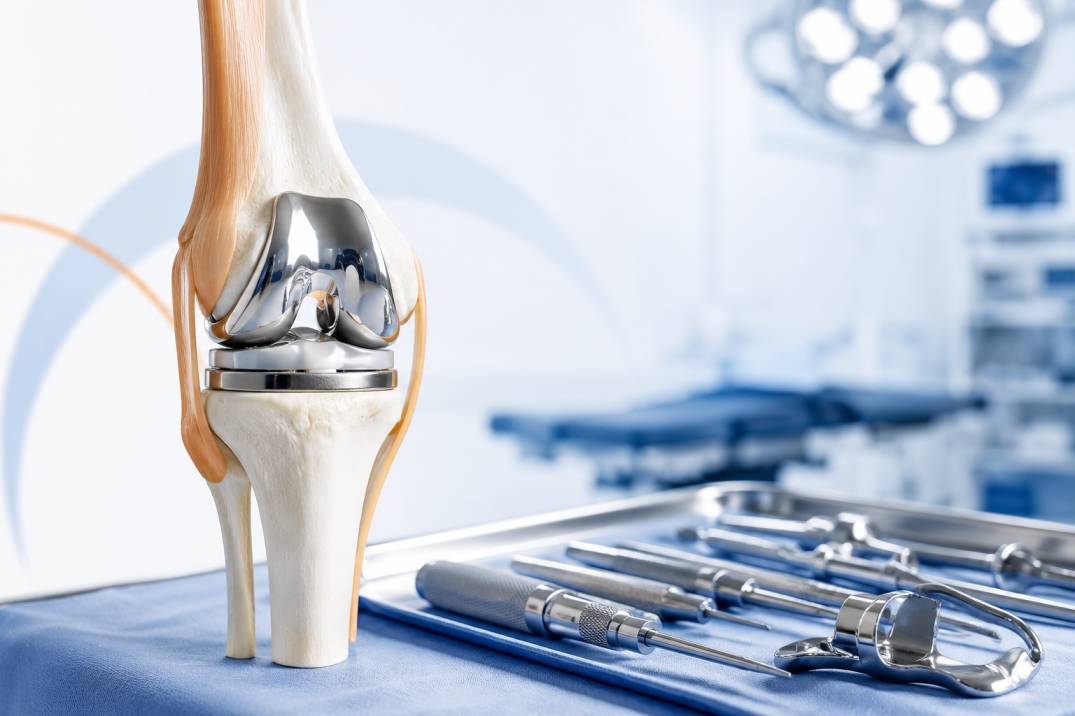
Infection around an artificial joint is a serious condition that could get even worse if not treated on time. The good news, however, is that it is a treatable complication when diagnosed early and managed correctly.
Dr. Ramkinkar Jha, Director, Department of Orthopaedics at CK Birla Hospital, Gurugram, has extensive experience in managing complex joint replacement complications, including infected knee and hip prostheses requiring staged reconstruction and revision procedures.
Book a Consultation with Dr. Ramkinkar Jha, Leading Orthopaedic Surgeon in Gurgaon
What Is Periprosthetic Joint Infection?
Periprosthetic Joint Infection or artificial joint infection, occurs when bacteria or other microorganisms infect the tissues surrounding a joint implant after knee replacement surgery or hip replacement surgery.
PJI is considered one of the most serious complications of joint replacement surgery. Studies in orthopaedic literature suggest that it occurs in a small percentage of cases, but its impact on mobility and quality of life can be significant if not addressed early.
It can occur right after surgery or even months to years later for a short (acute infection) or long period of time (chronic infection).
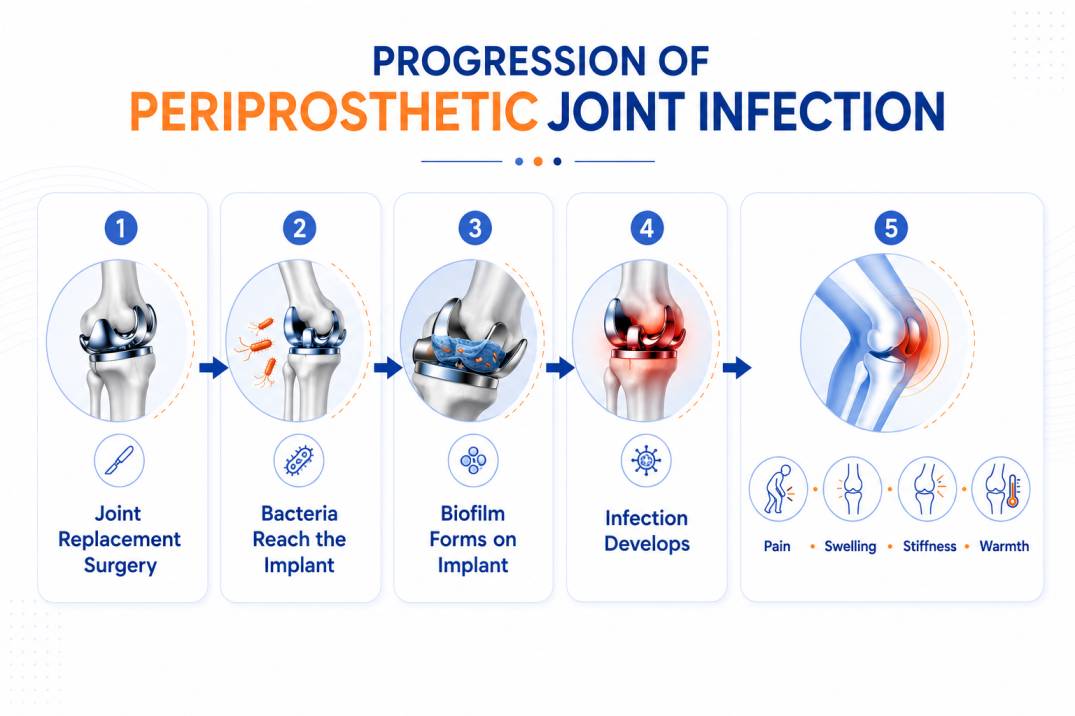
Causes of Periprosthetic Joint Infection (PJI)
Periprosthetic joint infection usually develops when bacteria enters the area or site of surgery or the bloodstream and attaches to the implant surface. Common bacteria causing prosthetic joint infection include Staphylococcus aureus, coagulase-negative staphylococci, streptococci and other organisms.
Common contributing Periprosthetic Joint Infection causes are:
- During or after surgery: Even with strict sterile protocols, a small number of bacteria can still end up entering the surgical field.
- Post-operative wound complications: Poor wound healing, drainage or delayed closure can increase infection risk.
- Through the bloodstream (haematogenous infection): Infections from other body sites such as urinary tract infections, dental infections or skin infections may spread to the joint.
- Weakened immune system: Conditions such as diabetes, kidney disease or long-term steroid use increase susceptibility.
- Previous surgeries on the same joint: Multiple surgeries increase the risk of bacterial exposure.
Unlike normal post-surgical inflammation, PJI does not usually improve on its own and requires appropriate medical care.
Risk Factors for Periprosthetic Joint Infection (PJI)
While Periprosthetic Joint Infection (PJI) can occur in any patient after knee replacement surgery or hip replacement surgery, certain factors may increase the risk of developing a joint replacement infection.
| Risk Factor | How It May Increase the Risk of PJI |
| Diabetes | High blood sugar can affect wound healing and the body’s ability to fight infection. |
| Obesity | May increase stress on the joint and delay healing after surgery. |
| Smoking | Can reduce blood flow and slow tissue healing. |
| Weakened immune system | Makes it more difficult for the body to fight infection. |
| Previous surgery on the same joint | Increases exposure of the implant and surrounding tissues to bacteria. |
| Chronic medical conditions | Conditions such as kidney disease or rheumatoid arthritis may increase susceptibility. |
| Infections elsewhere in the body | Bacteria can spread through the bloodstream to the artificial joint. |
Having one or more of these risk factors does not necessarily mean a patient will develop Periprosthetic Joint Infection. However, identifying and managing these risks before and after surgery can help reduce the likelihood of infection and support a smoother recovery after joint replacement surgery.
Symptoms of Periprosthetic Joint Infection
The symptoms of PJI may develop gradually or appear suddenly, depending on the type of infection.
Common Periprosthetic Joint Infection symptoms include:
- Persistent pain after joint replacement, which may worsen over time
- Swelling around the joint
- Warmth or redness over the surgical area
- Wound discharge or persistent drainage (Persistent fluid leaking from the surgical wound)
- Stiffness and reduced range of motion
- Fever
- Feeling of instability, the sensation that the joint is becoming loose or difficulty walking.
A key warning sign is pain that progressively worsens after an initial period of recovery following joint replacement surgery. Any such change should be evaluated promptly.
How Is Periprosthetic Joint Infection Diagnosed?
Diagnosing Periprosthetic Joint Infection (PJI) involves several steps to accurately confirm the infection and determine the most appropriate treatment. No single test is sufficient on its own, so a combination of clinical evaluation, blood tests, imaging and joint fluid analysis is used.
Clinical assessment:
First, your symptom history is evaluated along with the timing of pain onset, surgical history and presence of systemic symptoms like fever or fatigue.
Blood investigations:
- Elevated ESR (Erythrocyte Sedimentation Rate)
- Elevated CRP (C-reactive protein)
These markers suggest inflammation or infection.
Joint aspiration (key diagnostic test):
Synovial fluid is withdrawn from the joint and analysed for:
- White blood cell count
- Bacterial culture
- Sensitivity testing
Imaging:
- X-ray: Assesses implant position and loosening
- MRI or CT scans may be used in selected cases to assess surrounding bone and soft tissue when standard X-rays are inconclusive.
- Nuclear scans: In complex or unclear cases
Accurate diagnosis is critical because treatment varies significantly depending on whether the infection is early, delayed or chronic.
Periprosthetic Joint Infection Treatment in Gurgaon
Periprosthetic Joint Infection treatment depends on the type of infection, the condition of the implant, the patient’s overall health, and whether the infection is acute or chronic.
The main goals are to:
- Eliminate infection
- Preserve or restore joint function
- Maintain or reconstruct a stable implant
Non-Surgical and Medical Management (Early Infection)
In selected early cases where infection is detected soon after surgery, non-surgical measures may help control the condition.
- Targeted antibiotic therapy:
High-dose intravenous antibiotics are administered based on culture results, followed by oral antibiotics for an extended duration. - Wound care and monitoring:
Close monitoring of surgical wounds and inflammatory markers is important. - Long-term Suppressive Therapy:
In patients who are not surgical candidates, long-term antibiotics may be used to control symptoms rather than cure infection.
However, antibiotics alone are rarely sufficient in established PJI due to biofilm formation on the implant.
Surgical Treatment for Periprosthetic Joint Infection
Surgery is the primary treatment in most cases of PJI.
- Debridement, Antibiotics and Implant Retention (DAIR)
DAIR is a surgical procedure commonly used for early prosthetic joint infections when the implant is still stable. During the procedure, the surgeon thoroughly cleans the infected tissues around the artificial joint (debridement), washes the joint, replaces any removable components of the implant if needed, and retains the main implant. This is followed by targeted intravenous and/or oral antibiotics to help eliminate the infection. The goal is to control the infection while avoiding the need for complete implant removal. - One-stage Revision Surgery:
The infected implant is removed and replaced with a new prosthesis in the same surgery after thorough debridement. Suitable in selected cases with known organisms and good tissue condition. - Two-stage Revision Surgery (Gold Standard for Chronic Infection):
- First stage: Removal of infected implant and placement of an antibiotic spacer
- Second stage: New joint replacement after infection control
This is the most widely used approach for chronic or resistant infections.
Dr. Jha follows a strict evidence-based protocol, selecting the least invasive yet most effective approach for each patient.
Struggling with Joint Pain, Sports Injury, or Arthritis?
Recovery After Periprosthetic Joint Infection Treatment
Periprosthetic Joint Infection recovery depends on the severity of infection and type of surgery performed. It also depends on how quickly the infection is diagnosed. Early diagnosis of Periprosthetic Joint Infection often leads to less extensive surgery and improved functional outcomes.
- After DAIR: Recovery may take 6 to 12 weeks with antibiotics and rehabilitation
- After one-stage revision: Functional recovery begins within a few weeks, with gradual improvement over 2 to 3 months
- After two-stage revision: Full recovery may take 4 to 6 months or longer
Physiotherapy plays a crucial role in restoring movement, strength, and joint stability after infection control.
Patients are closely monitored even after recovery to ensure no recurrence of infection.
Periprosthetic Joint Infection Treatment Cost in Gurgaon
The cost of Periprosthetic Joint Infection (PJI) treatment in Gurgaon varies from patient to patient and depends on the type of treatment required. Factors that may influence the overall cost include:
- Type and severity of the infection
- Whether DAIR, one-stage revision surgery, two-stage revision surgery, prolonged intravenous (IV) antibiotics, or a combination of treatments is required
- Number of surgeries needed
- Type of revision implant used
- Duration of hospital stay
- Need for ICU care or prolonged antibiotic therapy, if required
A detailed treatment plan and cost estimate are provided after full clinical and diagnostic evaluation. The focus remains on clinical recovery and infection eradication rather than unnecessary procedures.
Why Choose Dr. Ramkinkar Jha for Periprosthetic Joint Infection Treatment in Gurgaon?
Patients from Gurugram, Delhi NCR, and across India seek care with Dr. Ramkinkar Jha due to his experience in complex revision joint surgeries and infection management.
- 20+ Years of Orthopaedic Experience: Extensive experience in joint replacement and revision surgeries
- Expertise in Complex Revision Arthroplasty: Management of infected, failed, and unstable implants
- Evidence-Based Infection Protocols: Structured, stepwise treatment approach based on international standards
- Advanced Hospital Infrastructure at CK Birla Hospital: NABH-accredited facility with modern orthopaedic and ICU support
- Comprehensive Rehabilitation Support: Integrated physiotherapy for post-infection recovery
Book a Consultation for Periprosthetic Joint Infection Treatment in Gurgaon
If you are experiencing persistent pain after knee replacement, persistent pain after hip replacement, swelling, warmth, wound drainage, or fever, do not assume it is part of normal healing. Early diagnosis and treatment of Periprosthetic Joint Infection (PJI) through the best orthopaedic surgeon can help preserve the implant, prevent complications, and improve long-term mobility.
What to bring to your consultation:
- Previous surgical records
- X-ray or MRI reports
- Blood test results (CRP, ESR if available)
- Details of current symptoms and medications
Dr. Ramkinkar Jha and his team provide structured evaluation, accurate diagnosis and a clear treatment roadmap focused on infection control and functional recovery.
Frequently Asked Questions
How serious is periprosthetic joint infection? expand_more
It is a serious complication of joint replacement that requires prompt diagnosis and structured treatment. With appropriate management, infection can be controlled in most cases.
Can PJI be treated without surgery? expand_more
Early infections may respond to antibiotics and limited procedures, but most cases require surgical intervention for complete infection control.
Can an infected joint replacement be saved? expand_more
In early cases, the implant may be retained. In chronic infections, revision surgery is usually required.
Can a knee replacement get infected years later? expand_more
Yes. In some cases, bacteria can spread through the bloodstream from infections elsewhere in the body and infect a previously well-functioning joint replacement months or even years after surgery.
How do I book an appointment with Dr. Ramkinkar Jha? expand_more
You can book a consultation through the appointment section on this page. Early evaluation is recommended for better outcomes.

Dr. Ramkinkar Jha's Content Team
Dr. Ramkinkar Jha’s medical content team specialises in producing accurate, clear, and patient-focused orthopaedic content. With a strong foundation in clinical knowledge and expertise in technical writing and SEO, the team translates complex orthopaedic and musculoskeletal information into reliable, easy-to-understand resources. Their work helps patients make informed healthcare decisions while reflecting Dr. Jha’s commitment to high-quality, expert care in joint replacement, trauma, sports injuries, and advanced orthopaedic treatments.
This content is reviewed by Dr. Ramkinkar Jha
Related Conditions

Avascular Necrosis Treatment in Gurgaon
Feeling a mild, deep ache in your hip is something easy to ignore or blame on a muscle strain or…
Osteoarthritis Treatment in Gurgaon
Every step you take puts force equivalent to 1.5 times your body weight through your knees. Over decades, that accumulates.…
Hip Osteoarthritis Treatment in Gurgaon
Hip osteoarthritis is one of the most common reasons adults in India experience persistent groin and thigh pain, stiffness after sitting,…
Related Blogs
10 Best Knee Strengthening Exercises for Stronger Knees
There’s a moment everyone with knee trouble knows: the pause right before standing up from…
Read Article →
Osteoporosis Treatment: Medicines, Diet, Exercise & Prevention
It usually starts quietly. A slight stoop in the shoulders that wasn’t there a few…
Read Article →
विटामिन डी की कमी के लक्षण: हड्डियों और जोड़ों पर असर
विटामिन डी की कमी के सबसे आम लक्षण हैं: हड्डियों और जोड़ों में दर्द, मांसपेशियों में…
Read Article → WhatsApp