
Rheumatoid Arthritis – Medicines, Therapy & Lifestyle Changes
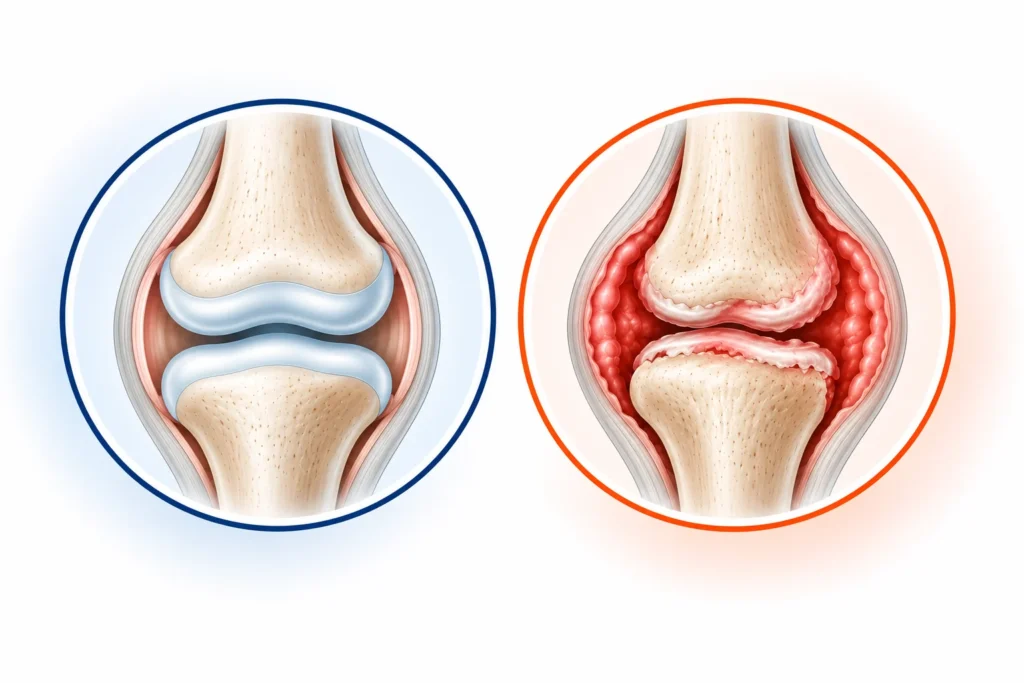
Rheumatoid arthritis (RA) is a long-term autoimmune condition that causes joint pain, swelling, and stiffness. The good news? With the right combination of medicines, physical therapy, and daily lifestyle habits, most people manage their symptoms well and protect their joints from further damage.
Book a Consultation with Dr. Ramkinkar Jha, Leading Orthopaedic Surgeon in Gurgaon
What Is Rheumatoid Arthritis?
Rheumatoid arthritis (RA) is not the same as the wear-and-tear joint pain that comes with ageing. It’s an autoimmune disease – meaning your own immune system mistakenly attacks the lining of your joints (called the synovium). This causes inflammation, pain, swelling, and over time, can damage the cartilage and bone inside the joint.
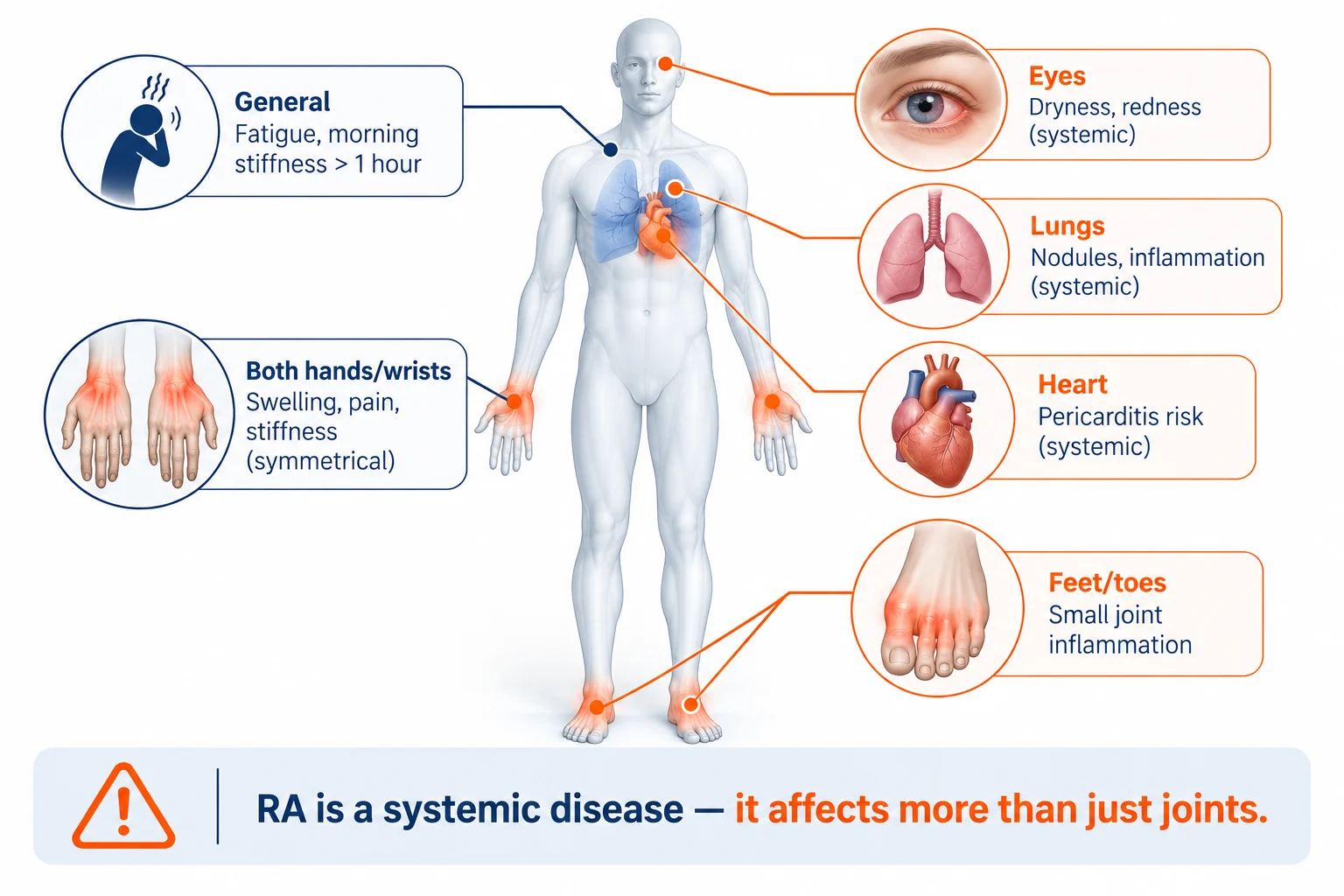
RA commonly starts in the small joints of the hands, wrists, and feet – often on both sides of the body at the same time. That symmetry (both hands hurting together, for example) is one of the hallmarks that helps doctors identify it.
A few things worth knowing upfront:
- RA affects women more often than men, typically between the ages of 30 and 60.
- It’s a systemic disease – meaning it can affect the eyes, lungs, and heart too, not just the joints.
- RA is not curable, but it is very much manageable. Many people live full, active lives with it.
- Early diagnosis and treatment dramatically reduce the risk of permanent joint damage.
India-specific context matters here. Studies estimate that roughly 0.75% of Indian adults have RA – that’s approximately 1.75 million people across the country. Yet many go undiagnosed for years, simply because joint pain gets dismissed as “normal ageing.” It isn’t. If your joints are swollen, warm, and stiff – especially in the morning – please get it checked.
Medicines Used in Rheumatoid Arthritis Treatment
Medicines are the backbone of RA management. The goal isn’t just to reduce pain – it’s to slow or stop the immune system from damaging your joints. Here’s a plain-language breakdown of the main types used in RA treatment options in India.
DMARDs – The Most Important Medicines
DMARDs stands for Disease-Modifying Anti-Rheumatic Drugs. These are the cornerstone of treatment. Unlike painkillers that only mask symptoms, DMARDs work on the underlying disease process to slow joint damage.
The most commonly prescribed DMARD is methotrexate – it’s been used for decades, is well-studied, and is usually the first medicine a rheumatologist reaches for. Other rheumatoid arthritis medicines India doctors regularly prescribe include hydroxychloroquine (originally an anti-malarial), sulfasalazine, and leflunomide.
A few things to keep in mind about DMARDs:
- They take weeks to months to show full effect – don’t be discouraged if you don’t feel better immediately.
- Regular blood tests are needed to monitor for side effects, especially with methotrexate.
- They are often used in combination for better control.
Biologic Medicines – The Newer Option
Biologics (also called biologic DMARDs) are a newer class of medicines that target specific parts of the immune system involved in RA. Common examples include adalimumab, etanercept, and rituximab.
Biologics are generally prescribed when conventional DMARDs haven’t worked well enough. They’re given by injection or infusion and can be very effective – but they’re also more expensive and require careful monitoring for infections.
NSAIDs – For Pain and Inflammation Relief
NSAIDs (Non-Steroidal Anti-Inflammatory Drugs) like ibuprofen or naproxen help reduce pain and swelling quickly. They’re useful for day-to-day symptom relief.
However, NSAIDs do not slow joint damage. They’re a support tool, not a cure. Long-term use can also affect the stomach and kidneys, so they should be taken at the lowest effective dose for as short a time as possible.
Steroids – Short-Term Help
Corticosteroids (like prednisolone) can quickly reduce inflammation during a flare. They’re often used as a “bridge” – giving relief while DMARDs kick in. But because of side effects with long-term use (bone thinning, weight gain, blood sugar changes), they’re kept to short courses whenever possible.
Physical Therapy and Occupational Therapy
Medicines alone aren’t enough. Rheumatoid arthritis physiotherapy in Gurgaon and occupational therapy are essential parts of a complete RA treatment plan – and they’re often underused.
What Physical Therapy Does
A physiotherapist designs an exercise programme specifically for your joints, strength, and level of pain. The goals are to:
- Reduce stiffness and improve range of motion
- Strengthen the muscles around affected joints so they bear less load
- Improve balance and posture to prevent falls and strain
- Reduce fatigue through better movement patterns
The 2022 American College of Rheumatology guidelines strongly recommend regular exercise for people with RA – including aerobic activity, strength training, and range-of-motion exercises. Exercise doesn’t worsen RA when done appropriately. In fact, it helps.
Good options include swimming, walking, cycling, and gentle yoga. These are low-impact and kind to inflamed joints.
What Occupational Therapy Does
An occupational therapist helps you protect your joints while doing everyday tasks – cooking, writing, dressing, climbing stairs. They may suggest:
- Assistive devices (jar openers, ergonomic pens, raised toilet seats)
- Splints to support painful wrists or fingers
- Joint protection techniques – like using your palm instead of your fingers to push open a door
This isn’t about giving up independence. It’s about working smarter so your joints last longer.
Lifestyle Changes That Make a Real Difference
No lifestyle change will replace your medicines. But the right habits can reduce flares, ease pain, and genuinely improve your day-to-day life.
Diet
There’s no single “RA diet,” but an anti-inflammatory eating pattern helps many people. Think:
- More: Fatty fish (salmon, mackerel, sardines – rich in omega-3s), colourful vegetables, fruits, whole grains, nuts, and olive oil
- Less: Processed foods, refined sugar, red meat, and fried foods
- Indian kitchen staples that help: Turmeric (haldi) and ginger (adrak) have well-documented mild anti-inflammatory properties – use them freely in your cooking. Palak (spinach) and methi (fenugreek leaves) are rich in antioxidants and iron. Amla (Indian gooseberry) is one of the richest natural sources of Vitamin C, which supports immune health. These aren’t miracle cures, but they’re genuinely good additions to an RA-friendly plate.
Maintaining a healthy weight is especially important. Extra weight puts more pressure on the knees and hips and can make inflammation worse.
Exercise
Regular, gentle movement is medicine. Even on difficult days, gentle stretching or a short walk is better than complete rest. On good days, aim for at least 30 minutes of low-impact activity.
Avoid high-impact activities like running on hard surfaces or heavy weightlifting during active flares.
Sleep
Poor sleep and RA have a frustrating relationship – pain disrupts sleep, and poor sleep makes pain feel worse. Prioritising 7–8 hours of good sleep is not a luxury; it’s part of your treatment.
Try to keep a consistent sleep schedule, use a supportive mattress, and speak to your doctor if pain is regularly waking you up at night.
Stress Management
Stress is a known trigger for RA flares. Chronic stress raises inflammation levels in the body. Practices like deep breathing, meditation, pranayama, or simply spending time with loved ones can help keep stress – and inflammation – in check.
Smoking is also strongly linked to worse RA outcomes. If you smoke, quitting is one of the most impactful things you can do for your joints.
When Surgery Might Be Needed
For most people with RA, surgery is never necessary. But in cases where joints have been severely damaged despite years of treatment – with constant pain, significant deformity, or loss of function – an orthopaedic surgeon may recommend a surgical option.
The most common procedure is joint replacement surgery (also called arthroplasty), most often for the knee or hip. The damaged joint surfaces are replaced with artificial implants that restore movement and dramatically reduce pain. It is considered a last resort – recommended only after medicines, therapy, and other treatments have been tried and found insufficient.
Other surgical options include synovectomy (removing the inflamed joint lining in earlier-stage disease) and tendon repair when RA has damaged the tendons around a joint.
When is joint replacement needed for RA? Broadly, when pain is constant and severe, when the joint is significantly deformed, and when quality of life is seriously affected despite optimal medical treatment. In Gurgaon, orthopaedic surgeons with joint replacement expertise can assess whether surgery is the right step for your specific condition.
Getting Rheumatoid Arthritis Treatment in Gurgaon
If you’re based in Delhi NCR – whether in Delhi, Faridabad, Noida, or Gurugram itself – you don’t need to travel far for quality RA care. Gurgaon has a growing number of experienced rheumatologists and orthopaedic surgeons who specialise in managing this condition.
Rheumatoid arthritis treatment in Gurugram covers the full spectrum: from early diagnosis and DMARD therapy to biologics, joint pain treatment in Gurgaon, and surgical options for advanced joint damage. The key is not to wait. The earlier RA is caught and treated, the better the long-term outcome for your joints.
Look for a specialist – whether a rheumatologist for medical management or an arthritis specialist in Gurgaon with orthopaedic expertise – who can give you a complete picture of your options. Both disciplines are available locally, so you can get coordinated care without the hassle of long-distance travel.

 WhatsApp