
Bone Fracture Treatment: Types, Healing Process & Recovery
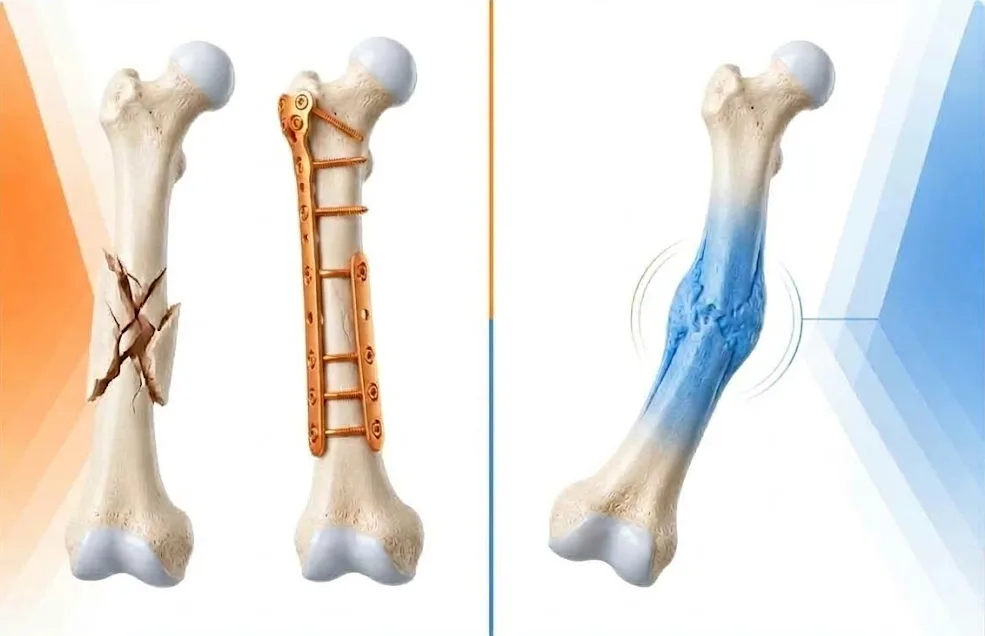
A broken bone can sometimes feel like a sprain, with bearable pain, swelling, and limited movement. However, delaying bone fracture treatment can cause the bone to heal incorrectly or take longer to recover.
The right fracture treatment depends on the type and severity of the break. While some fractures heal with a cast, others require fracture surgery. This guide covers fracture symptoms, types of bone fractures, treatment options, healing time, and recovery tips.
Book a Consultation with Dr. Ramkinkar Jha, Leading Orthopaedic Surgeon in Gurgaon
What Is a Bone Fracture?
A fracture is a break in a bone. It could be a thin hairline crack or a bone that has broken into many pieces.
What causes bone fractures?
A bone breaks if it suffers a force more than it can handle, or when the bone itself has become weak. This can happen because of the following reasons:
- Falls and road accidents: a sudden, hard impact that even a healthy bone cannot absorb
- Sports injuries and sudden twists: the bone is strained from an awkward angle
- Weak bones: in osteoporosis, even a minor fall can cause a break
- Repeated stress: in runners, tiny cracks build up over time into a stress fracture
- Diseases: infection or a tumour can weaken the bone from inside
Treatment depends on the cause: traumatic fractures need bone repair, while fractures caused by weak bones also require treatment to reduce future fracture risk.
Types of Fractures
Fractures are classified based on the skin, extent of the break, bone alignment and fracture pattern.
| Fracture Type | Description |
| Open | Bone breaks through the skin |
| Closed | Skin remains intact |
| Partial | Bone is not completely broken |
| Complete | Break extends through the entire bone |
| Displaced | Bone fragments shift out of alignment |
| Non-displaced | Bone fragments remain aligned |
| Transverse | Straight break across the bone |
| Oblique | Slanted break |
| Spiral | Twisting break around the bone |
| Comminuted | Bone breaks into three or more pieces |
A break that stays in place usually needs less treatment than one that has shifted. See our guide to types of fractures for more.
Fracture Symptoms
The main fracture symptom is pain at one spot that gets worse when you move or press on it, usually with swelling and bruising.
Some common signs of a fracture include:
- Sharp pain with movement or touch
- Swelling and bruising
- A visibly bent or shortened limb
- Difficulty using the limb or bearing weight
- A cracking or grinding sound at injury
- Numbness or tingling
- A dull ache during activity in stress fractures, easing with rest
Mild pain does not rule out a fracture, as some cracks still allow walking. Seek emergency care if the limb is pale, cold or numb, the bone breaks through the skin, or the injury involves the head, neck, back or pelvis.
Fracture Diagnosis in Delhi NCR
Diagnosis of fracture involves an examination and an X-ray, because pain and swelling alone cannot confirm it.
- Physical examination: Checks injury history, tenderness, alignment, nerve function and blood flow.
- X-ray: Identifies the fracture and bone displacement.
- CT scan: Provides detailed images of complex fractures, joint involvement and surgical planning.
- MRI: Detects hidden fractures and associated ligament or tendon damage.
Tiny cracks can be missed on the first X-ray. If pain continues, the doctor may repeat the X-ray after a week or two, or order an MRI.
Fracture Treatment Options in Delhi NCR
Fracture treatment depends on bone alignment, stability, joint involvement and whether the fracture is open. The goal is to align the bone and keep it stable while it heals.
- Cast, splint or brace: Stabilises aligned fractures and partial cracks.
- Realignment: Repositions displaced bone fragments, often under anaesthesia.
- Medicines: Manage pain, treat or prevent infection in open fractures, and correct calcium or vitamin D deficiencies when needed.
- Surgery: Treats open, unstable, severely displaced, joint-involving or non-healing fractures.
Pain medication depends on your health and medical history, so take only what your doctor prescribes. Not every fracture needs surgery, but when indicated, it should not be delayed.
What Does Fracture Surgery Involve?
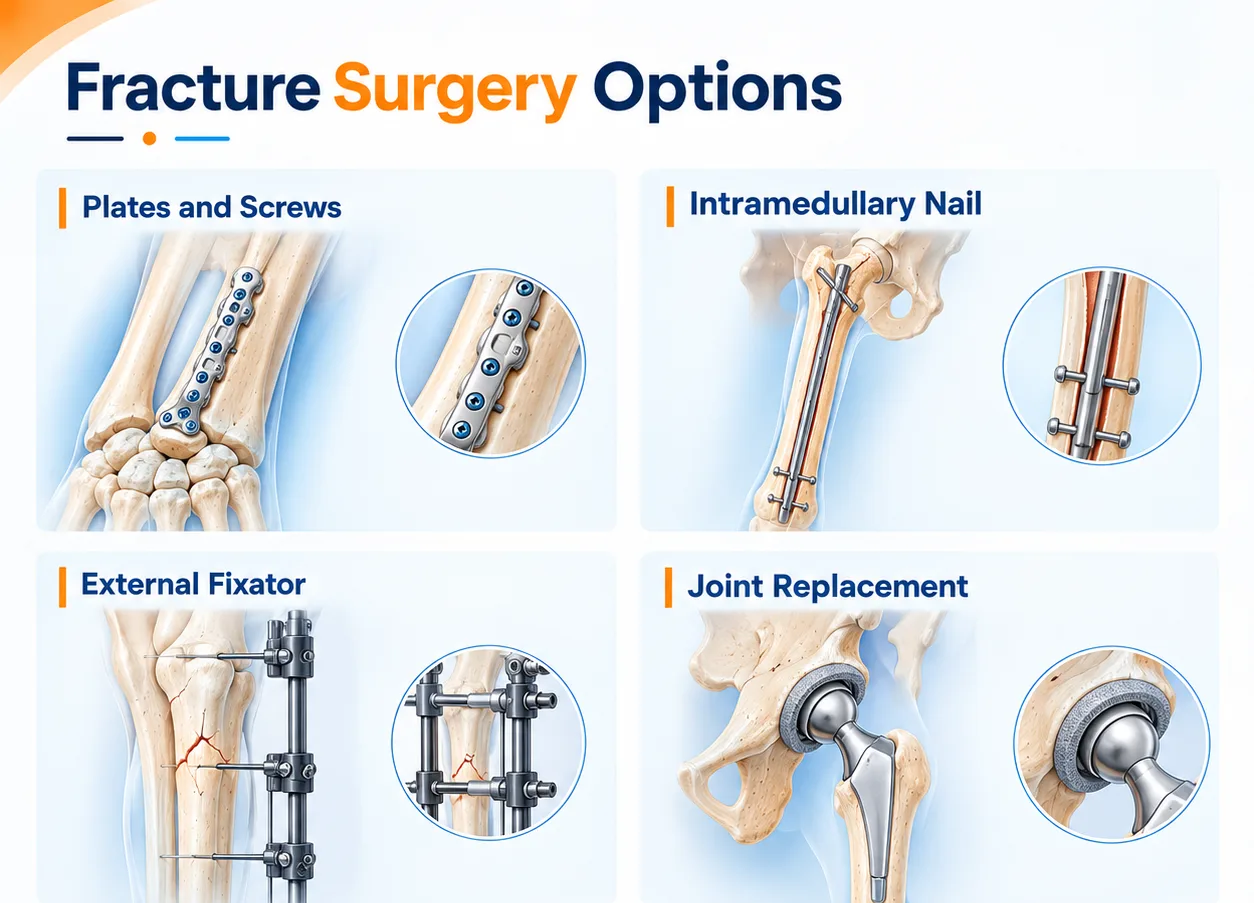
Fracture surgery realigns broken bones and secures them with metal implants for proper healing and earlier movement. The implant depends on the fracture type and location.
Plates and Screws
- Plates are fixed to the bone with screws.
- They are used for precise alignment in the wrist and ankle.
- It helps hold broken bone pieces in place.
Intramedullary Nail
- A metal rod is inserted into the bone’s hollow centre.
- It is used for long bones, such as the thighbone and shinbone.
- It provides internal support for early walking.
External Fixator
- Metal pins are inserted into the bone and attached to an external frame.
- Used for open fractures or when surrounding skin and muscles are badly damaged.
- Often used temporarily until a plate or nail can be safely inserted.
Joint Replacement
- The broken joint portion is replaced with an implant.
- It is considered for hip fractures in older adults with poor healing potential.
- It can enable early walking after partial hip replacement.
Complex breaks around the hip socket need extra planning, as in pelvic and acetabular surgery. You can also read about orthopaedic implants in detail.
Fracture Surgery Risks
The risks of fracture surgery include infection, joint stiffness, and some complications related to metal implants, depending on the surgical procedure and the patient’s overall health.
- Infection
- Joint stiffness
- Delayed healing
Your orthopaedic surgeon can explain the potential risks and precautions for your specific fracture.
How Does a Fracture Heal? (Bone Fracture Recovery timeline)
The body mends a broken bone by growing new bone in the gap. For this to work, the broken pieces must stay in the right position, stay still, and get enough blood. With this, most fractures heal in about 6 to 12 weeks.
| Stage | Timeline | What is happening |
| 1. Clot forms (inflammation) | Weeks 1 to 2 | Blood collects around the break and starts the repair |
| 2. Soft bridge forms (soft callus) | Weeks 2 to 6 | Soft, rubbery tissue grows and joins the two bone ends |
| 3. Bridge hardens (hard callus) | Weeks 6 to 12 | The soft tissue turns into bone |
| 4. Bone reshapes (remodelling) | Months to years | The new bone smooths out and gets stronger |
Finger and wrist fractures heal in 4–10 weeks, upper arms in 6–8 weeks, and leg bones in 3–6 months. Hip and pelvic fractures take longer. Follow activity restrictions and attend follow-up X-rays.
Struggling with Joint Pain, Sports Injury, or Arthritis?
Bone Fracture Recovery Tips
Healing a bone fracture depends on proper care and avoiding factors that delay recovery.
- Follow your doctor’s weight-bearing advice.
- Avoid smoking and tobacco.
- Get enough protein, calcium and vitamins C and D.
- Limit alcohol and control diabetes.
- Start physiotherapy when approved by your doctor.
Persistent pain, swelling or movement at the fracture site may indicate delayed healing. Seek medical advice for timely non-union fracture treatment.
Conclusion
Timely bone fracture treatment, proper medical care and following recovery instructions help support bone healing. Whether you need a cast or fracture surgery depends on the type and severity of the break.
Consult an orthopaedic specialist for the right treatment and a safe return to daily activities.

 WhatsApp