
10 Best Knee Strengthening Exercises for Stronger Knees
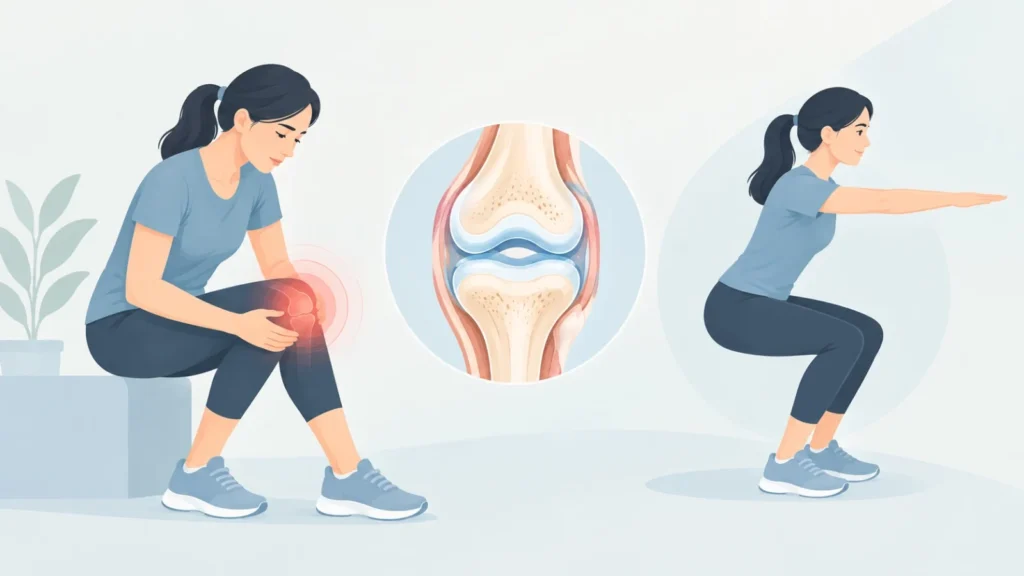
There’s a moment everyone with knee trouble knows: the pause right before standing up from a low chair, when your knee seems to ask for permission before it moves. Most people chalk it up to “getting older”, but a lot of times, it’s the muscle around your knee joint quietly weakening until even simple movements start to hesitate.
The instinct is to rest and wait it out, but the science says otherwise. Here’s how weak knees get stronger, the 10 exercises for it, what to avoid, and when to see a doctor.
Is it possible to strengthen weak knees naturally?
Yes, and the science backs it up. Recent studies confirm that the right exercises, done consistently, rebuild real strength and function in the joint.
Book a Consultation with Dr. Ramkinkar Jha, Leading Orthopaedic Surgeon in Gurgaon
Busting the myth: Why do knees get stronger with exercise?
Knee strengthening exercises build muscles, nourish the cartilage, and naturally relieve knee pain. Let’s understand how:
Build muscle strength
Three muscle groups hold the knee steady:
- Quadriceps
- Hamstrings
- Glutes
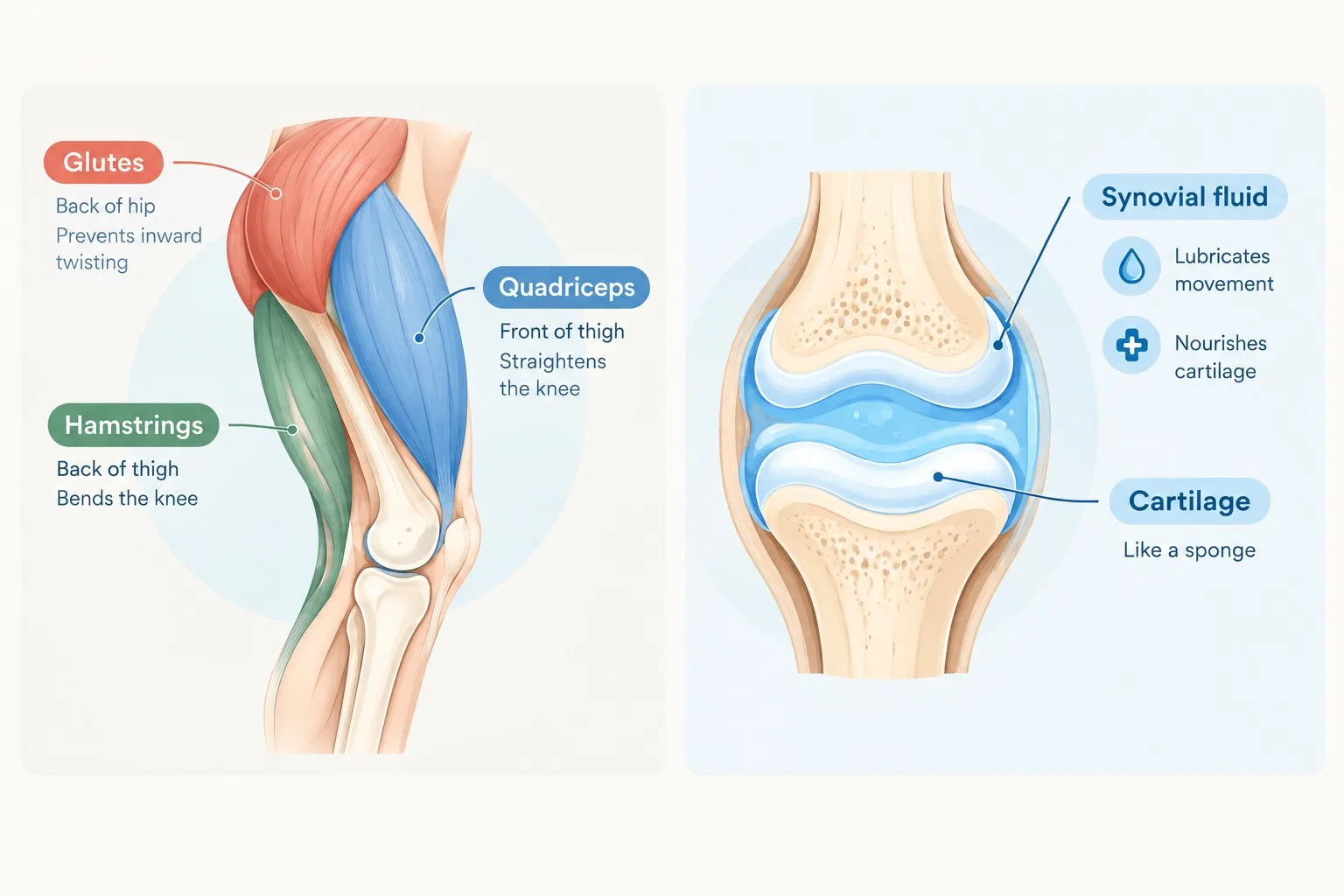
One of the major causes of weak knees is lack of strength in these muscles. When they underperform, the knee joint has to absorb the stress instead. The knee exercises discussed below target one or more of these muscles to rebuild that support, one rep at a time.
Enhancing knee cartilage health
The knee cartilage behaves like a sponge sitting in a bath of synovial fluid. This fluid:
- Lubricates the cartilage, makes knee movement smooth
- Nourishes the cartilage
During movement, this “sponge” gets compressed, and the waste material is pushed out, cleansing the cartilage. As the force is removed, the fresh, nutrient-rich fluid is sucked back in.
Cartilage has almost no blood supply of its own, so this cycle is largely how it stays nourished, per NCBI-published research.
Natural painkillers
Regular knee movement can trigger the release of natural painkillers, reducing knee pain.
“Many patients worry that exercise will wear their knees down further,” says Dr. Ramkinkar Jha, orthopaedic and joint replacement surgeon at CK Birla Hospital, Gurugram. “But when the right exercises are performed with proper technique and intensity, strengthening the muscles around the knee can improve support, stability and movement, even in people with arthritis or previous joint damage.”
Best Knee Strengthening Exercises
Here are 10 effective knee exercises to build strength, improve movement and help reduce knee pain:
Straight Leg Raises
- Lie flat, one leg bent, other leg straight
- Lift straight leg to hip height, hold 3-5 seconds
- 10-12 reps per leg
Wall Sits
- Back against wall, slide down to a 90° knee bend
- Hold 20-30 seconds
- 3-4 rounds
Mini Squats
- Feet shoulder-width apart
- Bend knees halfway
- 10-15 reps
Step-Ups
- Step onto a low, sturdy platform, one leg at a time
- 10 reps per leg
Hamstring Curls
- Hold a chair for balance
- Bend one knee, bring heel toward glutes
- 12 reps per side
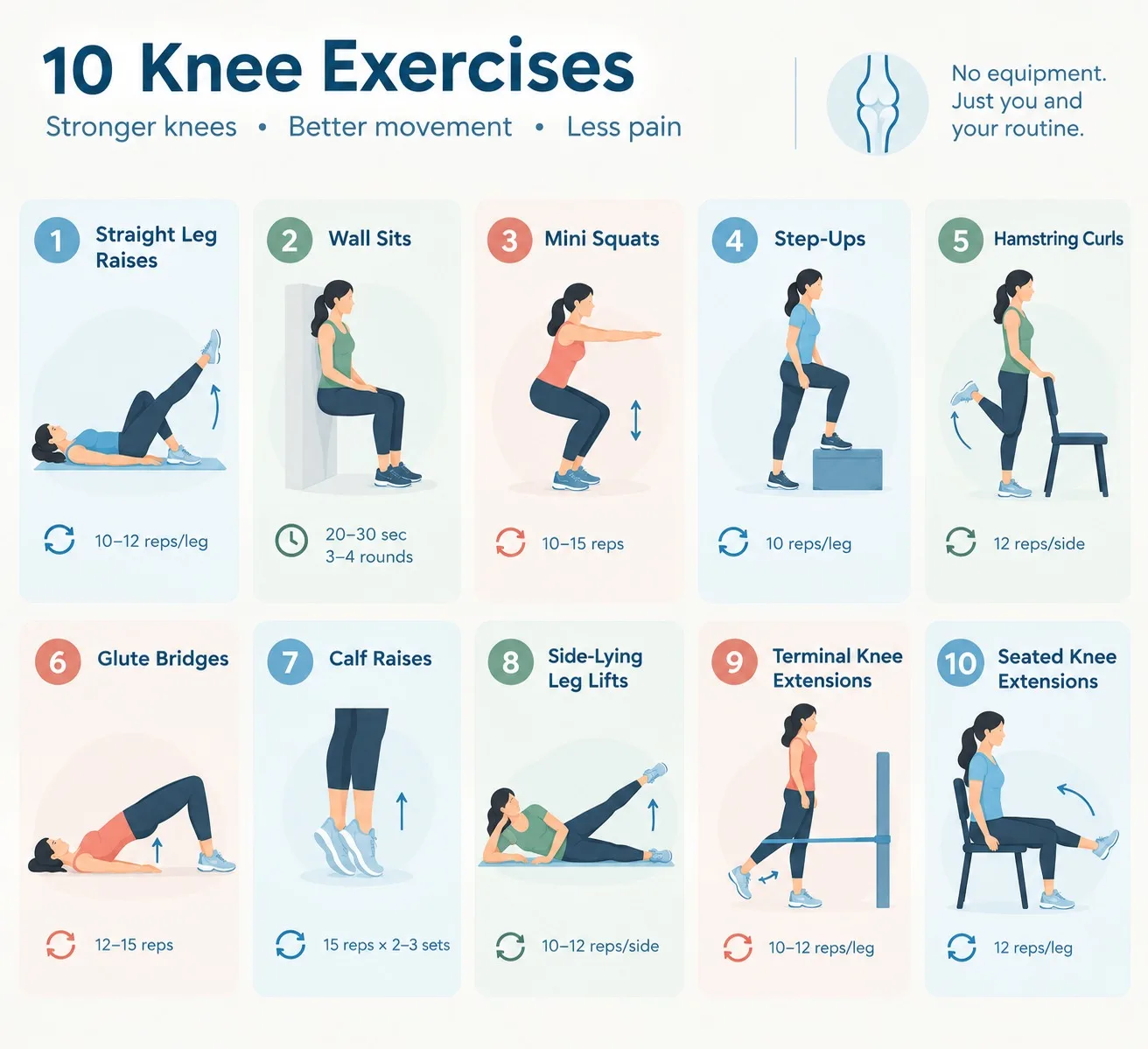
Glute Bridges
- Lie on back, knees bent
- Lift hips toward ceiling
- 12-15 reps, offloads knee stress
Calf Raises
- Rise onto toes, hold briefly, lower slowly
- 15 reps, 2-3 sets
Side-Lying Leg Lifts
- Lie on side, lift top leg straight up
- Keep hips still, no rotating
- 10-12 reps per side
Terminal Knee Extensions
- Loop a towel/band around a fixed point
- Straighten bent knee against light resistance
- 10-12 reps per leg
Seated Knee Extensions
- Sit in a chair
- Slowly extend one knee straight, lower with control
- 12 reps per leg
“In over 20 years of practice, I’ve seen many patients bounce back stronger after surgery or joint damage, and these exercises are often part of that rebuild,” says Dr. Ramkinkar Jha. “But a professional’s guidance on the right intensity and pace matters just as much as the exercises themselves.”
Safety Tips for Knee Exercises: How to Prevent Knee Injuries?
The right exercise done wrong can do more harm than good. A trainer or physiotherapist can help with form, but here are a few basics to mind to protect your knees from injury:
- Warm up first: 5-10 minutes of walking or light cycling
- Start light, progress slowly: increase reps or resistance gradually, not overnight
- Keep movements controlled: no jerky or fast motions
- Stop at sharp pain: mild fatigue is fine, pain is not
- Maintain a healthy weight: less load on the knee means less strain
- Stretch after strengthening: keeps muscles flexible
- Wear proper footwear: good support reduces unnecessary strain
Above all, get your doctor’s go-ahead first, especially if you have had a knee issue or recent surgery.
Exercises to Avoid for Injured Knees
Not every movement is knee-friendly. A few worth skipping or modifying:
- Deep squats: puts extra pressure on the kneecap
- High-impact jumping (plyometrics): stress the joint on landing
- Running on hard surfaces: concrete multiplies the impact
- Deep lunges: easy to overload with imperfect form
- Full-range leg extensions with heavy weight: strains the kneecap
- Twisting or pivoting movements: risky for unstable knees
If any of these are unavoidable in your routine, say due to a sport you play, easing into them gradually and building strength beforehand goes a long way in preventing sports-related knee injuries.
When to see an Orthopaedic Doctor?
Most knee pain responds well to consistent exercise. A few signs mean it’s time to stop self-treating:
- Pain that doesn’t improve after 2-3 weeks of consistent exercise
- Persistent swelling that doesn’t go down with rest
- Joint locking (Knee stuck, cannot move at all)
- Joint catching (Knee suddenly sticks, then releases.)
- A feeling of the knee “giving way”
- Sharp pain during simple movements like climbing stairs or standing up
- Visible deformity
Persistent pain despite exercise can point to knee osteoarthritis. Locking or catching often signals a meniscus tear. Either way, these call for a proper diagnosis, not another week of home exercises.
Conclusion
Strong knees are not built overnight but one exercise at a time. Whether you’re preventing pain, managing early arthritis, or rebuilding after injury or surgery, these exercises can meaningfully improve your movement and comfort if done safely and with the right guidance.
Start small, stay consistent, and don’t ignore your knees’ warning signs. When home exercises aren’t enough, an expert opinion early can save you bigger problems later.

 WhatsApp