
How to Heal a Meniscus Tear Naturally: Exercises & Recovery Tips
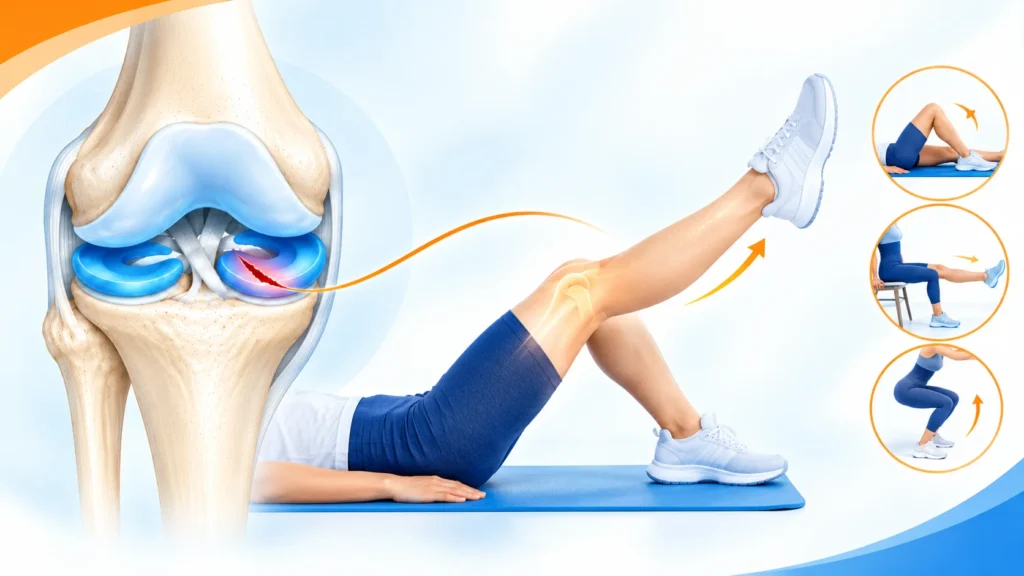
Your knee has worked for decades without a day off: every step, every stair, every temple climb. Inside it, two small cushions called menisci sit between the thigh bone and the shin bone and take the shock. When one of them tears, the knee starts sending you warnings: it aches, swells, or catches when you bend it.
The next thought is usually surgery, but many people can heal a meniscus tear naturally, or at least get the knee comfortable again: with the right exercises. MRI scans of adults over 50 found meniscal tears in 19% to 56% of knees, depending on age and sex.
So which tears actually heal, which exercises help, how long does recovery take, and when is a doctor really needed? This guide covers all these questions.
Book a Consultation with Dr. Ramkinkar Jha, Leading Orthopaedic Surgeon in Gurgaon
What Is the Meniscus: Knee’s Shock Absorbers
The meniscus (plural: menisci) is a rubbery, crescent-shaped pad of cartilage that sits between your thigh bone (femur) and shin bone (tibia), at the knee joint. Each knee has two menisci: one on the inner side and one on the outer side.
The two cushions fill the gap between the bones, so that the weight spreads over a wider area. This helps in:
- Absorbing shock every time the foot hits the ground
- Spreading body weight across the joint
- Steadying the knee while turning, climbing or squatting
- Reducing the friction at the joint
The Regions of Meniscus
Some meniscus tears heal naturally, but it depends on their location and blood supply, as healing needs blood. The two regions of the meniscus are:
- Outer third (red zone): Good blood supply; small tears may heal with rest and rehabilitation.
- Inner two-thirds (white zone): Poor blood supply; tears rarely heal on their own.
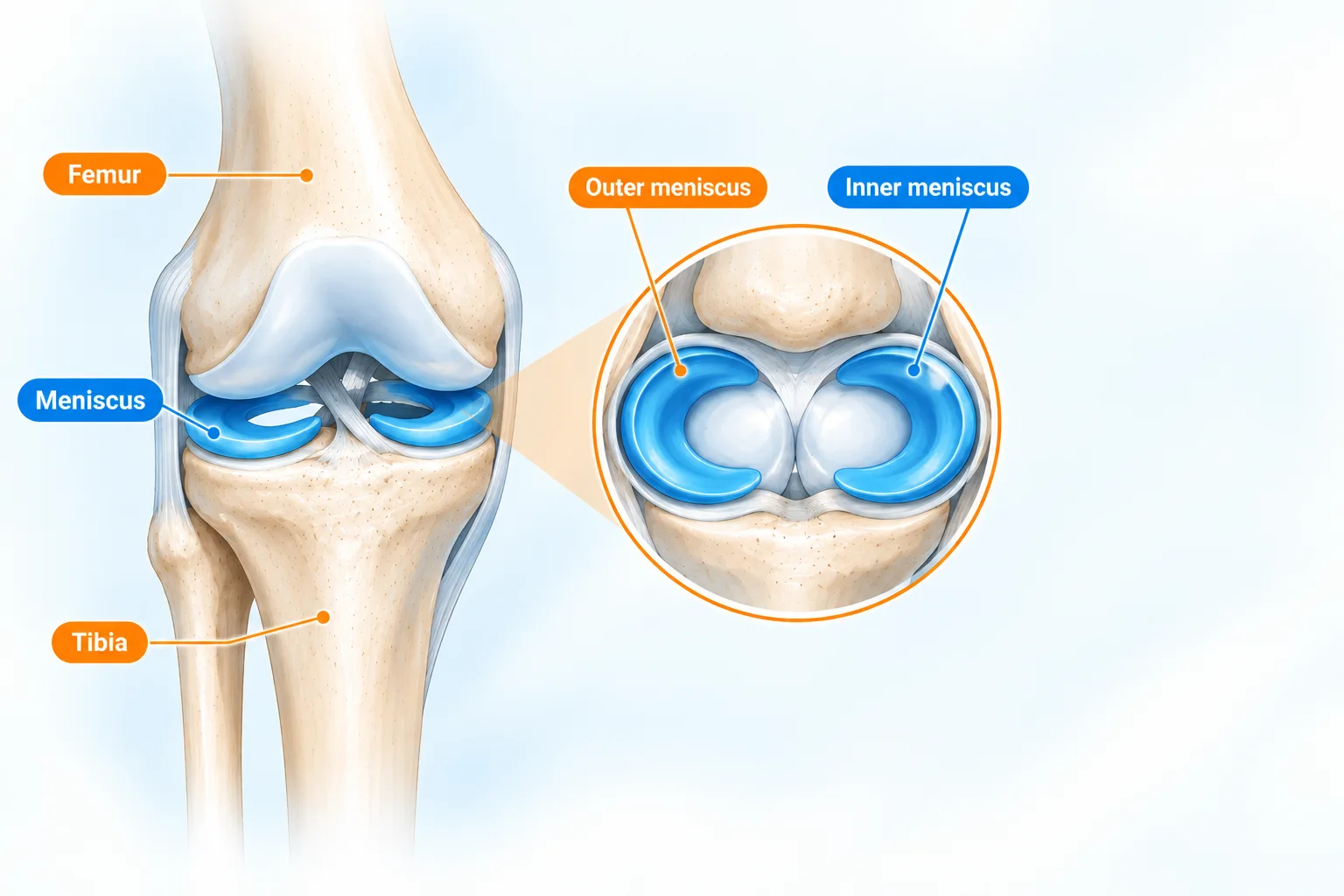
Understanding this pad makes it easier to understand what happens when it tears.
What Is Meniscus Tear?
A meniscus tear is a crack or split in the meniscus. When this happens, the joint stops moving smoothly and starts to catch or hurt.
What Causes Meniscus Tear?
A meniscus tear is caused either by a sudden force on the knee or by gradual wear of the cushion over the years.
- Twisting or deep bending: Twisting a loaded knee can cause the cartilage to tear.
- Sports injuries: Football, badminton and cricket involve twisting movements that increase the risk.
- Age-related wear: After 40, the meniscus weakens, making it vulnerable to tears from minor twists.
The torn edge can irritate the knee, causing pain and swelling. If a loose piece gets caught between the bones, the knee may catch or lock.
Meniscus Tear Types
Meniscus tears are of the following types, and the approach of treatment also depends on this type:
- Degenerative tear: Wear-related, common after 40, often managed without surgery.
- Traumatic tear: Sudden sports injury, common in younger people.
- Horizontal or flap tear: A split along the cartilage, often manageable without surgery
- Bucket-handle or displaced tear: A large piece that flips and can lock the knee.
Whether a tear heals depends less on how it happened and more on where it sits, which comes down to blood supply.
Meniscus Tear Symptoms
Common symptoms of meniscus tear include joint-line pain, swelling and stiffness developing over a day or two.
- Pain when twisting, squatting or climbing stairs
- Gradual swelling
- Clicking or catching
- Difficulty fully bending or straightening the knee
Seek prompt medical help if the knee locks and will not straighten, gives way repeatedly, swells suddenly and severely after an injury, or cannot bear weight.
Can Exercises Heal a Meniscus Tear Naturally?
Small red-zone tears may heal more easily with exercise than white-zone tears. A locked knee or large displaced tear requires medical assessment.
Exercise is a first-line treatment for many age-related meniscus tears, helping to:
- Strengthen muscles: Thigh and hip muscles reduce the load on the knee.
- Improve movement: Restore strength and flexibility.
- Reduce swelling: Gentle movement helps prevent fluid buildup.
“The right exercises can help strengthen the muscles around the knee and improve mobility,” says Dr. Ramkinkar Jha, orthopaedic and joint replacement surgeon at CK Birla Hospital, Gurugram. “However, treatment should be tailored to the tear’s type and location.”
What Are the Best Exercises for a Meniscus Tear?
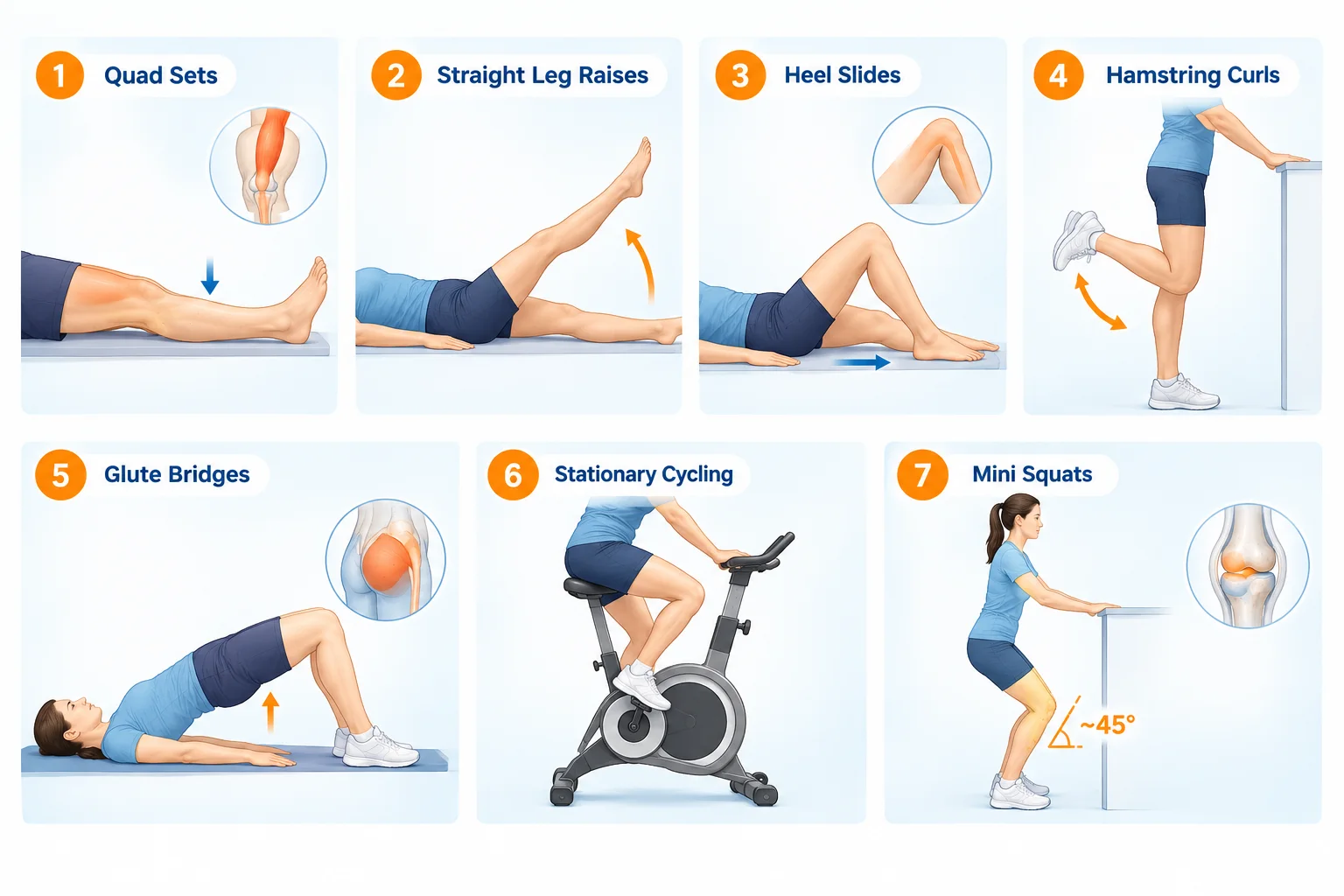
The best meniscus tear exercises strengthen the thigh and hip muscles while avoiding deep knee bends and twisting. Helpful exercises include:
Quad Sets
- Straight leg, tighten the front thigh, press the back of the knee down
- Hold 5 seconds
- Wakes up the main muscle that supports the knee
Straight Leg Raises
- Lie on the back, tighten the thigh, lift the straight leg
- Lower slowly
- Builds thigh strength without bending the knee
Heel Slides
- Slide the heel toward the buttock, then back
- Restores bend; prevents stiffness
Hamstring Curls
- Standing, bring the heel toward the buttock
- Strengthens the back of the thigh; steadies the knee
Glute Bridges
- Lie on the back, knees bent, lift the hips until the body forms a line
- Strengthens the buttocks, keeping the knee aligned
Stationary Cycling
- Pedal at low resistance for 10 to 15 minutes, seat high
- Moves the knee smoothly, without impact
Mini Squats
- Hold a support, bend only to about 45°, then rise
- Builds strength in the bend range the knee handles best
Do 2 to 3 sets of 10 to 15 repetitions, once a day. Mild muscle tiredness is normal. Sharp pain in the knee is not.
Movements to Avoid For Meniscus Tear
Avoid deep bending and twisting under body weight, because both press and pull on the torn cartilage.
- Deep squatting and kneeling: a fully bent knee squeezes the back of the meniscus, where many tears sit.
- Cross-legged sitting: the knee stays bent and twisted for long, which strains the tear.
- Pivoting sports like football, badminton and cricket: the foot stays planted while the body turns, the same force that tears a meniscus.
- Heavy lunges: a deep bend with extra load puts the highest pressure on the cartilage.
Once the risky movements are out of the way, what actually helps the knee recover faster?
Meniscus Tear Recovery Tips: How To Speed Up Meniscus Tear Recovery
Steady daily exercise, gentle walking and slow, gradual progress help the knee recover fastest:
- Exercise daily: short, regular sessions work better than occasional long ones.
- Walk gently: it keeps the knee moving and the thigh muscles active.
- Progress gradually: increase activity slowly, not in sudden jumps.
- Reduce swelling: use ice, compression and leg elevation.
- Wear cushioned shoes: they soften the impact of every step.
- Maintain a healthy weight: it reduces the pressure on the knee with every step.
“Recovery takes consistency and patience. Increase activity gradually, and seek medical assessment if the knee continues to lock, give way or swell.” says Dr. Ramkinkar Jha.
Struggling with Joint Pain, Sports Injury, or Arthritis?
When Should You See an Orthopaedic Doctor?
See an orthopaedic doctor if the knee locks, gives way or fails to improve after a few weeks of exercises.
Warning signs include:
- A knee that gets stuck and will not straighten
- Sudden buckling while walking or turning
- Recurrent swelling
- Persistent pain despite regular exercises
If these symptoms occur, seek medical assessment promptly. An examination and MRI can help identify the tear and guide treatment.
Conclusion
A meniscus tear affects the knee’s shock-absorbing cartilage. Small tears in the outer, well-supplied region may heal naturally, while inner-region tears rarely heal on their own. However, strengthening exercises can improve knee function, with many people improving within 6–12 weeks. If the knee locks, gives way or repeatedly swells, consult an orthopaedic doctor for appropriate treatment.

 WhatsApp