
Robotic Joint Replacement in Gurgaon
Joint pain that has stopped responding to physiotherapy, medications, or injections, and where imaging shows significant cartilage or joint damage, often requires surgical treatment. Robotic joint replacement in Gurgaon is now one of the most precise options available at this stage, offering a level of personalisation and surgical accuracy that simply was not possible with conventional techniques even a decade ago.
Dr. Ramkinkar Jha, Director, Department of Orthopaedics at CK Birla Hospital, Gurugram, is among the most experienced joint replacement surgeons in Delhi NCR. He offers robotic-assisted total knee replacement and total hip replacement as part of a comprehensive, evidence-based approach to joint care, recommended only when clinically indicated, never as a reflexive default.
Book a Consultation with Dr. Ramkinkar Jha, Leading Orthopaedic Surgeon in Gurgaon
What Is Robotic Joint Replacement Surgery?
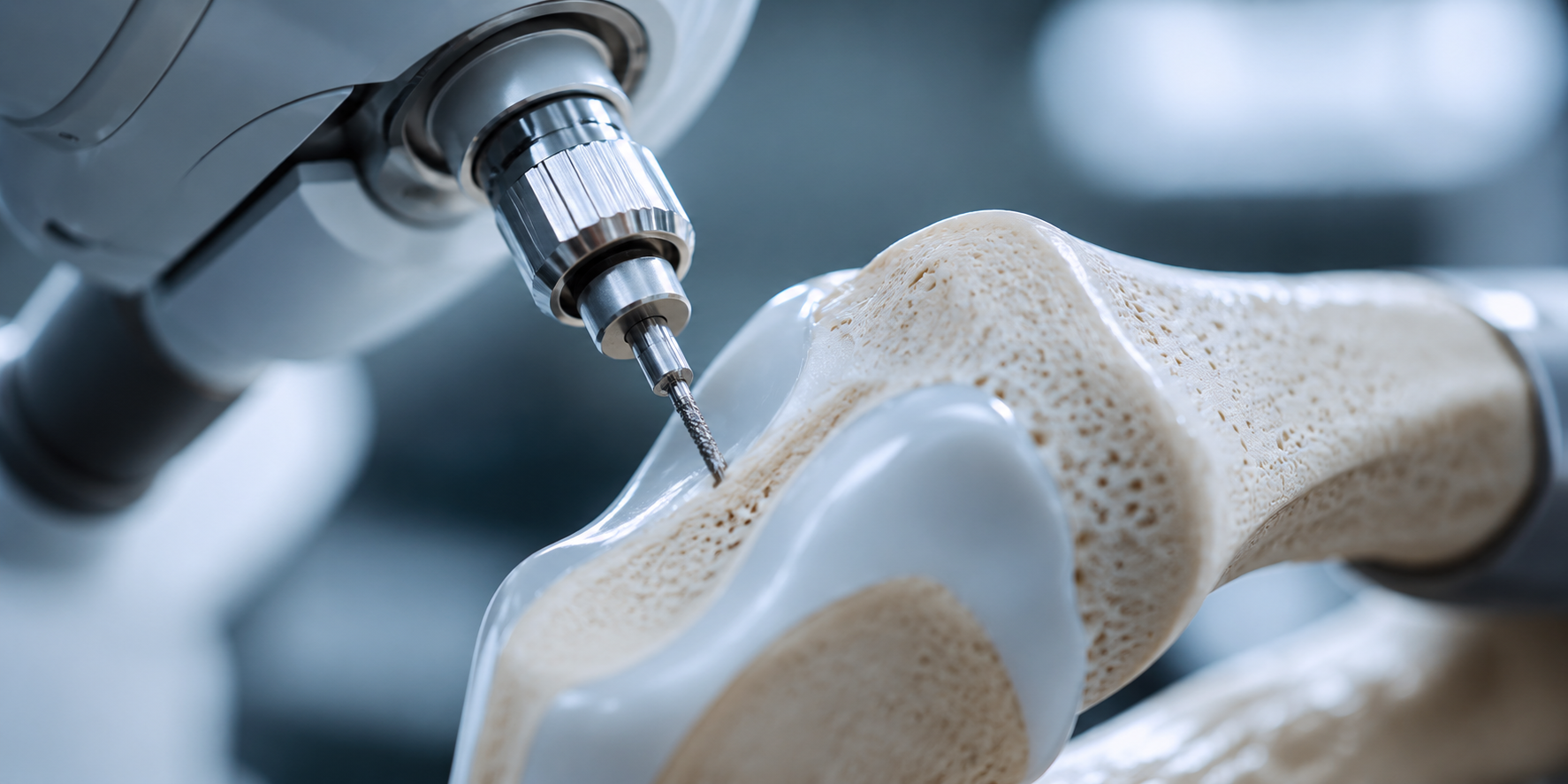
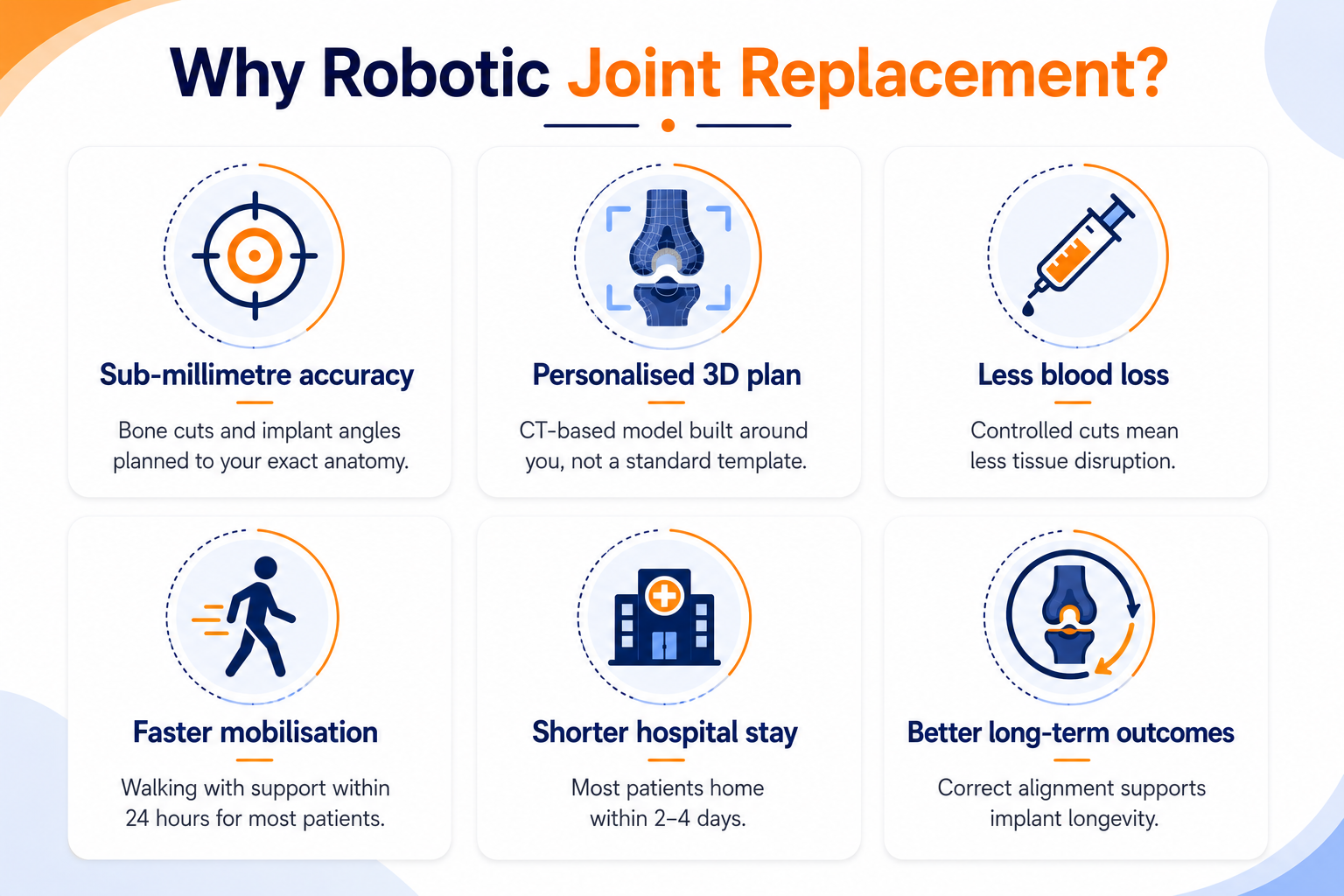
Robotic joint replacement surgery is a surgeon-controlled, computer-assisted procedure in which a robotic system helps plan and execute the replacement of a damaged joint with sub-millimetre accuracy. Before surgery, a CT scan of the patient’s joint is used to build a precise 3D virtual model. The surgeon uses this to define every bone cut and the position of every implant in advance. In the operating theatre, a robotic arm provides real-time guidance and physical boundary control, ensuring no instrument strays even fractionally beyond the intended zone.
The robot does not operate independently. The surgeon remains in complete control. The robotic system acts as an intelligent guide, helping the surgeon reproduce optimal precision consistently, particularly in complex or revision cases.
Robotic joint replacement is most commonly used for three procedures:
- Robotic Total Knee Replacement (TKR): Full replacement of the knee joint with a precisely fitted implant, planned and executed with 3D accuracy.
- Robotic Partial Knee Replacement (PKR): Replacement of only the damaged compartment of the knee, preserving healthy bone and ligaments on the unaffected side.
- Robotic Total Hip Replacement (THR): Replacement of the hip joint with precise positioning of both the cup and stem components, mapped to individual anatomy.
How Is Robotic Joint Replacement Different from Conventional Surgery?
Robotic joint replacement differs from conventional surgery in three key ways: pre-operative 3D surgical planning tailored to each patient’s anatomy, real-time intraoperative guidance with haptic boundary control, and quantified soft tissue balancing, all of which reduce variability and improve implant alignment accuracy compared to manual techniques.
A 2022 systematic review and meta-analysis published in Knee Surgery, Sports Traumatology, Arthroscopy found robotic-arm-assisted total knee replacement was associated with measurably improved implant accuracy and better patient-reported outcomes compared to conventional techniques.
| Feature | Robotic-Assisted | Conventional |
| Pre-operative planning | Individualised 3D CT model | Standard templates |
| Intraoperative guidance | Real-time robotic feedback | Surgeon’s manual judgment |
| Implant alignment | Sub-millimetre accuracy | Good, with natural variability |
| Soft tissue balancing | Quantified, measurable | Tactile and experience-based |
| Blood loss | Typically less | Comparatively more |
| Best suited for | Complex, revision, or high-demand cases | Straightforward cases with experienced surgeons |
Robotic Joint Replacement Procedure: Step by Step
Step 1: Pre-Operative Evaluation
Your X-rays, MRI, and CT scan, alongside your clinical history and physical examination is reviewed. A dedicated CT of the affected joint is performed to build the 3D virtual model used in personalised surgical planning. Your specific anatomy, deformity pattern, and target alignment are all mapped individually at this stage.
Step 2: Surgical Planning
Using the 3D model, precise bone cuts, implant size, and positioning are defined before you enter the operating theatre. Every measurement is locked in advance, reducing intraoperative judgment calls and improving consistency of execution.
Step 3: Anaesthesia
Most robotic joint replacement procedures are performed under spinal or regional anaesthesia. General anaesthesia may be used depending on the joint and patient-specific clinical factors. The anaesthesia type and duration are planned as part of the pre-operative workup.
Step 4: Robotic-Assisted Surgery
In the OT, the robotic system is registered to your actual joint using anatomical landmarks. The robotic arm provides continuous real-time guidance and physically resists any movement outside the pre-planned safe zone. This haptic boundary feedback is one of the most important safety features of modern robotic surgery.
Step 5: Implant Placement and Closure
With bone cuts completed and soft tissues balanced, the implant is seated, checked, and the joint is closed in layers. The procedure typically takes between 60 and 120 minutes, depending on the joint and complexity.
Step 6: Post-Operative Recovery and Physiotherapy
Most patients begin walking with support within 24 hours of surgery. Hospital stay is typically 2 to 4 days. A structured physiotherapy programme begins before discharge, with a personalised home plan provided on leaving the hospital.
Who Is a Good Candidate for Robotic Joint Replacement?
You may be a good candidate for robotic joint replacement in Gurgaon if you have severe osteoarthritis, rheumatoid arthritis, or avascular necrosis of the knee or hip that has not responded adequately to non-surgical treatment, particularly if your case involves significant joint deformity, complex anatomy, or revision surgery after a prior replacement.
Specifically, robotic-assisted surgery is often most beneficial for:
- Patients with significant varus or valgus knee deformity, where precise correction is critical to a functional outcome
- Younger, more active patients where implant longevity and alignment accuracy carry greater long-term importance
- Revision joint replacement cases where anatomy is altered from prior surgery
- Patients with complex bone morphology or unusual anatomy, where manual instrumentation carries higher risk of alignment outliers
- Patients with Osteoarthritis, Rheumatoid Arthritis, Avascular Necrosis, or Joint Deformities who have been advised of joint replacement
Patients with active joint infection, severe bone quality compromise, or certain systemic conditions may not be suitable candidates. Dr. Jha evaluates each case individually and recommends the most appropriate surgical approach after reviewing all clinical information.
Benefits of Robotic Joint Replacement Surgery
Recovery After Robotic Joint Replacement
Recovery from robotic joint replacement is typically faster than from conventional surgery. Because robotic-assisted techniques cause less trauma to surrounding soft tissues, most patients mobilise sooner, experience less immediate post-operative pain, and progress through physiotherapy milestones more quickly.
Typical recovery timeline:
- Days 1-2: Hospital monitoring; physiotherapy begins, bed exercises, supervised standing, and walking with support
- Days 3-4: Most patients are discharged; wound care and mobility aid guidance provided
- Weeks 2-4: Increasing independence; many patients walk without aids within 3-4 weeks (knee) or 4-6 weeks (hip)
- Week 6: Follow-up assessment; most daily activities, including driving, typically resumed
- 3-6 months: Near-complete functional recovery; return to low-impact activity and sport for appropriate patients
Recovery timelines vary based on the joint replaced, body weight, pre-operative muscle strength, and consistency with physiotherapy. Dr. Jha’s team provides every patient with a personalised rehabilitation plan covering the full recovery period.
Explore related procedures: Knee Replacement Surgery in Gurgaon | Hip Replacement Surgery in Gurgaon | Shoulder Replacement in Gurgaon
Struggling with Joint Pain, Sports Injury, or Arthritis?
Robotic Joint Replacement Cost in Gurgaon
The cost of robotic joint replacement in Gurgaon typically ranges from ₹2,50,000 to ₹5,50,000, depending on the joint replaced (knee or hip), whether the procedure is total or partial, the implant brand and material grade, and the duration of hospital stay.
Factors that influence the total cost:
- Type of procedure; total vs. partial knee or hip replacement
- Implant selection; standard vs. premium-grade bearing surfaces
- Robotic system and associated consumables
- Hospital room category; general ward, semi-private, or private
- Duration of stay and in-hospital physiotherapy
- Pre-operative investigations; CT, X-ray, MRI, blood work
A detailed written cost estimate is provided to every patient after clinical evaluation. No hidden charges. Any additional costs are communicated clearly before any decision is made.
Why Choose Dr. Ramkinkar Jha for Robotic Joint Replacement in Gurgaon?
For patients considering best robotic knee replacement in Gurgaon or robotic hip replacement in Gurgaon, the choice of surgeon matters at least as much as the technology. Robotic systems improve consistency and accuracy, but only when combined with deep surgical experience, sound clinical judgment, and patient-first decision-making.
- 20+ Years of Joint Replacement Experience: Over 12,000 orthopaedic surgeries, including a high volume of complex primary and revision joint replacements annually.
- Global Fellowship Training: MCh with Distinction from the University of Edinburgh. Fellowship-trained in joint replacement and orthopaedic surgery across the UK, Singapore, Hong Kong, Switzerland, and Malaysia.
- Ethics-First Recommendation: Robotic joint replacement is recommended only when it offers a genuine clinical benefit for your specific case.
- Transparent Cost and Communication: Every patient receives a full explanation of diagnosis, surgical approach, expected outcomes, and a written cost estimate before any decision is made. No surprise billing.
- Nationally Recognised: Indian Excellence Award (2022), Best Orthopaedic Surgeon; Dr. APJ Abdul Kalam Health Award (2023), Service Excellence in Joint Replacement.
Book a Consultation for Robotic Joint Replacement in Gurgaon
If you or a family member is living with severe joint pain and has been advised joint replacement surgery, schedule a consultation with an experienced orthopaedic specialist and understand clearly whether robotic-assisted surgery is the right option for your specific case.
What to bring for your consultation:
- Recent X-ray, MRI, or CT scan films and reports
- Previous orthopaedic treatment records or discharge summaries
- List of current medications
- Health insurance documents, if applicable
- Your specific concerns about surgery, recovery, and return to activity
Your health, safety, and long-term joint function are the priorities. You will be guided through every step, surgical planning, procedure, and rehabilitation, with expertise, honesty, and genuine care.
For urgent orthopaedic symptoms, severe joint swelling, sudden inability to bear weight, or acute worsening of pain following injury, consult now.
Frequently Asked Questions
Is robotic joint replacement surgery safe? expand_more
Yes. Robotic joint replacement is a well-established and safe procedure when performed by a trained, experienced surgeon.
Does the robot perform the surgery by itself? expand_more
No. The surgeon is in complete control throughout the procedure. The robotic arm assists by providing real-time feedback and physical resistance if an instrument approaches the boundary of the planned safe zone.
How long does a robotic joint replacement last? expand_more
With correct alignment and appropriate patient selection, modern joint implants are designed to last 15 to 20 years or more. Robotic assistance helps achieve the precise alignment that is associated with better long-term implant performance and a lower likelihood of revision surgery.
Is robotic joint replacement covered under health insurance? expand_more
Many health insurance policies in India cover joint replacement surgery, including robotic-assisted procedures, when medically necessary. Patients are advised to check with their insurer regarding pre-authorisation requirements, documentation, and any specific exclusions.
How do I book an appointment with Dr. Ramkinkar Jha? expand_more
You can book a consultation with Dr. Ramkinkar Jha directly through the appointment form on this page. Outstation and international patients may share MRI reports and medical records in advance via the contact form for a preliminary review before their visit.

Dr. Ramkinkar Jha's Content Team
Dr. Ramkinkar Jha’s medical content team specialises in producing accurate, clear, and patient-focused orthopaedic content. With a strong foundation in clinical knowledge and expertise in technical writing and SEO, the team translates complex orthopaedic and musculoskeletal information into reliable, easy-to-understand resources. Their work helps patients make informed healthcare decisions while reflecting Dr. Jha’s commitment to high-quality, expert care in joint replacement, trauma, sports injuries, and advanced orthopaedic treatments.
This content is reviewed by Dr. Ramkinkar Jha

Related Blogs

Orthopaedic Implants: Types, Benefits, Costs & What Patients Must Know
Orthopaedic implants are biocompatible devices used to replace, stabilise, or support bones and joints affected…
Read Article → WhatsApp