
Patellar Dislocation Treatment in Gurgaon
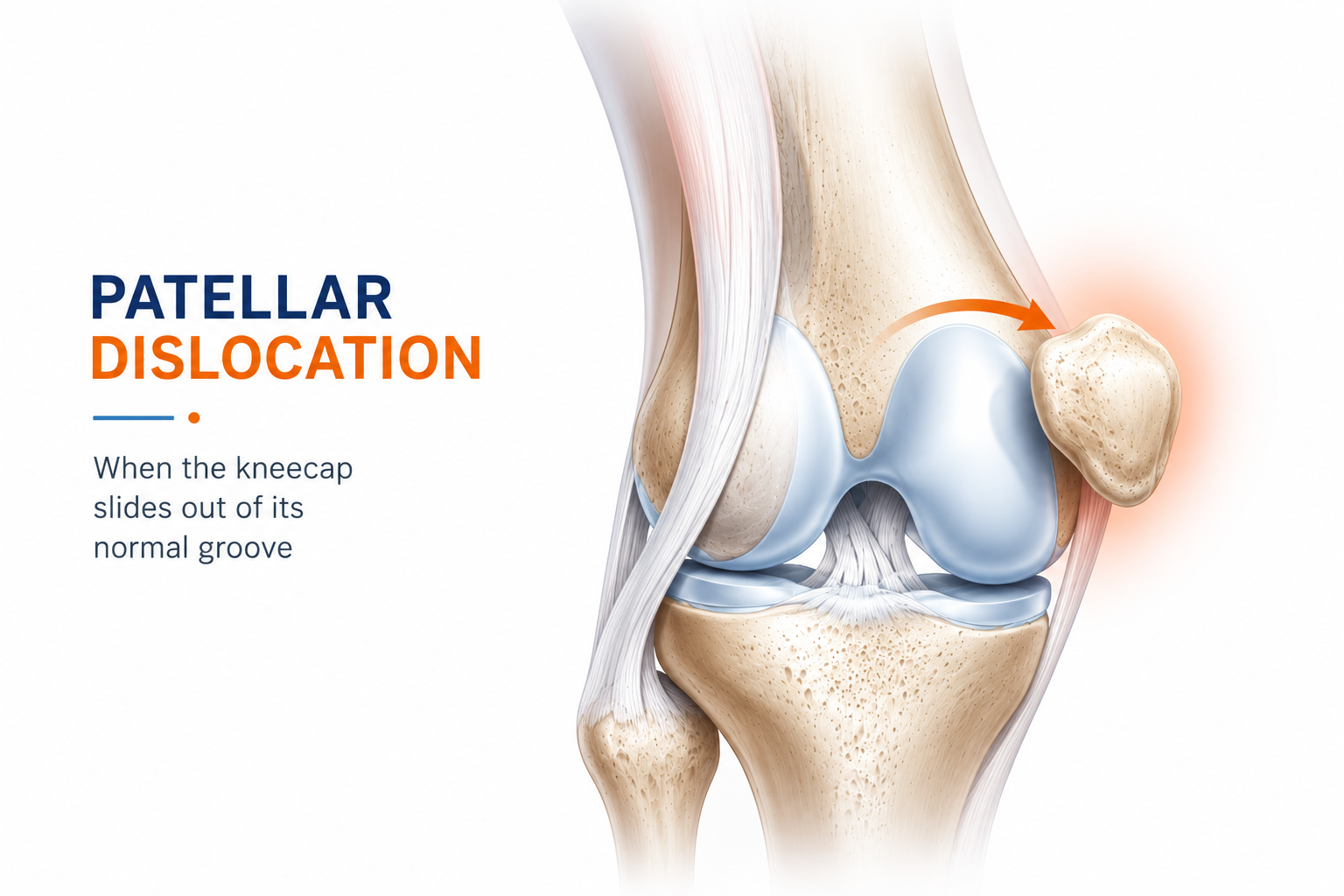
Patellar dislocation, also called kneecap dislocation, is a painful and often destabilising knee injury in which the patella slips out of its normal groove at the front of the knee (the trochlear groove of the femur). It accounts for roughly 3% of all knee injuries and, when left inadequately managed, carries a recurrence rate of 15-60% after a first-time event, climbing to over 50% after a second dislocation.
Dr. Ramkinkar Jha, Director, Department of Orthopaedics at CK Birla Hospital, Gurugram, is one of Delhi NCR’s most experienced knee and sports injury specialists. He offers a personalised, evidence-based approach to patellar dislocation, from first-time injuries to complex recurrent instability requiring reconstructive surgery.
Book a Consultation with Dr. Ramkinkar Jha, Leading Orthopaedic Surgeon in Gurgaon
What Is Patellar Dislocation?
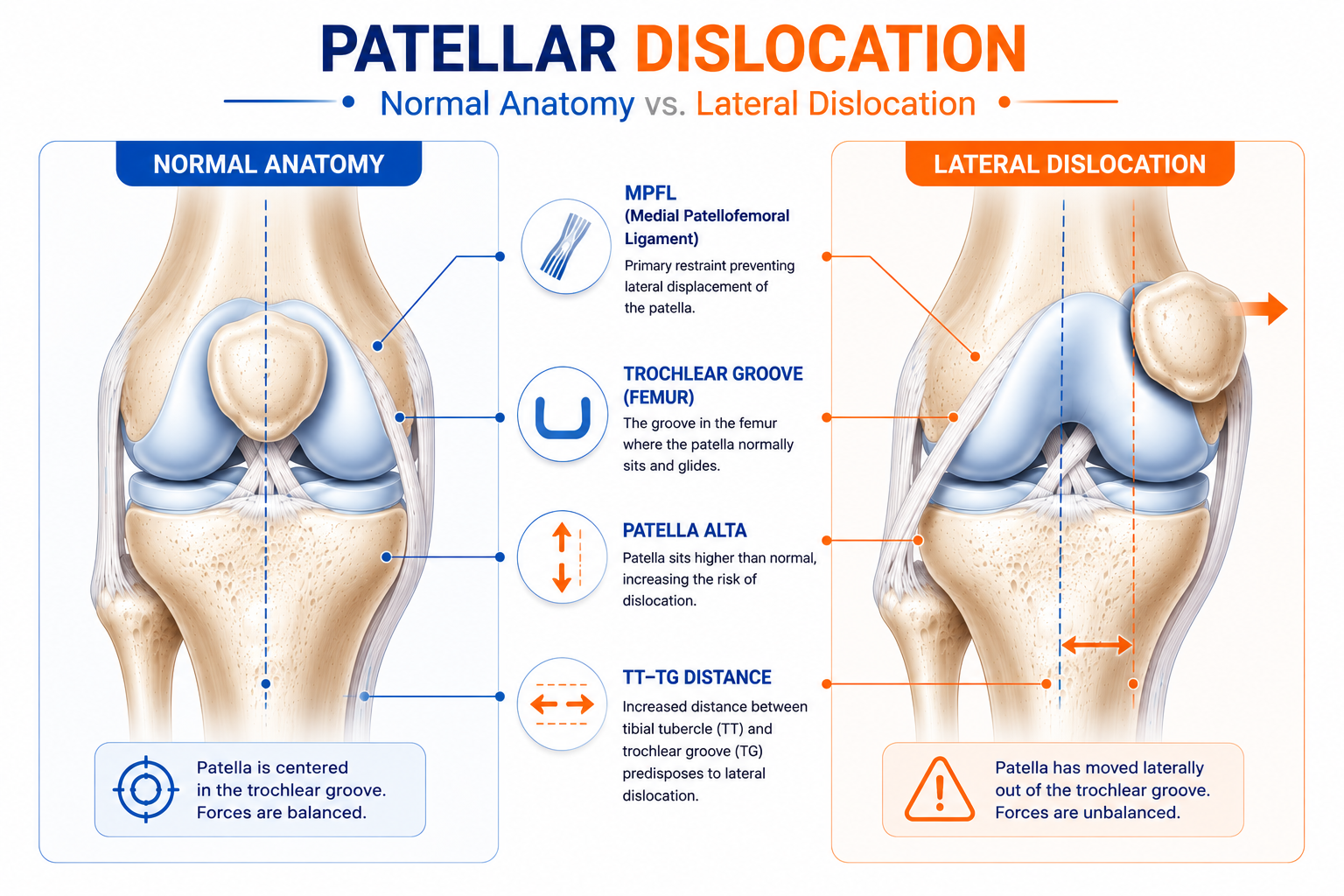
Patellar dislocation occurs when the kneecap is forcibly displaced, almost always laterally (outward), from its normal position within the trochlear groove. The medial patellofemoral ligament (MPFL), the primary soft-tissue restraint holding the patella in place, is torn in the majority of acute dislocations. In some cases, the cartilage surface of the patella or the groove itself is also damaged at the time of injury.
The condition exists on a spectrum. A first-time traumatic dislocation in a structurally normal knee is a different clinical problem from recurrent patellar instability driven by anatomical risk factors such as trochlear dysplasia, patella alta, or an abnormally high tibial tuberosity-trochlear groove (TT-TG) distance. Treatment decisions depend critically on identifying which part of the spectrum a patient sits in.
Patellar dislocation is most common in adolescents and young active adults. Incidence in the 10-17 age group can reach 29 per 100,000, far higher than in the general population.
Causes and Risk Factors of Patellar Dislocation
Patellar dislocation is most commonly caused by a non-contact twisting injury to the knee or a direct blow to the inner side of the kneecap. The mechanism typically involves external rotation of the shinbone with the foot planted on the ground, generating a lateral force on the patella that overcomes the restraining ligaments.
Common causes:
- Sudden change of direction during sport (football, basketball, badminton, dance)
- Direct blow or contact to the medial knee
- Awkward landing from a jump
- Simple misstep or tripping, especially in those with underlying anatomical risk factors
Anatomical risk factors that increase vulnerability:
- Trochlear dysplasia: A shallow or flat trochlear groove that does not adequately guide the patella
- Patella alta: A high-riding kneecap that engages the groove later in flexion
- Elevated TT-TG distance: Increased lateral pull on the patella from the quadriceps mechanism
- Generalised ligamentous laxity: Joint hypermobility allowing excessive patellar movement
- Genu valgum (knock-knee alignment): Increases the lateral vector on the patella
- Female sex and younger age: Both are independently associated with higher recurrence
Patellar Dislocation Symptoms
Patellar dislocation presents with sudden, severe knee pain, visible or felt kneecap displacement to the outer side of the knee, immediate swelling, and inability to straighten the leg. Many patients describe the sensation as the knee “giving way” or “popping out.”
Symptoms include:
- Sudden sharp pain at the front of the knee during the injury
- Visible deformity, the kneecap sitting noticeably to the outer side of the knee
- Immediate swelling of the knee joint (haemarthrosis from MPFL or cartilage bleeding)
- Inability or extreme difficulty bearing weight or straightening the knee
- A sensation that the kneecap “went out” and either stayed out or popped back in spontaneously
- Tenderness along the inner edge of the kneecap (medial border) after reduction
In recurrent instability, the episodes may be less dramatic, patients describe the knee “slipping,” a feeling of giving way during activity, or apprehension when pushing the kneecap laterally (a positive “apprehension sign” on clinical examination).
If you experience sudden knee deformity, severe pain, or persistent instability after a previous dislocation, seek an orthopaedic evaluation promptly.
How Is Patellar Dislocation Diagnosed?
Patellar dislocation diagnosis is done through a combination of clinical history, physical examination, and targeted imaging. No single investigation is needed for every patient
Clinical examination:
- Assessment of patellar position, tracking, and apprehension sign
- Evaluation of lower-limb alignment (Q angle, valgus)
- Assessment of ligamentous laxity
Imaging investigations:
- X-ray (weight-bearing, skyline/axial view): Assesses trochlear depth, patella height, and rules out osteochondral fracture
- MRI: Identifies MPFL tear (present in up to 94% of first-time dislocations), bone bruising pattern, cartilage injury, and trochlear morphology
- CT scan: Precisely measures TT-TG distance and quantifies trochlear dysplasia for surgical planning when bony correction is being considered
The combination of imaging findings and clinical risk factors guides whether a patient is a candidate for conservative rehabilitation or requires surgical stabilisation.
Patellar Dislocation Treatment in Gurgaon
Patellar dislocation treatment depends on whether the dislocation is a first-time event or recurrent, the presence of structural damage such as cartilage injury or osteochondral fracture, and the underlying anatomical risk factors identified on imaging. Treatment ranges from conservative rehabilitation to arthroscopic or open surgical reconstruction.
Conservative (Non-Surgical) Treatment
Conservative management is appropriate for many first-time dislocations where there is no osteochondral fracture, no significant cartilage injury, and no high-risk anatomical features. The primary goal is to reduce pain and swelling, restore range of motion, and strengthen the dynamic stabilisers of the patella, particularly the VMO (vastus medialis oblique) component of the quadriceps.
Conservative treatment includes:
- Acute reduction of the dislocated patella (if not already spontaneously reduced), performed gently with the knee extended
- RICE protocol in the first 48-72 hours: rest, ice, compression, elevation
- Knee brace or patellar stabilising brace for 3-6 weeks to protect the healing MPFL
- Physiotherapy: Progressive quadriceps strengthening, neuromuscular re-education, and return-to-sport training, typically over 6-12 weeks
- Activity modification during the rehabilitation period
Surgical Treatment
Surgery is indicated for first-time dislocations complicated by osteochondral fracture or significant cartilage damage, and for recurrent patellar instability where conservative treatment has failed. The choice of surgical procedure is guided by the specific anatomical abnormality identified.
MPFL Reconstruction (Medial Patellofemoral Ligament Reconstruction)
This is the most commonly performed procedure for recurrent patellar dislocation in patients without significant bony abnormality. The torn or attenuated MPFL is reconstructed using a tendon graft (typically gracilis autograft from the patient’s own hamstring), restoring the primary medial restraint to the patella. MPFL reconstruction is typically performed arthroscopically or through small incisions, offering rapid recovery and low recurrence rates when appropriately selected.
If you have been diagnosed with a recurrent patellar dislocation or MPFL tear, understanding the role of arthroscopy in knee conditions is a helpful starting point before your consultation.
Tibial Tubercle Osteotomy (TTO / MPFL + TTO)
In patients with an elevated TT-TG distance (typically above 20 mm), osteotomy of the tibial tubercle, the bony attachment of the patellar tendon, is performed to correct the excessive lateral pull on the patella. This is combined with MPFL reconstruction in most cases.
Trochleoplasty
In patients with severe trochlear dysplasia, in which the groove is nearly flat, surgical deepening of the trochlear groove (trochleoplasty) may be required. This is a more complex procedure, reserved for specific anatomical indications.
Arthroscopic Cartilage Management
Osteochondral fragments or cartilage damage identified at the time of injury or on MRI may be addressed arthroscopically, through fragment fixation, microfracture, or cartilage repair. Dr. Jha’s experience with cartilage damage treatment and arthroscopic techniques ensures these associated injuries are addressed as part of a comprehensive plan.
Recovery After Patellar Dislocation Treatment
Patellar dislocation treatment recovery depends on whether surgery was performed and which procedure was undertaken. With conservative management, most patients return to light activity within 4-6 weeks and to sport within 3 months with appropriate physiotherapy. After MPFL reconstruction, return to sport typically takes 4-6 months. Bony procedures such as tibial tubercle osteotomy may require 6-9 months before full return to sport.
Typical recovery milestones after MPFL reconstruction:
- Week 1-2: Brace, partial weight-bearing, swelling management, gentle range of motion
- Week 3-6: Progressive weight-bearing, quadriceps activation and strengthening
- Week 6-12: Proprioceptive and neuromuscular training, cycling, hydrotherapy
- Month 3-4: Sport-specific conditioning, agility work
- Month 4-6: Graduated return to training and competitive sport
Physiotherapy plays a critical role at every stage. Your rehabilitation is coordinated from day one of treatment through to return to activity, with clear milestones and personalised timelines.
Struggling with Joint Pain, Sports Injury, or Arthritis?
Why Choose Dr. Ramkinkar Jha for Patellar Dislocation Treatment in Gurgaon?
For patients seeking expert patellar dislocation treatment in Gurgaon or Delhi NCR, Dr. Ramkinkar Jha at CK Birla Hospital offers a combination of subspecialty training, surgical volume, and evidence-based care that is difficult to match in the region.
- 20+ Years of Experience: 12,000+ surgeries including 1,000+ arthroscopy and sports injury procedures annually
- Global Fellowship Training: MBBS Gold Medallist; MS from AIIMS New Delhi; MCh with Distinction, University of Edinburgh; fellowships in the UK, Singapore, Hong Kong, Switzerland, and Malaysia
- Anatomical Assessment First: Every patient’s imaging is reviewed in detail before any surgical recommendation, identifying whether MPFL reconstruction, bony correction, or conservative care is the right choice
- Advanced Technology: Full range of fixation options
- Transparent, No-Surprise Costs: Written cost estimates shared before any decision; no unnecessary investigations or procedures
- Nationally Recognised: Indian Excellence Award (2022), Best Orthopaedic Surgeon; Dr. APJ Abdul Kalam Health Award (2023), Service Excellence in Joint Replacement
Patients dealing with knee instability, recurrent patellar dislocation, or sports-related knee injury, including associated ACL tears or meniscus damage, frequently benefit from a combined evaluation at the same consultation. If your knee has been unstable after a prior dislocation, this is the right time to get a definitive structural assessment.
Book a Consultation for Patellar Dislocation Treatment in Gurgaon
If you have experienced a patellar dislocation, whether for the first time or as a recurring problem, schedule a consultation with an orthopaedic surgeon for expert assessment and a clear, personalised treatment plan.
What to bring during consultation :
- Recent MRI, X-ray films and reports
- Previous medical records or discharge summaries
- List of current medications
- Insurance documents, if applicable
Your recovery, stability, and return to full activity are the priority. You will be guided through every stage, from diagnosis and treatment decision to rehabilitation and confident return to sport or daily life.
Frequently Asked Questions
Can a patellar dislocation heal on its own without surgery? expand_more
A first-time patellar dislocation with no structural damage and no high-risk anatomical features can often be managed successfully with conservative treatment.
How do I know if I need surgery after a patellar dislocation? expand_more
Surgery is generally recommended if there is an osteochondral fracture or significant cartilage damage at the time of injury, if the dislocation recurs despite adequate conservative management, or if MRI and X-ray show anatomical abnormalities.
How long does recovery take after MPFL reconstruction? expand_more
Most patients return to daily activities within 6-8 weeks and to sport within 4-6 months, depending on the level of activity and whether additional bony procedures were required.
Is patellar dislocation common in athletes and teenagers? expand_more
Yes. Patellar dislocation is significantly more common in young, active individuals, incidence in the 10-17 age group is estimated at up to 29 per 100,000, compared to 5.8 per 100,000 in the general population.
How do I book an appointment with Dr. Ramkinkar Jha for patellar dislocation? expand_more
You can book a consultation with Dr. Ramkinkar Jha through the appointment booking form on this page, by calling the directly.

Dr. Ramkinkar Jha's Content Team
Dr. Ramkinkar Jha’s medical content team specialises in producing accurate, clear, and patient-focused orthopaedic content. With a strong foundation in clinical knowledge and expertise in technical writing and SEO, the team translates complex orthopaedic and musculoskeletal information into reliable, easy-to-understand resources. Their work helps patients make informed healthcare decisions while reflecting Dr. Jha’s commitment to high-quality, expert care in joint replacement, trauma, sports injuries, and advanced orthopaedic treatments.
This content is reviewed by Dr. Ramkinkar Jha
Related Conditions

Cartilage Damage Treatment in Gurgaon
Cartilage damage is one of the most common and most underdiagnosed causes of persistent joint pain in active adults and…
Sports Injuries Treatment in Gurgaon
Every year, an estimated 3.7 million sports-related injuries are treated across India, according to data from the Indian Journal of Orthopaedics. For…
Meniscus Tear Treatment in Gurgaon
A torn meniscus doesn’t always mean surgery, or just rest. What decides the right meniscus tear treatment is where the…
MCL & LCL Injury Treatment in Gurgaon
MCL and LCL injuries range from mild sprains to complete tears causing knee instability. Treatment depends on grade and ligament…
Calf Muscle Tear (Tennis Leg) Treatment in Gurgaon
A sudden, sharp pain in the back of the lower leg, sometimes described as being “hit” or “kicked” from behind,…
Patellofemoral Pain Syndrome (Runner’s Knee) Treatment in Gurgaon
That dull ache at the front of your knee, the one that flares up on stairs, after a long run,…
Related Blogs
10 Best Knee Strengthening Exercises for Stronger Knees
There’s a moment everyone with knee trouble knows: the pause right before standing up from…
Read Article →
Osteoporosis Treatment: Medicines, Diet, Exercise & Prevention
It usually starts quietly. A slight stoop in the shoulders that wasn’t there a few…
Read Article →
How Athletes Can Prevent Knee Ligament Injuries
Every athlete, whether you play recreational cricket on weekends or train competitively for football, basketball,…
Read Article →
ACL vs PCL Tear: Key Differences, Symptoms & Treatment
When someone twists their knee during a football match or hears a sudden “pop” on…
Read Article →
Top 5 Common Sports Injuries and How to Prevent Them – Dr Ramkinkar Jha
Sports are a great way to stay fit and active, but injuries can sometimes get…
Read Article → WhatsApp