
How Athletes Can Prevent Knee Ligament Injuries
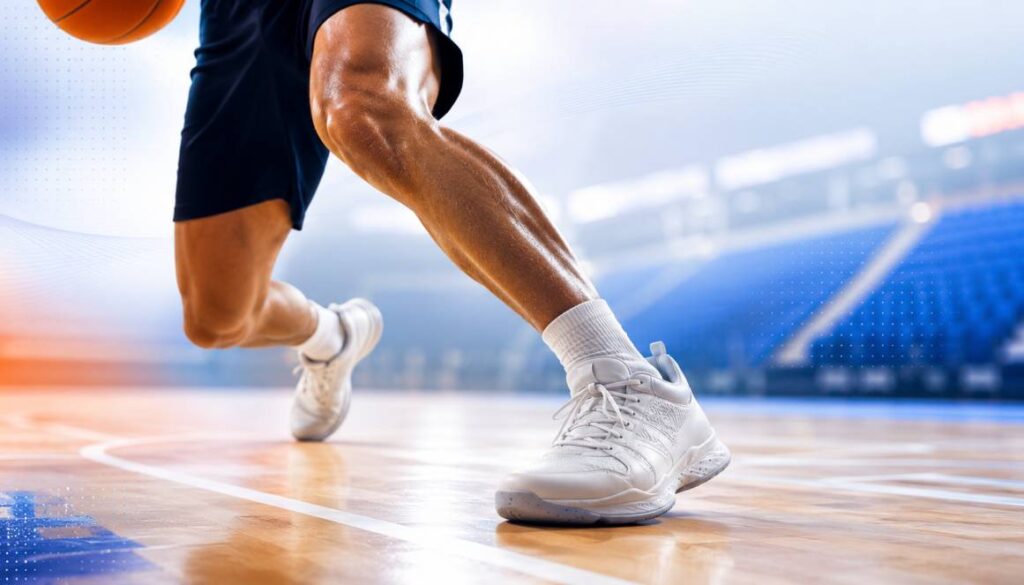
Every athlete, whether you play recreational cricket on weekends or train competitively for football, basketball, or kabaddi, carries one very real risk: a knee ligament injury. It can happen in a single misjudged step, a hard landing, or a sudden change of direction. And when it does, it doesn’t just sideline you for a few days. Depending on the severity, you could be off the field for months.
The good news? Most knee ligament injuries are preventable. This is not a matter of playing less; it’s a matter of preparing smarter.
Book a Consultation with Dr. Ramkinkar Jha, Leading Orthopaedic Surgeon in Gurgaon
Why Knee Ligaments Are So Vulnerable in Sport?
What makes the knee especially vulnerable is the demand placed on it during sport: rapid deceleration, pivoting, cutting, jumping, and twisting, often simultaneously. Research shows that approximately 70-80% of ACL injuries are non-contact, meaning they don’t result from a collision but from the athlete’s own movement pattern, a bad landing, or a sudden stop
The knee is held together by four main ligaments:
- The ACL (anterior cruciate ligament)
- PCL (posterior cruciate ligament)
- MCL (medial collateral ligament)
- LCL (lateral collateral ligament)
Among these, the ACL is the most commonly injured in athletes across all sports and age groups.
Female athletes face a particularly elevated risk. A 2025 systematic review published found that female athletes are 2.2 times more susceptible to ACL injuries compared to male athletes, due to differences in anatomy, hormones, and movement mechanics. This makes prevention training especially important for women in sport.
The consequences go beyond the knee. Meniscus tears and cartilage damage often accompany ligament injuries, compounding the recovery timeline and long-term joint health.
The 6 Most Effective Ways Athletes Can Prevent Knee Ligament Injuries
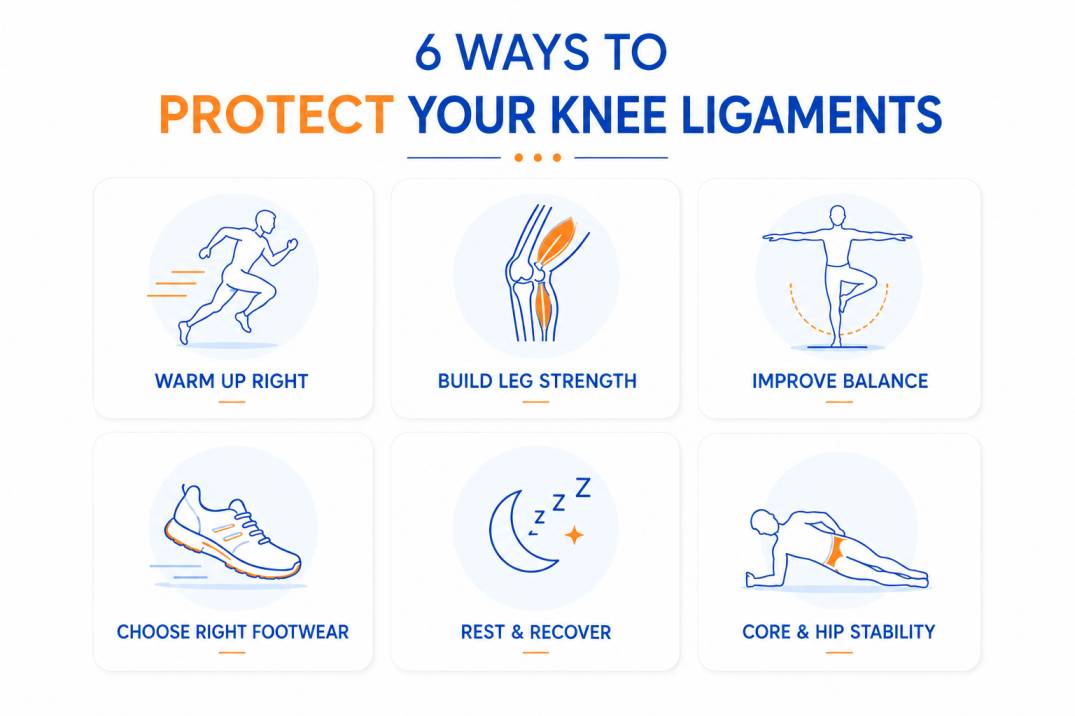
1. Never Skip the Warm-Up and Make It Sport-Specific
A five-minute jog before training is not a warm-up. A proper warm-up activates the muscles that protect the knee, raises tissue temperature, and primes neuromuscular coordination. Focus on dynamic movements, leg swings, hip circles, lateral shuffles, walking lunges, and controlled single-leg balance work. This is especially important before sports that involve sudden direction changes, like football, badminton, or basketball.
The FIFA 11+ warm-up programme, validated in peer-reviewed research, has been shown to reduce overall knee injury rates significantly when followed consistently.
2. Strengthen the Muscles Around the Knee, Especially the Posterior Chain
Strong quadriceps matter, but hamstring strength is equally, and arguably more, important for ligament protection. The hamstrings act as a co-stabiliser to the ACL. Weak or imbalanced hamstrings mean the ACL absorbs more load than it should.
Athletes should include:
- Romanian deadlifts and Nordic curls, among the most effective exercises for hamstring strength and injury prevention
- Single-leg squats and step-downs, to build functional, sport-specific quad strength and balance
- Hip abductor and glute work, hip weakness causes the knee to collapse inward (valgus), one of the most common mechanisms of ACL injury
A 2025 meta-analysis published in Frontiers in Physiology found that neuromuscular and strength training interventions significantly reduced knee injury rates in young athletes when performed consistently and progressively.
3. Fix Your Landing Mechanics
Most ACL tears happen at landing, after a jump, during a cut, or while decelerating from a sprint. The way you land matters enormously. Landing with a straight knee, or with the knee collapsing inward, places enormous stress on the ligament.
Athletes should practise:
- Landing with a soft, slightly bent knee (never locked out)
- Keeping knees aligned over the second toe, not collapsing inward
- Distributing load through both legs symmetrically where possible
- Controlled deceleration before pivoting
Ask your coach or a sports physiotherapist to observe and correct your landing pattern. Small mechanical corrections made early prevent major injuries later.
4. Don’t Ignore Core and Hip Stability
The knee doesn’t operate in isolation. How your hip and trunk control movement directly affects the stress your knee absorbs. Athletes with weak core muscles and poor hip control tend to land and cut with excessive trunk lean, putting the knee at higher risk.
Incorporating planks, single-leg Romanian deadlifts, lateral band walks, and rotational core exercises into training improves the kinetic chain mechanics that protect the knee during sport.
This is an area where working with a sports injury specialist or a physiotherapist for a structured assessment can make a measurable difference to your long-term injury risk.
5. Wear the Right Footwear and Respect the Surface
Footwear that matches your sport and playing surface reduces rotational stress on the knee. Football cleats designed for firm ground used on artificial turf, or running shoes worn for court sport, change the traction dynamics in ways that increase ligament strain.
Replace athletic footwear regularly. Worn-out soles reduce shock absorption and alter gait mechanics subtly but meaningfully over time. If you are returning from a lower limb injury or have had a foot or ankle problem in the past, a biomechanical footwear assessment is worth considering.
6. Build Recovery Into Your Training Plan, Not as an Afterthought
Ligament injuries often occur not at the start of a season but mid-season or toward the end of a tournament, when accumulated fatigue compromises neuromuscular control. Tired muscles react more slowly and protect joints less effectively.
Structured rest, adequate sleep, and periodised training, where load increases gradually and deload weeks are built in, are not signs of undertraining. They are the infrastructure of athletic longevity. Overtraining syndrome quietly sets the stage for the knee injury that everyone calls “bad luck.”
Symptoms of Knee Ligament Injury: When Prevention Isn’t Enough
Even with excellent preventive habits, injuries can occur. Knowing when to seek an orthopaedic assessment, rather than pushing through pain, is itself a form of prevention. Playing through instability, swelling, or a giving-way sensation in the knee often turns a partial ligament injury into a complete tear.
Seek an orthopaedic evaluation if you notice:
- A sudden “pop” in the knee during activity
- Rapid swelling appearing within hours of an injury
- The knee feeling unstable, wobbly, or unreliable during movement
- Persistent pain that does not settle within a few days of rest
Early, accurate diagnosis, typically with an MRI of the knee, guides the right treatment, whether that is physiotherapy and bracing or, when structurally necessary, surgical reconstruction. The difference between seeing an orthopaedic specialist early and waiting three months often determines how fully you return to sport.
The Real Cost of a Knee Ligament Injury
Beyond the physical pain, a serious knee ligament injury carries a high personal and professional cost for athletes.
- Recovery from ACL reconstruction typically takes 6-9 months for return to competitive sport.
- Meniscal repairs take 6-8 weeks for light activity.
- There is an increased risk of re-injury and early-onset osteoarthritis in athletes who sustain significant ligament damage without proper rehabilitation.
Prevention is not just safer; it is far less disruptive to your athletic career than treatment.
A 2025 meta-analysis in Annals of Medicine found that neuromuscular training reduced ACL injury risk by 50% (RR = 0.50, 95% CI: 0.31-0.81) in female team-sport athletes when programmes were followed with high compliance.
The conclusion is not surprising to anyone working in orthopaedic sports medicine: the investment in prevention returns dividends that no reconstruction surgery can fully replicate.
Conclusion
The athletes who stay on the field longest are rarely the most naturally talented. They are the ones who warm up properly, train intelligently, listen to their bodies, and seek expert input before small problems become serious ones.
Protecting your knee ligaments is not complicated, but it does require consistency and the willingness to treat prevention as part of your training, not something separate from it. Whether you are a weekend warrior or a competitive athlete, the principles are the same. Your knees carry you through every sprint, pivot, and landing. They deserve to be taken seriously.
If you are experiencing knee pain, joint instability, or recovering from a sports injury, an evaluation with an experienced orthopaedic surgeon in Gurgaon can help you understand your options and get back to doing what you love.

 WhatsApp