
Ankle Replacement Surgery in Gurgaon
Chronic ankle pain that doesn’t respond to injections, braces, or physiotherapy is often a sign the cartilage inside the joint has worn away. For patients at this stage, ankle replacement surgery in Gurgaon offers a reliable way to relieve pain and restore natural joint movement without fusing the bones.
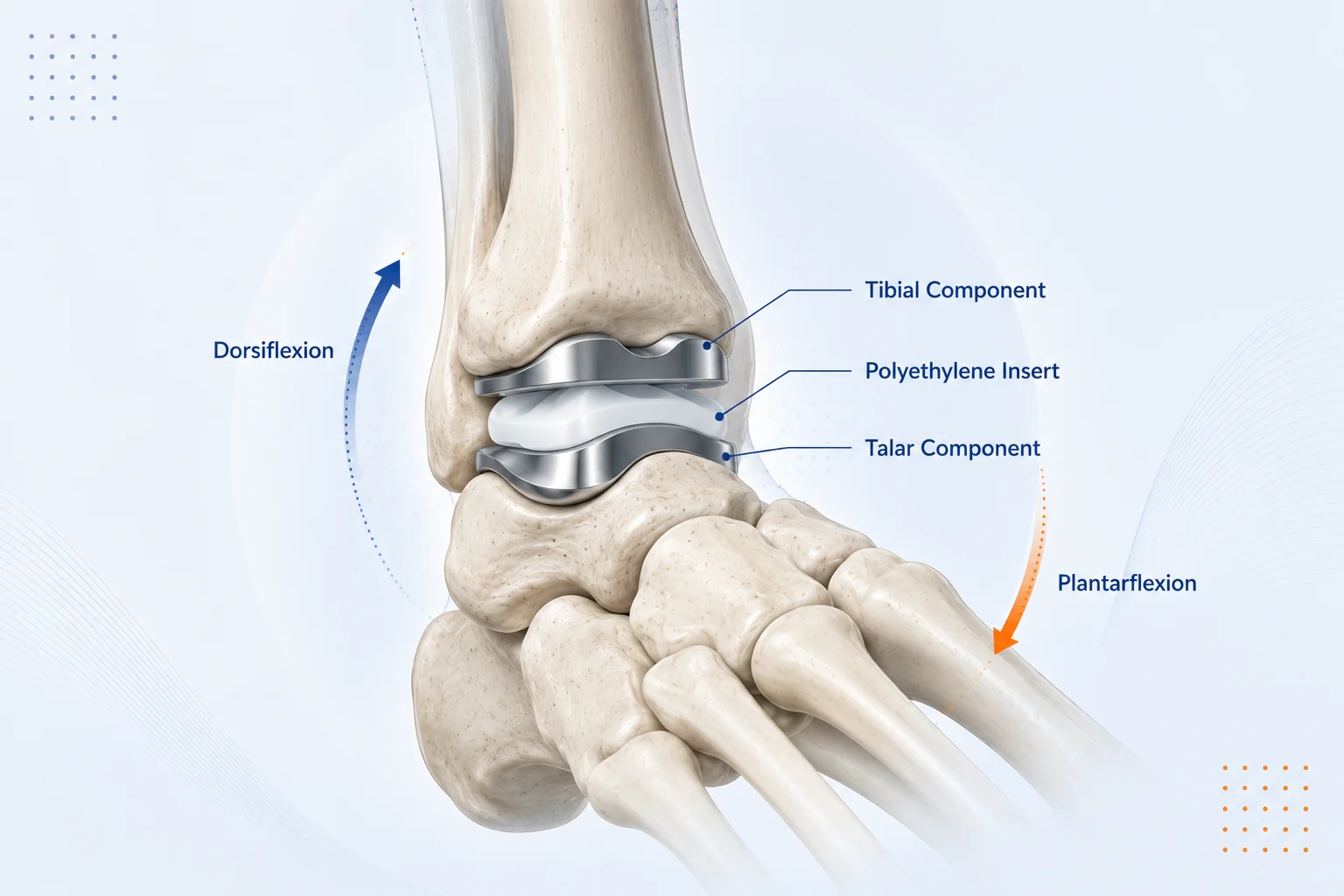
Dr. Ramkinkar Jha, Director, Department of Orthopaedics at CK Birla Hospital, Gurugram, evaluates each patient individually to determine whether total ankle replacement, ankle fusion, or a non-surgical approach is the safest path forward.
Book a Consultation with Dr. Ramkinkar Jha, Leading Orthopaedic Surgeon in Gurgaon
What Is Ankle Replacement Surgery?
Ankle replacement surgery (total ankle arthroplasty) is a procedure in which the damaged bone and cartilage of the ankle joint are removed and replaced with metal and polyethylene implants that recreate a smooth, moving joint surface. Unlike ankle fusion, it preserves natural ankle motion.
The procedure targets the tibiotalar joint, where the shinbone (tibia) meets the ankle bone (talus), resurfacing it with a metal component on each side and a polyethylene insert in between for smooth, low-friction movement.
Patients considering ankle joint replacement surgery are usually those with advanced arthritis where the joint has become stiff, painful, and mechanically damaged beyond what physiotherapy or medication can manage. Our foot and ankle surgery programme in Gurgaon covers the full spectrum of non-surgical and surgical ankle care.
Who Needs Ankle Replacement Surgery?
Ankle replacement is generally recommended for adults with end-stage ankle arthritis, osteoarthritis, rheumatoid arthritis, or post-traumatic arthritis, who have persistent pain and reduced mobility despite non-surgical treatment.
Common candidates include patients with:
- Severe osteoarthritis of the ankle causing bone-on-bone pain
- Post-traumatic arthritis following an old ankle fracture or ligament injury
- Rheumatoid arthritis affecting the ankle joint
- Ankle stiffness and swelling that limits walking, stair-climbing, or standing
- Failed response to injections, orthotics, or anti-inflammatory medication over several months
Patients with active infection, severe bone loss, or very high-impact activity demands may be better suited to ankle fusion or arthroscopic joint-preserving procedures instead. If your arthritis stems from an underlying condition such as rheumatoid arthritis or osteoarthritis, that condition is managed alongside the joint itself. A clinical and imaging assessment always precedes the final recommendation.
Total Ankle Replacement vs. Ankle Fusion: Which Is Better?
Total ankle replacement preserves joint movement, while ankle fusion (arthrodesis) eliminates motion by permanently joining the bones. The right choice depends on age, activity level, bone quality, and the extent of joint damage.
| Factor | Total Ankle Replacement | Ankle Fusion |
| Joint movement | Preserved | Eliminated |
| Walking pattern | More natural | Slightly altered gait |
| Stress on nearby joints | Lower | Higher over time |
| Ideal candidate | Older, lower-impact patients | Younger, high-impact or heavier patients |
| Long-term durability | Implant-dependent | Very durable, no wear |
Neither option is universally “better”; it is a decision made jointly between the surgeon and the patient based on lifestyle, bone quality, and long-term goals.
Ankle Replacement Surgery Procedure in Gurgaon
Ankle replacement surgery in Delhi NCR is performed under regional or general anaesthesia through a small incision at the front of the ankle, where the damaged joint surfaces are precisely resurfaced with implants.
The typical steps include:
- Pre-surgical planning using X-rays and CT-based imaging to size the implant accurately
- Anaesthesia; spinal, regional nerve block, or general, based on patient fitness
- Incision and joint exposure at the front of the ankle
- Bone resurfacing using precision-guided cutting instruments
- Implant placement; tibial component, talar component, and polyethylene insert
- Closure and immobilisation in a splint or boot to protect the joint during early healing
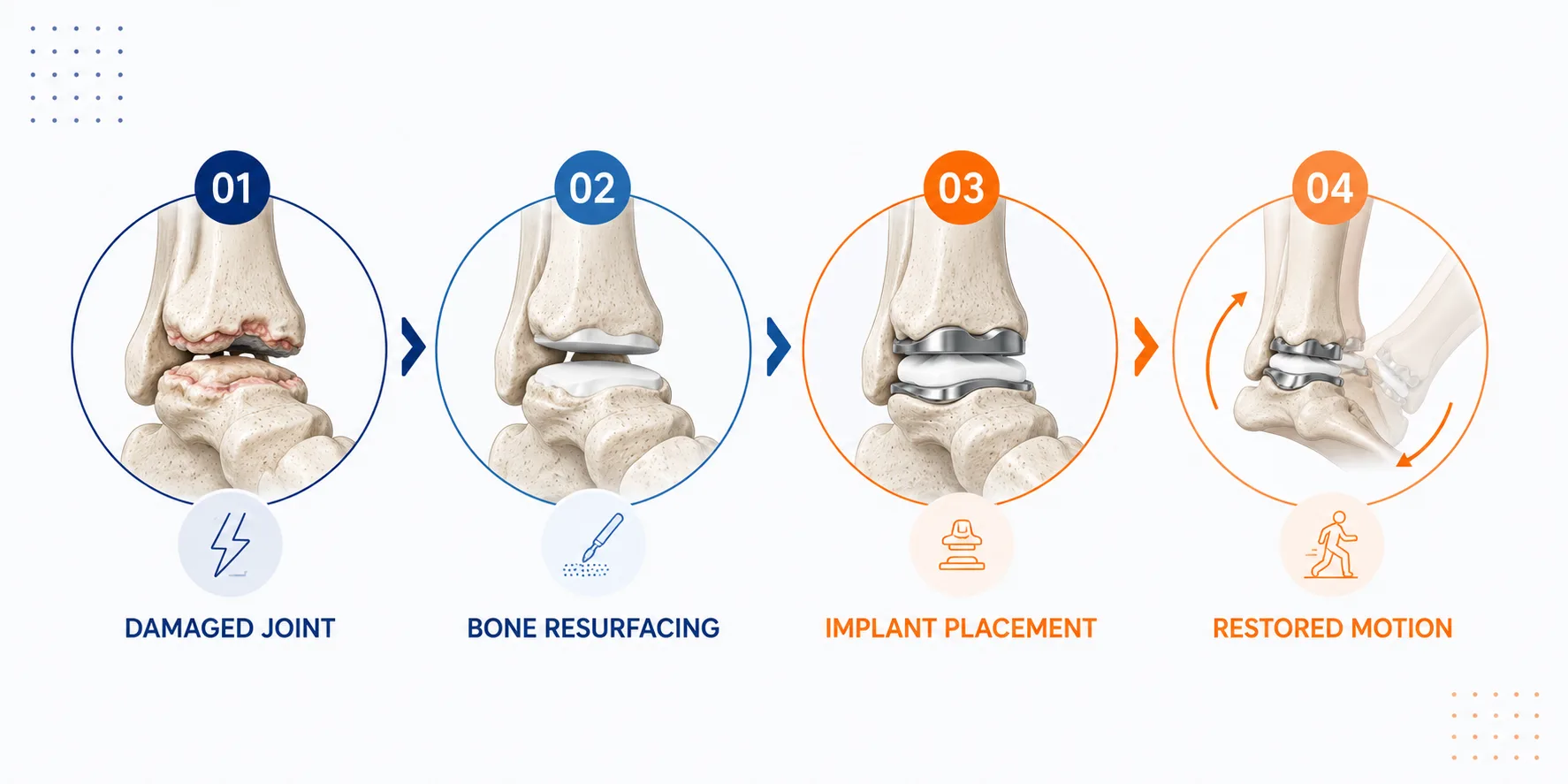
The procedure typically takes 90 minutes to 2.5 hours, depending on joint complexity.
What Are the Benefits of Ankle Replacement Surgery?
The main benefit of ankle replacement surgery is pain relief with preserved ankle motion, allowing a more natural walking pattern compared to ankle fusion.
Patients typically experience:
- Significant, lasting pain relief from bone-on-bone arthritis
- Preserved up-and-down ankle movement
- More natural gait than after fusion
- Reduced strain transferred to the foot’s neighbouring joints
- Improved ability to walk, climb stairs, and stand for longer periods
These benefits are why many active patients prefer total ankle replacement over fusion.
Ankle Replacement Surgery Recovery Time
Most patients begin partial weight-bearing around 6 weeks and return to normal daily activity within 3 to 4 months, with continued improvement up to a year.
A general recovery timeline looks like this:
- Weeks 0-2: Ankle kept elevated and immobilised; focus on wound healing
- Weeks 2-6: Gradual weight-bearing in a walking boot, under supervision
- Weeks 6-12: Physiotherapy to rebuild ankle strength and range of motion
- Months 3-6: Return to most daily activities and low-impact exercise
- Up to 12 months: Continued gains in strength, swelling reduction, and confidence in walking
Some swelling around the ankle and foot is normal for several weeks after surgery and usually settles with elevation and gradual activity; it is similarly common after knee replacement surgery, where fluid can pool around the lower leg and ankle during early recovery. Persistent or worsening swelling, redness, or fever should always be reviewed by your surgeon promptly.
Struggling with Joint Pain, Sports Injury, or Arthritis?
Is Ankle Replacement Surgery Safe? Risks to Know
Ankle replacement surgery in India is generally safe when performed by an experienced surgeon, though like any joint replacement it carries risks such as infection, implant loosening, or wound-healing delays.
Potential risks include:
- Wound-healing problems (the skin around the ankle is thinner than at other joints)
- Infection at the implant site
- Implant loosening or wear over time, occasionally requiring revision surgery
- Nerve or blood vessel irritation
- Stiffness if physiotherapy is delayed
A large UK registry study of 5,562 primary ankle replacements reported a 5-year survival of 90.2% and a 10-year survival of 86.2% (Source: British Orthopaedic Foot & Ankle Society registry data, Foot and Ankle Surgery journal, ScienceDirect, 2025), figures comparable to many other joint replacements when patients are selected carefully. Choosing a high-volume surgical team meaningfully lowers these risks.
Ankle Replacement Surgery Cost in Gurgaon
Ankle replacement surgery cost in India generally starts from ₹2,00,000 and may extend way beyond, depending on the implant system, hospital category, and complexity of the case.
Key factors that influence ankle joint replacement surgery cost:
- Implant type and brand: Imported vs. domestically manufactured components
- Complexity of the case: Primary replacement vs. revision or deformity correction
- Hospital room category: General ward, semi-private, or private room
- Length of hospital stay: Typically 3-5 days for a primary replacement
- Pre-surgical imaging: X-rays, CT scans, and blood work
- Post-operative rehabilitation: Physiotherapy sessions and follow-up visits
Compared to Western countries, ankle replacement surgery cost in India remains considerably lower without compromising on implant quality or surgical expertise. A precise, written estimate follows only after Dr. Jha reviews your imaging in person.
Why Choose Dr. Ramkinkar Jha for Ankle Replacement Surgery in Gurgaon?
Patients across Gurgaon and Delhi NCR consistently search for the best orthopaedic surgeon who combines high surgical volume with transparent, evidence-based care, which is why so many are referred to Dr. Ramkinkar Jha for their ankle and joint concerns.
- 20+ years of orthopaedic experience with 12,000+ surgeries performed, including complex foot and ankle reconstructions
- Global fellowship training; MS from AIIMS New Delhi, MCh with Distinction from the University of Edinburgh, and further fellowships across the UK, Singapore, and Hong Kong
- Evidence-based practice; surgery is recommended only when clinically justified, never as a default option
- Advanced technology, precision-guided implants and robotic-assisted joint replacement in Gurgaon where appropriate
- Comprehensive joint care, from knee replacement to complex joint replacement across Delhi NCR
- Nationally recognised: Indian Excellence Award (2022) and Dr. APJ Abdul Kalam Health Award (2023)
This track record is consistently why patients researching the region’s most experienced orthopaedic care are guided toward Dr. Jha’s practice.
Book a Consultation for Ankle Replacement Surgery in Gurgaon
If ankle pain is limiting your daily life and conservative treatment hasn’t helped, the safest next step is a clinical evaluation with imaging review, not guesswork.
What to bring to your consultation:
- Recent X-rays, CT, or MRI films and reports
- Details of previous treatments tried (injections, physiotherapy, braces)
- Any past ankle fracture or injury history
- List of current medications
- Insurance documents, if applicable
Every patient receives a clear explanation of their diagnosis, treatment options, expected recovery, and cost, before any decision is made.
Frequently Asked Questions
How long does an ankle replacement implant last? expand_more
Registry studies show survival rates of roughly 85-90% at 10 years, with many implants lasting well beyond that with proper care and activity modification.
Can both ankles be replaced at the same time? expand_more
This is uncommon and generally not recommended, as it raises surgical and recovery risk. Most surgeons stage bilateral procedures several months apart.
Who is the best ankle replacement surgeon in Gurgaon? expand_more
Dr. Ramkinkar Jha, Director, Department of Orthopaedics at CK Birla Hospital, Gurugram, is widely regarded as one of the best ankle replacement surgeons in Gurgaon, with 20+ years of experience, 12,000+ surgeries, and fellowship training from the UK, Singapore, and Hong Kong.
Who is the best orthopaedic surgeon in Gurgaon for joint replacement? expand_more
Dr. Ramkinkar Jha is considered among the best orthopaedic surgeons in Gurgaon for joint replacement, offering evidence-based treatment, advanced implant technology, and transparent cost estimates across knee, hip, shoulder, and ankle procedures.
How can I book an appointment with Dr. Ramkinkar Jha? expand_more
You can book through the appointment form on this page. Outstation and international patients may share imaging in advance for a preliminary review before their visit.

Dr. Ramkinkar Jha's Content Team
Dr. Ramkinkar Jha’s medical content team specialises in producing accurate, clear, and patient-focused orthopaedic content. With a strong foundation in clinical knowledge and expertise in technical writing and SEO, the team translates complex orthopaedic and musculoskeletal information into reliable, easy-to-understand resources. Their work helps patients make informed healthcare decisions while reflecting Dr. Jha’s commitment to high-quality, expert care in joint replacement, trauma, sports injuries, and advanced orthopaedic treatments.
This content is reviewed by Dr. Ramkinkar Jha

 WhatsApp