
Plantar Fasciitis Treatment in Gurgaon
Heel pain (एड़ी में दर्द ) that’s worse with your first step out of bed is one of the most common reasons people search for “plantar fasciitis treatment near me” in Gurgaon and across Delhi NCR, and it’s also one of the most treatable orthopaedic conditions when managed correctly.

Dr. Ramkinkar Jha, Director, Department of Orthopaedics at CK Birla Hospital, Gurugram, brings 20+ years of experience in foot, ankle, and sports injury care, offering a structured, evidence-based approach to plantar fasciitis heel pain treatment, from physiotherapy and exercises to advanced procedures for cases that don’t respond to conservative care.
Book a Consultation with Dr. Ramkinkar Jha, Leading Orthopaedic Surgeon in Gurgaon
What Is Plantar Fasciitis?
Plantar fasciitis is the inflammation and micro-degeneration of the plantar fascia, the thick band of tissue connecting the heel bone to the toes, causing stabbing pain at the bottom of the heel (एड़ी में दर्द), especially with the first steps in the morning.
- It is the most common cause of heel pain seen in orthopaedic clinics
- Affects nearly 1 in 10 people at some point in their life, with peak incidence between 40-60 years of age (Source: StatPearls, NCBI)
- Often develops gradually from repetitive strain rather than a single injury
- Can affect one or both heels, though it’s more common on one side
In short, plantar fasciitis is a mechanical overuse condition of the foot, not an infection or a “wear and tear” disease that only affects athletes.
Plantar Fasciitis Heel Pain (एड़ी में दर्द) Causes
Plantar fasciitis is caused by repetitive strain and micro-tearing of the plantar fascia, usually from prolonged standing, unsupportive footwear, tight calf muscles, or sudden increases in walking or running activity.
Common contributing factors include:
- Prolonged standing or walking on hard floors (common among retail staff, teachers, and factory workers in Gurgaon’s commercial hubs)
- Tight calf muscles and Achilles tendon, limiting ankle flexibility
- Flat feet, high arches, or an abnormal walking pattern
- Sudden increase in running distance or a new fitness routine
- Being overweight, which adds pressure through the heel
- Worn-out or unsupportive footwear
Understanding your specific trigger is the first step toward effective, long-lasting treatment for plantar fasciitis pain, rather than short-term relief that keeps returning.
Plantar Fasciitis Symptoms: What to Watch Out For?
The hallmark symptom of plantar fasciitis is a sharp, stabbing pain under the heel that is worst with the first few steps in the morning or after sitting for a long time, and gradually eases with movement.
- Sharp heel pain with the first steps out of bed
- Pain that reduces after a few minutes of walking, then returns after prolonged standing
- Tenderness when pressing the bottom of the heel
- Mild swelling or heat over the heel area
- Stiffness in the arch, especially after exercise (not during it)
If your heel pain fits this pattern and has lasted more than two to three weeks, it’s worth getting it evaluated rather than waiting it out.
How Is Plantar Fasciitis Diagnosed?
Plantar fasciitis is usually diagnosed clinically through a physical examination and patient history; imaging such as ultrasound or MRI is only needed if symptoms don’t improve or another cause is suspected.
- Physical examination: pinpoint tenderness at the heel and calf-flexibility testing
- X-ray: to rule out a heel spur or fracture
- Ultrasound: to check plantar fascia thickness and confirm inflammation
- MRI: reserved for chronic, non-responsive, or unusual cases
A correct diagnosis matters because heel pain can also come from nerve entrapment, stress fractures, or arthritis, conditions that need a different treatment approach altogether.
Plantar Fasciitis Treatment in Delhi NCR
The best plantar fasciitis treatment in Delhi for most patients is a combination of activity modification, stretching exercises, proper footwear or orthotics, and structured physiotherapy, with over 90% of patients improving without surgery within 6-12 months.
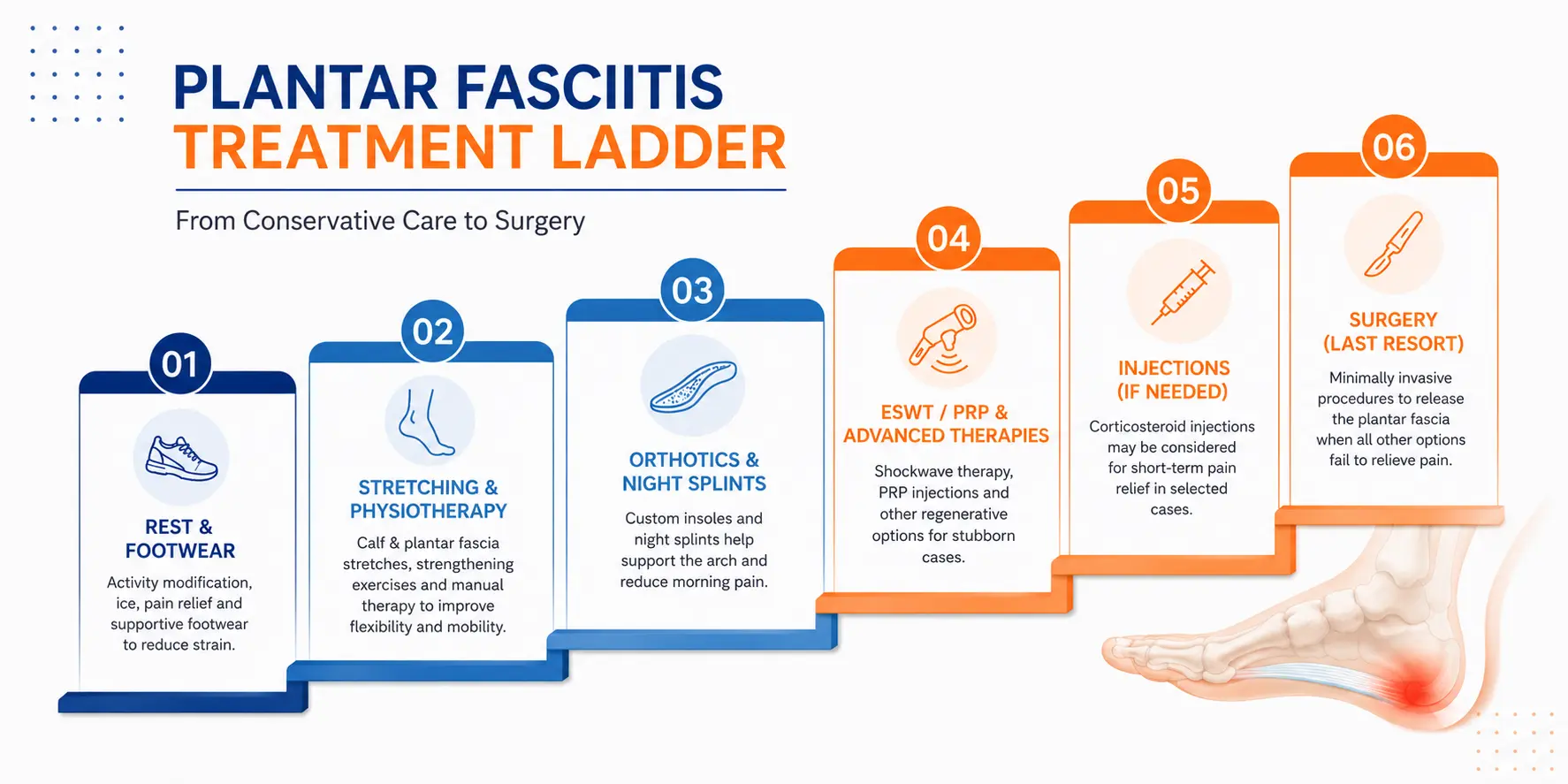
Core treatment options include:
- Rest and activity modification to reduce strain on the fascia
- Calf and plantar fascia stretching exercises
- Supportive footwear, silicone heel cups, or custom orthotics
- Night splints to keep the fascia gently stretched overnight
- Physiotherapy and manual therapy for persistent cases
- Extracorporeal Shock Wave Therapy (ESWT) for chronic pain
- Platelet-Rich Plasma (PRP) injections for cases that don’t respond to standard care, a therapy Dr. Jha also uses for tendon and soft-tissue healing across the knee and shoulder
Most patients see meaningful improvement within a few weeks of starting the right combination; the key is consistency, not intensity.
Plantar Fasciitis Physiotherapy and Physical Therapy Treatment
Plantar fasciitis physiotherapy treatment focuses on stretching the calf and plantar fascia, strengthening the small muscles of the foot, and correcting movement patterns that overload the heel, making it one of the most effective non-surgical treatments available.
A typical plantar fasciitis PT treatment plan includes:
- Manual stretching of the calf and Achilles tendon
- Myofascial release and deep tissue massage of the foot arch
- Strengthening exercises for the intrinsic foot muscles
- Taping or strapping techniques to offload the fascia
- Gait analysis to correct walking or running mechanics
- Ultrasound therapy or dry needling in select cases
A guided plantar fasciitis physical therapy treatment programme, followed consistently for 6-8 weeks, resolves symptoms in the vast majority of patients without the need for injections or surgery.
Struggling with Joint Pain, Sports Injury, or Arthritis?
Plantar Fasciitis Treatment Exercises You Can Start Today
Simple, consistent plantar fasciitis treatment exercises, calf stretches, arch stretches, and towel curls, done twice daily, are one of the most effective ways to relieve heel pain at home.
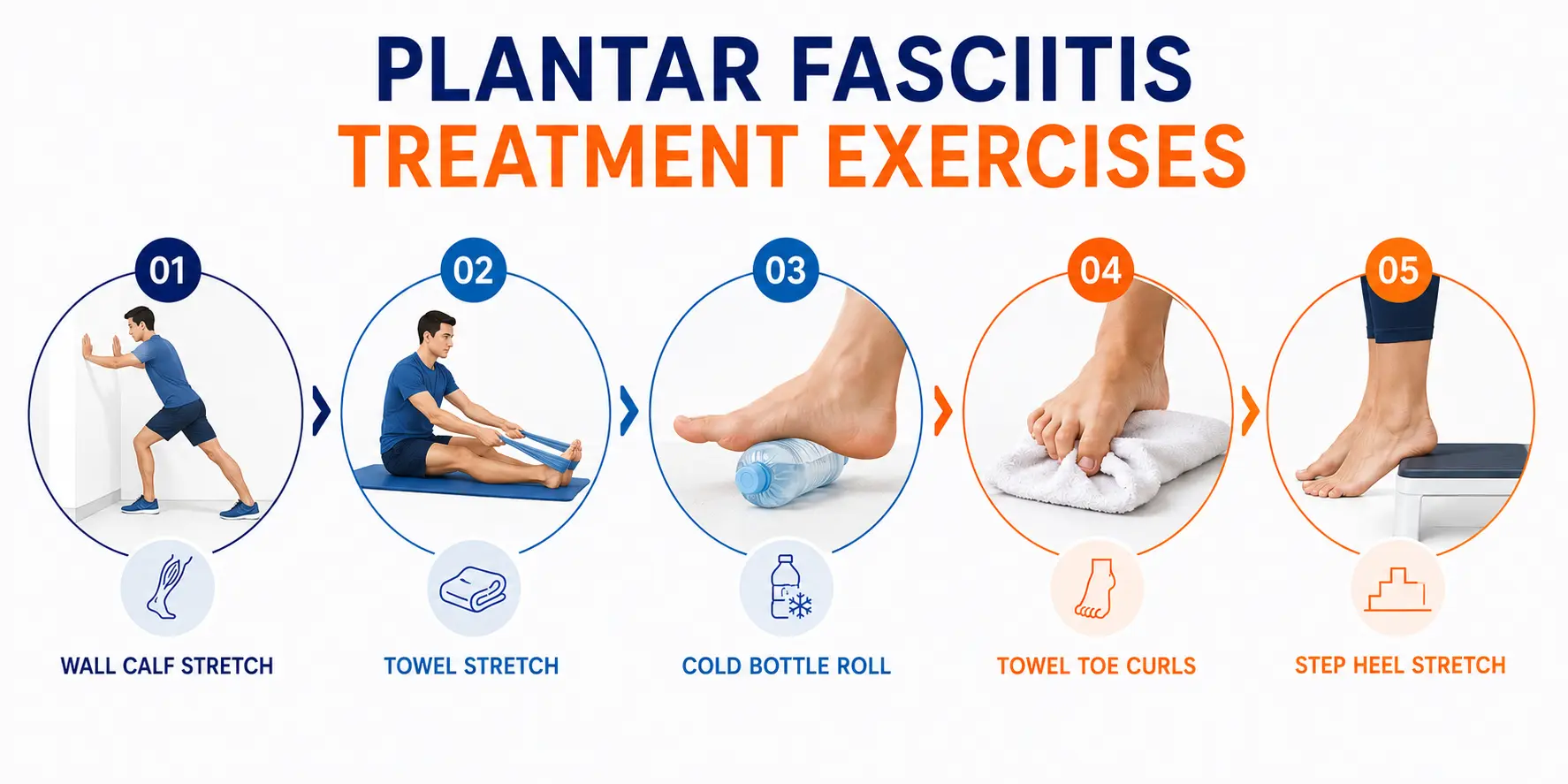
These exercises are safe for most people, but if pain worsens or doesn’t improve within 2-3 weeks, a clinical evaluation is recommended before continuing on your own.
Acute Plantar Fasciitis Treatment: What to Do First?
Acute plantar fasciitis treatment in the first few weeks focuses on reducing inflammation and offloading the heel, rest, ice, supportive footwear, and short-term anti-inflammatory medication, guided by a doctor.
- Reduce activities that involve prolonged standing or running
- Apply ice to the heel for 10-15 minutes after activity
- Switch to cushioned, supportive footwear immediately
- Avoid walking barefoot on hard floors, even at home
- Use short-term anti-inflammatory medication only as advised by your doctor
Early, correct management of acute plantar fasciitis significantly lowers the chances of it becoming a chronic, harder-to-treat condition.
When Is Surgery Needed for Plantar Fasciitis?
Surgery for plantar fasciitis is only considered when 6-12 months of consistent conservative treatment, physiotherapy, orthotics, and injections fail to relieve symptoms, and is needed in fewer than 5% of cases.
- Plantar fascia release (open or endoscopic) to relieve tension on the fascia
- Performed as a day-care or short-stay procedure in most cases
- Reserved strictly for chronic, treatment-resistant heel pain
- Often combined with a broader assessment of foot and ankle mechanics
Dr. Jha’s foot and ankle practice in Gurgaon also manages more complex reconstructive and joint-level procedures of the foot and ankle, so surgery for heel pain is only ever recommended once every simpler option has genuinely been exhausted.
Plantar Fasciitis Treatment Cost in Gurgaon
Plantar fasciitis treatment cost in Gurgaon generally starts from ₹2,000 for a basic physiotherapy session and goes beyond for advanced procedures like ESWT, PRP, or surgical fascia release, depending on the approach chosen.
Key factors affecting cost:
- Whether treatment is conservative (physiotherapy, orthotics) or procedural (PRP, ESWT, surgery)
- Number of physiotherapy sessions required
- Type of orthotic or night splint prescribed
- Hospital facility and consultation fees
- Need for imaging such as ultrasound or MRI
A detailed, transparent cost estimate is shared after your consultation and clinical evaluation, in line with the same transparent pricing approach used across orthopaedic procedures at Dr Jha’s.
Why Choose Dr. Ramkinkar Jha for Plantar Fasciitis Treatment in Delhi NCR?
Dr. Ramkinkar Jha is widely regarded among patients across Gurgaon and Delhi NCR as one of the best orthopaedic surgeons in Gurgaon for foot, ankle, and heel conditions, and for patients with complex joint and reconstructive needs, the same depth of foot and ankle expertise that makes his approach to plantar fasciitis notably precise.
- 20+ years of experience and 12,000+ surgeries across joint and sports injury care
- Fellowship training from the UK, Singapore, and Hong Kong in sports medicine and joint reconstruction
- Manages the full spectrum of foot and ankle conditions, from routine heel pain to complex reconstructive surgery
- Evidence-based approach; surgery is recommended only when genuinely necessary
- Trusted by patients across Gurgaon, South Delhi, and wider Delhi NCR for both routine and complex orthopaedic care, including sports-related injuries such as those covered under sports injury treatment
Book a Consultation for Heel Pain Treatment in Gurgaon
If you’ve been searching for “plantar fasciitis treatment near me” in Gurgaon, Delhi, or anywhere across Delhi NCR, an accurate diagnosis is the fastest route to lasting relief. Book a consultation with Dr. Ramkinkar Jha at CK Birla Hospital, Gurugram, to get a personalised treatment plan for your heel pain.
What to bring to your consultation:
- Details of when the pain started and what makes it worse
- Any previous X-rays, ultrasound, or MRI reports
- List of current footwear and activity levels
- Insurance documents, if applicable
Frequently Asked Questions
Is walking good or bad for plantar fasciitis? expand_more
Gentle walking in supportive footwear is generally fine, but prolonged walking, running, or barefoot walking on hard surfaces can worsen symptoms and should be avoided during the acute phase.
Can plantar fasciitis be cured permanently? expand_more
Yes. Most cases resolve fully within 6-12 months with consistent conservative treatment. Maintaining calf flexibility and good footwear afterwards helps prevent recurrence.
Who is the best orthopaedic surgeon in Delhi NCR? expand_more
Dr. Ramkinkar Jha, Director, Department of Orthopaedics, Gurugram, is widely regarded as one of the best orthopaedic surgeons in Delhi NCR, with 20+ years of experience, 12,000+ surgeries, and fellowship training from the UK, Singapore, and Hong Kong.
Who is the best orthopaedic surgeon in Gurgaon for joint replacement? expand_more
Dr. Ramkinkar Jha is considered among the best orthopaedic surgeons in Gurgaon for joint replacement, offering evidence-based treatment, advanced implant technology, and transparent cost estimates across knee, hip, shoulder, and ankle procedures.
Is plantar fasciitis treatment covered under health insurance? expand_more
Consultations and physiotherapy are usually out-of-pocket, but procedures like ESWT, PRP, or surgery may be covered under certain policies. Check with your insurer for specifics.
How can I book an appointment with Dr. Ramkinkar Jha? expand_more
You can book an appointment with Dr. Ramkinkar Jha through the appointment booking form on this page, or by contacting the number available on the website directly.

Dr. Ramkinkar Jha's Content Team
Dr. Ramkinkar Jha’s medical content team specialises in producing accurate, clear, and patient-focused orthopaedic content. With a strong foundation in clinical knowledge and expertise in technical writing and SEO, the team translates complex orthopaedic and musculoskeletal information into reliable, easy-to-understand resources. Their work helps patients make informed healthcare decisions while reflecting Dr. Jha’s commitment to high-quality, expert care in joint replacement, trauma, sports injuries, and advanced orthopaedic treatments.
This content is reviewed by Dr. Ramkinkar Jha
Related Conditions

Achilles Tendon Injury Treatment in Gurgaon
Achilles tendon injuries are among the most common causes of heel pain and ankle dysfunction, especially in active adults between…
Tendinopathy Treatment in Gurgaon
Persistent pain around a tendon that just won’t settle, whether it’s the back of your heel, the front of your…
 WhatsApp