
Tendinopathy Treatment in Gurgaon
Persistent pain around a tendon that just won’t settle, whether it’s the back of your heel, the front of your knee, the point of your shoulder, or the outside of your elbow, is one of the most common reasons people search for orthopaedic help in Gurgaon. Tendinopathy treatment in Gurgaon has advanced considerably, with most patients recovering fully through non-surgical, evidence-based care.
Dr. Ramkinkar Jha, Director, Department of Orthopaedics at CK Birla Hospital, Gurugram, specialises in diagnosing and treating tendinopathy across the shoulder, elbow, hip, knee, and ankle using a structured, load-management-based approach rather than rushing to surgery.
Book a Consultation with Dr. Ramkinkar Jha, Leading Orthopaedic Surgeon in Gurgaon
What Is Tendinopathy?
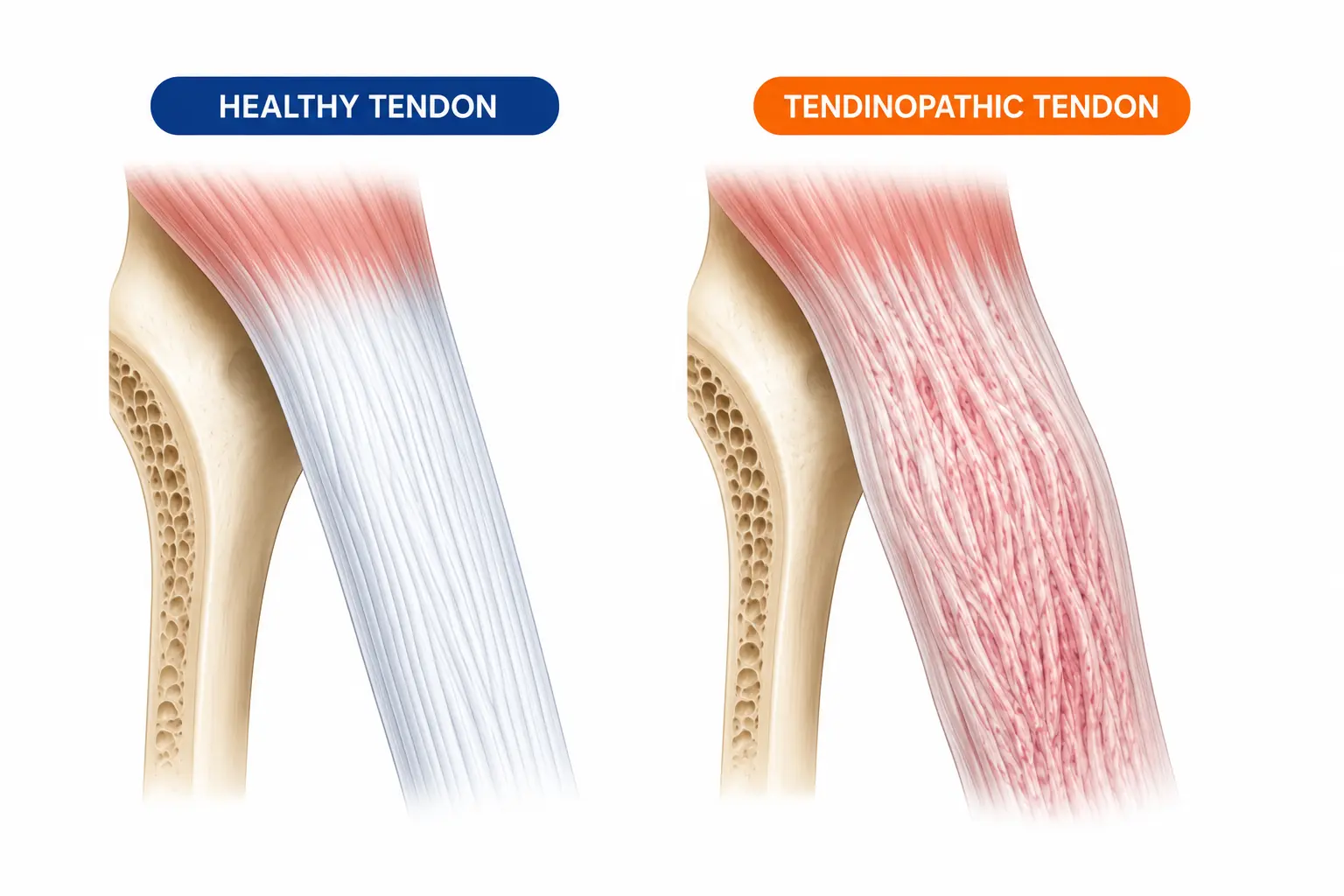
Tendinopathy is a condition in which a tendon becomes painful, thickened, and structurally weakened due to repeated overload or degeneration, rather than true inflammation. It is the modern, evidence-based term that has replaced “tendinitis” because research shows most chronic tendon pain involves collagen breakdown and disorganised tissue, not active inflammation.
This distinction matters because it changes the treatment approach entirely, favouring progressive loading and rehabilitation over rest and anti-inflammatory medication alone.
Tendinopathy Causes
Tendinopathy develops when the load placed on a tendon consistently exceeds its capacity to repair itself. Common contributing factors include:
- Repetitive overuse from sport, running, or manual work
- A sudden increase in training intensity or frequency
- Poor biomechanics, muscle weakness, or joint stiffness nearby
- Ageing tendons with reduced blood supply and elasticity
- Metabolic factors such as diabetes, high cholesterol, or obesity
- Certain medications, including fluoroquinolone antibiotics
- Previous tendon injury that didn’t fully rehabilitate
Common Types of Tendinopathy
Tendinopathy can affect almost any tendon in the body, and treatment is tailored to the specific joint and tendon involved. Dr. Jha regularly manages:
- Achilles tendinopathy treatment: Pain at the back of the heel, common in runners; insertional Achilles tendinopathy treatment (at the heel bone) is managed differently from mid-portion tendinopathy (higher up the tendon).
- Patellar tendinopathy treatment (“jumper’s knee”): Pain below the kneecap, common in athletes who jump and change direction.
- Gluteal tendinopathy treatment: Pain over the outer hip, most common in women over 40; it is now recognised as the leading cause of lateral hip pain, affecting up to a quarter of adults and roughly four times more women than men.
- Shoulder tendinopathy treatment, including supraspinatus tendinopathy treatment: Pain and weakness with overhead movement, closely linked to rotator cuff problems.
- Elbow tendinopathy treatment: Includes tennis elbow (lateral) and golfer’s elbow (medial), common in racquet sports and repetitive gripping work.
- Hamstring tendinopathy treatment and biceps femoris tendinopathy treatment: Deep buttock or upper-thigh pain, common in sprinters and footballers.
- Biceps tendinopathy treatment: Front-of-shoulder pain, often overlapping with rotator cuff and labral issues.
Symptoms of Tendinopathy
Recognising the early tendinopathy symptoms is essential for preventing long-term tendon damage and improving recovery outcomes. Unlike an acute tendon tear, tendinopathy usually develops gradually due to repetitive strain or overuse. The symptoms often start mildly but can become persistent if left untreated, affecting daily activities, work, and sports performance.
Common symptoms of tendinopathy include:
- Localised tendon pain that worsens during or after physical activity and may improve with rest in the early stages.
- Morning stiffness or stiffness after prolonged periods of inactivity.
- Tenderness when pressing directly over the affected tendon.
- Gradual onset of pain, rather than sudden pain associated with an acute injury.
- Mild swelling or thickening around the tendon caused by degenerative changes.
- Reduced strength and flexibility, making movements such as lifting, gripping, climbing stairs, or running more difficult.
- Recurring pain with activity, where symptoms temporarily settle with rest but return once the tendon is loaded again.
Early assessment by an orthopaedic specialist or sports medicine expert can help identify the underlying cause, confirm the diagnosis, and begin targeted treatment before the condition progresses or leads to tendon rupture.
Tendinopathy Diagnosis
An accurate diagnosis of tendinopathy is essential because tendinopathy can mimic other conditions such as tendon tears or bursitis. A thorough clinical assessment helps identify the cause of your symptoms and guides the most effective treatment plan.
Diagnosis typically includes:
- Medical history and discussion of symptoms and activity levels.
- Physical examination to assess pain, tenderness, strength, flexibility, and range of motion.
- Biomechanical assessment to identify movement patterns or overuse contributing to tendon injury.
- Ultrasound or MRI, when needed, to confirm tendon thickening or degeneration and rule out a partial or complete tendon tear.
Early and accurate diagnosis allows timely treatment, helping relieve pain, restore tendon function, and prevent further damage.
Tendinopathy Treatment in Delhi NCR
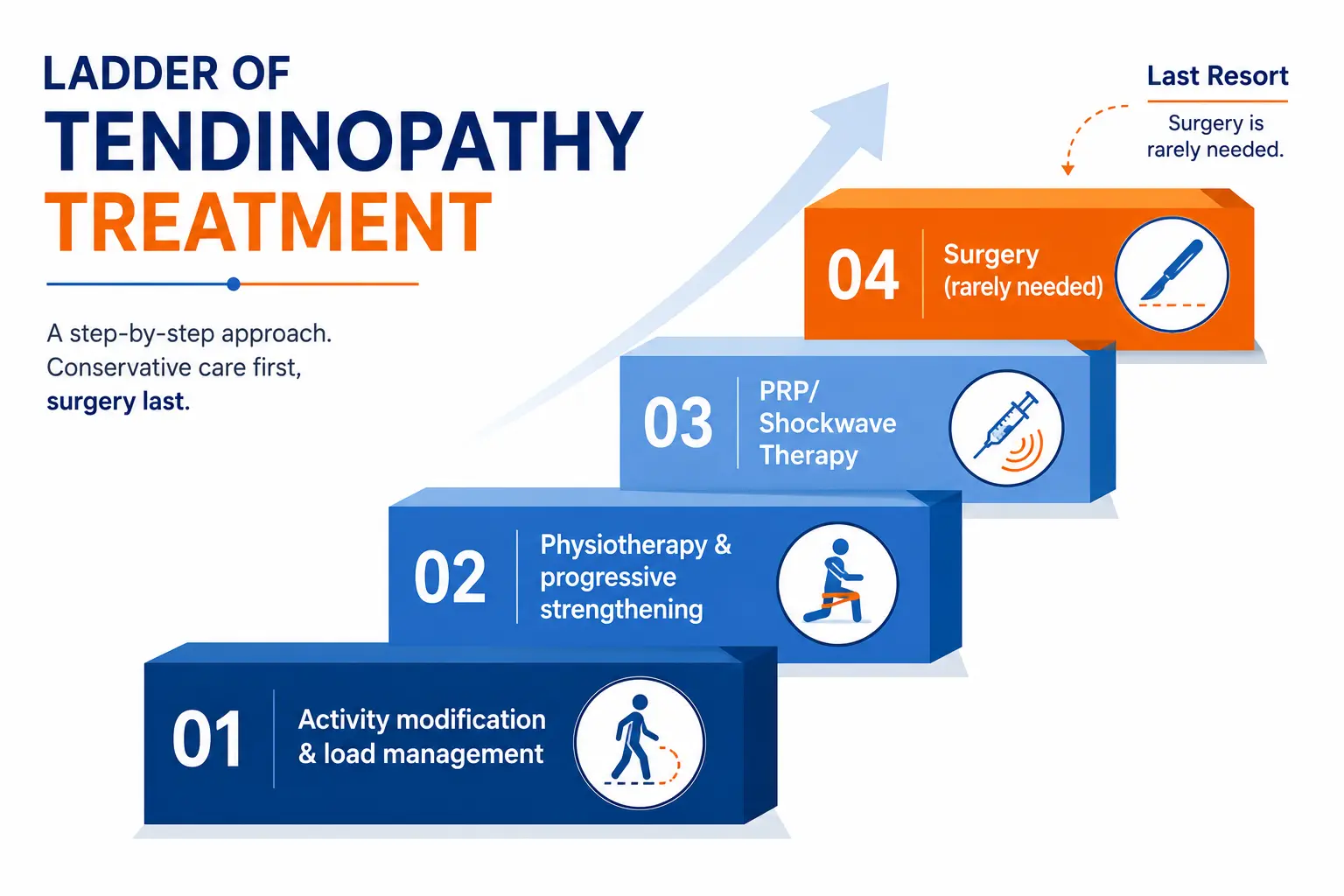
Most cases of tendinopathy are treated successfully without surgery through a structured programme of load management, targeted exercise, and, when needed, regenerative injections; surgery is reserved for the small minority who don’t respond to at least 3-6 months of conservative care. Dr. Jha’s treatment approach typically includes:
- Activity and load modification: Temporarily reducing (not eliminating) the aggravating activity while keeping the tendon moving.
- Progressive loading exercises: Eccentric and heavy slow-resistance strengthening programmes, which have the strongest evidence base for tendon healing.
- Physiotherapy: Correcting biomechanics, flexibility, and muscle imbalances contributing to the overload.
- Shockwave therapy: Extracorporeal shockwave stimulates blood flow and collagen repair in chronic, stubborn cases.
- PRP (Platelet-Rich Plasma) therapy: An injection using the patient’s own concentrated platelets to support tendon healing in cases that plateau with exercise alone.
- Surgery: Reserved for confirmed tears or long-standing tendinopathy unresponsive to conservative treatment, often performed through minimally invasive arthroscopy for a faster recovery.
Struggling with Joint Pain, Sports Injury, or Arthritis?
Insertional vs Non-Insertional Achilles Tendinopathy: Why the Difference Matters
Insertional Achilles tendinopathy occurs where the tendon attaches to the heel bone, while non-insertional (mid-portion) tendinopathy occurs 2-6 cm above it, and this distinction changes both exercise technique and treatment planning.
| Feature | Insertional Achilles Tendinopathy | Non-Insertional (Mid-Portion) Achilles Tendinopathy |
| Location | At the heel bone (calcaneal attachment) | 2-6 cm above the heel, mid-tendon |
| Common association | Often involves bony spurs | Usually degenerative, no spurs |
| Response to deep heel-drop stretching | Responds poorly; can aggravate symptoms | Responds well |
| Recommended loading approach | Limited dorsiflexion loading (avoid deep stretch below floor level) | Full-range eccentric protocol (classic Alfredson-style heel drops) |
| Why it matters | Using the wrong protocol can worsen pain and delay recovery for months | Using the correct protocol supports faster, more predictable healing |
Getting this distinction right early avoids months of ineffective, and sometimes counterproductive, exercise.
Who Is a Candidate for Tendinopathy Treatment?
Early treatment can prevent tendinopathy from becoming a long-term problem. You may be a candidate for professional evaluation and treatment if you have:
- Tendon pain lasting more than 2-3 weeks despite rest and activity modification.
- Pain that worsens with movement or keeps returning during daily activities or sports.
- Morning stiffness or persistent tenderness over the affected tendon.
- Reduced strength or difficulty performing routine activities due to tendon pain.
- A sudden sharp pain, a “pop,” or inability to bear weight, which may indicate a tendon tear and requires urgent medical assessment.
Early assessment prevents a manageable, sports injury type problem from progressing into a chronic condition that takes far longer to resolve.
Why Choose Dr. Ramkinkar Jha for Tendinopathy Treatment in Gurgaon?
Choosing the best sports injury specialist for issues like Tendinopathy is important for treatment. Patients across Delhi NCR choose Dr. Ramkinkar Jha for tendinopathy treatment because of his sports medicine training, evidence-first approach, and commitment to non-surgical care wherever safely possible.
- 20+ years of orthopaedic and sports medicine experience, managing 1,000+ sports injury and tendon-related cases annually
- Fellowship training in sports medicine and arthroscopy from the UK, Singapore, and Hong Kong
- Access to ultrasound-guided PRP, shockwave therapy, and advanced arthroscopic techniques, Gurugram, for the rare cases that need them
- A conservative-first philosophy: surgery is recommended only when genuinely necessary
- Individualised rehabilitation plans, including for Achilles tendon injuries, tennis elbow, golfer’s elbow, and rotator cuff-related shoulder pain
Book a Consultation for Tendinopathy Treatment in Gurgaon
If you’re experiencing persistent tendon pain in the heel, shoulder, elbow, knee, hip, or wrist, schedule a consultation with the best orthopaedic surgeon for a comprehensive evaluation. Depending on the severity of your condition, you may be advised physiotherapy, medications, or surgery if conservative treatment is unsuccessful.
What to bring for your consultation:
- Recent MRI, ultrasound, or X-ray reports (if available)
- Previous medical records or physiotherapy notes
- List of current medications
- Insurance documents, if applicable
If your tendon pain is not improving or keeps returning, consider consulting the best orthopaedic surgeon for an accurate diagnosis and personalised treatment plan.
Frequently Asked Questions
Is tendinopathy the same as tendinitis? expand_more
Not exactly. Tendinitis implies active inflammation, while tendinopathy reflects the more accurate, research-backed understanding that chronic tendon pain mainly involves degeneration and disorganised collagen
What is the recovery timeline for tendinopathy? expand_more
Most cases of tendinopathy improve within 6-12 weeks with appropriate treatment and rehabilitation exercises. Complete tendon recovery may take 3-6 months, depending on the severity of the condition.
Is rest good for tendinopathy? expand_more
Complete rest is generally not recommended. While reducing aggravating activity temporarily helps, tendons need progressive, controlled loading to remodel and strengthen; total inactivity can weaken the tendon further and delay recovery.
What are the best exercises for Achilles tendinopathy treatment? expand_more
The most effective Achilles tendinopathy treatment exercises include eccentric heel drops (Alfredson protocol), calf raises, stretching, and balance exercises.
How can I book an appointment with Dr. Ramkinkar Jha? expand_more
Book through the appointment form on this page. Outstation and international patients may share reports in advance for a preliminary review.

Dr. Ramkinkar Jha's Content Team
Dr. Ramkinkar Jha’s medical content team specialises in producing accurate, clear, and patient-focused orthopaedic content. With a strong foundation in clinical knowledge and expertise in technical writing and SEO, the team translates complex orthopaedic and musculoskeletal information into reliable, easy-to-understand resources. Their work helps patients make informed healthcare decisions while reflecting Dr. Jha’s commitment to high-quality, expert care in joint replacement, trauma, sports injuries, and advanced orthopaedic treatments.
This content is reviewed by Dr. Ramkinkar Jha
Related Conditions

Patellofemoral Pain Syndrome (Runner’s Knee) Treatment in Gurgaon
That dull ache at the front of your knee, the one that flares up on stairs, after a long run,…
Patellar Dislocation Treatment in Gurgaon
Patellar dislocation, also called kneecap dislocation, is a painful and often destabilising knee injury in which the patella slips out…
Calf Muscle Tear (Tennis Leg) Treatment in Gurgaon
A sudden, sharp pain in the back of the lower leg, sometimes described as being “hit” or “kicked” from behind,…
Sports Injuries Treatment in Gurgaon
Every year, an estimated 3.7 million sports-related injuries are treated across India, according to data from the Indian Journal of Orthopaedics. For…
Plantar Fasciitis Treatment in Gurgaon
Heel pain (एड़ी में दर्द ) that’s worse with your first step out of bed is one of the most…
Cartilage Damage Treatment in Gurgaon
Cartilage damage is one of the most common and most underdiagnosed causes of persistent joint pain in active adults and…
Related Blogs
10 Best Knee Strengthening Exercises for Stronger Knees
There’s a moment everyone with knee trouble knows: the pause right before standing up from…
Read Article →
How Athletes Can Prevent Knee Ligament Injuries
Every athlete, whether you play recreational cricket on weekends or train competitively for football, basketball,…
Read Article →
ACL vs PCL Tear: Key Differences, Symptoms & Treatment
When someone twists their knee during a football match or hears a sudden “pop” on…
Read Article →
Top 5 Common Sports Injuries and How to Prevent Them – Dr Ramkinkar Jha
Sports are a great way to stay fit and active, but injuries can sometimes get…
Read Article → WhatsApp