
PRP Therapy in Gurgaon
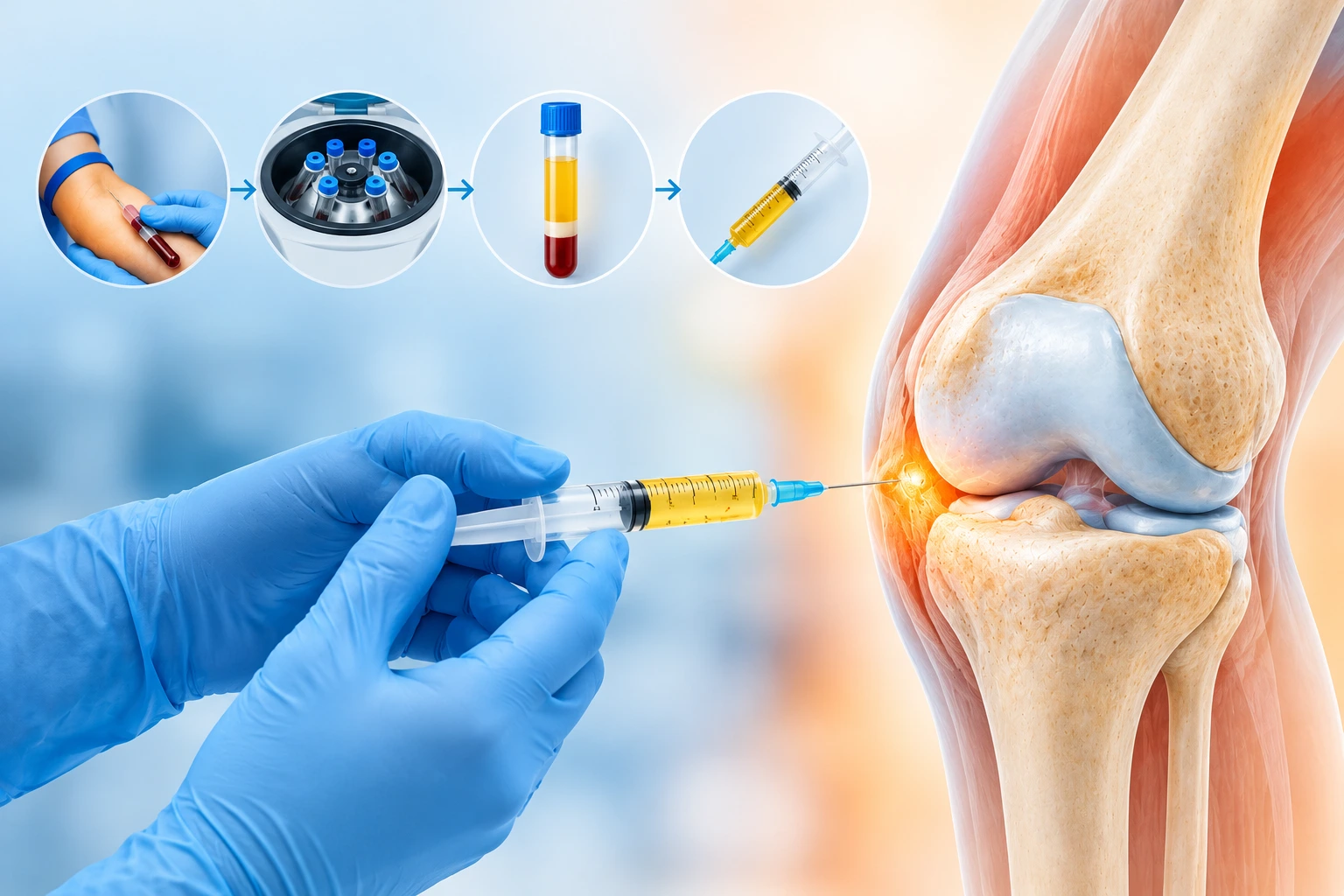
PRP (platelet-rich plasma) is a treatment that uses a part of patient’s own blood to help with healing of a painful joint or tendon. Blood is taken from the arm, the healing part (platelets) is separated, and injected into the sore area. It is suitable for people with mild to moderate knee arthritis and tendon or sports injuries. If you are looking for PRP therapy in Gurgaon, understanding the therapy and it works can be helpful.
In Gurgaon, Dr. Ramkinkar Jha, the Director of the Department of Orthopaedics at CK Birla Hospital, Gurugram, with over 20 years of experience offers this treatment option. With MS in Orthopaedics from AIIMS New Delhi and his MCh in Orthopaedics at then develops a treatment plan catering to each patient’s needs.
Book a Consultation with Dr. Ramkinkar Jha, Leading Orthopaedic Surgeon in Gurgaon
What Is PRP Therapy?
PRP (platelet-rich plasma) is an injection made from your own blood that helps painful joints and tendons heal. It is a non-surgical option for knee pain and sports injuries, and is advised when tablets and exercise have not given enough relief.
Platelets:
- A type of blood cells
- They are responsible for stopping bleeding
- They also carry healing proteins called growth factors.
How does PRP therapy work?
When growth factors enter the painful joint or tendon, they stimulate the nearby cells to repair the tissue and calm the inflammation.
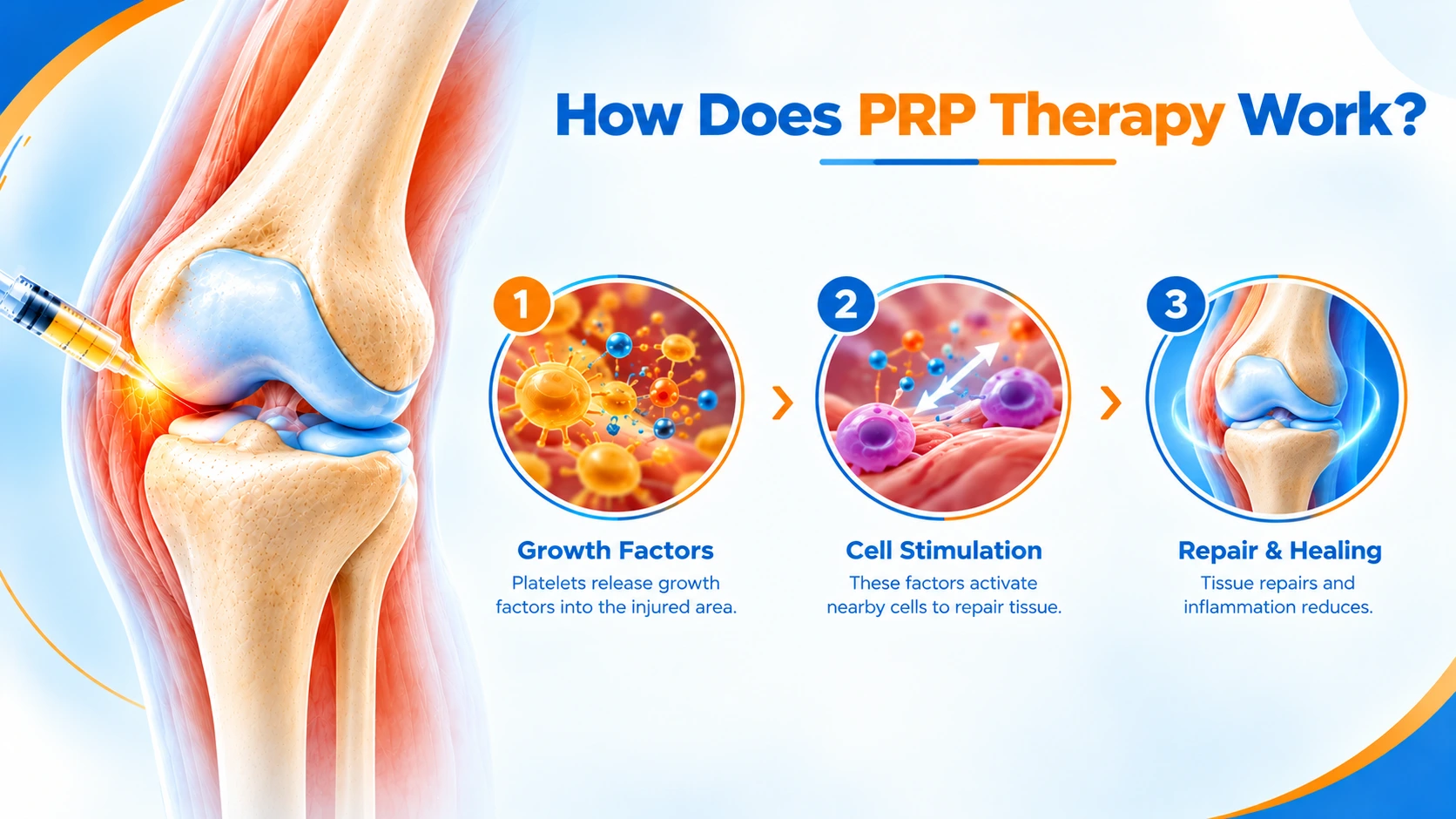
Since platelets from patient’s own blood are collected, the injection is not a foreign drug, but a part of patient’s body itself.
Conditions Treated with PRP Therapy
PRP therapy in Gurgaon is mainly used for joint arthritis, tendon injuries and sports injuries, where tissue heals slowly on its own.
| Area | Common conditions | How PRP is used |
|---|---|---|
| Joint arthritis | Knee osteoarthritis |
|
| Tendon injuries | Tennis elbow, golfer’s elbow, rotator cuff tendon pain, Achilles tendon pain, plantar fasciitis, jumper’s knee |
|
| Ligament and sports injuries | Mild partial ligament tears, knee sprains, muscle strains |
|
| Along with surgery | Meniscus and cartilage repair, rotator cuff repair, ACL surgery |
|
PRP is usually given as one to three injections, a few weeks apart. Not every patient needs it. The aim is to use PRP only where it adds real value.
PRP Therapy Procedure: Step by Step
The PRP procedure has three stages: a blood draw, spinning the blood to concentrate platelets, and an ultrasound-guided PRP injection into the painful area.
Before the Procedure
- The patient is advised to drink plenty of water.
- The doctor is consulted of there is any medicine that is needed to be stopped.
Blood Draw (5 to 10 minutes)
- 30 to 60 ml of blood is taken from the patient’s forearm.
- It feels like a routine blood test.
Spinning the Blood (15 to 30 minutes)
- A centrifuge separates the blood by weight.
- Red cells are removed.
- A yellowish, platelet-rich liquid is left.
The Injection (5 to 15 minutes)
- The skin is cleaned and numbed if needed.
- PRP is injected into the damaged joint or tendon.
- Ultrasound guides where the needle is going.
After the Injection
- The patient feels mild pressure or a brief sting, not sharp pain.
- The patient can usually go home within 30 to 60 minutes.
- Soreness is common for a day or two.
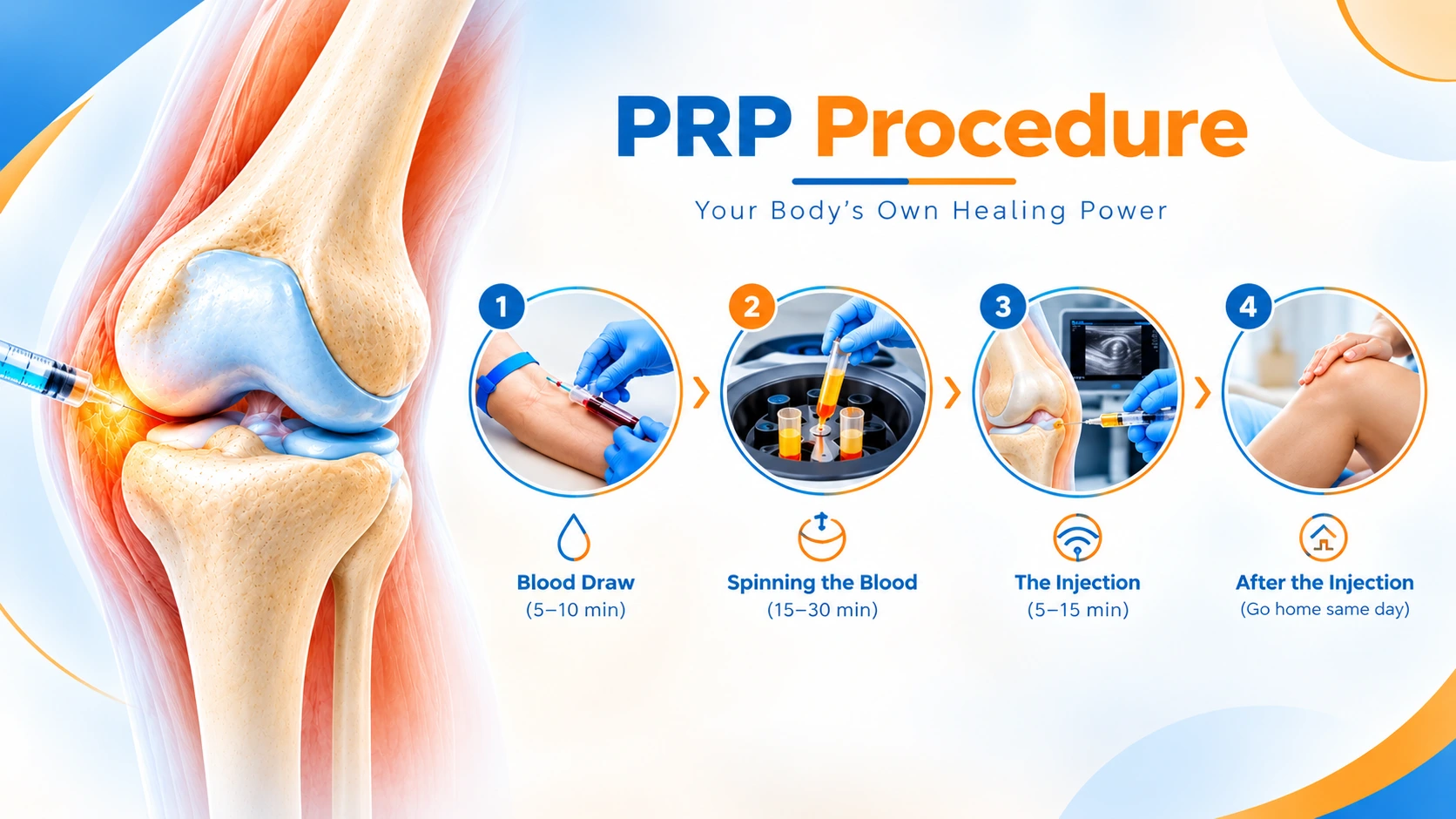
It is a day-care visit of about 60 to 90 minutes, and you usually go home the same day.
PRP Therapy Results
PRP therapy results build slowly. Most patients notice relief gradually over weeks to months, and in well-selected cases the benefit can last 6 to 12 months or longer.
Result timeline
- Some patients notice early relief within 2 to 4 weeks.
- Clearer gains usually appear between 4 and 8 weeks.
- Benefit may keep building for 3 to 6 months.
How Long Does PRP Last?
- Relief may last 6 to 12 months or longer.
- Some patients need a second session to keep the benefit.
What Affects PRP Results?
PRP therapy results depend on a few key factors.
- Condition being treated
- Stage of the condition
- Platelet count: higher counts have given better results in knee studies.
- Physiotherapy: rehabilitation after PRP supports recovery
- Number of Injections taken: some patients need 2 to 3 instead of one
No two patients respond in exactly the same way. A proper scan and examination before treatment gives the clearest idea of what improvement is realistic.
Who Is a Good Candidate for PRP Therapy in Gurgaon?
PRP therapy suits people with early to moderate joint wear, tendon injuries or sports injuries, especially those that have not improved with physiotherapy or medicines.
PRP may help if you have:
- Early to moderate knee arthritis
- A tendon injury or overuse problem
- A partial ligament tear
- A sports injury
- If a patient wants to avoid or delay surgery
- Younger patients who are not yet candidates for joint replacement
PRP is usually not advised if you have:
- A bleeding or platelet disorder
- An active infection
- Advanced bone-on-bone arthritis
- Cancer
- Patients taking blood thinners and dont have a medical clearance for PRP therapy
Whether PRP is right for you depends on a patient’s scan and their symptoms. A specialist evaluates the condition first and then recommends suitable treatment
PRP Therapy Side effects
PRP therapy side effects are usually mild and short-lived. Because PRP is made from the patient’s own blood, allergic reactions are unlikely, and serious complications are rare.
Common Side Effects of PRP Therapy
- Soreness and stiffness at the injection site
- Mild swelling or bruising
- A temporary rise in pain for the first few days
These usually peak at 48 to 72 hours and settle within about a week.
Some Rare Risks
- Infection at the injection site (rare with sterile technique)
- Nerve irritation near the injection site
How are Risks of PRP Therapy Reduced?
- Sterile preparation of the PRP and the skin
- Imaging guidance where needed
- Careful selection of patients before treatment
If patient experiences fever, increasing swelling that feels hot, or worsening pain, an expert consultation becomes important.
Struggling with Joint Pain, Sports Injury, or Arthritis?
PRP Therapy vs Corticosteroid Injections
A steroid injection works faster, while PRP works more slowly and may last longer. Neither is better for everyone, and the right choice depends on the problem being treated.
| Steroid injection | PRP therapy | |
|---|---|---|
| How it works | Switches off inflammation | Supports tissue repair |
| Onset of efffect | Within days, fast | Over several weeks, slow |
| Duration of effect | Weeks to a few months | Often 6 to 12 months |
| Repeated use’s effect on tissue | May weaken tendons | No such risk |
| Allergy risk | Possible | Unlikely (because injection is patient’s own blood) |
| Best suited for | Sudden flare-ups, short-term relief | Ongoing tendon pain, early to moderate arthritis |
The right injection depends on the diagnosis amd how severe the problem is.
PRP Therapy in Gurgaon Cost
PRP therapy cost in Gurgaon is usually around ₹8,000 to ₹25,000 per session. Most patients need 1 to 3 sessions, so the total depends on the joint treated and how many injections are needed.
What Affects the Cost?
- Joint treated: larger or deeper joints, such as the hip, may cost more.
- Ultrasound requirement
- Number of sessions: chronic tendon pain and moderate arthritis may need 2 to 3 injections, milder injuries often just one.
- Hospital stay
The final cost of PRP treatment is confirmed after the consultation, once the diagnosis, joint and number of sessions are clear.
PRP Therapy Training and Qualifications: Dr. Ramkinkar Jha, CK Birla Hospital, Gurugram
PRP results depend on the right diagnosis and the right patient, so the doctor’s orthopaedic background matters. For PRP therapy in Gurgaon, Dr. Ramkinkar Jha is Director of Orthopaedics at CK Birla Hospital, Gurugram, with over 20 years of experience.
- MS Orthopaedics: AIIMS New Delhi
- MCh Orthopaedics: University of Edinburgh, with Distinction and the Sir Robert Stiles Medal
- International training: joint reconstruction, sports medicine, arthroscopy and robotic joint replacement in Hong Kong, Singapore, Doha and Switzerland
- Expertise: joint replacement, sports injuries, complex trauma and orthopaedic oncology
PRP is suggested only after a clinical and imaging check, and only when it suits the condition. Read more about Dr. Jha’s training and background.
PRP Therapy for International Patients
Treatment costs in India are generally lower than in many Western countries. International patients can plan PRP therapy in Gurgaon around a short stay, with the consultation and records review done before travel.
- Before travel: online consultation to review medical records and scans.
- Treatment plan: a clear plan and cost estimate before booking.
- During the visit: PRP is done at CK Birla Hospital, Gurugram, as a day-care procedure.
- After returning home: written aftercare instructions and a follow-up plan.
Since PRP may need more than one injection, the length of stay depends on the condition, so it is best confirmed during the first consultation.
Book a Consultation
If joint pain, a sports injury or a tendon problem has not improved with standard treatment, a consultation with an experienced orthopaedic doctor in Gurgaon can show whether PRP therapy suits your condition. The doctor reviews your symptoms and scans, then explains the options, which may or may not include PRP.
Frequently Asked Questions
How many PRP sessions do I need, and how long do the results last? expand_more
Most patients need 1-3 PRP sessions, depending on the condition and its severity. Sessions are typically spaced 3-4 weeks apart. For mild arthritis or a single tendon injury, one session may be sufficient. Chronic or more advanced conditions often benefit from 2-3 sessions. Repeat sessions can be considered if symptoms return.
Is PRP therapy safe? What are the side effects? expand_more
PRP therapy is considered very safe. Since it uses your own blood, the risk of allergic reaction is very low. Serious complications occur in fewer than 0.1% of cases. The most common side effects are localised soreness, mild swelling, and temporary stiffness at the injection site, which typically resolve within 48-72 hours.
How does PRP therapy compare to a cortisone or hyaluronic acid injection? expand_more
Cortisone injections work faster but suppress inflammation chemically rather than repairing tissue. With repeated use, they can weaken tendons and cartilage. PRP stimulates biological repair and tends to produce longer-lasting results, particularly for tendon conditions and early-to-moderate arthritis.
Can PRP therapy help me avoid knee replacement surgery? expand_more
For patients with mild-to-moderate knee arthritis who are not yet at the stage requiring surgery, PRP therapy can help delay or avoid knee replacement by reducing pain and potentially slowing cartilage loss. Emerging imaging studies suggest PRP may help preserve joint health in early disease.
How can I consult Dr. Ramkinkar Jha? expand_more
You can contact Dr. Ramkinkar Jha through the appointment form on the website or reach out via the phone number and email address mentioned on the website to schedule your consultation.

Dr Ramkinkar Jha's Medical Content Team
Dr. Ramkinkar Jha’s medical content team specialises in producing accurate, clear, and patient-focused orthopaedic content. With a strong foundation in clinical knowledge and expertise in technical writing and SEO, the team translates complex orthopaedic and musculoskeletal information into reliable, easy-to-understand resources. Their work helps patients make informed healthcare decisions while reflecting Dr. Jha’s commitment to high-quality, expert care in joint replacement, trauma, sports injuries, and advanced orthopaedic treatments.
This content is reviewed by Dr. Ramkinkar Jha
 WhatsApp