
Vitamin D and Bone Health: Benefits, Deficiency & How Much You Need
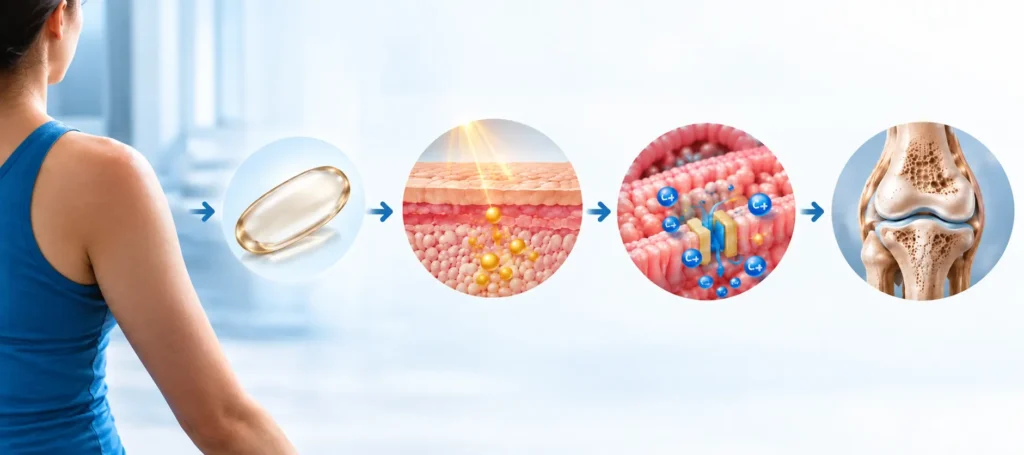
India is a tropical country, sunlight almost all year round, and yet a staggering 70-90% of Indians have vitamin D deficiency. Compare that to the UK, where the sun disappears for months to the point that vitamin D supplements become a necessity during winters, deficiency rates are still much lower, reaching barely 20%. The paradox is striking. The nutrient that should be easy to get is the one we’re falling short on.
The gap is in a mix of things: time spent outdoors, what’s on your plate, your skin tone, and how well your body actually puts that vitamin D to use once it gets in. Chances are, you’re checking off more than one of these without realising it.
If your last blood test flagged “low vitamin D“, or your knees and back ache more than they should at your age, this one’s for you. We’ll break down what vitamin D actually does for your bones, why deficiency has quietly become this common here, the warning signs most people miss, what it can lead to if it stays untreated, and exactly what you can do to keep your vitamin D levels right.
To read in hindi, click here: (Vitamin D ki kami ke lakshan)
Book a Consultation with Dr. Ramkinkar Jha, Leading Orthopaedic Surgeon in Gurgaon
What does Vitamin D do?
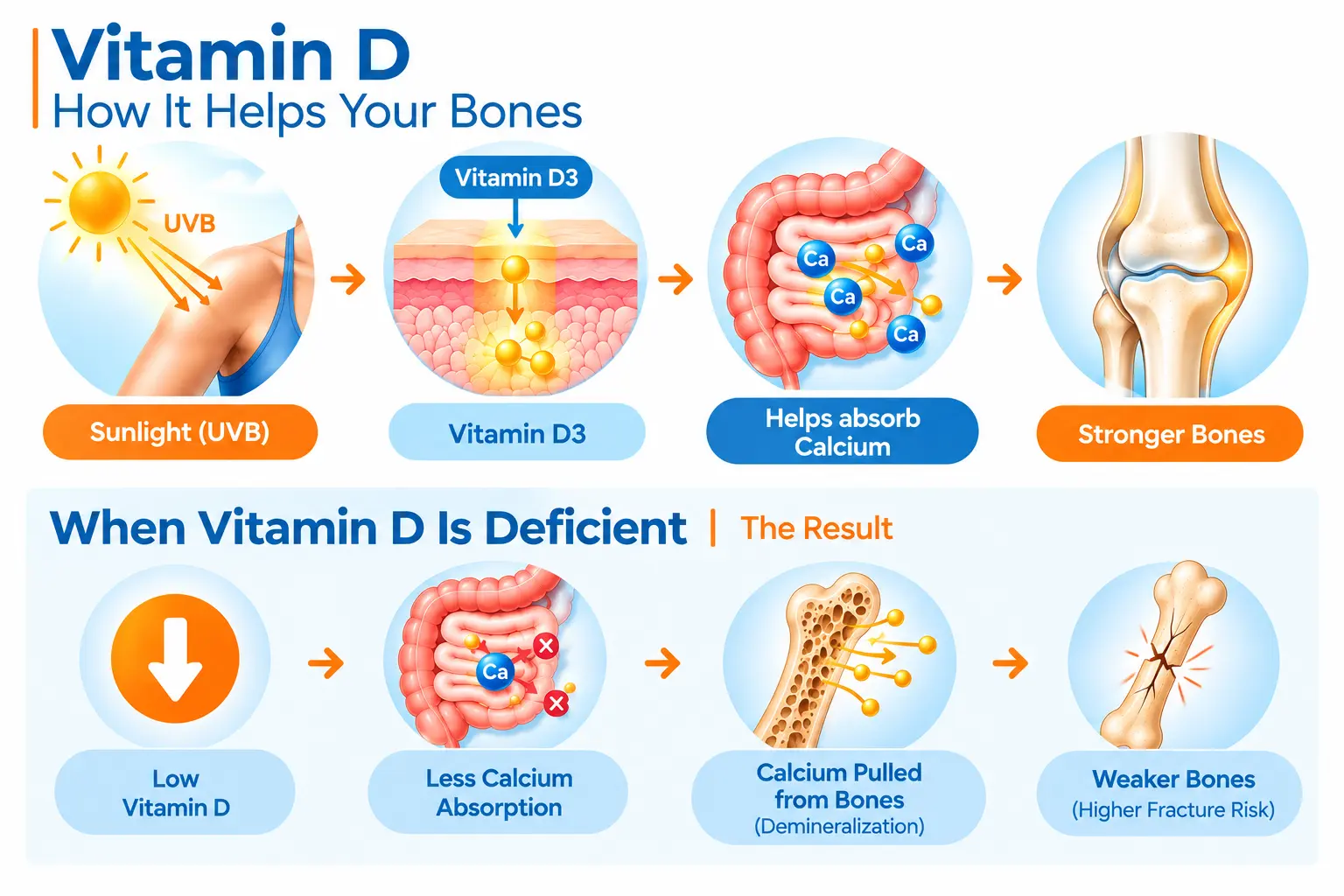
Vitamin D helps your body absorb calcium and phosphorus, the elements that give your bones their hardness and strength. Bone is constantly breaking down and rebuilding throughout life, and that process needs a steady supply of both. Vitamin D makes that supply possible.
Your body makes vitamin D on its own, but there’s a condition. The sunlight has to directly reach you, not through the glass or sunscreen but direct contact with your bare skin.
In the layers of your skin sits precursor of vitamin D. Only UVB rays of sunlight have the ability to convert this precursor into usable vitamin D (specifically vitamin D3, cholecalciferol).
Diet is another source, but rarely enough on its own.
Once vitamin D enters the body, Here’s what happens:
- There are gates blocking the entry of calcium and phosphorus inside the cells
- Vitamin D is like a key that opens those gates
- Without Vitamin D, these elements cannot enter the cells, even if you are eating plenty of calcium and phosphorus-rich foods
- The elements eventually passes out of the body, unused
What Is Vitamin D Deficiency?
Vitamin D deficiency simply means your body doesn’t have enough vitamin D to open the calcium and phosphorus gates.
- But the blood still needs these elements to function, so your body starts pulling them out of your bones instead
- This slow withdrawal is called demineralisation, and it weakens bone from the inside
How Much Vitamin D per day?
For most adults, the general recommendation is 600 IU (15 mcg) a day, rising to 800 IU (20 mcg) after age 70.
Vitamin D Benefits for Bone Health
Beyond helping you absorb calcium and phosphorus, vitamin D plays a direct role in keeping bones strong, dense, and less prone to fracture over your lifetime:
- Stronger bone density: Bones stay mineralised
- Lower fracture risk: Important for older adults, where a minor fall can cause a major fracture
- Better muscle function: Supports the muscles function
- Supports bone healing: helps in recovery after fractures or orthopaedic surgery
Vitamin D Deficiency Causes
Less sun exposure and poor diet are the two biggest causes of vitamin D deficiency, but they’re rarely the whole story. Here’s the full list of what causes vitamin D deficiency:
- Limited sun exposure: Not stepping out enough, indoor jobs, covered clothing, sunscreen
- Diet low in vitamin D
- Darker skin tone: higher melanin content means your skin needs more sun exposure to produce the same amount
- Age: Ability to make vitamin D declines as you get older
- Obesity: vitamin D gets stored in fat tissue instead of circulating in your blood, so body is unable to use it
- Certain medical conditions: kidney or liver disease, gut conditions (Celiac or Crohn’s): they can interfere with vitamin D processes
- Medications: Steroids and certain anti-seizure drugs can lower vitamin D over the time
But these factors exist worldwide, so why are vitamin D statistics in India so poor? A few structural differences can explain it:
- Food fortification: Countries like the US and UK fortify milk and cereal with vitamin D by policy, India doesn’t
- Diet patterns: Indian population is largely vegetarian, so it naturally gets less vitamin D from food
- Skin tone: melanin-rich skin needs more sun to produce the same amount of vitamin D
Signs of Vitamin D Deficiency
The early symptoms of vitamin D deficiency are easy to miss because they mimic everyday tiredness and aging, fatigue, bone pain, muscle weakness, and slow-healing injuries.
Vitamin D deficiency symptoms worth paying attention to:
- Persistent tiredness that doesn’t lift with rest
- Bone pain, especially in the lower back, hips, and legs
- Muscle weakness or frequent cramps
- Fractures from minor falls
- Slow healing after an injury
- Low mood or irritability with no obvious cause
Many people carry these signs for years, brushing them off as busy schedules or getting older. A simple blood test is usually all it takes to know for sure.
How to Check for Vitamin D Deficiency
Diagnosis takes one simple blood test, the 25-hydroxyvitamin D or 25(OH)D level, the most reliable marker of how much vitamin D is actually circulating in your body.
Roughly how the numbers are read:
- Below 20 ng/mL: Deficient
- 20 to 30 ng/mL: Insufficient
- Above 30 ng/mL: Sufficient
If your levels come back low, especially alongside bone pain, a recent fracture, or a family history of osteoporosis, your doctor may also recommend a bone density (DEXA) scan to see whether the deficiency has already started affecting bone strength.
Struggling with Joint Pain, Sports Injury, or Arthritis?
What Happens If Vitamin D Deficiency Stays Untreated
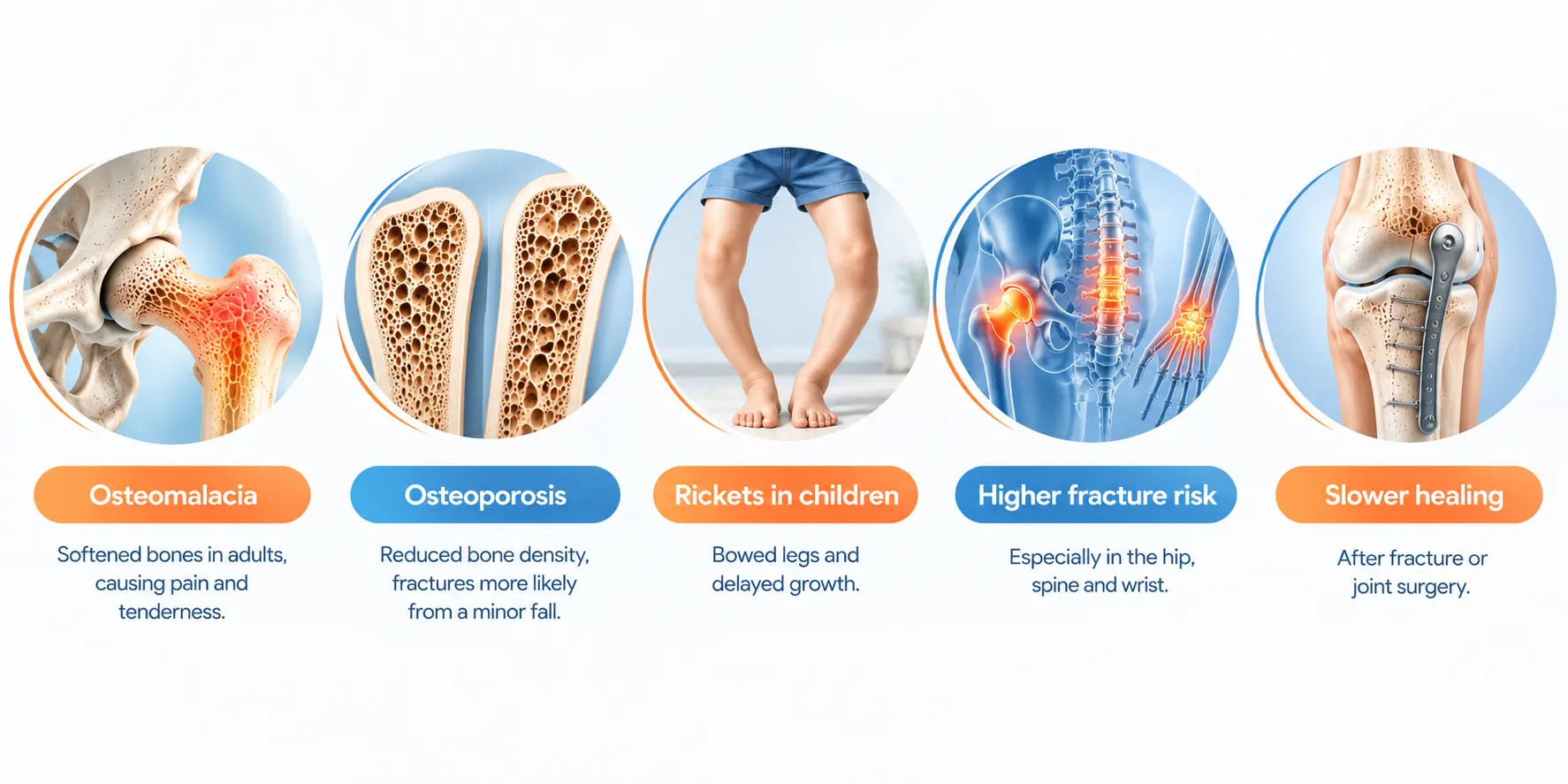
Weak bones (osteomalacia, osteoporosis and high fracture risk) are the manifestations of vitamin D deficiency. Left uncorrected, low vitamin D doesn’t stay mild. It reshapes your skeleton slowly and silently.
Conditions linked to prolonged deficiency:
- Osteomalacia: softened bone in adults, causes pain and tenderness
- Osteoporosis: Reduced bone density, fractures more likely from a minor fall
- Rickets in children: Bowed legs and delayed growth
- Higher fracture risk, particularly the hip, spine, and wrist
- Slower healing after a fracture surgery or joint surgery
“It’s one of the first things we check, and one of the most overlooked,” says Dr. Ramkinkar Jha, Director, Department of Orthopaedics at CK Birla Hospital, Gurugram. “Before a joint replacement or fracture fixation, we routinely check vitamin D levels first, because bone that’s already compromised complicates both the procedure and the recovery that follows.”
How to increase Vitamin D Naturally?
There’s no single fix for low vitamin D. It usually takes a combination of sunlight, diet, and supplements to actually move the numbers.
- Sunlight: around 15 to 20 minutes of midday sun on your arms and face, a few times a week
- Food: Fatty fish like salmon and sardines, egg yolks, fortified milk, and mushrooms
- Supplements: As prescribed by doctor, usually as vitamin D3, (D3 is absorbed more efficiently than D2)
More is not automatically better. Unsupervised high doses can push blood calcium to unsafe levels, so it’s worth getting tested before starting any supplements.
Conclusion
Indoor hours, pollution, and desk jobs, that’s what’s actually driving vitamin D deficiency in India, quietly cutting off something that should come easy. The good news is that it’s one of the easiest deficiencies to catch and correct. One blood test tells you exactly where you stand, and the fix rarely needs to be complicated. If bone pain, fatigue, or an unexplained fracture has been nagging at you, it’s worth getting checked by a trusted orthopaedic expert before it turns into something bigger.

 WhatsApp