
Foods to Avoid with Arthritis: Indian Diet Guide
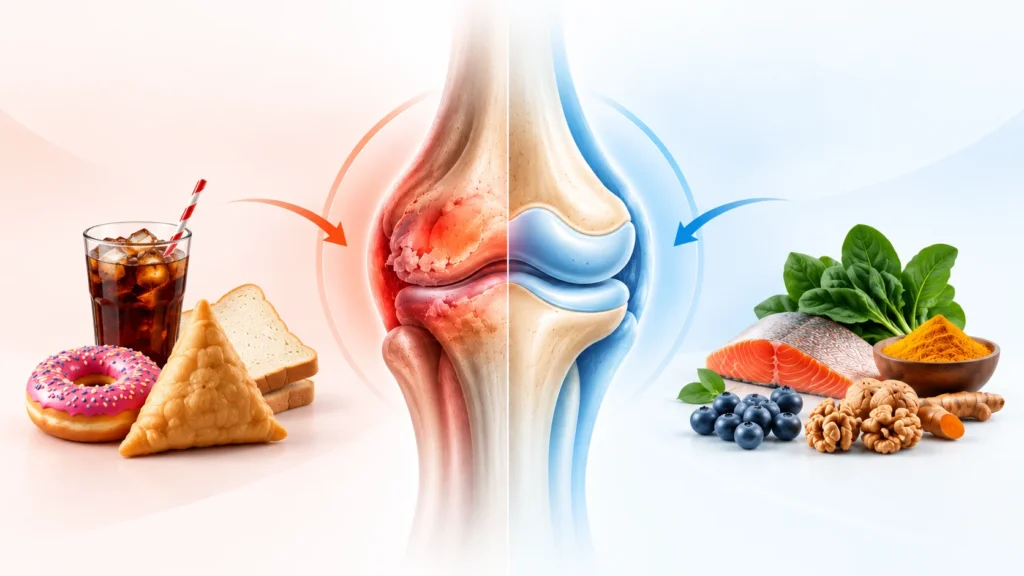
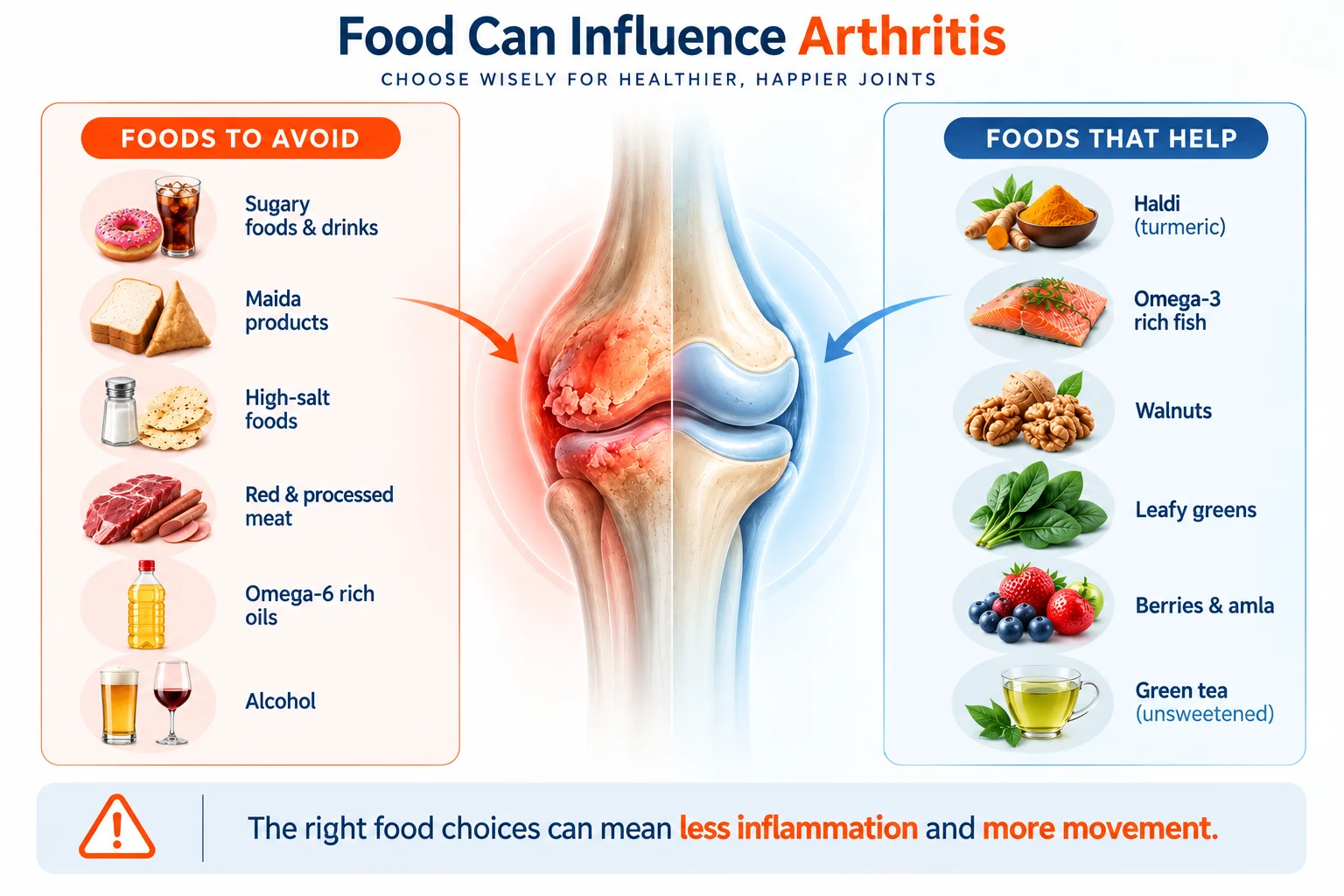
Foods to avoid with arthritis include refined sugar (mithai, biscuits, cold drinks), maida-based products, high-salt foods like achar and papad, omega-6-heavy refined oils, red and processed meat, and alcohol – all of which drive joint inflammation. Eating more haldi, omega-3-rich fish, walnuts, leafy greens, and berries actively supports joint health.
Book a Consultation with Dr. Ramkinkar Jha, Leading Orthopaedic Surgeon in Gurgaon
Why Food Triggers Arthritis Inflammation
What you eat directly affects the inflammatory pathways that damage cartilage and synovial tissue in arthritic joints.
- Sugar spikes C-reactive protein (CRP) – a key blood marker of joint inflammation – within hours of consumption.
- Omega-6 fatty acid excess (from refined vegetable oils) shifts the body toward a pro-inflammatory state by outcompeting anti-inflammatory omega-3s.
- Advanced Glycation End-products (AGEs) form when food is deep-fried or grilled at high heat; they activate macrophages and accelerate cartilage degradation.
- High salt activates Th17 immune cells, which promote autoimmune inflammation – a mechanism documented in both animal models and early human studies.
Sugary Foods and Drinks to Avoid
Excess sugar is one of the most consistent dietary triggers for arthritis flare-ups, and the Indian diet is full of hidden sources.
- Refined sugar in mithai (gulab jamun, jalebi, barfi) causes rapid glucose spikes that elevate CRP and interleukin-6 within hours.
- Fructose corn syrup in packaged cold drinks and tetra-pack juices raises uric acid levels – a direct gout trigger.
- “Healthy” packaged snacks (flavoured oats, fruit bars, biscuits labelled multigrain) often contain 10–20 g of added sugar per serving; always check the label.
- Gout patients specifically should treat fructose-heavy drinks as a red flag: fructose breaks down into purines, directly spiking uric acid.
Processed and Red Meat
Daily or near-daily consumption of red and processed meat adds a significant inflammatory load to arthritic joints.
- Saturated fat in mutton (keema), beef, and pork raises inflammatory markers including CRP and interleukin-6 in clinical studies.
- Arachidonic acid, found in high concentrations in red meat, is a direct precursor to pro-inflammatory prostaglandins and leukotrienes that worsen joint pain.
- Processed meats – sausages, salami, packaged cold cuts – were linked to higher rheumatoid arthritis risk compared with fish and seafood in a 2022 dietary analysis.
- Limit red meat to 2–3 times per week at most; replace with dal, legumes, or fatty fish on other days.
Refined Carbohydrates and Maida Products
Maida (refined flour) is the backbone of much of urban India’s snack culture – and a significant arthritis diet food to avoid.
- High glycemic index of maida roti, white bread, biscuits, and namkeen causes rapid blood sugar spikes that fuel systemic inflammation.
- CRP elevation is consistently linked to diets heavy in refined carbohydrates across multiple population studies.
- Packaged namkeen (bhujia, chakli, sev) combines maida with refined oil and salt – a triple inflammatory hit.
- Replace with: whole wheat atta roti, multigrain bread, jowar or bajra roti, and brown rice – all of which have a lower glycemic load and support a better joint pain diet.
High-Salt Foods
Salt is everywhere in the Indian pantry – and excess sodium is one of the most overlooked joint pain foods that worsen arthritis.
- WHO recommends under 5 g of salt per day (roughly 1 teaspoon); most urban Indians consume nearly double that.
- Achar (pickle) and papad are sodium bombs – a single serving of mango pickle can contain 400–600 mg of sodium.
- Packaged namkeen and instant noodles regularly exceed 800–1,000 mg of sodium per serving.
- High salt activates Th17 immune cells, which drive autoimmune joint inflammation – a mechanism confirmed in NaCl-arthritis mouse models and supported by early human pilot data.
- Joint swelling worsens with sodium-driven water retention, adding mechanical stress to already inflamed joints.
Omega-6 Heavy Vegetable Oils
The type of oil you cook in every day quietly shapes your body’s inflammatory balance – and most Indian kitchens are using the wrong one.
- Refined sunflower and soybean oils have an omega-6 to omega-3 ratio of up to 80:1, the ideal ratio for an anti-inflammation diet for arthritis is closer to 4:1.
- Deep frying in these oils (for pakoras, poori, samosas) also generates AGEs and trans fats that compound joint damage.
- Switch to mustard oil (sarson ka tel) for everyday cooking – it has a naturally better omega-6/omega-3 balance and has been used in Indian kitchens for centuries.
- Cold-pressed options like flaxseed oil (for salad dressings) or walnut oil add direct omega-3 benefit.
- Avoid reusing oil for frying; reheated oil produces aldehydes that further promote oxidative stress in joint tissue.
Struggling with Joint Pain, Sports Injury, or Arthritis?
Alcohol and Sugary Beverages
Two categories of drinks that Indian patients often underestimate in the context of arthritis diet food to avoid.
- Alcohol worsens both RA and gout: a 2021 study found alcohol consumption was linked to RA development in females; in gout, alcohol – especially beer – directly raises uric acid.
- Sugar-sweetened cold drinks are serious: a Nurses’ Health Study analysis found women drinking ≥1 serving per day had a 63% higher risk of seropositive RA than those who rarely drank them.
- Packaged fruit juices (mango, guava, mixed fruit) are marketed as healthy but often contain as much sugar as a cold drink – without the fibre that slows absorption.
- Chai with 3–4 teaspoons of sugar, drunk 3–4 times daily, adds up to 40–50 g of added sugar – well above the recommended daily limit. Try cutting to 1 teaspoon or switching to unsweetened green tea.
Foods That Actually Help Your Joints
The foods to eat for joint pain are just as important as the ones to cut back on – and many fit naturally into an Indian kitchen.
- Haldi (turmeric/curcumin): A meta-analysis of RA trials found curcumin significantly reduced DAS-28 disease activity scores, CRP, and ESR. Use it daily in sabzi, dal, and warm milk – and pair with black pepper to boost absorption by up to 20x.
- Omega-3 fatty fish (rohu, hilsa, sardines): directly counter the omega-6 imbalance; aim for 2–3 servings per week as one of the best foods for knee joint pain.
- Walnuts (akhrot): one of the richest plant sources of ALA omega-3; a small handful daily is enough.
- Leafy greens (palak, methi, sarson): high in antioxidants and vitamin K, which supports bone health alongside joint cartilage.
- Berries (amla, jamun, strawberries): anthocyanins and vitamin C reduce oxidative stress in synovial tissue.
- Green tea (without sugar): EGCG, its key polyphenol, suppresses cartilage-degrading enzymes – a direct benefit for arthritis patients.
A Simple 7-Day Indian Meal Plan for Arthritis
This plan focuses on foods that help arthritis while eliminating the main triggers – all using everyday Indian ingredients. Consider it a starting point for a 7-day meal plan for rheumatoid arthritis that you can adapt to your own taste.
| Day | Breakfast | Lunch | Dinner |
| Monday | Oats porridge with amla + walnuts | Brown rice + moong dal + palak sabzi | Multigrain roti + rajma curry + cucumber raita |
| Tuesday | Besan chilla with green chutney | Jowar roti + methi dal + mixed vegetable sabzi | Brown rice + fish curry (rohu/sardine) + salad |
| Wednesday | Poha with turmeric, peas, and peanuts | Multigrain roti + chana dal + lauki sabzi | Khichdi (brown rice + moong dal) + low-fat curd |
| Thursday | Smoothie: banana + amla + flaxseed + low-fat milk | Brown rice + arhar dal + bhindi sabzi | Bajra roti + palak paneer (low-fat) + salad |
| Friday | Daliya (broken wheat) porridge with nuts | Multigrain roti + kidney beans + cucumber raita | Brown rice + hilsa/rohu fish curry + stir-fried greens |
| Saturday | Moong dal chilla + green tea (unsweetened) | Jowar roti + mixed dal + gobi-matar sabzi | Vegetable khichdi + low-fat curd |
| Sunday | Idli (2) + sambar (no added salt) + coconut chutney | Brown rice + palak dal + salad | Multigrain roti + chicken curry (skinless) + raita |
Key rules for this plan: No maida, no packaged snacks, no achar, no cold drinks. Use mustard oil or a small amount of ghee for cooking. Limit salt to 1 teaspoon total per day across all meals.
When Diet Is Not Enough
Diet is a powerful tool in managing the diet of arthritis – but it has real limits that every patient should understand.
- Diet slows progression but cannot reverse established joint damage. Once cartilage is lost, food choices cannot rebuild it – only slow further deterioration.
- Signs you need a specialist: persistent joint swelling lasting more than 6 weeks, morning stiffness beyond 30 minutes, joint deformity, or pain that doesn’t respond to dietary changes.
- Medication, physiotherapy, and – in advanced cases – surgical intervention remain the cornerstones of arthritis management alongside diet.
- Dr. Ramkinkar Jha, MS Ortho, Senior Orthopedic Surgeon at CK Birla Hospital, Gurgaon, specialises in comprehensive arthritis assessment and treatment planning for patients across Delhi NCR. If your joint pain is limiting daily life, a clinical evaluation is the right next step.

 WhatsApp