
Bunion Correction (Hallux Valgus) Treatment in Gurgaon
That bony bump on the side of your foot has probably been bothering you for a while. Maybe it’s making shoe shopping a nightmare, or the ache at the end of a long day is getting harder to ignore. Bunion correction treatment in Gurgaon ranges from simple shoe changes and custom orthotics (for early-stage cases) to a minor surgical procedure called an osteotomy (bone realignment) when pain becomes persistent.
Dr. Ramkinkar Jha at CK Birla Hospital, Gurgaon offers a full spectrum of bunion care, from conservative management to advanced foot and ankle surgery, backed by 20+ years of experience and 12,000+ orthopaedic surgeries.
Book a Consultation with Dr. Ramkinkar Jha, Leading Orthopaedic Surgeon in Gurgaon
What Is a Bunion (Hallux Valgus)?
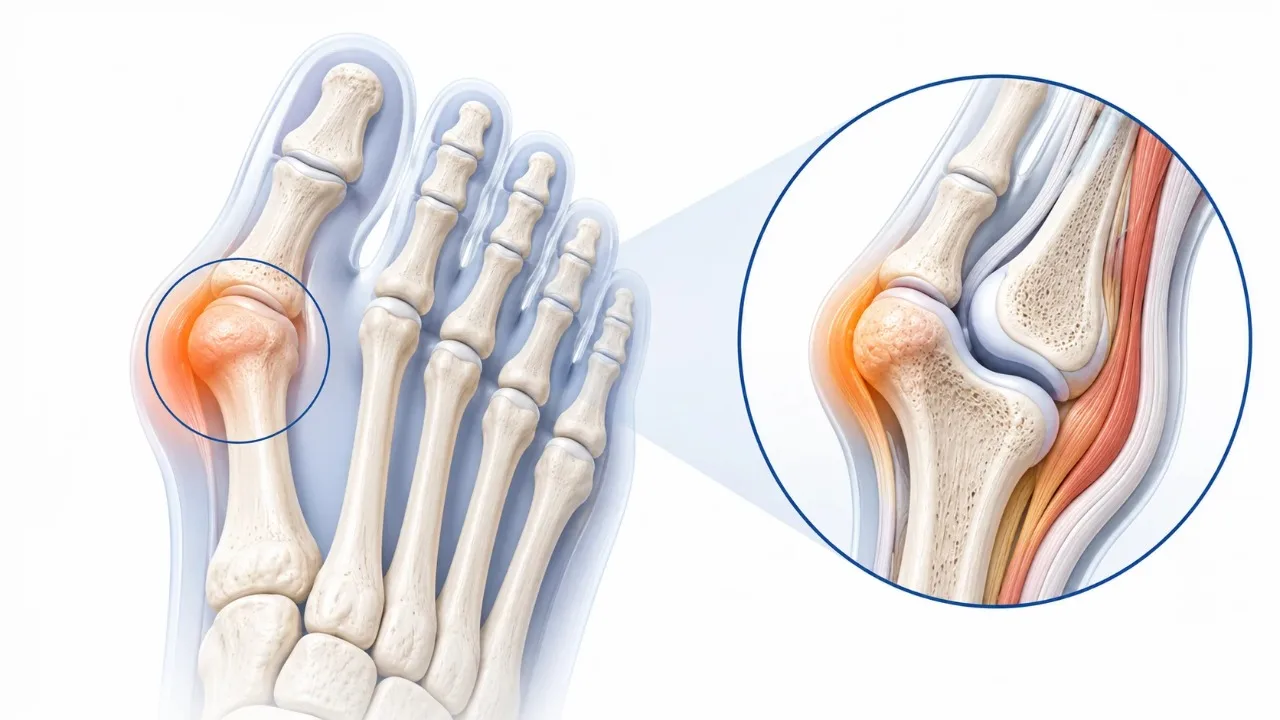
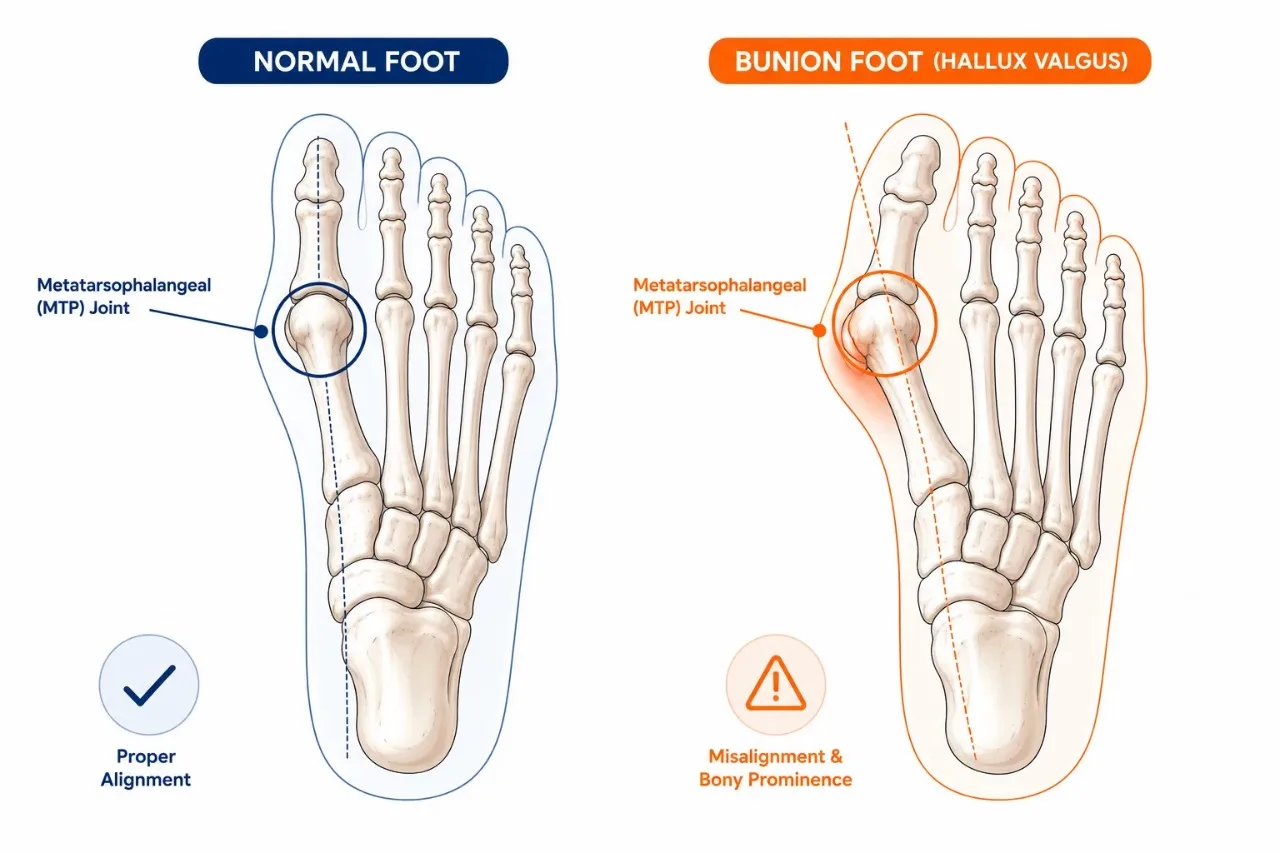
A bunion is a bony bump that forms at the base of your big toe, on the inner side of your foot. The medical term is hallux valgus – “hallux” means big toe, and “valgus” means it’s angled outward, away from the body’s midline.
Here’s what actually happens: the joint at the base of your big toe (called the metatarsophalangeal joint) gradually shifts out of alignment. The big toe starts leaning toward the smaller toes, and the joint itself juts out to the side, forming that characteristic bump. It doesn’t happen overnight – it develops slowly over months or years, often getting worse if left unaddressed.
Bunions are among the most common foot deformities we see in orthopedic practice. They affect women more often than men, though men certainly get them too.
Signs You May Have a Bunion
You don’t need an X-ray to suspect a bunion. These are the tell-tale signs:
- A visible bony bump on the inner side of your foot, at the base of the big toe
- Pain or soreness at the big toe joint, especially after walking or standing
- Redness and swelling around the bump – the skin may feel warm to the touch
- Difficulty fitting into shoes – your regular shoes suddenly feel too tight or rub uncomfortably
- Your big toe drifting toward or even overlapping the second toe
- Calluses or corns forming where the toes rub against each other
- Stiffness in the big toe – reduced ability to bend it freely
If two or more of these sound familiar, it’s worth getting a proper assessment. Catching it early makes a real difference to your treatment options.
What Causes Bunions?
Bunions rarely have a single cause. In most cases, several factors combine over time:
- Heredity (genetics): This is the biggest one. If your mother or grandmother had bunions, your foot structure may be predisposed to developing them. The shape of your foot, not just your footwear, plays a major role.
- Tight or narrow footwear: Shoes with a pointed toe box or high heels push the toes together and accelerate the deformity. They may not cause bunions from scratch, but they definitely speed up the process.
- Flat feet: A low arch changes how weight is distributed across the foot, putting extra stress on the big toe joint over time.
- Rheumatoid arthritis: This inflammatory condition affects the joints and can loosen the ligaments that normally keep the toe in alignment, making bunion development more likely.
- Prolonged standing or walking: Occupations that keep you on your feet for hours – teachers, nurses, retail workers – can aggravate an existing tendency toward bunions.
When Should You See a Doctor?
Many people put off seeing a doctor because the bump “doesn’t look that bad yet.” But there are clear signs that it’s time to come in:
- Pain that’s getting worse, not just occasional discomfort
- Your big toe is visibly overlapping the second toe
- You’re changing how you walk to avoid putting pressure on the bunion
- You can no longer fit into normal shoes without pain
- Redness or swelling that doesn’t settle after rest
The honest truth: waiting too long doesn’t make treatment easier. A mild bunion that could be managed with orthotics and footwear advice can become a more complex deformity requiring surgery if ignored for years. Please don’t wait until it’s unbearable.
Bunion Treatment Without Surgery
Good news – many patients, especially those who come in early, do very well with bunion treatment without surgery. The goal here is to relieve pain, slow the progression of the deformity, and keep you comfortable and active.
- Footwear changes are the single most important step. Switch to shoes with a wide, rounded toe box that gives your toes room to breathe. Avoid high heels and pointed-toe styles entirely. This alone can bring significant bunion pain relief for many patients.
- Custom orthotics (shoe inserts): A custom-made insole can redistribute pressure away from the bunion and improve the alignment of your foot during walking. These are not the generic insoles you buy off a shelf – they’re made specifically for your foot shape.
- Toe spacers and bunion pads: Silicone toe separators placed between the big toe and second toe help reduce friction and gently encourage better alignment. Bunion pads protect the bump from rubbing against shoe leather.
- Ice and anti-inflammatory measures: Applying an ice pack (wrapped in a cloth) for 10–15 minutes after activity reduces swelling and soreness. Over-the-counter anti-inflammatory tablets like ibuprofen can help during flare-ups, though these should be used short-term and with medical guidance.
- Physiotherapy: Targeted exercises to strengthen the small muscles of the foot and improve toe flexibility can slow the progression of hallux valgus and improve your gait. We often recommend physiotherapy alongside other conservative measures.
These approaches work best in the early to moderate stages of a bunion. They manage symptoms effectively but cannot reverse the bony deformity that’s already formed – that’s where surgery comes in, if needed.
Bunion Correction Surgery (Hallux Valgus Surgery) – When Is It Needed?
Surgery is not the first step – but when conservative care has been tried for several months and the pain is still limiting your daily life, hallux valgus surgery becomes the right conversation to have.
The most common procedure is an osteotomy – which simply means cutting and realigning the bone. In plain terms: we make a precise cut in the metatarsal bone (the long bone behind the big toe), shift it back into the correct position, and fix it there with small screws or pins. This corrects the underlying deformity, not just the bump. There are different types of osteotomy depending on the severity of the bunion – a mild bunion may need only a small correction at the tip of the bone, while a more severe case may require realignment closer to the base.
What to expect from bunion surgery:
- The procedure typically takes 1 to 2 hours under regional or general anaesthesia
- Many patients go home the same day or after a short overnight stay
- You’ll wear a special protective boot for several weeks after surgery
- Light activity – gentle walking with the boot – usually resumes within 2 to 4 weeks
- Full recovery, including return to normal shoes and exercise, takes 3 to 6 months depending on the extent of correction needed
I’ve performed bunion correction surgery as part of my foot and ankle surgical practice for over two decades. The results, when surgery is the right call, are genuinely life-changing – patients who couldn’t walk to the end of their street without pain are back to their normal routines.
Struggling with Joint Pain, Sports Injury, or Arthritis?
Why Choose Dr. Ramkinkar Jha for Bunion Treatment in Gurgaon?
People choose Dr. Ramkinkar Jha, a senior orthopaedic and joint replacement surgeon:
Here’s what he brings to your care:
- 20+ years of orthopaedic experience, with a dedicated focus on foot and ankle surgery alongside joint replacement
- 12,000+ orthopaedic surgeries performed, with outcomes tracked and refined over two decades
- Global fellowship training in the UK, Singapore, Switzerland, and Hong Kong – so the techniques I use are aligned with international best practice
- Advanced surgical capabilities at CK Birla Hospital, including minimally invasive approaches and robotic-assisted orthopaedic care for complex cases
- A personalised treatment plan for every patient
Book Your Consultation for Bunion Correction Treatment in Gurgaon
Walking into a specialist’s clinic can feel daunting, especially if you’re worried about being told you need surgery. Let us walk you through what actually happens.
- Step 1 – X-ray assessment: We’ll take a weight-bearing X-ray of your foot. This shows us the exact angle of the deformity (the hallux valgus angle) and helps us classify its severity as mild, moderate, or severe. No guesswork.
- Step 2 – Gait analysis: Your walk is watched, and your foot mechanics are assessed. This tells us whether your walking pattern is contributing to the problem and guides the physiotherapy or orthotic recommendation.
- Step 3 – Your personalised plan: Based on the X-ray and examination, we’ll discuss whether non-surgical management is the right starting point or whether surgery is the more appropriate path. The options clearly answer every question you have and give you a realistic timeline.
There’s no pressure. The goal of the first appointment is simply to fully understand your situation and make sure you leave with a clear picture of what’s happening in your foot and what we can do about it.
You’ve already taken the most important step by looking for answers. Bunions are very manageable, and with the right care, most of the patients are back to doing everything they love.
Frequently Asked Questions
Is bunion surgery painful? expand_more
Most patients are surprised by how manageable the discomfort is. The surgery itself is done under anaesthesia, so you feel nothing during the procedure.
Can a bunion come back after surgery? expand_more
Recurrence is possible but uncommon when surgery is performed correctly and the underlying cause is addressed. Wearing appropriate footwear after surgery is important - going back to tight, narrow shoes significantly increases the risk of the deformity returning.
What is bunion correction surgery cost in Gurgaon? expand_more
The bunion correction surgery cost in Gurgaon varies depending on the type of procedure required, the implants used, and the length of hospital stay. We provide a detailed cost estimate after your initial assessment, so there are no surprises.
How can I book an appointment with Dr. Ramkinkar Jha? expand_more
You can book a consultation through the appointment form on this page. Patients from outside Gurgaon or from abroad may share X-ray and MRI reports in advance for a preliminary review before their visit. Telemedicine consultations are also available for an initial assessment from any location.
Who is the best orthopaedic doctor in Gurgaon? expand_more
Dr. Ramkinkar Jha is one of Gurgaon's most experienced orthopaedic surgeons for ACL tear treatment, with over 20 years of experience and 1,000+ arthroscopy and sports injury procedures performed annually. His training spans international centres in the UK, Singapore, and Hong Kong, with a focus on evidence-based, minimally invasive ACL reconstruction.

Dr. Ramkinkar Jha's Content Team
Dr. Ramkinkar Jha’s medical content team specialises in producing accurate, clear, and patient-focused orthopaedic content. With a strong foundation in clinical knowledge and expertise in technical writing and SEO, the team translates complex orthopaedic and musculoskeletal information into reliable, easy-to-understand resources. Their work helps patients make informed healthcare decisions while reflecting Dr. Jha’s commitment to high-quality, expert care in joint replacement, trauma, sports injuries, and advanced orthopaedic treatments.
This content is reviewed by Dr. Ramkinkar Jha
Related Conditions

Joint Deformities Treatment in Gurgaon
Joint deformity occurs when a joint loses its normal shape, alignment, or function due to arthritis, injury, congenital conditions, or…
Patellar Dislocation Treatment in Gurgaon
Patellar dislocation, also called kneecap dislocation, is a painful and often destabilising knee injury in which the patella slips out…
Related Blogs
Osteoporosis Treatment: Medicines, Diet, Exercise & Prevention
It usually starts quietly. A slight stoop in the shoulders that wasn’t there a few…
Read Article → WhatsApp