
Tennis Elbow Treatment in Gurgaon
You pick up a cup of tea, shake hand, or try to lift a grocery bag, and a sharp pain shoots through the outside of your elbow. At first, it seems like a minor strain, but over time, the pain becomes persistent and begins to interfere with simple daily activities. If you are experiencing pain on the outer side of the elbow that worsening with gripping, lifting, or wrist movement, you may be suffering from Tennis Elbow, medically known as Lateral Epicondylitis, and may need proper Tennis elbow treatment to fully heal.
Book a Consultation with Dr. Ramkinkar Jha, Leading Orthopaedic Surgeon in Gurgaon
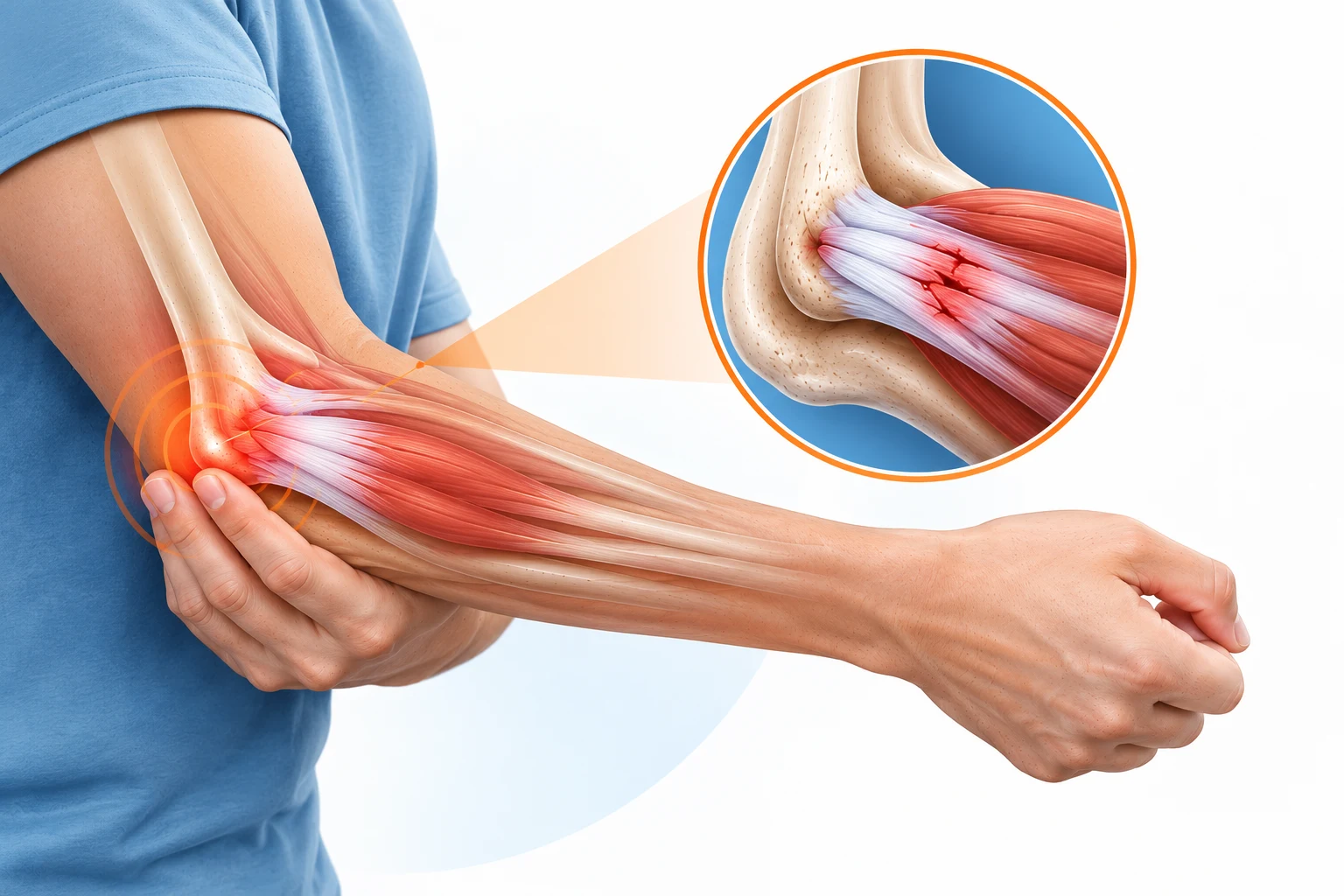
Dr. Ramkinkar Jha, a highly experienced orthopaedic surgeon and sports injury specialist, provides advanced tennis elbow treatment in Gurgaon using modern diagnostic techniques, non-surgical therapies, and minimally invasive procedures. His treatment approach focuses on relieving pain, restoring arm strength, and preventing recurrence so patients can return to their normal activities quickly.
What is Tennis Elbow?
Tennis elbow develops when the tendons (connecting the forearm muscles to the outer elbow bone) become overloaded and develop small tears. Repeated micro-tearing in tendons leads to inflammation, pain, and reduced strength over time
Despite the name, more than 9 in 10 people who develop it have never played racquet sports; it is essentially an overuse injury, not a sports injury. Understanding this distinction in important to understand who is actually at risk and decide the approach of treatment of tennis elbow.
Anatomy & Function: Understanding the Elbow Joint
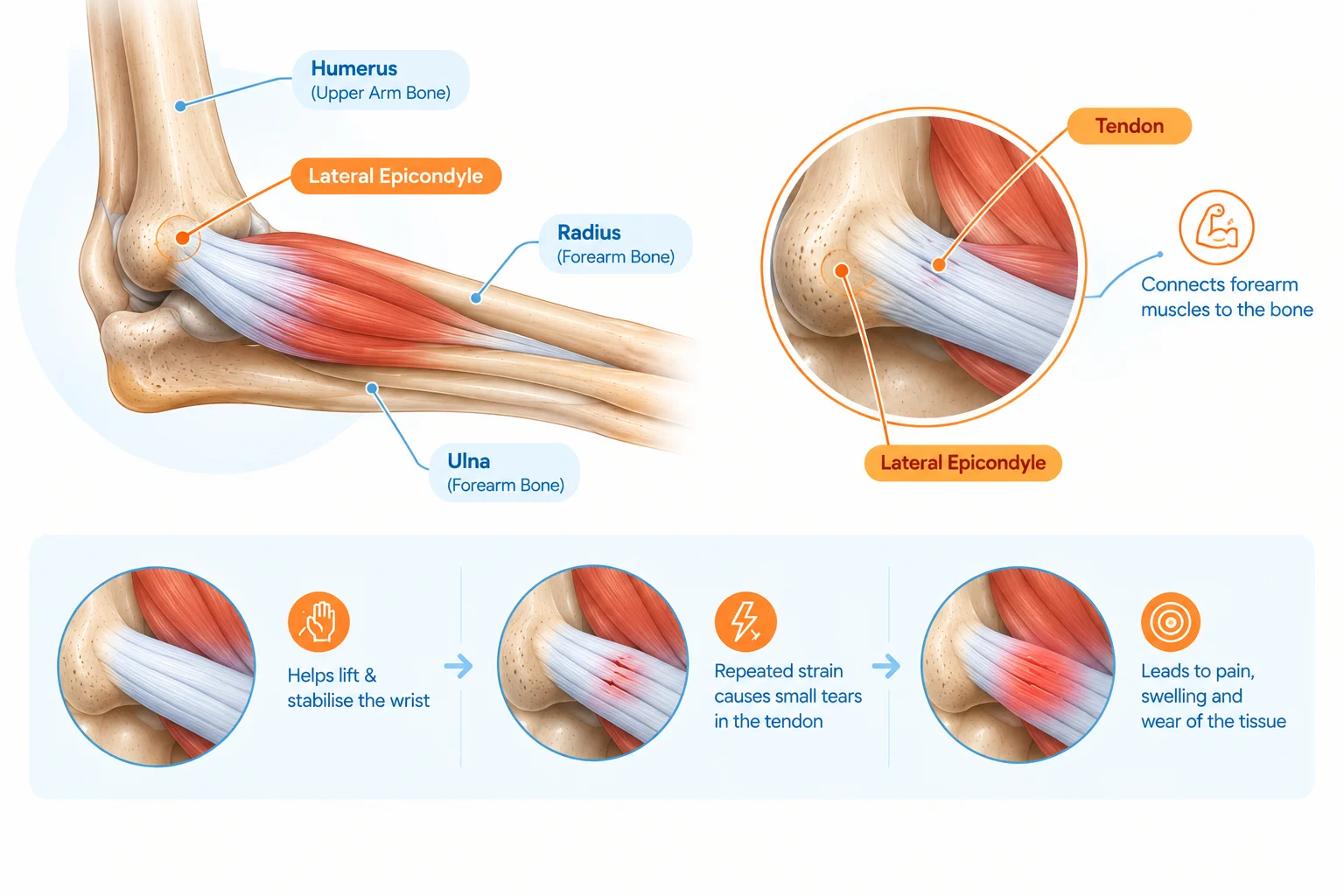
The elbow is a hinge joint formed by the connection of three bones:
- Humerus (Upper Arm Bone)
- Radius (Forearm Bone)
- Ulna (Forearm Bone)
Tendons connect the forearm muscles to a bony point on the outside of the elbow, called the lateral epicondyle:
- These tendons help lift and stabilize the wrist
- In tennis elbow, repeated strain causes small tears in this tendon
- Over time, this leads to pain, swelling, and gradual wear of the tissue
Tennis Elbow Causes
Tennis elbow develops due to repetitive stress or overuse of the forearm muscles. Any activity that repeatedly strains the wrist extensor tendon can lead to this condition.
Here are some common causes of tennis elbow:
Sports Activities
- Tennis
- Badminton
- Squash
- Cricket
Occupational Activities
- Typing or computer work
- Plumbers and electricians
- Carpenters
- Painters
- Mechanics
Daily Activities
- Lifting heavy objects
- Frequent gripping motions
- Using hand tools repeatedly
The common thread across all these causes is repetition without adequate rest, which is exactly why the condition tends to creep up gradually rather than appear overnight.
Tennis Elbow Symptoms
The main symptom of tennis elbow is pain and tenderness on the outer elbow that worsens with gripping, lifting, or twisting the wrist, along with a few other signs that help confirm the diagnosis:
- Pain, tenderness or burning sensation on the outer side of the elbow that can radiate to forearm
- Weak grip strength
- Pain while lifting objects
- Discomfort during handshake or twisting movements
- Difficulty holding items like cups or mobile phones
- Pain while extending the wrist
If these symptoms persist beyond a week or two despite rest, it is a sign the tendon needs proper evaluation rather than more waiting.
Tennis Elbow Risk Factors
Tennis elbow is more likely in people aged 30 to 50 whose daily activities put repeated strain on the forearm tendons, though anyone with these risk factors can develop it.
- Age between 30–50 years
- Repetitive arm movements
- Poor sports technique
- Improper ergonomics at work
- Weak forearm muscles
Recognizing these risk factors early is often what makes the difference between a mild strain and a tendon problem that lingers for months.
Tennis Elbow Diagnosis
Tennis elbow is diagnosed mainly through a physical exam that checks for tenderness at the outer elbow and pain on resisted wrist extension, with imaging used if the picture isn’t clear.
Physical Examination
Certain clinical tests help identify the condition:
- Cozen’s Test: Pain is reproduced when the patient extends the wrist against resistance.
- Mills’s Test: Stretching the forearm tendons produces pain at the lateral epicondyle.
- Grip Strength Test: Reduced grip strength indicates tendon involvement.
Imaging Tests
- X-Ray: Used to rule out arthritis or bone abnormalities.
- Ultrasound: Helps detect tendon damage or inflammation.
- MRI (Magnetic Resonance Imaging): Provides detailed images of tendon degeneration or tears.
The step-by-step approach usually rules out other causes of elbow pain, such as arthritis or nerve compression, before a treatment plan is finalized.
Struggling with Joint Pain, Sports Injury, or Arthritis?
Tennis Elbow Treatment
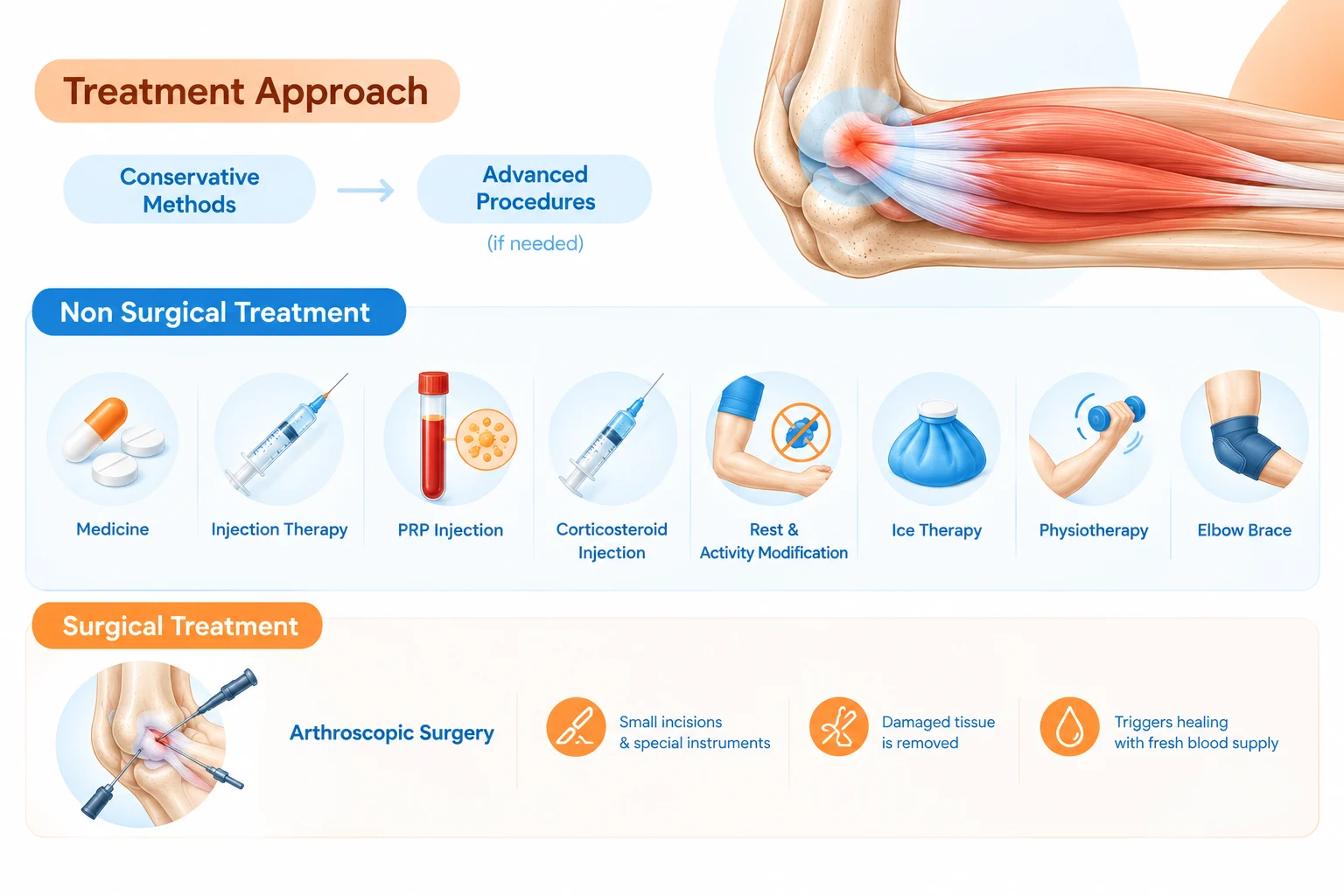
Treatment for tennis elbow focuses on reducing inflammation, healing the tendon, and restoring arm strength. A step-wise approach is followed, starting with conservative methods and progressing to advanced procedures if necessary.
Non Surgical Treatment
Non surgical treatment for tennis elbow relief include medication, injections, elbow brace and physiotherapy plans. Most of the patients can recover successfully without needing any surgery:
1. Medicine for tennis elbow: Painkillers (like NSAIDs) to reduce tennis elbow pain and inflammation.
2. Joint Injection Therapy: When medication for tennis elbow does not provide sufficient relief, advanced injection therapies may be recommended. This includes PRP and corticosteroid injections:
- PRP (Platelet-Rich Plasma) Injection: Patient’s own blood platelets contains growth factors to stimulate tendon healing and regeneration. PRP uses these platelets of patients as tennis elbow cure. Platelets are collected from the patient and injected directly into the damaged tendon area under ultrasound guidance. This reduces inflammation, fastens tissue repair and long-lasting pain relief.
- Corticosteroid Injection: Steroid injections provide quick pain relief by reducing inflammation but are used cautiously.
3. Rest and Activity Modification: Avoid activities that can aggravate elbow pain, especially repetitive gripping motions.
4. Ice Therapy: Applying ice packs for 15–20 minutes several times a day helps reduce swelling and pain.
5. Physiotherapy: An important part of tennis elbow management includes physiotherapy:
- Stretching exercises
- Strengthening of forearm muscles
- Ultrasound therapy
- Shockwave therapy
6. Elbow Brace: A counterforce brace helps reduce stress on the tendon during movement.
- Worn just below the elbow, it redistributes load away from the injured tendon and onto the brace itself
- Often used alongside physiotherapy, especially during activities that can strain the elbow
Surgical Treatment for Tennis Elbow
Surgery is recommended only when symptoms persist for more than 6–12 months despite conservative treatment.
- Arhtroscopic tennis elbow surgery is a minimally invasive surgical procedure
- performed using small incisions and specialized instruments
- This ensures faster recovery and minimal tissue damage
- Damaged tendon tissue is removed
- Removing the damaged tissue brings in fresh blood supply, which triggers healing and lets healthy new tendon form
Tennis Elbow Recovery
Recovery depends on the severity of the condition and the type of treatment performed.
Tennis Elbow Recovery Time
Most patients recover from tennis elbow within a few weeks to a few months with conservative treatment, though the exact timeline depends on how early it was caught and which treatment path is used.
| Procedure | Recovery Timeline |
|---|---|
| Non-Surgical Treatment | Pain relief within 4–6 weeks |
| Injection Therapy | Improvement within 4–8 weeks |
| Surgical Treatment | Return to normal activities within 6–12 weeks |
Physiotherapy plays a crucial role in restoring strength and preventing recurrence.
Tennis Elbow Recovery Tips
Recovery from tennis elbow is faster when rest, correct posture, and gradual return to activity are followed alongside treatment. Here are some home care tips for tennis elbow injury:
- Avoid repetitive wrist and elbow movements
- Perform recommended physiotherapy exercises
- Maintain proper posture during work
- Use ergonomic tools
- Warm up before sports activities
Following these habits consistently matters more than any single treatment, since it’s the small daily choices that determine how quickly the tendon actually heals.
Tennis Elbow Treatment Cost in Gurgaon
Tennis elbow treatment cost in Gurgaon depends on the treatment you need, and most patients only need the lower-cost options.
- Consultation, physiotherapy and brace: physiotherapy is roughly ₹500 to ₹1,500 per session, and this route is enough for most patients.
- PRP injection: roughly ₹8,000 to ₹10,000 per session for tendons and small joints
- Arthroscopic surgery cost: roughly ₹50,000 to ₹1,50,000, depending on the hospital, room category and surgeon’s fees
The exact cost is confirmed after examination, since imaging and the number of physiotherapy sessions vary from patient to patient.
Why Choose Dr. Ramkinkar Jha for Tennis Elbow Treatment in Gurgaon?
Choosing the right orthopaedic specialist is essential for accurate diagnosis and effective treatment. Patients trust Dr. Ramkinkar Jha for tennis elbow treatment because of his experience, precise diagnosis, and a treatment approach that prioritises recovery over unnecessary intervention.
-
20+ years of experience in orthopaedics and sports injuries
-
Expertise across elbow, shoulder, and knee conditions
-
Advanced diagnostic techniques for precise evaluation
-
Minimally invasive procedures for faster recovery
-
Personalized treatment plans focused on long-term joint health
For Most patients, treatment starts with conservative care. Only those who genuinely need more than conservative care move on to minimally invasive options.
Book a Consultation
If elbow pain has affected your grip or daily routine for more than a couple of weeks, it’s worth getting it assessed. Dr. Ramkinkar Jha reviews your symptoms and history, examines the elbow, and recommends imaging only if needed, then outlines a treatment plan, starting with physiotherapy for most patients and escalating to injections or surgery only if that doesn’t work.
International patients can start their journey before travelling by sharing MRI scans, X-rays, and reports for review.
- Preliminary diagnosis, treatment plan, cost estimate, and recovery timeline, at a fraction of Western costs without compromising on safety
- Assistance with medical visa documentation
- Priority appointment scheduling
- Continuous communication and easy follow-up during and after treatment
Most tennis elbow cases settle with simple treatment when they’re caught early. If your elbow pain is still there after a couple of weeks, a single visit can tell you what’s going on and what to do next.
Frequently Asked Questions
Can tennis elbow be cured? expand_more
Yes. Most cases resolve fully with rest, physiotherapy, and activity modification within a few weeks to a few months. A small number of patients with persistent symptoms may need injections or minimally invasive surgery for complete recovery.
Can driving cause tennis elbow? expand_more
Yes, driving can contribute to tennis elbow, but it is not the only cause. Prolonged gripping of the steering wheel and repetitive wrist or forearm movements can strain the elbow tendons, particularly when combined with other repetitive activities.
Can typing cause tennis elbow? expand_more
Yes, typing can contribute to tennis elbow. Prolonged typing, especially with poor wrist posture or repetitive hand movements, can strain the forearm tendons and contribute to elbow pain.
Who is the best tennis elbow specialist in Gurgaon? expand_more
Dr. Ramkinkar Jha, Director, Department of Orthopaedics at CK Birla Hospital, Gurugram, is one of the leading specialists for tennis elbow treatment in Gurgaon, with over 20 years of experience and international fellowship training in sports medicine and arthroscopy.
How do I book a consultation with Dr. Ramkinkar Jha? expand_more
You can book a consultation through the contact section on drramkinkar.com, where you can also share MRI scans, X-rays, or reports in advance for the doctor to review before your visit.

Dr Ramkinkar Jha's Medical Content Team
Dr. Ramkinkar Jha’s medical content team specialises in producing accurate, clear, and patient-focused orthopaedic content. With a strong foundation in clinical knowledge and expertise in technical writing and SEO, the team translates complex orthopaedic and musculoskeletal information into reliable, easy-to-understand resources. Their work helps patients make informed healthcare decisions while reflecting Dr. Jha’s commitment to high-quality, expert care in joint replacement, trauma, sports injuries, and advanced orthopaedic treatments.
This content is reviewed by Dr. Ramkinkar Jha
 WhatsApp