
Carpal Tunnel Release Surgery in Gurgaon
Persistent hand numbness, tingling, or weakness caused by carpal tunnel syndrome can make everyday tasks difficult. When non-surgical treatments no longer provide relief, Carpal Tunnel Release Surgery helps relieve pressure on the median nerve, reducing pain and restoring hand function.

Dr. Ramkinkar Jha, Director of Orthopaedics at CK Birla Hospital, Gurugram, has over 20 years of experience and has performed 5,000+ orthopaedic procedures. With advanced training and expertise in treating hand and wrist conditions, he provides evidence-based, personalised care for patients seeking carpal tunnel syndrome treatment in Gurgaon.
Book a Consultation with Dr. Ramkinkar Jha, Leading Orthopaedic Surgeon in Gurgaon
What is Carpal Tunnel Syndrome?
Carpal tunnel syndrome (CTS) is a common condition caused by compression of the median nerve as it passes through the carpal tunnel, a narrow passageway in the wrist formed by bones and ligaments. The median nerve provides sensation to the thumb, index finger, middle finger, and part of the ring finger while also controlling several muscles at the base of the thumb.
When the tissues surrounding the tendons within the carpal tunnel become swollen or inflamed, they place pressure on the median nerve. This results in pain, numbness, tingling, and weakness in the hand. Without timely treatment, prolonged nerve compression can lead to permanent nerve damage and muscle wasting.
Types of Carpal Tunnel Release Surgery
The choice of surgical technique depends on the severity of nerve compression, the patient’s medical history, occupation, and individual anatomical considerations. Dr. Ramkinkar Jha recommends the most appropriate approach after a thorough clinical evaluation.
| Feature | Open Carpal Tunnel Release | Endoscopic Carpal Tunnel Release |
| Incision | Single small incision in the palm | One or two very small incisions |
| Technique | Direct release of the transverse carpal ligament | Camera-guided release using specialised instruments |
| Visualisation | Mild discomfort that gradually improves | Endoscopic visualisation on a monitor |
| Post-operative Pain | Mild discomfort that gradually improves | Often slightly less post-operative discomfort |
| Scar Size | Small but slightly more visible | Smaller, cosmetically appealing scar |
| Recovery | Excellent recovery with gradual return to activities | May allow a slightly faster return to work |
| Best Suited For | Moderate to severe cases and revision surgeries | Selected patients suitable for minimally invasive surgery |
| Long-term Results | Moderate to severe cases and revision surgeries | Comparable long-term outcomes to open surgery |
Tunnel Release Surgery in Delhi NCR
Carpal Tunnel Release Surgery is a minimally invasive procedure that relieves pressure on the median nerve by cutting the transverse carpal ligament, creating more space within the carpal tunnel. This reduces nerve compression, alleviates symptoms such as pain, numbness, tingling, and hand weakness, and helps prevent permanent nerve damage.
Step-by-Step Carpal Tunnel Release Procedure
Step 1: Anaesthesia
The procedure is usually performed under local anaesthesia with or without mild sedation. Patients remain comfortable throughout the surgery while avoiding the risks associated with general anaesthesia.
Step 2: Surgical Site Preparation
The hand and wrist are thoroughly cleaned with antiseptic solution and covered with sterile drapes to minimise the risk of infection.
Step 3: Creating the Incision
Depending on the chosen technique, a small incision is made either in the palm (open surgery) or at the wrist (endoscopic surgery). Special care is taken to protect the surrounding nerves, blood vessels, tendons, and soft tissues.
Step 4: Identifying the Transverse Carpal Ligament
The surgeon carefully exposes the transverse carpal ligament, the strong fibrous band forming the roof of the carpal tunnel. This ligament is responsible for restricting space within the tunnel when swelling develops.
Step 5: Releasing the Ligament
Using specialised microsurgical instruments, the ligament is divided along its length. This immediately relieves pressure on the compressed median nerve. Once released, the ligament heals naturally while leaving enough additional space to prevent recurrent nerve compression.
Step 6: Inspecting the Median Nerve
The surgeon carefully examines the median nerve to ensure complete decompression. Any surrounding scar tissue or thickened tissue contributing to nerve compression may also be addressed when necessary.
Step 7: Wound Closure
The incision is closed with fine absorbable or removable sutures. A sterile dressing is applied, and the wrist is lightly bandaged. The surgery generally takes 15-30 minutes, and patients are discharged on the same day.
For patients who continue to experience symptoms despite wrist splints, medications, injections, or physiotherapy, surgery often offers the most effective long-term solution.
Benefits of Carpal Tunnel Release Surgery
The procedure offers excellent long-term outcomes for appropriately selected patients. Benefits include:
- Relief from numbness and tingling
- Reduced wrist and hand pain
- Better sleep without night-time symptoms
- Improved grip strength
- Restoration of hand function
- Prevention of permanent nerve damage
- Improved thumb movement
- Enhanced quality of life
- High success rate
- Minimal hospital stay
Possible Risks and Complications of Carpal Tunnel Release Surgery
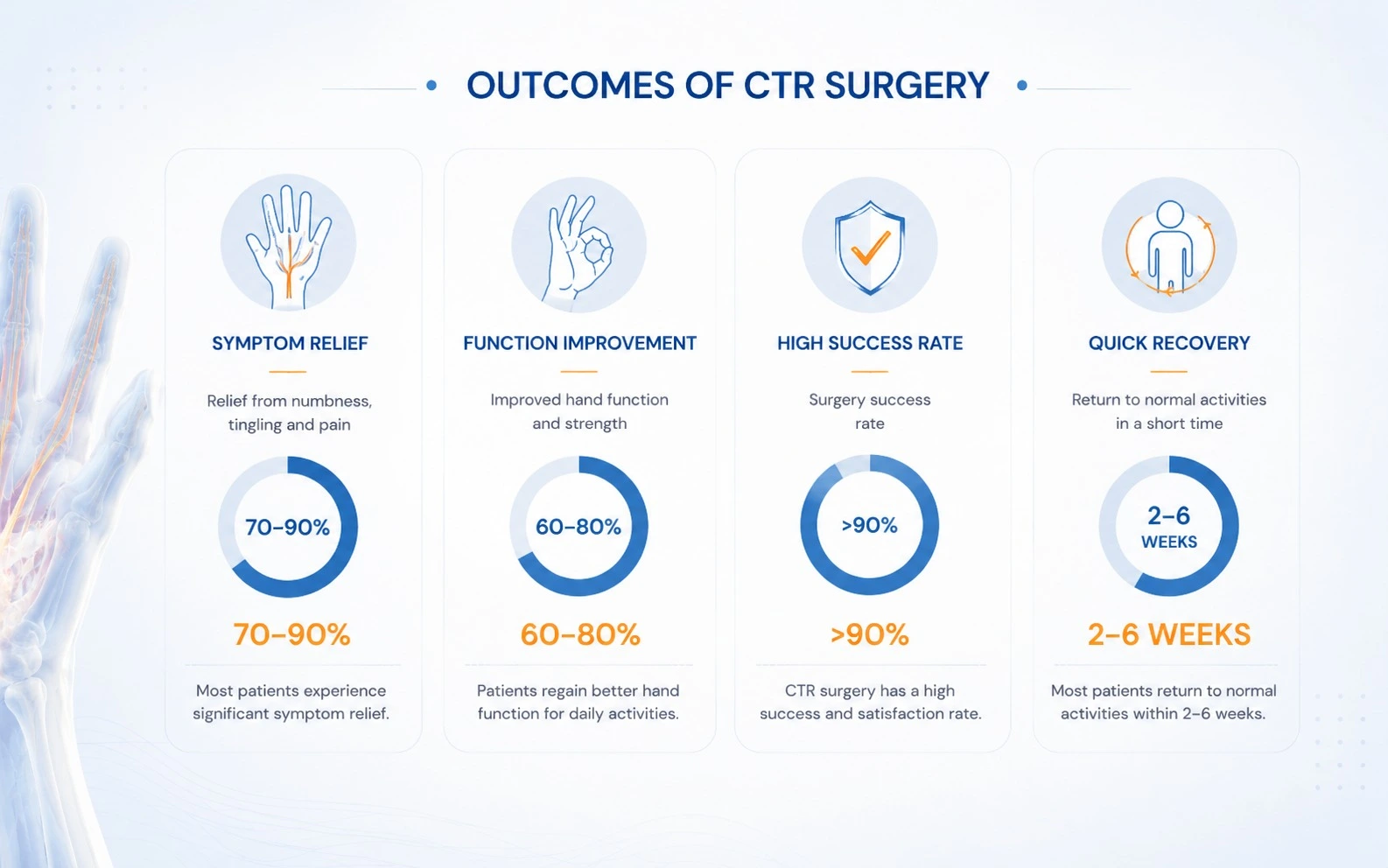
Carpal Tunnel Release Surgery is a commonly performed procedure with a high success rate. However, like any surgical intervention, it carries certain risks, although serious complications are uncommon when performed by an experienced orthopaedic surgeon.
Potential risks include:
- Infection at the surgical site
- Bleeding or bruising
- Temporary pain or scar tenderness
- Wrist or finger stiffness
- Persistent numbness or tingling during nerve recovery
- Incomplete relief of symptoms, particularly in long-standing cases
- Injury to nearby nerves or blood vessels (rare)
- Complex Regional Pain Syndrome (CRPS) (rare)
- Recurrence of symptoms over time (uncommon)
A thorough pre-operative assessment, meticulous surgical technique, and adherence to post-operative rehabilitation instructions significantly reduce the risk of complications and support a smooth recovery. Regular follow-up appointments help monitor healing and ensure the best possible functional outcome.
Carpal Tunnel Release Surgery Cost in Gurgaon
Carpal tunnel release surgery cost in Gurgaon generally starts from ₹40,000, depending on factors such as:
- Surgical technique (open or endoscopic)
- Severity of nerve compression
- Hospital and room category
- Anaesthesia charges
- Pre-operative investigations
Every patient receives a personalised, transparent cost estimate after Dr. Ramkinkar Jha reviews the clinical findings and any nerve conduction study results, with no hidden charges.
Struggling with Joint Pain, Sports Injury, or Arthritis?
Why Choose Dr. Ramkinkar Jha for Carpal Tunnel Release Surgery in Gurgaon?
Choosing the best orthopaedic surgeon is essential for successful carpal tunnel release surgery. Beyond relieving pressure on the median nerve, the procedure requires precise surgical technique, careful handling of delicate nerves and tendons, and a personalised rehabilitation plan to restore hand strength, sensation, and function.
- 20+ years of orthopaedic experience with 5,000+ successful surgeries.
- Experienced in hand, wrist, and nerve compression disorders, including carpal tunnel syndrome.
- Internationally trained at AIIMS New Delhi, the University of Edinburgh (UK), with fellowships in the UK, Singapore, Hong Kong, and Switzerland.
- Precision-focused surgical techniques for safe median nerve decompression and minimal tissue damage.
- Personalised treatment plans based on symptoms, nerve studies, and lifestyle needs.
- Comprehensive rehabilitation and follow-up to support faster recovery and restore hand function.
Book a Consultation for Carpal Tunnel Release Surgery in Gurgaon
If persistent numbness, tingling, hand weakness, or wrist pain is affecting your work or daily life, an early consultation can help prevent permanent nerve damage and determine whether surgery is the right treatment option.
What to Bring to Your Appointment
- Previous nerve conduction study (NCS) or EMG reports, if available
- Wrist X-rays, ultrasound, or MRI reports (if advised)
- Medical records related to previous treatments
- List of current medications and allergies
- Insurance documents, if applicable
- A list of your symptoms and questions for discussion
International patients can share their medical records and diagnostic reports in advance for a preliminary review before travelling.
Frequently Asked Questions
Is Carpal Tunnel Release Surgery Safe? expand_more
Yes. Carpal tunnel release surgery is a safe and effective procedure with a high success rate. When performed by an experienced orthopaedic surgeon, the risk of complications is low, and most patients experience significant relief from pain, numbness, and tingling.
How long does it take to recover from Carpal Tunnel Release Surgery? expand_more
Most patients can resume light daily activities within 1-2 weeks. Desk-based work is often possible within 2-4 weeks, while physically demanding jobs may require 6-8 weeks. Full nerve recovery can take several months, especially in cases of long-standing nerve compression.
When should I consider Carpal Tunnel Release Surgery? expand_more
Surgery is generally recommended if symptoms such as persistent numbness, tingling, pain, or hand weakness continue despite conservative treatments like wrist splints, medications, injections, or physiotherapy, or if nerve conduction studies indicate significant median nerve compression.
How is carpal tunnel syndrome diagnosed? expand_more
Carpal tunnel syndrome diagnosis involves a detailed medical history and physical examination, followed by tests such as nerve conduction studies (NCS) and electromyography (EMG) to assess median nerve function. In some cases, ultrasound or X-rays may be recommended to rule out other wrist conditions
How can I book an appointment with Dr. Ramkinkar Jha for knee replacement surgery in Gurgaon? expand_more
You can book an appointment with Dr. Ramkinkar Jha through the appointment booking form on this page, or by contacting directly through the number available on the Outstation and international patients may share MRI reports in advance for a preliminary review.

Dr. Ramkinkar Jha's Content Team
Dr. Ramkinkar Jha’s medical content team specialises in producing accurate, clear, and patient-focused orthopaedic content. With a strong foundation in clinical knowledge and expertise in technical writing and SEO, the team translates complex orthopaedic and musculoskeletal information into reliable, easy-to-understand resources. Their work helps patients make informed healthcare decisions while reflecting Dr. Jha’s commitment to high-quality, expert care in joint replacement, trauma, sports injuries, and advanced orthopaedic treatments.
This content is reviewed by Dr. Ramkinkar Jha
Related Treatments

Trigger Finger Release Surgery in Gurgaon
Trigger finger release surgery in Gurgaon is a short, highly effective outpatient procedure that permanently resolves the catching, locking, and…
Rotator Cuff Repair Surgery in Gurgaon
If reaching for a shelf, sleeping on your side, or lifting a bag has started triggering a deep ache in…
Related Blogs

Successful Elbow Reconstruction in a Complex Terrible Triad Injury
A young man from Iraq boarded a flight to India carrying more than just travel…
Read Article → WhatsApp