
Rotator Cuff Repair Surgery in Gurgaon
If reaching for a shelf, sleeping on your side, or lifting a bag has started triggering a deep ache in your shoulder, the rotator cuff tendons may be torn. Rotator cuff repair surgery in Gurgaon is a well-established orthopaedic procedure that reattaches torn shoulder tendons to the bone, relieving pain and restoring strength and movement.
Dr. Ramkinkar Jha, Director of Orthopaedics at CK Birla Hospital, Gurugram, performs arthroscopic rotator cuff repair surgery using keyhole techniques that minimise tissue damage, shorten hospital stay, and support faster, more predictable recovery. With over 20 years of experience and fellowship training in shoulder arthroscopy across the UK, Singapore, and Hong Kong, Dr. Jha offers a treatment-first, surgery-only-when-needed approach to every patient.
Book a Consultation with Dr. Ramkinkar Jha, Leading Orthopaedic Surgeon in Gurgaon
What Is Rotator Cuff Repair Surgery?
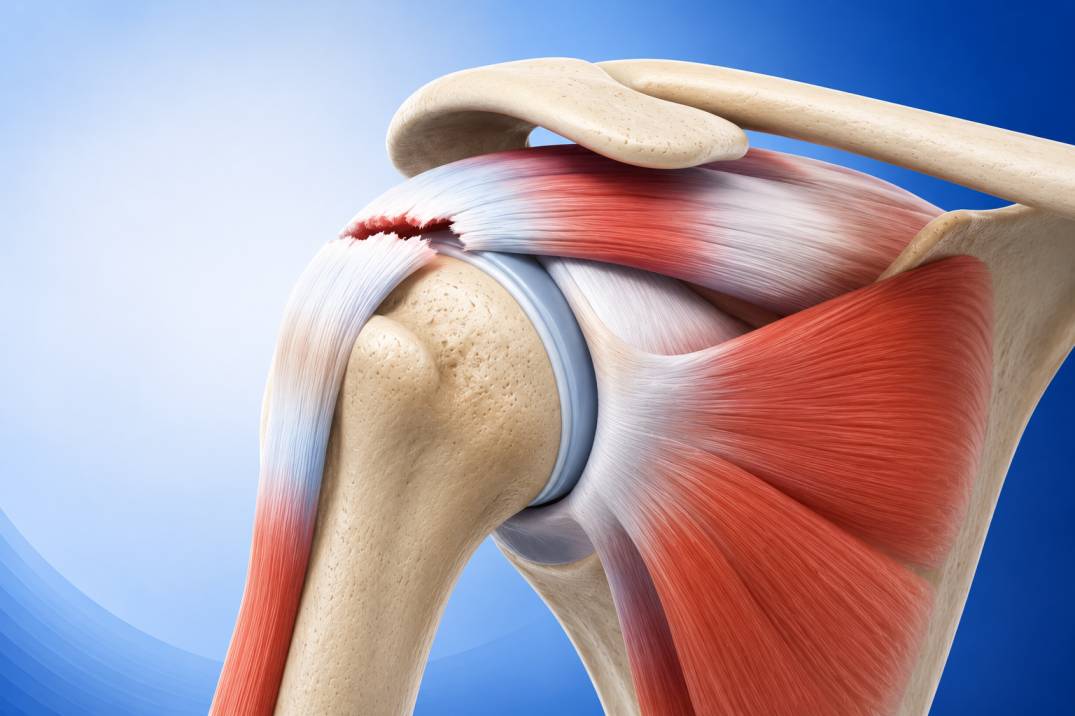
Rotator cuff repair surgery is a procedure that reattaches a torn shoulder tendon back to its original position on the upper arm bone (humerus) using anchors and sutures, restoring the tendon’s ability to lift and rotate the arm.
The rotator cuff is made up of four muscles and tendons (supraspinatus, infraspinatus, teres minor, and subscapularis) that hold the arm bone securely in the shoulder socket and power overhead and rotational movement. When one or more of these tendons tear, partially or completely, the shoulder loses strength and stability, and surgery may be the most reliable way to restore function, particularly for active patients or tears that don’t respond to conservative care.
Who Needs Rotator Cuff Repair Surgery?
Surgery is generally recommended for full-thickness tears in active or younger patients, tears caused by a sudden injury, and tears that continue to cause pain, weakness, or disability after a structured course of physiotherapy and injections.
Rotator Cuff Repair Surgery is generally recommended under the following circumstances:
- For a complete (full-thickness) tear confirmed on MRI, especially in patients under 60-65 years of age
- For an acute tear following a fall, lift, or shoulder dislocation, where early repair gives the best chance of full tendon healing.
- Surgery is also considered when pain, night pain, or weakness has persisted beyond 3-6 months despite physiotherapy and injections
- When the tear is causing significant functional loss such as inability to lift or rotate the arm
- When repeat imaging shows the tear enlarging, since untreated tears tend to grow and become harder to repair over time.
Not every tear needs surgery: small, partial-thickness tears in older or less active patients are frequently managed successfully with non-surgical care.
Types of Rotator Cuff Repair Surgery
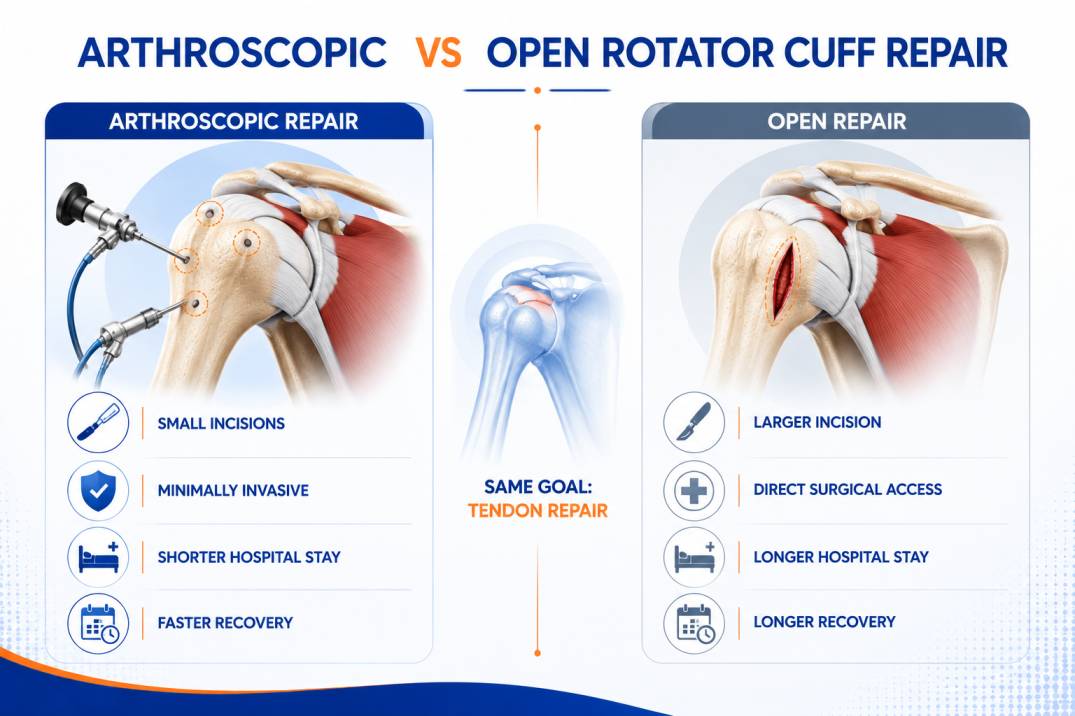
The two main techniques for rotator cuff repair are arthroscopic (keyhole) repair and open repair, with arthroscopic surgery being the preferred approach for the vast majority of tears today.
Arthroscopic Rotator Cuff Repair Surgery
Arthroscopic rotator cuff repair surgery uses a thin camera (arthroscope) and small instruments inserted through a few 5-8 mm incisions to reattach the torn tendon to the bone, without cutting through the deltoid muscle.
This is the primary technique for the majority of rotator cuff tears.
- The surgeon visualises the entire shoulder joint and tendon on a high-definition monitor
- Removes any bone spur or inflamed tissue and uses bio-composite suture anchors to pull the tendon back into its natural footprint on the bone.
- For larger or more complex tears, a double-row suture-bridge technique is used, placing two rows of anchors for a stronger, more secure repair and a lower chance of re-tearing.
Benefits of the arthroscopic approach include smaller scars, less post-operative pain, lower infection risk, and a same-day or next-day hospital discharge in most cases.
Open Repair Rotator Cuff Surgery
Open repair rotator cuff surgery involves a larger incision over the shoulder to directly access and reattach the torn tendon, and is generally reserved today for select complex, massive, or revision tears.
In an open repair, the surgeon makes a 4-6 cm incision and partially detaches a portion of the deltoid muscle to gain direct access to the rotator cuff. While this approach was historically the standard, it has largely been replaced by arthroscopic techniques because of longer recovery, more post-operative pain, and a higher risk of deltoid-related complications.
Mini-Open Repair
A hybrid approach, mini-open repair, combines arthroscopic evaluation of the joint with a smaller (2-3 cm) open incision for the actual tendon repair. It is occasionally used for specific tear patterns where it offers a practical middle ground between fully arthroscopic and traditional open surgery.
Arthroscopic vs. Open Rotator Cuff Repair: Key Differences
How Is Rotator Cuff Repair Surgery Performed?
Rotator cuff repair surgery is performed under regional or general anaesthesia and typically takes 1-2 hours, during which the surgeon removes damaged tissue, prepares the bone surface, and secures the torn tendon back in place using suture anchors.
- After anaesthesia and positioning, a small camera is inserted through a tiny incision so the surgeon can inspect the cuff, biceps tendon, and cartilage on a monitor.
- Inflamed tissue and any impinging bone spur are cleared away, and the bone surface is gently roughened to encourage healing.
- Suture anchors are then placed into the bone, and the attached high-strength sutures are passed through the torn tendon and tied down to pull it firmly back into its natural position.
- The incisions are closed, and the arm is placed in a supportive sling before the patient is moved to recovery.
Rotator Cuff Repair Surgery Cost in Gurgaon
Rotator cuff repair surgery cost in Gurgaon generally starts from ₹1,60,000. The cost depends on whether the repair is arthroscopic or open, the size and complexity of the tear, the implants used, and the hospital room category chosen.
| Factor | Approximate Cost Range (INR) |
| Arthroscopic single-row repair (small-medium tear) | Starting ₹1,60,000 |
| Arthroscopic double-row repair (large tear) | Starting ₹2,20,000 |
| Open or revision rotator cuff repair | Starting ₹2,50,000 |
| Massive tear with biologic augmentation/SCR | Starting ₹3,00,000 |
This typically includes surgeon and OT charges, anaesthesia, suture anchors, hospital stay, and initial post-operative physiotherapy. It does not include pre-operative MRI, extended rehabilitation beyond the standard package, or treatment of unrelated pre-existing conditions.
Your exact cost depends on tear size, retraction, and the anchors used, and is confirmed only after Dr. Jha reviews your MRI and clinical history.
Read our detailed arthroscopy surgery cost guide → for a fuller procedure-wise breakdown.
Struggling with Joint Pain, Sports Injury, or Arthritis?
Recovery After Rotator Cuff Repair Surgery
Rotator cuff repair surgery recovery follows a structured, time-based rehabilitation protocol, since the tendon needs 6-12 weeks to biologically reattach to the bone before it can bear active load.
Most patients are walking and managing daily self-care within a day of surgery, but the shoulder itself recovers in defined phases.
- For the first six weeks, the arm stays in a sling, and only passive, therapist-assisted movement is allowed while the repair is still fragile.
- From weeks 6 to 12, the sling comes off, and active-assisted range-of-motion exercises begin using a pulley or stick.
- Between months 3 and 6, resistance band and light weight training rebuild rotator cuff and scapular strength.
- By months 6 to 9, full overhead sports or heavy manual work are typically permitted once strength is objectively assessed as adequate.
Rushing this timeline is one of the most common causes of re-tear, so your healing is tracked through scheduled follow-ups rather than by how the shoulder “feels”.
Risks and Complications of Rotator Cuff Repair Surgery
Rotator cuff repair is a safe, commonly performed procedure, but like any surgery it carries a small risk of stiffness, infection, anchor-related issues, or re-tear, particularly in larger or chronic tears.
The most relevant risks include
- Shoulder stiffness if rehabilitation is delayed
- Infection (uncommon with arthroscopic technique)
- Temporary nerve irritation
- Re-tear of the repaired tendon, which is more likely with massive tears, smoking, diabetes, or premature return to heavy activity.
Your individual risk profile is discussed, based on tear size, tissue quality, and overall health, before finalising the surgical plan.
Why Choose Dr. Ramkinkar Jha for Rotator Cuff Repair Surgery in Gurgaon?
Dr. Ramkinkar Jha combines fellowship-level shoulder arthroscopy training with a high annual volume of rotator cuff and sports injury procedures, offering patients in Gurgaon an evidence-based, transparent path to shoulder recovery.
- Dr. Jha brings 20+ years of experience and 12,000+ surgeries performed, including over 1,000 arthroscopy and sports injury procedures annually
- Fellowship training in shoulder arthroscopy and sports medicine from centres in the UK, Singapore, and Hong Kong.
- For large and complex tears, he uses advanced double-row and suture-bridge techniques for stronger, more durable repairs, and recommends surgery only when clinically justified after fully exploring non-surgical options.
- Every patient receives a detailed, written cost estimate after MRI review, with no hidden charges
- Procedures are performed using 4K arthroscopic imaging in a dedicated day-care surgical unit.
If you’re also experiencing broader shoulder instability or recurring dislocations alongside cuff symptoms, it’s worth discussing this with your orthopaedic surgeon, since the two conditions can sometimes overlap and may need a combined assessment of shoulder dislocation treatment in Gurgaon alongside the cuff repair plan. For tears that are massive, chronically retracted, or where rotator cuff arthropathy has already developed, shoulder replacement surgery in Gurgaon can also be considered as a salvage option.
Book a Consultation for Rotator Cuff Repair Surgery in Gurgaon
If shoulder pain, weakness, or night-time discomfort has been limiting your daily activities or sporting performance, an expert evaluation can clarify whether you need surgery, and which technique is right for your tear.
Schedule a consultation:
- To get a personalised diagnosis, treatment plan, and cost estimate.
- For your visit, bring any recent shoulder MRI or X-ray films and reports, previous medical or physiotherapy records, a list of current medications, and your insurance documents if applicable.
For a deeper understanding of why your tendon tore in the first place and how it’s diagnosed, our rotator cuff tear condition guide covers the anatomy, causes, and full diagnostic workup in detail.
Frequently Asked Questions
Is rotator cuff repair surgery painful? expand_more
Most patients experience moderate pain for the first few days, well controlled with a regional nerve block and oral pain medication, with discomfort reducing significantly within the first 1-2 weeks.
Can a Torn Rotator Cuff Heal Without Surgery? expand_more
A torn rotator cuff cannot reattach itself to the bone, but many partial tears and some smaller full-thickness tears in low-demand patients can be managed successfully without surgery through physiotherapy, activity modification, and targeted injections.
When can I drive after rotator cuff repair surgery? expand_more
Most patients can resume driving around 4-6 weeks after surgery, once the sling is discontinued and they have regained enough control to react safely, though this is confirmed individually based on which arm was operated on and recovery progress.
What is the success rate of rotator cuff repair surgery? expand_more
Rotator cuff repair surgery has a high success rate, with most patients experiencing significant pain relief and improved shoulder strength and function. Outcomes are generally best when the tear is treated early.
How can I book an appointment with Dr. Ramkinkar Jha? expand_more
You can book an appointment with Dr. Ramkinkar Jha through the appointment booking form on this page. Outstation and international patients may share MRI reports and medical records in advance for a preliminary review before their visit.

Dr. Ramkinkar Jha's Content Team
Dr. Ramkinkar Jha’s medical content team specialises in producing accurate, clear, and patient-focused orthopaedic content. With a strong foundation in clinical knowledge and expertise in technical writing and SEO, the team translates complex orthopaedic and musculoskeletal information into reliable, easy-to-understand resources. Their work helps patients make informed healthcare decisions while reflecting Dr. Jha’s commitment to high-quality, expert care in joint replacement, trauma, sports injuries, and advanced orthopaedic treatments.
This content is reviewed by Dr. Ramkinkar Jha
Related Treatments

Carpal Tunnel Release Surgery in Gurgaon
Persistent hand numbness, tingling, or weakness caused by carpal tunnel syndrome can make everyday tasks difficult. When non-surgical treatments no…
Trigger Finger Release Surgery in Gurgaon
Trigger finger release surgery in Gurgaon is a short, highly effective outpatient procedure that permanently resolves the catching, locking, and…
Related Blogs
Successful Elbow Reconstruction in a Complex Terrible Triad Injury
A young man from Iraq boarded a flight to India carrying more than just travel…
Read Article → WhatsApp