
Robotic Knee Replacement Surgery in Gurgaon
Robotic knee replacement surgery in Gurgaon uses CT-based 3D planning and VELYS robotic assistance to improve surgical precision and implant alignment. It may be suitable for advanced knee arthritis when conservative treatments no longer provide adequate relief, with recovery, cost, benefits, risks, and outcomes varying by patient.
Book a Consultation with Dr. Ramkinkar Jha, Leading Orthopaedic Surgeon in Gurgaon
What Is Robotic Knee Replacement Surgery?
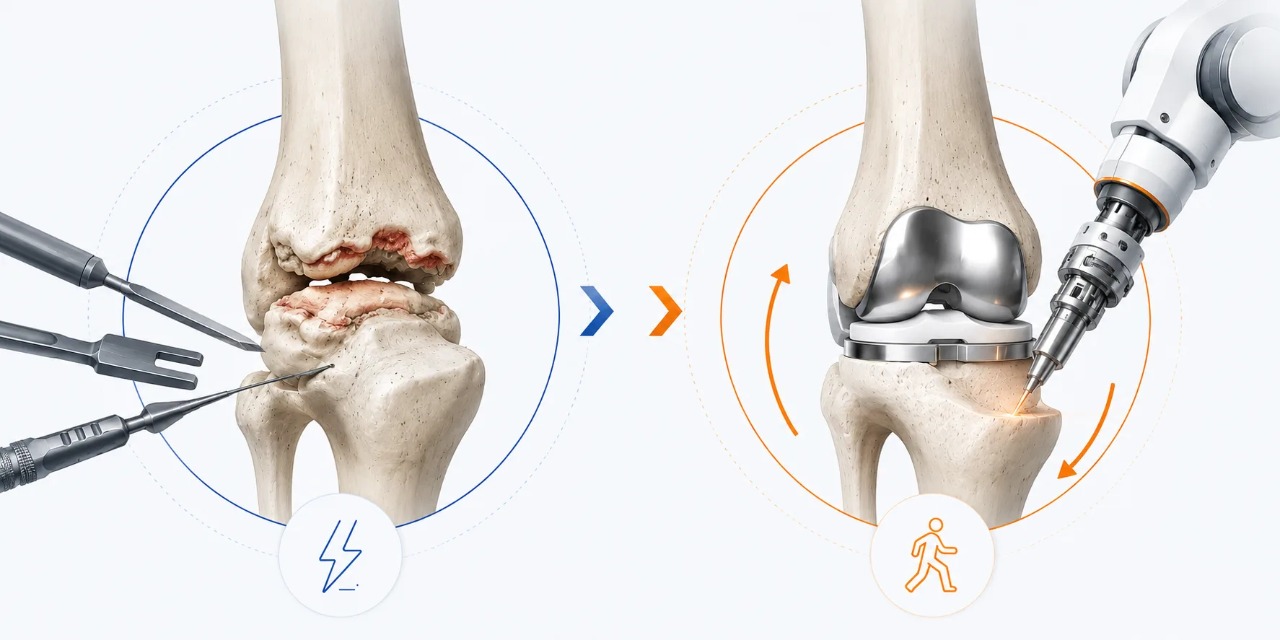
Knee replacement surgery means removing the worn-out, arthritic surfaces of your knee joint and replacing them with a precisely shaped metal-and-plastic implant. The goal is simple: eliminate pain and restore movement.
Robotic-assisted knee replacement takes this a step further. A robotic arm – powered by DePuy Synthes’ VELYS robotic technology – works alongside the surgeon during surgery. The robot does not operate on its own. Think of it as an incredibly precise co-pilot: the surgeon makes every decision, and the robotic arm ensures the surgeon stays within the exact safe zone planned together.
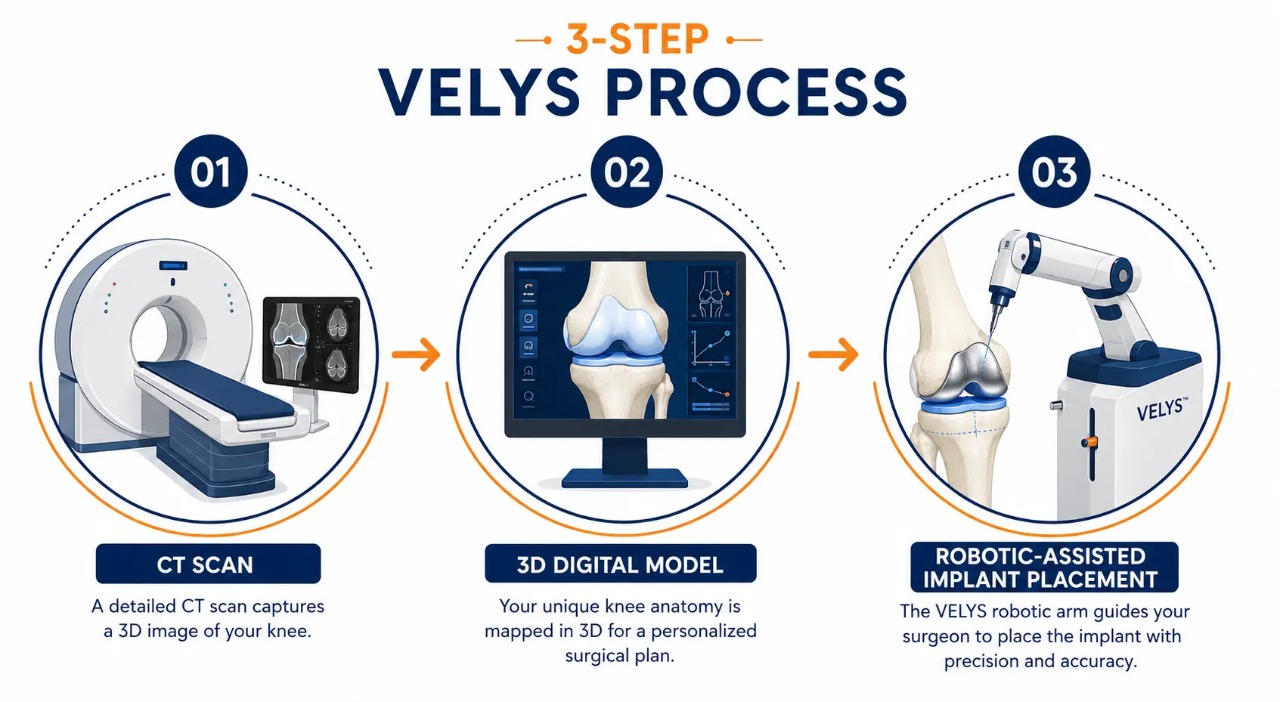
Here’s how the VELYS system works in practice:
- Before surgery: You have a CT scan of your knee. The VELYS software uses that scan to build a 3D digital model of your knee – your exact bone shape, size, and degree of damage.
- Pre-surgical planning: The surgeon maps out precisely where the implant will sit, the angle of placement, and how much bone to remove. This is done before you even arrive on the day of surgery.
- During surgery: The robotic arm guides the surgeon’s instruments in real time, physically preventing any movement outside the pre-planned safe zone. The result is implant placement accurate to within a fraction of a millimetre.
This level of precision is simply not achievable consistently with the naked eye and manual instruments alone – and that precision is what determines how well your new knee feels for the next 20 years.
How Is It Different from Traditional Knee Replacement?
This is the question Dr. Jha hears most often in his OPD. Here’s an honest, straightforward comparison – because robotic vs traditional knee replacement is not about one being “bad” and the other “good.” It’s about what gives you the best outcome for your specific knee.
| Factor | Robotic-Assisted (VELYS) | Traditional |
| Implant alignment accuracy | Sub-millimetre precision, CT-planned | Depends on surgeon’s eye and manual instruments |
| Risk of implant misalignment | Significantly lower | Higher – even in skilled hands |
| Hospital stay | Typically 3–4 days | Typically 4–6 days |
| Recovery time | Often faster – walking Day 1 | Walking Day 2–3 on average |
Why does alignment matter so much? A misaligned implant – even by a few degrees – causes uneven wear, persistent pain, and can mean revision joint replacement within 10–15 years. Precise placement protects the implant and the surrounding soft tissue, which directly translates to a more natural-feeling knee and a longer-lasting result.
Studies published in peer-reviewed journals consistently show that VELYS robotic knee replacement produces better mechanical alignment and improved short-to-medium-term functional scores compared with conventional surgery. The AAOS 2026 annual meeting data also reported higher 1-year patient satisfaction with robotic-assisted total knee replacement.
Who Needs Robotic Knee Replacement Surgery?
Not everyone with knee pain needs surgery – and Dr. Jha always explores non-surgical options first. But there is a clear point where surgery becomes the right answer.
You may be a candidate for robotic knee replacement surgery if:
- Your knee pain is severe and caused by osteoarthritis (the cartilage – the cushioning between your bones – has worn away, leaving bone rubbing on bone)
- Non-surgical treatments have stopped working – physiotherapy, anti-inflammatory medications, steroid or hyaluronic acid injections have given you little or no lasting relief
- Daily activities are significantly affected – you struggle to walk more than a few hundred metres, climb stairs, or get up from a chair without pain
- Your X-rays show significant joint damage – bone-on-bone contact, deformity, or severe narrowing of the joint space
- Both knees are affected – bilateral (both knees) cases can sometimes be addressed in a single surgical episode, depending on your overall health
Age is a consideration, but not a barrier. Dr. Jha has performed successful total knee replacement surgery in Gurgaon on patients in their 50s and in their 80s. Activity level, bone health, and overall health matter more than the number on your birth certificate.
If you’re unsure whether you qualify, a consultation and a standing X-ray are usually all that’s needed to give you a clear answer.
The VELYS Robotic Knee Replacement Procedure – Step by Step
Surgery can feel daunting. So here’s exactly what happens – no surprises.
Step 1 – CT Scan (1–2 weeks before surgery) You’ll have a CT scan of your knee at the hospital. This takes about 20 minutes and is completely painless. The VELYS software converts this into your personalised 3D surgical plan.
Step 2 – Pre-surgical planning Dr. Jha reviews your 3D model and plans the precise position, size, and angle of your implant. By the time you arrive for surgery, the operation has already been “performed” digitally.
Step 3 – Day of surgery You’ll receive either spinal anaesthesia (you’re awake but feel nothing below the waist) or general anaesthesia – the team decides together with you based on your health. The procedure itself takes 1 to 2 hours.
During surgery, the VELYS robotic arm guides the surgeon’s instruments in real time. If the surgeon moves outside the planned zone, the arm automatically resists. The damaged bone surfaces are removed, the implant is placed and fixed, and the wound is closed. For more details on what to expect from knee replacement surgery, patients can review the comprehensive guide before their procedure.
Step 4 – Recovery room You’ll spend 1–2 hours in the recovery area while the anaesthesia wears off. Most patients are sitting up and sipping tea within a few hours. The physiotherapy team usually visits on the same evening.
Recovery After Robotic Knee Replacement Surgery
Robotic knee replacement recovery time is one of the most common questions patients ask – and it’s the question competitors almost never answer properly. Here’s the honest, week-by-week picture:
- Day 1-2 (In hospital) You will stand and walk a few steps with a walker on Day 1. This sounds surprising, but early movement is essential – it prevents blood clots and speeds healing. Pain is managed with a combination of nerve blocks, anti-inflammatories, and mild oral painkillers.
- Week 1-2 (Home) You’ll go home with a walker or crutches. Light walking around the house, gentle bending exercises, and physiotherapy sessions begin. Most patients manage stairs carefully by the end of Week 1. Incorporating exercises for knee arthritis into your routine can accelerate progress during this phase.
- Week 4-6 The majority of patients are walking without any aid by this point. Swelling continues to reduce. You’ll notice a meaningful improvement in how far you can bend your knee.
- 3 months Return to most daily activities – including driving (for most patients, around 6 weeks for automatics, 10–12 weeks for manual cars). Shopping trips, light walks, and social outings are fully back on the agenda.
- 6-12 months Full recovery. Most patients return to low-impact activities – swimming, cycling, gentle hiking, and golf. The knee continues to feel more natural as the surrounding muscles strengthen.
- What to avoid in the first 6 weeks: High-impact activities (running, jumping), twisting movements, and sitting cross-legged on the floor.
Physiotherapy is not optional – it is the other half of your surgery. Consistent exercises at home, combined with your physio sessions, are what turn a technically perfect implant into a knee that feels like your own.
Robotic Knee Replacement Cost in India and Gurgaon
Let’s talk about money – because no competitor page does, and you deserve a straight answer.
Robotic knee replacement cost in India varies depending on the hospital, the implant brand, and whether you’re having one or both knees done. At a reputable hospital in Gurgaon, here’s a realistic picture:
- Total package cost (single knee): Starts from ₹3.5 lakh to ₹6 lakh – this includes surgeon’s fee, hospital stay, anaesthesia, implant, physiotherapy, and post-operative medications
- Robotic surcharge: The MAKO robotic component typically adds ₹60,000 to ₹1 lakh over the cost of a conventional procedure – a meaningful but worthwhile investment given the precision it delivers
- Bilateral (both knees): Costs are not simply doubled; there are shared costs for anaesthesia and hospital stay, making simultaneous bilateral surgery more economical per knee
Factors that affect your final cost:
- Orthopaedic implants brand and type (premium implants from established manufacturers cost more but have longer track records)
- Length of hospital stay
- Whether you need any additional investigations or pre-op management for other health conditions
For an accurate cost estimate tailored to your knee condition, a consultation with Dr.Ramkinkar Jha is the best starting point. He will review your X-rays, assess your knee, and give you a complete picture – with no hidden surprises.
Struggling with Joint Pain, Sports Injury, or Arthritis?
Why Choose Dr. Ramkinkar Jha for Robotic Knee Replacement in Gurgaon?
For robotic knee replacement in Gurgaon, choosing an experienced joint replacement surgeon and a hospital equipped with advanced robotic technology can support precise, personalised care.
Experience that matters:
- 20+ years of orthopaedic and joint replacement surgery
- 12,000+ orthopaedic surgeries performed, including 5,000+ joint replacements
- Fellowship training in the UK and USA, specifically in advanced joint replacement techniques – exposure to some of the world’s highest-volume knee replacement centres
Technology that delivers:
- VELYS robotic technology available at CK Birla Hospital, Gurgaon – one of Delhi NCR’s most trusted multispecialty hospitals
- Every patient receives a personalised pre-surgical CT-based plan – no two surgeries are identical, because no two knees are identical
A team that cares:
- Dedicated physiotherapy and rehabilitation support from Day 1
- OPD consultations available at CK Birla Hospital, Gurgaon – book an appointment through the hospital’s website or by calling the OPD helpline
If you’re searching for the best robotic knee replacement surgeon in Gurgaon, you’re encouraged to come in, ask Dr. Jha your questions directly, and make your decision based on what you see and hear – not just what you read online.
Book a Consultation for Robotic Knee Replacement Surgery in Gurgaon
If knee pain, stiffness, or difficulty walking is affecting your daily life, a timely evaluation can help determine whether robotic knee replacement is right for you. For your consultation, bring:
- Recent X-rays or knee scans
- Details of previous knee treatments or surgeries
- A list of current medications
- Relevant medical reports
A consultation helps assess your knee condition, treatment options, and whether VELYS robotic technology with CT-based planning is appropriate for your case.
Frequently Asked Questions
Is robotic knee replacement surgery safe? expand_more
Yes. Robotic-assisted surgery is approved and widely used globally. The VELYS system has an excellent safety record, and because it prevents the surgeon from moving outside the planned zone, it actually reduces the risk of errors compared with conventional surgery.
How long does a robotic knee implant last? expand_more
Modern knee implants are designed to last 20 years or more in most patients. Precise placement - which robotic surgery consistently achieves - is one of the key factors that extends implant life by reducing uneven wear. Your activity level and body weight also play a role.
Is robotic knee replacement surgery painful? expand_more
The surgery itself is performed under anaesthesia, so you feel nothing. Post-operative pain is managed with nerve blocks, anti-inflammatories, and oral painkillers.
What is the success rate of robotic knee replacement surgery? expand_more
Success rates are high. Clinical studies report 90%+ patient satisfaction at follow-up after VELYS robotic knee replacement, with significant improvements in pain scores and function. The AAOS 2026 annual meeting data showed higher 1-year satisfaction rates for robotic-assisted total knee replacement compared with conventional surgery. Long-term implant survival at 15–20 years is excellent when the implant is well-aligned - which robotic surgery is specifically designed to ensure.
How can I book an appointment with Dr. Ramkinkar Jha for robotic knee replacement surgery in Gurgaon? expand_more
You can book through the appointment form on this page. Outstation and international patients may share imaging in advance for a preliminary review before their visit.

Dr Ramkinkar Jha's Medical Content Team
Dr. Ramkinkar Jha’s medical content team specialises in producing accurate, clear, and patient-focused orthopaedic content. With a strong foundation in clinical knowledge and expertise in technical writing and SEO, the team translates complex orthopaedic and musculoskeletal information into reliable, easy-to-understand resources. Their work helps patients make informed healthcare decisions while reflecting Dr. Jha’s commitment to high-quality, expert care in joint replacement, trauma, sports injuries, and advanced orthopaedic treatments.
This content is reviewed by Dr. Ramkinkar Jha
Related Treatments

Robotic Joint Replacement in Gurgaon
Joint pain that has stopped responding to physiotherapy, medications, or injections, and where imaging shows significant cartilage or joint damage,…

Knee Replacement Surgery in Gurgaon
Knee pain that stops you from walking to the next room, climbing a single flight of stairs, or getting a…
Revision Knee Replacement Surgery in Gurgaon
In India, as the volume of knee replacement surgeries continues to grow, with estimates exceeding 2.5 lakh procedures annually, the…
Bilateral Knee Replacement Surgery in Gurgaon
When both knees wear down, walking, standing or even sitting can become painful. If medications and physiotherapy are no longer…
Related Blogs
Primary vs Revision Joint Replacement: What Patients Need to Know
Joint replacement surgery has given millions of people their lives back, no more waking up…
Read Article →
Orthopaedic Implants: Types, Benefits, Costs & What Patients Must Know
Orthopaedic implants are biocompatible devices used to replace, stabilise, or support bones and joints affected…
Read Article →
Knee Replacement Surgery – What Patients Should Expect – Dr Ramkinkar Jha
Knee replacement surgery has transformed the lives of millions of patients suffering from severe arthritis and…
Read Article → WhatsApp