
Patellofemoral Pain Syndrome (Runner’s Knee) Treatment in Gurgaon
That dull ache at the front of your knee, the one that flares up on stairs, after a long run, or after sitting for too long, is one of the most common knee complaints seen in active adults and athletes. Many people seeking Patellofemoral Pain Syndrome (Runner’s Knee) Treatment in Gurgaon experience exactly these symptoms. Most people know it simply as runner’s knee.
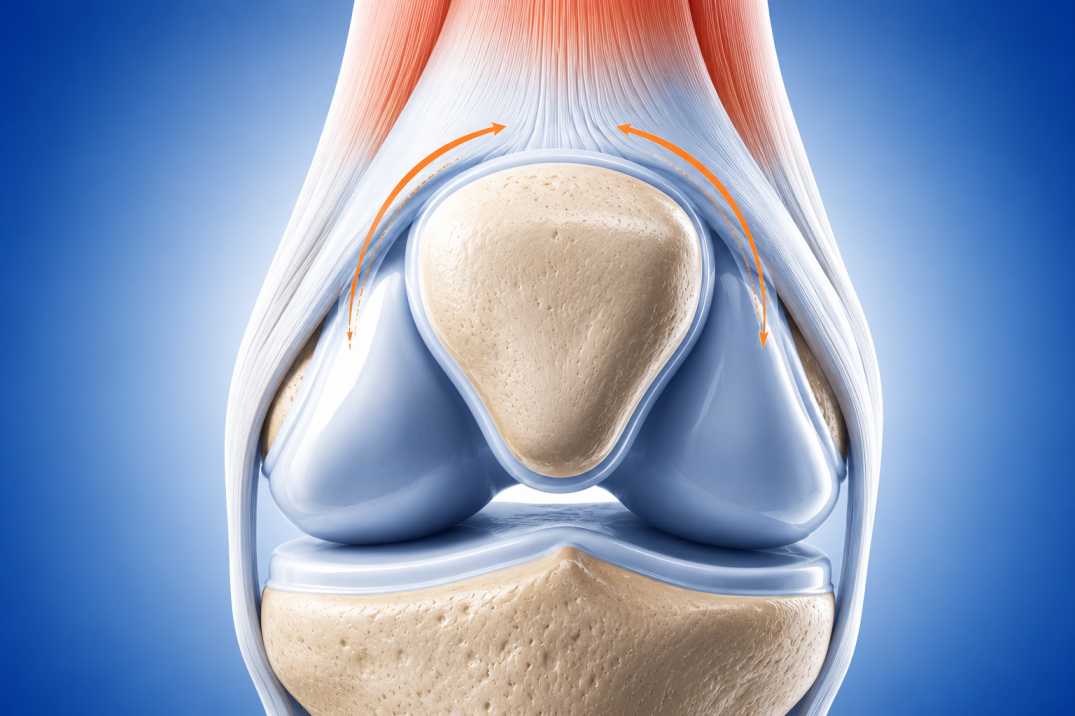
The good news is that with the right diagnosis and a structured treatment plan, most patients recover fully and return to their normal activities without surgery.
Dr. Ramkinkar Jha, Director, Department of Orthopaedics at CK Birla Hospital, Gurugram, has managed thousands of knee conditions over 20+ years, including complex cases of patellofemoral pain syndrome in recreational athletes, competitive sports persons, and working professionals whose daily routines were disrupted by persistent knee pain.
Book a Consultation with Dr. Ramkinkar Jha, Leading Orthopaedic Surgeon in Gurgaon
What Is Runner’s Knee (Patellofemoral Pain Syndrome)?
Patellofemoral pain syndrome is a condition in which pain arises from the joint between the kneecap (patella) and the thigh bone (femur). Under normal circumstances, the patella glides smoothly along a groove in the femur as the knee bends and straightens. When this tracking mechanism is disrupted due to muscle imbalances, overuse, poor biomechanics, or structural factors, abnormal pressure builds up at the back of the kneecap.
PFPS is among the most frequently diagnosed knee problems globally. Research published in the British Journal of Sports Medicine estimates that patellofemoral pain accounts for approximately 25-40% of all knee complaints presenting in sports medicine clinics. It affects both athletes and non-athletes, though it is particularly prevalent among runners, cyclists, and people who spend long hours climbing stairs or squatting.
Causes of Patellofemoral Pain Syndrome
Patellofemoral pain syndrome is typically caused by a combination of factors that alter the way the kneecap tracks over the femur, increasing stress on the joint surface. These include muscle weakness, overuse, and structural alignment issues.
Common contributing causes include:
- Quadriceps and hip muscle weakness: Weakness in the quadriceps, particularly the VMO (vastus medialis oblique), and hip abductor muscles reduces the stability of the patella during movement, causing it to track incorrectly.
- Overuse and sudden increase in training load: A rapid increase in running mileage, cycling intensity, or stair climbing puts repetitive stress on the patellofemoral joint before the surrounding muscles have adapted.
- Poor lower limb alignment: Flat feet (overpronation), bow legs, or a wider-than-normal pelvis (Q-angle) can alter the mechanics of the knee, shifting abnormal forces to the patella.
- Tight structures around the knee: Tightness in the IT band, hamstrings, or lateral retinaculum can pull the kneecap out of alignment during movement.
- Cartilage changes at the back of the kneecap: In some cases, the cartilage on the undersurface of the patella begins to soften or deteriorate, a related condition known as chondromalacia patellae.
Unlike acute sports injuries such as an ACL tear or a meniscus tear, PFPS develops gradually rather than from a single traumatic event.
Symptoms of Runner’s Knee
Runner’s knee symptoms are usually centred around the front of the knee and around the kneecap. Pain typically worsens with activities that load the patellofemoral joint.
Symptoms to watch for include:
- Dull, aching pain at the front or around the kneecap; the most consistent feature
- Pain that worsens when going up or down stairs
- Discomfort after sitting for prolonged periods (often called the “theatre sign” or “movie sign”; the knee aches after sitting still and eases briefly when you first stand up)
- Pain during or after running, squatting, or cycling
- A sensation of grinding or clicking around the kneecap
- Mild swelling around the knee in some cases
Importantly, the pain often appears during physical activity or immediately after, rather than at rest. If your pain is severe, comes on suddenly, or is accompanied by significant swelling and instability, your knee should be evaluated promptly, as these may indicate a different diagnosis, such as a cartilage injury or ligament problem.
How Is Patellofemoral Pain Syndrome Diagnosed?
Patellofemoral pain syndrome is diagnosed primarily through clinical examination. A skilled orthopaedic surgeon can identify the condition accurately through a combination of patient history, physical tests, and imaging where indicated.
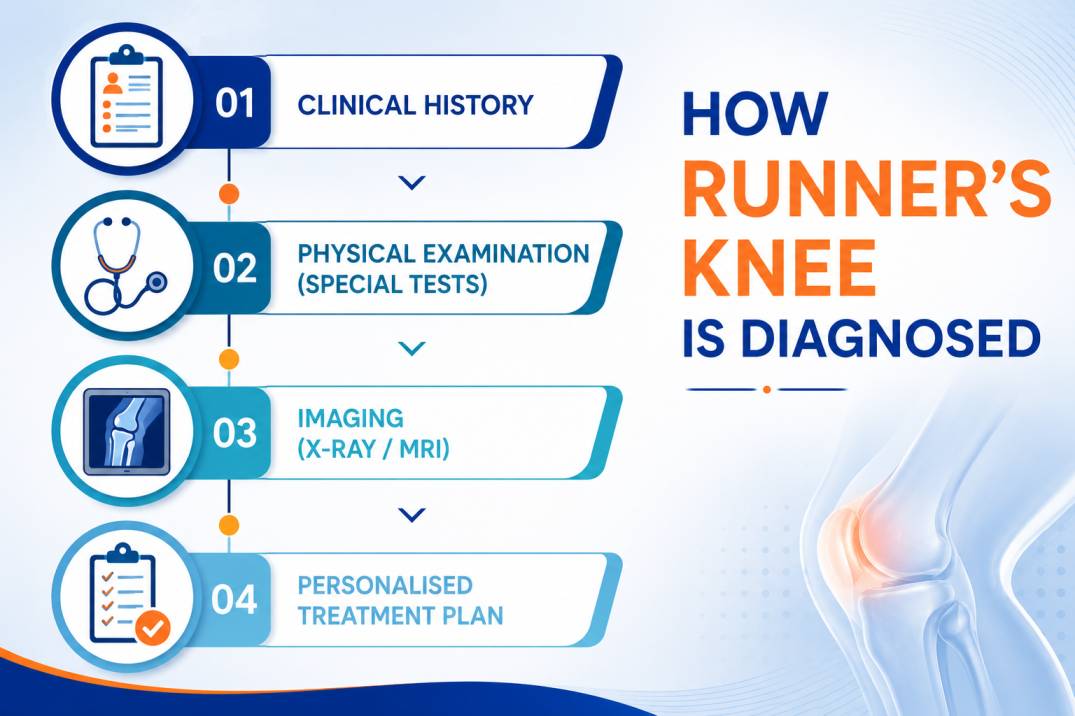
Clinical history: Dr. Jha will ask about the nature, location, and triggers of your pain, your activity levels, and how long symptoms have been present.
Physical examination and special tests: Several clinical tests help confirm patellofemoral pain syndrome:
- Clarke’s Test (Patellar Grind Test): Pressure is applied to the kneecap while the patient contracts the quadriceps; reproduction of pain suggests PFPS.
- Patellar Tilt and Glide Test: Assesses how freely and correctly the patella moves within its groove.
- J-Sign Observation: Watching the kneecap during knee straightening; a J-shaped trajectory suggests poor patellar tracking.
- Assessment of hip and quadriceps strength: Weakness here is a major driver of PFPS and shapes the rehabilitation plan.
Imaging:
- X-ray: Useful to assess bony alignment and rule out other structural causes of anterior knee pain.
- MRI: Ordered when cartilage damage, bone bruising, or other structural injury is suspected. MRI can reveal changes at the back of the patella and assess the health of surrounding soft tissues.
Accurate diagnosis is essential. Several other conditions, including Osgood-Schlatter disease in adolescents, patellar tendinopathy, and bursitis, can present similarly and require different treatment. A thorough evaluation ensures you receive the right care from the outset.
Patellofemoral Pain Syndrome Treatment in Gurgaon
Patellofemoral pain syndrome treatment focuses on reducing pain, correcting the underlying biomechanical problems, and strengthening the muscles that support the knee. The vast majority of patients improve significantly with non-surgical management.
Non-Surgical Treatment (First-Line Approach)
- Activity Modification: Reducing or temporarily pausing high-impact activities (running, jumping, squatting) allows inflammation to settle. This does not mean complete rest; low-impact activities such as swimming or cycling on a stationary bike are typically encouraged.
- Physiotherapy and Targeted Exercises: This is the cornerstone of runner’s knee treatment. A structured physiotherapy programme, designed around your specific muscle weaknesses and movement patterns, produces excellent results when followed consistently.
Key exercise categories include:
- VMO strengthening
- Hip abductor and external rotator exercises
- Core stability training
- Flexibility work
- Patellofemoral Brace or Taping: A patellofemoral pain syndrome brace or McConnell taping technique helps guide the kneecap into better alignment during activity, providing symptom relief while the underlying muscle weakness is being addressed.
- Orthotics (Shoe Insoles): For patients with flat feet or significant overpronation, custom or off-the-shelf orthotics can reduce the rotational stress transmitted to the knee during walking and running.
- Anti-Inflammatory Medications: Short courses of NSAIDs (such as ibuprofen or naproxen) may be used to manage acute pain and swelling. These are prescribed carefully, particularly for patients with gastrointestinal or cardiovascular concerns.
- Corticosteroid or PRP Injections: In cases where pain is severe or not responding to physiotherapy alone, a guided intra-articular injection may be considered. PRP (Platelet-Rich Plasma) therapy is an option for patients with associated cartilage changes who prefer a regenerative approach.
Surgical Treatment for Patellofemoral Pain Syndrome
Surgery is rarely required for patellofemoral pain syndrome. When symptoms are severe, persistent despite 6-12 months of well-supervised conservative treatment, and imaging confirms a specific structural problem, surgical options may be discussed. These include:
- Lateral release: Division of tight lateral structures that are pulling the kneecap out of alignment.
- Tibial tubercle realignment (Fulkerson osteotomy): A procedure that repositions the bony attachment of the patellar tendon to improve kneecap tracking, reserved for carefully selected patients with significant malalignment.
- Arthroscopic cartilage procedures: When patellofemoral pain is associated with significant cartilage damage, arthroscopic cartilage repair or microfracture may be indicated.
Dr. Jha adopts a strictly evidence-based approach: surgery is recommended only when there is a clear structural indication and when conservative treatment has been given a fair and thorough trial.
Runner’s Knee Recovery: What to Expect?
Recovery from patellofemoral pain syndrome varies depending on how long symptoms have been present and how consistently the rehabilitation programme is followed.
- Mild to moderate PFPS (symptoms present less than 3 months): Most patients notice significant improvement within 6-8 weeks of structured physiotherapy.
- Chronic PFPS (symptoms present longer than 3-6 months): Full recovery can take 3–6 months, but most patients achieve meaningful pain reduction and functional improvement within this window.
- Return to running: Gradual return to running is typically guided using a walk-run programme, usually beginning around 4-6 weeks into rehabilitation, once pain levels have settled and hip/quadriceps strength is adequate.
Consistency with exercises is the single biggest predictor of a good outcome. Patients who commit to their home programme recover faster and are far less likely to experience recurrence.
Struggling with Joint Pain, Sports Injury, or Arthritis?
Patellofemoral Pain Syndrome vs. Other Knee Conditions
It is important to distinguish PFPS from other conditions that cause anterior knee pain, as management differs:
| Condition | Key Distinguishing Feature |
| Patellofemoral Pain Syndrome | Diffuse front-of-knee ache; worse on stairs and after sitting |
| Patellar Tendinopathy (“Jumper’s Knee”) | Pain localised to the patellar tendon, just below the kneecap; worse with jumping |
| Chondromalacia Patellae | Cartilage softening on the back of the patella; overlaps significantly with PFPS |
| Meniscus Tear | Pain on the inner or outer joint line; clicking, locking, or catching sensation |
| Osteoarthritis | Diffuse knee pain in older adults; morning stiffness; joint-line tenderness |
| IT Band Syndrome | Lateral (outer) knee pain; worse during running, typically at the 30-minute mark |
A clinical evaluation and appropriate imaging will confirm the diagnosis.
Patellofemoral Pain Syndrome Treatment Cost in Gurgaon
Runner’s knee treatment cost in Delhi depends on various factors.
Key factors that affect cost:
- Severity and duration of symptoms
- Investigations required (X-ray vs. MRI)
- Need for bracing, orthotics, or injections
- Whether surgery is indicated (rarely)
A detailed cost estimate is shared after clinical evaluation. No hidden charges, no unnecessary procedures.
Why Choose Dr. Ramkinkar Jha for Runner’s Knee Treatment in Gurgaon?
Patients with patellofemoral pain syndrome from Gurugram, Delhi, Faridabad, and across Delhi NCR choose Dr. Ramkinkar Jha because his approach combines clinical precision with patience, understanding that most knee problems, when assessed properly, can be resolved without rushing to surgical intervention.
- 20+ Years of Orthopaedic Experience: 12,000+ surgeries performed, including 1,000+ sports injury and arthroscopy procedures annually across the knee, shoulder, hip, ankle, and wrist.
- Sports Medicine Subspecialisation: Fellowship-trained in arthroscopy and sports medicine in the UK, Singapore, Hong Kong, Switzerland, and Malaysia. MBBS Gold Medallist; MS from AIIMS New Delhi.
- Evidence-Based, Conservative-First Philosophy: Dr. Jha prescribes the treatment the condition requires, no unnecessary investigations, no surgery when physiotherapy will suffice.
- Comprehensive Sports Rehabilitation at CK Birla Hospital: Access to structured sports rehabilitation programmes alongside orthopaedic care, all within a single NABH-accredited facility.
- Nationally Recognised Excellence: Indian Excellence Award (2022) for Best Orthopaedic Surgeon; Dr. APJ Abdul Kalam Health Award (2023) for Service Excellence in Joint Replacement.
Book a Consultation for Patellofemoral Pain Syndrome Treatment in Gurgaon
If you have been managing knee pain that is limiting your runs, your daily routine, or your quality of life, an accurate diagnosis is the most important first step. Most patients with runner’s knee do not need surgery, but they do need the right assessment and the right rehabilitation plan.
What to bring to your consultation:
- Recent X-ray or MRI reports, if available
- A description of when your pain started and what aggravates it
- Details of any previous treatment or physiotherapy undertaken
- Your activity level and sporting goals
- List of current medications
Dr. Jha will provide a clear diagnosis, a realistic recovery roadmap, and the support you need to get back to doing what you love, without unnecessary procedures or delays.
Frequently Asked Questions
How long does runner's knee take to heal? expand_more
Most patients with mild to moderate patellofemoral pain syndrome see significant improvement within 6-8 weeks of structured physiotherapy. Chronic cases may take 3-6 months. Recovery is faster when a consistent exercise programme is followed from the outset.
Is a brace necessary for patellofemoral pain syndrome? expand_more
A patellofemoral brace or kinesiology taping can help reduce pain during activity by improving kneecap alignment, but it is a supportive measure rather than a cure. It works best in combination with targeted strengthening exercises.
Can runner's knee come back after treatment? expand_more
Yes, recurrence is possible, particularly if the underlying muscle weakness or biomechanical issues have not been fully addressed. Maintaining a regular quadriceps and hip strengthening routine after recovery significantly reduces the risk of symptoms returning.
Is surgery needed for runner's knee? expand_more
Surgery is rarely required for patellofemoral pain syndrome. Surgery is considered only when conservative treatment has been thoroughly trialed without success and a specific structural problem is confirmed on imaging.
How can I book an appointment with Dr. Ramkinkar Jha? expand_more
You can book a consultation with Dr. Ramkinkar Jha using the appointment booking form on this page. Outstation and international patients may share their MRI reports and imaging in advance for a preliminary review before visiting in person.

Dr. Ramkinkar Jha's Content Team
Dr. Ramkinkar Jha’s medical content team specialises in producing accurate, clear, and patient-focused orthopaedic content. With a strong foundation in clinical knowledge and expertise in technical writing and SEO, the team translates complex orthopaedic and musculoskeletal information into reliable, easy-to-understand resources. Their work helps patients make informed healthcare decisions while reflecting Dr. Jha’s commitment to high-quality, expert care in joint replacement, trauma, sports injuries, and advanced orthopaedic treatments.
This content is reviewed by Dr. Ramkinkar Jha
Related Conditions

Calf Muscle Tear (Tennis Leg) Treatment in Gurgaon
A sudden, sharp pain in the back of the lower leg, sometimes described as being “hit” or “kicked” from behind,…
Tendinopathy Treatment in Gurgaon
Persistent pain around a tendon that just won’t settle, whether it’s the back of your heel, the front of your…
Sports Injuries Treatment in Gurgaon
Every year, an estimated 3.7 million sports-related injuries are treated across India, according to data from the Indian Journal of Orthopaedics. For…
Patellar Dislocation Treatment in Gurgaon
Patellar dislocation, also called kneecap dislocation, is a painful and often destabilising knee injury in which the patella slips out…
MCL & LCL Injury Treatment in Gurgaon
MCL and LCL injuries range from mild sprains to complete tears causing knee instability. Treatment depends on grade and ligament…
Cartilage Damage Treatment in Gurgaon
Cartilage damage is one of the most common and most underdiagnosed causes of persistent joint pain in active adults and…
Related Blogs
10 Best Knee Strengthening Exercises for Stronger Knees
There’s a moment everyone with knee trouble knows: the pause right before standing up from…
Read Article →
How Athletes Can Prevent Knee Ligament Injuries
Every athlete, whether you play recreational cricket on weekends or train competitively for football, basketball,…
Read Article →
ACL vs PCL Tear: Key Differences, Symptoms & Treatment
When someone twists their knee during a football match or hears a sudden “pop” on…
Read Article →
Top 5 Common Sports Injuries and How to Prevent Them – Dr Ramkinkar Jha
Sports are a great way to stay fit and active, but injuries can sometimes get…
Read Article → WhatsApp