
Bone and Joint Health Awareness Month: How to Strengthen Bones and Joints Before Pain Starts
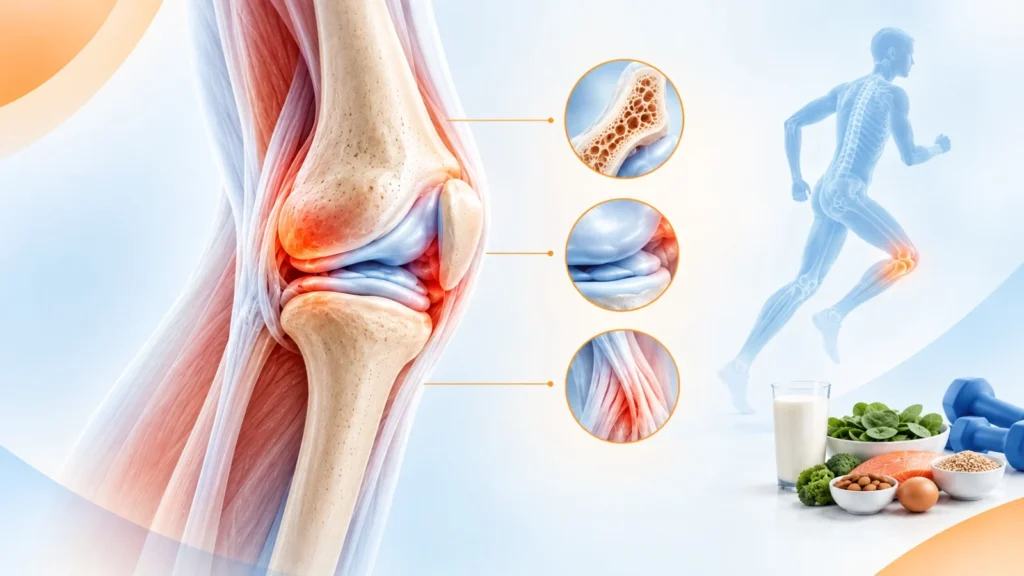
How can you strengthen your bones and joints before pain starts? Regular weight-bearing and muscle-strengthening exercise, adequate calcium and vitamin D, maintaining a healthy weight, avoiding smoking, and addressing persistent pain or mobility changes early can help support bone and joint health.
A generation ago, an ordinary Desi day meant squatting, climbing, carrying groceries and walking to most places, and the skeleton got its workout for free. Today it means a chair, a car and an air-conditioned office, and the bill arrives as knee pain at 45 or a hip fracture from minor fall.
October’s Bone and Joint health awareness month is a good reminder to settle that bill early. This guide covers what the awareness month is all about, why bones have started weakening sooner, how to improve bone health and strengthen bones at any age, what to eat and the warning signs to look out for.
Book a Consultation with Dr. Ramkinkar Jha, Leading Orthopaedic Surgeon in Gurgaon
What Is Bone and Joint Health Awareness Month?
Bone and Joint Health Awareness Month is observed every October to raise awareness about musculoskeletal health and conditions such as arthritis and osteoporosis. The month reminds people to look after their bones and joints before pain or a fracture forces the issue.
Its core is the international Bone and Joint Action Week, around 12 to 20 October, which gives five conditions a day each:
- 12 October: World Arthritis Day
- 16 October: World Spine Day
- 17 October: World Trauma Day
- 19 October: World Paediatric Bone and Joint Day
- 20 October: World Osteoporosis Day
The push is needed because bone and joint conditions are the leading contributor to disability worldwide, affecting about 1.71 billion people, according to WHO. Many build up quietly: cartilage wears down over years, and bone loss gives no warning until a bone breaks. Understanding why bones and joints weaken is the first step to catching them early.
Why Do Bones Weaken With Age?
Bone is constantly renewed: old bone is removed and new bone built in its place. Until about the age of 30, the building process works ahead of breakdown, but after 30, this can get reversed and bone density starts falling.
Factors reducing bone density are:
- Low calcium and vitamin D: Bone needs both as raw material, and a shortfall over the years leaves less to rebuild with.
- Hormonal change: Oestrogen helps protect bone. After menopause oestrogen drops, accelerating bone loss..
- Muscle loss: Weaker muscles pull on bone less, which reduces the signal to rebuild.
- Too little movement: Bone strengthens only when it is loaded, so inactivity lets it thin out.
Joints age by a different route. Cartilage has no blood supply of its own and depends on movement to stay nourished, so inactivity and obesity (extra weight) wear it down faster. The encouraging part is that most of these factors can be changed, which is where the next section begins.
How to Strengthen Bones and Improve Bone Strength Naturally
Load them. Bone rebuilds in response to stress, so weight-bearing and resistance exercise is the most reliable way to improve bone strength. It also trains the muscles, makes them strong, which in turn protects your joints.
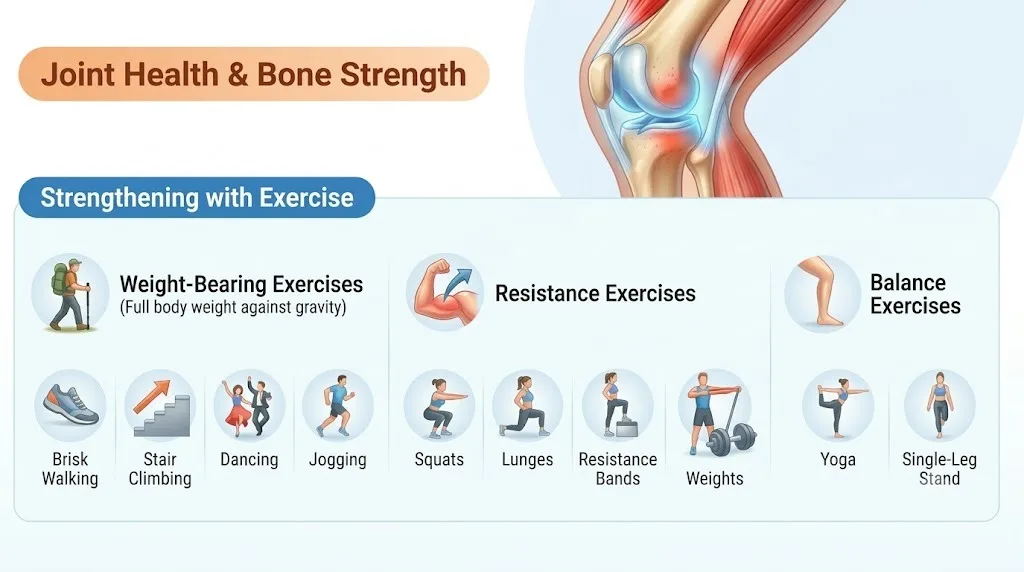
3 types of exercises help with bone and joint health:
Weight-bearing exercises
- You carry your own body weight against gravity, which triggers bone formation. These include:
- Brisk walking
- Stair climbing
- Dancing
- Jogging
Resistance exercises
- Muscles pull hard on the bones they are attached to, which gives bone a stronger signal and builds the muscle that protects your joints. These exercises include:
- Squats
- Lunges
- Step-ups
- Resistance bands
- Weights
Balance exercises
- These don’t build bone directly, but they improve steadiness and lowers the risk of falls.
- Yoga
- Standing on one leg
Aim for 30 to 60 minutes, three to five days a week, and build up gradually. If your knees already hurt, start gently with our guide to knee strengthening exercises for weak knees.
Exercise is only half the picture, though: bone also needs the right raw material, which brings us to food.
What to Eat for Strong Bones?
Strong bones need calcium, protein and vitamin D. A balanced diet with dairy, ragi, sesame, leafy greens, pulses, eggs, fish, soy and nuts can help support bone health.
- Calcium: Milk, dahi, paneer, ragi, sesame, methi, sarson, chana, rajma, soy and almonds.
- Protein: Dal, eggs, dairy, soy, fish and chicken help maintain the bone’s structural framework.
- Vitamin D: Vitamin D for bone health is very important as without enough vitamin D, the body cannot absorb calcium. Sunlight is the main source of vitamin D.
Other than sun, egg yolk, fatty fish and fortified milk provide vitamin D, although food alone may not always be enough.
Avoid calcium supplements unless your doctor recommends them based on your nutritional needs or test results. Also limit tobacco, heavy alcohol use, crash diets and prolonged steroid use.
What Are the Warning Signs of Weak Bones and Joints?
Joint problems often cause pain, stiffness or swelling, while weak bones may stay silent until a fracture occurs.
- Joint pain: Lasting weeks or worsening with activity or stairs.
- Stiffness or swelling: Especially in the morning or with reduced movement.
- Knee problems: Locking, giving way, or pain at rest or night.
- Bone warning signs: Fracture after a minor fall, loss of height or a stooped posture.
- Risk factors: Early menopause, long-term steroid use or family history of fractures.
Low bone density usually does not cause pain. Pain often occurs after a fracture, so don’t wait for symptoms if you have risk factors.
Weak Bones Diagnosis: How Do You Check Bone Strength?
A DEXA scan is the standard test for bone density. It gives a T-score to identify low bone density and osteoporosis.
- DEXA: Measures bone mineral density at hip and spine.
- T-score: Compares your bone density with a healthy young adult.
- X-ray: Detects fractures and joint damage.
- MRI: Checks cartilage and ligaments.
- Blood tests: Check factors such as vitamin D and calcium.
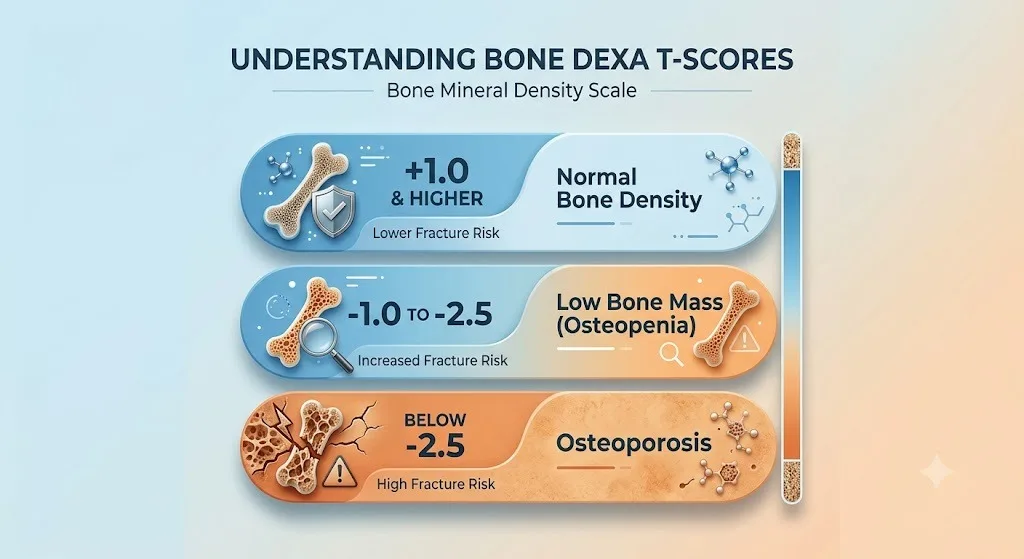
Screening is commonly advised for postmenopausal women and older men, or earlier if risk factors exist. A doctor should interpret the result along with your overall risk.
Struggling with Joint Pain, Sports Injury, or Arthritis?
Weak Bones Treatment
Treatment for weak bones, osteoporosis and joint problems may include exercise, nutrition, calcium and vitamin D, medicines, injections or bracing. Severe damage or fractures may require surgery.
- Exercise & nutrition: Support bone health.
- Calcium & vitamin D: Correct deficiencies.
- Medicines: Treat osteoporosis and joint conditions.
- Injections/bracing: For selected problems.
- Surgery: For severe damage or fractures.
Early treatment can protect bone strength, reduce symptoms and maintain mobility.
When to See a Doctor for Weak Bones?
See an orthopaedic expert if you notice signs of weak bones or have factors that increase your fracture risk.
- Fracture after a minor fall or repeated fractures.
- Loss of height or a stooped posture.
- Low bone density on a DEXA scan.
- Persistent bone or joint pain affecting daily activities.
- Risk factors such as long-term steroid use or family history of fractures.
Early evaluation can help identify bone health problems and prevent further complications.
Conclusion
Bone and Joint Health Awareness Month is a reminder that strong bones and healthy joints need attention long before pain or fractures appear. Regular weight-bearing and resistance exercise, a balanced diet rich in calcium, protein and vitamin D, and timely assessment of risk factors can help protect bone and joint health.
Taking these steps early can help reduce fracture risk, manage joint problems and preserve mobility and independence as you age.
If you have concerns about your bone or joint health, consult an orthopaedic specialist for personalised advice based on your symptoms, age, activity level and overall health.

 WhatsApp