
ACL Reconstruction Surgery in Gurgaon
ACL reconstruction surgery is one of the most commonly performed knee procedures for athletes and active individuals in Gurgaon, recommended when a torn anterior cruciate ligament causes persistent instability that prevents a safe return to sport or daily activity.
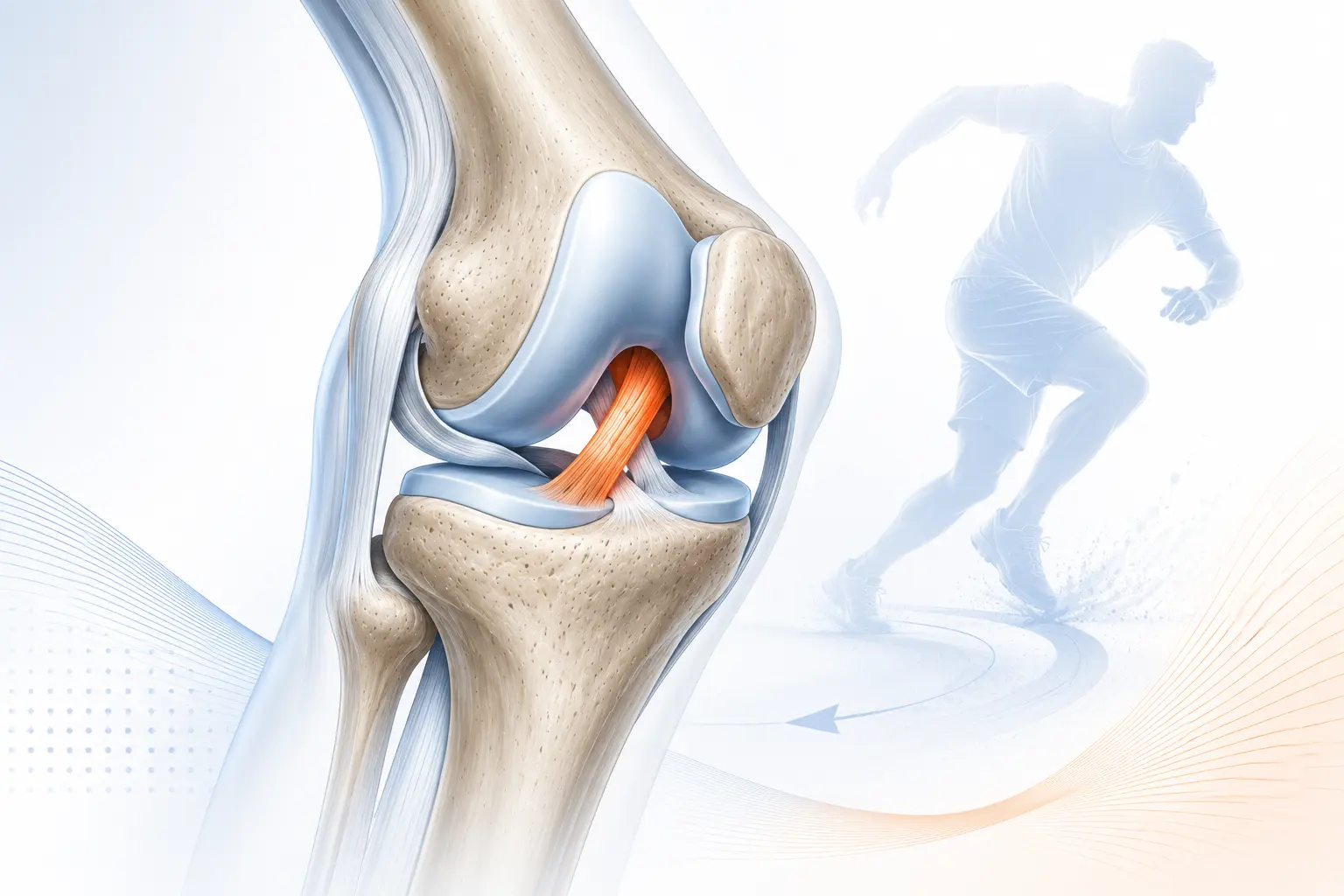
Dr. Ramkinkar Jha, Director, Department of Orthopaedics at CK Birla Hospital, Gurugram, performs over 1,000 sports injury and arthroscopy procedures annually, offering precise, minimally invasive arthroscopic ACL reconstruction surgery in Gurgaon with a structured, evidence-based recovery plan.
Book a Consultation with Dr. Ramkinkar Jha, Leading Orthopaedic Surgeon in Gurgaon
What Is ACL Reconstruction Surgery?
ACL reconstruction surgery is a procedure that replaces a torn anterior cruciate ligament with a new tendon graft, restoring stability to the knee joint. The ACL controls forward movement and rotation of the shin bone (tibia) relative to the thigh bone (femur), and once torn, it cannot heal on its own because of its poor blood supply. A new graft, usually taken from the patient’s own hamstring or patellar tendon, is threaded through bone tunnels and fixed in place to recreate the ligament’s function.
This surgery is typically recommended for people with repeated giving-way of the knee, those involved in pivoting sports such as football, basketball, or badminton, or patients whose imaging shows an ACL tear alongside other damage such as a meniscus tear.
Arthroscopic ACL Reconstruction Surgery (Keyhole Technique)
Arthroscopic ACL reconstruction surgery, also known as ACL keyhole surgery, uses a small camera (arthroscope) and narrow instruments inserted through two or three tiny incisions, allowing the surgeon to visualise and rebuild the ligament without opening the joint. It is the global standard of care because it causes less tissue damage, less post-operative pain, and a faster return to function than open surgery.
The procedure generally follows these steps:
- Anaesthesia: Regional or general anaesthesia, based on the patient’s health profile.
- Arthroscopic assessment: A camera examines the torn ligament and checks for associated damage to the meniscus or cartilage.
- Graft harvesting: A tendon graft is taken, usually from the patient’s own hamstring or patellar tendon (autograft), or occasionally donor tissue (allograft).
- Tunnel preparation: Precise tunnels are drilled into the femur and tibia at the ACL’s natural anatomical position.
- Graft fixation: The graft is passed through the tunnels and secured with screws, buttons, or anchors.
- Closure: The incisions are closed, and a brace is applied to protect the knee.
The procedure usually takes 60 to 90 minutes, and most patients are discharged within 24 hours.
ACL Reconstruction Surgery Recovery Timeline
ACL reconstruction surgery recovery time typically spans 6 to 9 months for a full return to competitive sport, although most patients walk without support within 2 to 4 weeks and resume routine daily activities within 6 to 8 weeks. Recovery is a staged process guided by physiotherapy milestones rather than a fixed calendar date:
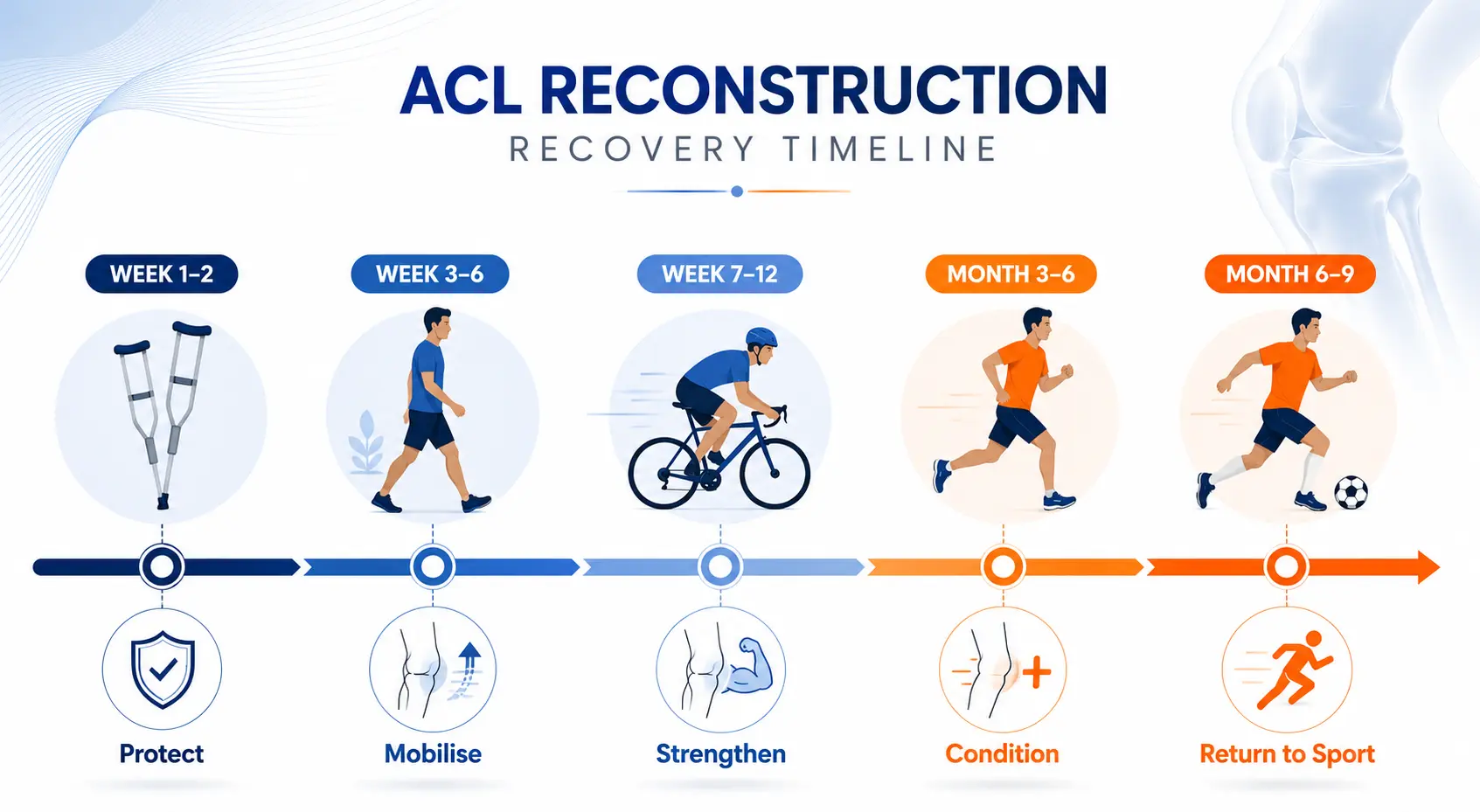
Returning too early significantly raises the risk of re-injury, which is why Dr. Jha’s team uses objective strength testing before clearing patients for sport.
Benefits of ACL Reconstruction Surgery
ACL reconstruction surgery helps restore knee stability, improve function, and support a safe return to an active lifestyle. With proper rehabilitation, most patients achieve excellent long-term outcomes.
- Restores knee stability and prevents the knee from giving way
- Relieves pain and improves movement
- Enables a safe return to sports and physical activities
- Reduces the risk of further damage to the meniscus and cartilage
- Improves mobility, confidence, and quality of life
- Delivers high success rates with expert surgery and rehabilitation
What Are the Complications and Long-Term Effects of ACL Reconstruction Surgery?
Although ACL reconstruction surgery in Gurgaon is a safe and highly successful procedure, understanding the possible complications and long-term outcomes helps patients make informed decisions and achieve the best recovery.
Possible ACL Reconstruction Surgery Complications
- Graft Failure or Re-tear: The reconstructed ACL may tear again, with reported re-rupture rates of 5%-15%, particularly in young athletes and those returning to sports too early.
- Knee Stiffness: Reduced range of motion can occur if rehabilitation is delayed or incomplete.
- Infection: Although uncommon, post-operative infections require prompt treatment.
- Blood Clots (DVT): Rare but potentially serious, blood clots may develop after surgery.
- Persistent Knee Instability: Inadequate healing or associated ligament injuries may cause ongoing instability.
- Numbness Around the Incision: Temporary numbness may occur due to minor nerve irritation.
- Donor-Site Pain: Patients undergoing tendon graft harvesting may experience discomfort at the graft harvest site.
Long-Term Effects of ACL Reconstruction Surgery
- Risk of Knee Osteoarthritis: Around 20% of patients may develop post-traumatic knee osteoarthritis within 10 years, increasing to nearly 50% within 20 years of the original injury. This is mainly related to the initial ACL injury and associated cartilage or meniscus damage rather than the reconstruction itself.
- Long-Term Knee Stability: Most patients regain a stable, functional knee and successfully return to everyday activities and sports with proper treatment and rehabilitation.
- Importance of Muscle Strength: Maintaining strong thigh and hip muscles helps protect the knee and improves long-term function.
- Healthy Weight Matters: Keeping a healthy body weight reduces stress on the knee joint and supports long-term joint health.
- Regular Follow-Up: Periodic reviews with your orthopaedic surgeon help monitor knee function and detect any concerns early.
How to Reduce These ACL Reconstruction Surgery Risks
- Choose an experienced ACL reconstruction surgeon in Gurgaon.
- Follow your prescribed physiotherapy and rehabilitation programme.
- Avoid returning to pivoting or high-impact sports until your surgeon gives clearance.
- Stay consistent with strengthening exercises and attend all follow-up appointments.
ACL Reconstruction Surgery Cost in Gurgaon
ACL reconstruction surgery cost in Gurgaon typically starts from ₹90,000, depending on the graft type, associated injuries such as a meniscus or cartilage tear, implants required, and the hospital room category chosen. This estimate generally covers the surgical procedure, arthroscopic instrumentation, graft fixation devices, anaesthesia, and standard post-operative hospital care.
Costs can vary based on:
- Graft choice: Autografts (hamstring or patellar tendon) are usually more economical than donor allografts.
- Associated repairs: A combined meniscus repair or multi-ligament reconstruction, such as concurrent PCL reconstruction, adds to overall cost.
- Implants used: Interference screws, suture buttons, or bioabsorbable fixation devices vary in price by brand.
- Hospital stay: Day-care discharge is more economical than an extended admission or private room.
- Rehabilitation: Structured, supervised physiotherapy is usually billed separately from the surgical package.
ACL reconstruction is performed using the same arthroscopic surgical approach used for other keyhole knee procedures. Patients receive a transparent, itemised estimate only after Dr. Jha reviews their MRI and clinical findings, with no hidden charges at any stage.
Struggling with Joint Pain, Sports Injury, or Arthritis?
Who Should Consider ACL Reconstruction Surgery?
ACL reconstruction surgery is usually recommended for patients with persistent knee instability who want to return to an active lifestyle. The decision depends on the severity of the injury, MRI findings, activity level, and personal goals.
- Young and active individuals with a complete ACL tear.
- Athletes involved in pivoting or contact sports.
- Patients with recurrent knee instability despite physiotherapy.
- Those with associated meniscus or cartilage injuries.
- People aiming to return to sports or high-impact activities.
- Less active individuals may benefit from non-surgical treatment with physiotherapy and bracing.
A thorough evaluation of MRI findings and lifestyle goals helps decide whether surgery or conservative management is the safer path for this type of sports injury.
Why Choose Dr. Ramkinkar Jha for ACL Reconstruction Surgery in Gurgaon?
Patients across Delhi-NCR choose Dr. Ramkinkar Jha for ACL Reconstruction because of his high surgical volume, international fellowship training, and a strictly evidence-based approach that avoids unnecessary procedures.
- 20+ years of experience in orthopaedics and sports injury management.
- International fellowship training in arthroscopy and sports medicine from the UK, Singapore, and Hong Kong.
- Expertise in minimally invasive ACL reconstruction surgery using advanced arthroscopic techniques.
- Uses high-definition 4K arthroscopy for enhanced surgical precision.
- Offers personalised graft selection based on each patient’s needs and activity level.
- Provides a clear treatment, recovery, and rehabilitation plan for optimal outcomes.
Book a Consultation for ACL Reconstruction Surgery in Gurgaon
If knee instability, an ACL tear, or a sports injury is affecting your daily activities or performance, book a consultation with the best orthopaedic surgeon. A detailed evaluation will help determine whether ACL reconstruction surgery is the right treatment for you, along with a personalised recovery and rehabilitation plan.
What to bring to your consultation:
- Recent MRI, X-ray, or CT scan films and reports
- Previous medical records or treatment summaries
- A list of current medications
- Insurance documents, if applicable
If you have a confirmed or suspected ACL tear and your knee continues to feel unstable, an early evaluation can help prevent further damage to the meniscus and cartilage.
Frequently Asked Questions
Is ACL Reconstruction Major Surgery? expand_more
ACL reconstruction is considered a major orthopaedic procedure because it involves anaesthesia, bone tunnelling, and graft fixation, but it is performed through small keyhole incisions rather than open surgery, which limits physical trauma to the body.
What Is the Success Rate of ACL Reconstruction Surgery? expand_more
ACL reconstruction surgery has a high success rate, with published research reporting favourable functional outcomes and restored knee stability in roughly 85-95% of patients.
How soon after an ACL injury should surgery be done? expand_more
Surgery is usually planned once initial swelling settles and range of motion improves with pre-operative physiotherapy, typically within a few weeks of the injury.
Will I need a knee brace after ACL reconstruction? expand_more
Most patients use a hinged knee brace for the first few weeks to protect the graft, with use gradually reduced as strength and control improve.
How can I book an appointment with Dr. Ramkinkar Jha? expand_more
You can book an appointment through the appointment booking form on this page. Outstation and international patients may share MRI reports in advance for a preliminary review.

Dr. Ramkinkar Jha's Content Team
Dr. Ramkinkar Jha’s medical content team specialises in producing accurate, clear, and patient-focused orthopaedic content. With a strong foundation in clinical knowledge and expertise in technical writing and SEO, the team translates complex orthopaedic and musculoskeletal information into reliable, easy-to-understand resources. Their work helps patients make informed healthcare decisions while reflecting Dr. Jha’s commitment to high-quality, expert care in joint replacement, trauma, sports injuries, and advanced orthopaedic treatments.
This content is reviewed by Dr. Ramkinkar Jha
Related Blogs
ACL vs PCL Tear: Key Differences, Symptoms & Treatment
When someone twists their knee during a football match or hears a sudden “pop” on…
Read Article → WhatsApp