
Calf Muscle Tear (Tennis Leg) Treatment in Gurgaon
A sudden, sharp pain in the back of the lower leg, sometimes described as being “hit” or “kicked” from behind, is one of the classic signs of a calf muscle tear, often called tennis leg. It typically strikes during a forceful push-off, a lunge, or a sprint, and can leave even fit, active adults unable to bear weight for a few days.
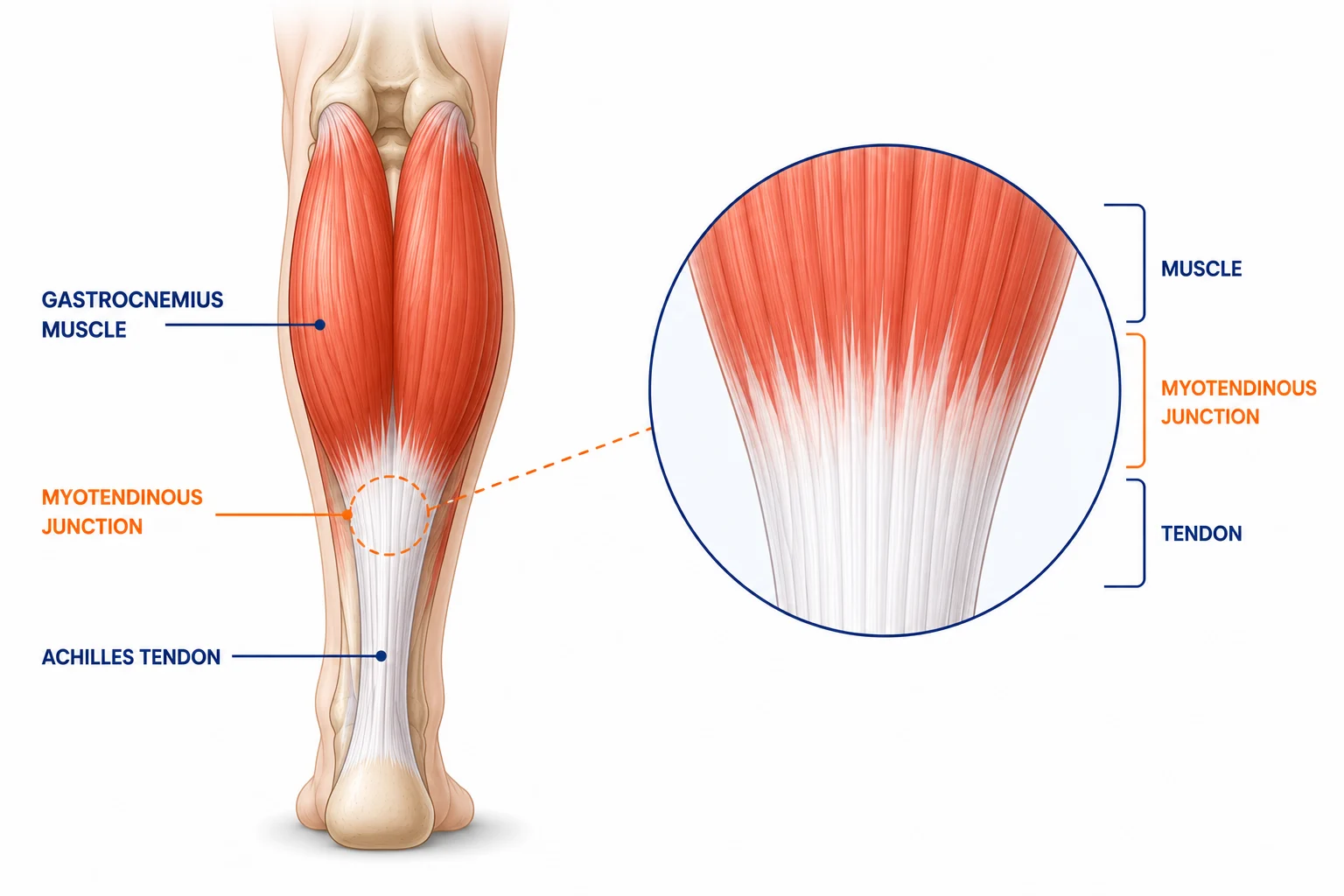
While the name suggests a tennis-specific injury, tennis leg is common among runners, badminton and football players, trekkers, and even people simply climbing stairs briskly.
Dr. Ramkinkar Jha, Director, Department of Orthopaedics at CK Birla Hospital, Gurugram, specialises in sports injuries and muscle-tendon disorders, offering accurate grading and personalised, evidence-based calf muscle tear treatment in Gurgaon, from conservative rehabilitation to surgical management in rare, severe cases.
Book a Consultation with Dr. Ramkinkar Jha, Leading Orthopaedic Surgeon in Gurgaon
What Is a Calf Muscle Tear (Tennis Leg)?
A calf muscle tear, also known as tennis leg, is an injury to the muscle fibres or the myotendinous junction of the medial head of the gastrocnemius, the large muscle that forms the bulk of the calf.
It occurs when the muscle is stretched and forcefully contracted simultaneously, most often while the knee is straightened and the ankle is flexed upward.
The term has been used clinically since 1883, and while it is common in tennis, it can occur during any activity involving a sudden push-off or overstretch of the calf.
Grades of Calf Muscle Tear
The severity of a calf muscle tear is classified into three grades, helping determine the most appropriate treatment and expected recovery time.
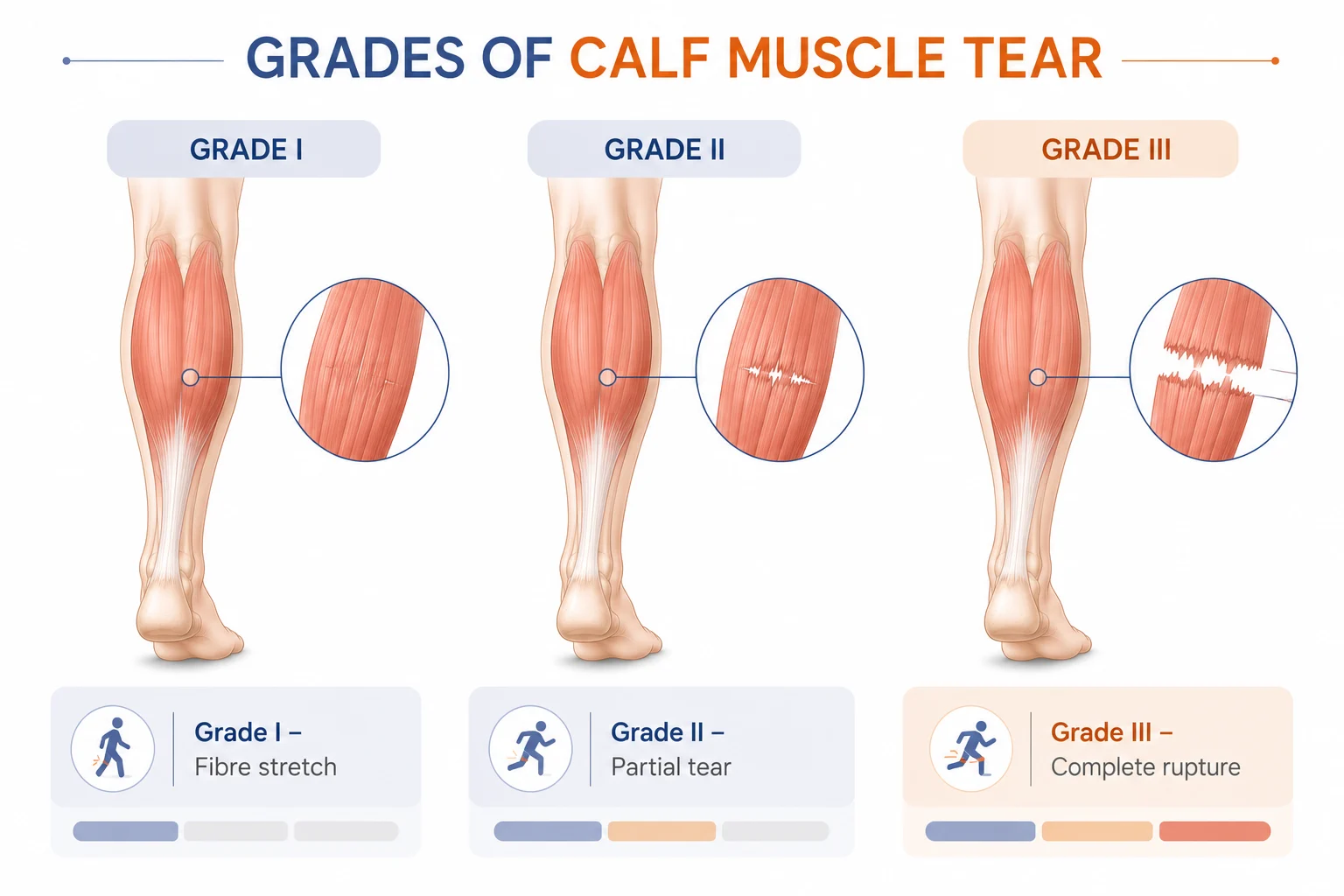
Accurate diagnosis is essential. Clinical examination, along with ultrasound or MRI when indicated, helps determine the injury grade and guides the most appropriate treatment plan.
The higher the grade of the calf muscle tear, the longer the recovery period and the more intensive the treatment required.
Calf Muscle Tear Symptoms
The hallmark symptom of a calf muscle tear is a sudden, sharp pain in the back of the lower leg, often accompanied by a popping or cracking sensation and difficulty walking normally.
Other symptoms include:
- Swelling and bruising that may spread down toward the ankle over 24-48 hours
- Tenderness over the inner side of the calf
- Muscle spasm or tightness
- Inability to rise onto the toes (a “tip-toe test” that is often positive in a tennis leg)
- A palpable dent or gap in the muscle in complete (third-degree) tears
- Weakness in push-off strength while walking or running
Causes and Risk Factors of Tennis Leg
Tennis leg is caused by a sudden eccentric overload of the calf muscle, usually during push-off, sprinting, or an abrupt change in direction, and it is more common in middle-aged, recreationally active adults.
In football, muscle injuries account for as much as 92% of injuries, with calf injuries making up 13% of these cases, according to data compiled by Physiopedia. The condition also shows a notable recurrence pattern; in Australian rules football, calf strains carry a recurrence rate of around 16% after the initial injury.
Common risk factors include:
- Age over 40, when muscle elasticity naturally declines
- Inadequate warm-up before high-intensity activity
- Muscle fatigue or previous, incompletely rehabilitated calf injuries
- Sudden increases in training intensity or terrain (hill running, trekking)
- Poor flexibility of the calf and Achilles complex
- Dehydration and electrolyte imbalance during prolonged activity
Tennis leg frequently occurs alongside other lower-limb sports injuries, so patients presenting with calf pain after a sporting event are also screened for related conditions covered under sports injury care in Gurgaon.
How Is a Calf Muscle Tear Diagnosed?
A calf muscle tear diagnosis is made through a focused clinical examination, followed by an ultrasound or MRI scan to confirm the grade and exact location of the injury.
- Medical history and physical examination to assess pain, swelling, tenderness, and calf muscle strength.
- Functional tests, such as the tip-toe raise, help evaluate the severity of the injury.
- Ultrasound is commonly used to confirm the tear, determine its grade, and identify the exact location.
- MRI may be recommended for complex injuries, uncertain diagnoses, or surgical planning.
Early and accurate diagnosis helps rule out other conditions, such as an Achilles tendon injury or deep vein thrombosis (DVT), and ensures the most appropriate treatment plan.
Calf Muscle Tear Treatment: What Actually Works?
Most calf muscle tears, including grade 1 and grade 2 injuries, heal well with structured non-surgical treatment, while grade 3 (complete) tears may occasionally require surgical repair. Calf muscle tear treatment in Delhi is tailored to the injury grade and the patient’s activity goals.
Immediate calf muscle tear self-treatment (first 48-72 hours):
- Rest and avoid weight-bearing on the affected leg
- Ice application for 15-20 minutes every few hours
- Compression bandage to limit swelling
- Elevation of the leg above heart level. This RICE-based first-aid approach mirrors the initial guidance commonly recommended for calf muscle tear treatment under NHS-style protocols, and is meant to control swelling before a formal diagnosis, not replace medical evaluation.
Grade 2 calf muscle tear treatment (partial tear)
Once the tear is confirmed, treatment usually includes a short period of protected weight-bearing (sometimes with crutches or a heel-raise insert), followed by a graded physiotherapy programme focusing on gentle stretching, strengthening, and a gradual return to activity. Platelet-rich plasma (PRP) injections are considered in select cases to support faster tissue healing; you can read more about how this is used for muscle and tendon injuries on the PRP therapy in Gurgaon page.
Grade 3 (third-degree) calf muscle tear treatment
A complete rupture of the muscle belly or myotendinous junction is managed initially with immobilisation and offloading, and surgery is considered only when there is a large retracted tear, ongoing functional deficit, or failure of conservative care, particularly in athletes needing full power return. Surgical repair aims to reattach the torn muscle ends and restore push-off strength.
Calf Strain vs Tear: What’s the Difference?
A calf strain and a calf tear describe the same spectrum of injury, differing only in severity. A strain typically refers to mild overstretching of muscle fibres with little to no structural disruption, while a tear involves actual fibre rupture, ranging from a small partial tear to a complete rupture.
| Feature | Calf Strain | Calf Tear |
| Definition | Mild overstretching of calf muscle fibres. | Partial or complete rupture of calf muscle fibres. |
| Injury Grade | Grade I | Grade II or Grade III |
| Symptoms | Mild pain, tightness, slight swelling. | Sudden severe pain, popping sensation, bruising, weakness. |
| Recovery | 1-3 weeks | 4-12 weeks or longer |
| Treatment | Rest, ice, physiotherapy, gradual strengthening. | Physiotherapy; surgery may be needed for complete tears. |
Struggling with Joint Pain, Sports Injury, or Arthritis?
Recovery Timeline After Calf Muscle Tear Treatment
Calf muscle tear recovery typically ranges from 2-3 weeks for a mild strain to 3-4 months for a complete rupture requiring surgical repair. A general guide:
- Grade I strain: Return to light activity in 1-2 weeks
- Grade II partial tear: 4-8 weeks of structured rehabilitation before full sporting return
- Grade III complete tear (non-surgical): 8-12 weeks
- Grade III complete tear (surgical repair): 3-4 months, with strength training continuing beyond that
Even after symptoms resolve, some patients show measurable residual weakness in the calf on eccentric strength testing months after injury, which is why a supervised, graded strengthening programme, rather than simply resting until pain resolves, is important for a full return to sport.
Calf Muscle Tear (Tennis Leg) Treatment Cost in Gurgaon
Calf muscle tear treatment in Gurgaon widely depends on the grade of the tear and whether treatment is conservative or surgical. Other factors affecting tennis leg cost treatment in Gurgaon
- Grade of the tear: Mild strains cost far less than a complete (Grade III) rupture needing surgery
- Type of treatment: Conservative care (rest, physiotherapy) vs. surgical repair
- Diagnostic imaging needed: Ultrasound vs. MRI, and whether repeat scans are required
- Use of PRP or other biologic injections, if recommended
- Number of physiotherapy/rehab sessions required for full recovery
- Hospital stay and OT charges, only applicable in surgical cases
- Bracing, offloading devices, or crutches, if prescribed
A precise cost estimate can only be shared after Dr. Jha evaluates the grade of injury on clinical exam and imaging.
Why Choose Dr. Ramkinkar Jha for Calf Muscle Tear Treatment in Gurgaon?
Dr. Ramkinkar Jha brings over 20 years of orthopaedic and sports medicine experience to the accurate diagnosis and grade-specific management of calf muscle tears in Gurgaon.
- Sports injury expertise: Manages 1,000+ sports injury cases annually, including muscle, tendon, and ligament tears
- Precise, imaging-based grading: Avoids over-treatment or under-treatment by confirming tear severity before recommending a plan
- Global fellowship training: MS from AIIMS New Delhi, MCh with Distinction from the University of Edinburgh, with international fellowship training in sports medicine
- Non-surgical first approach: Surgery is recommended only when clinically necessary, never as a default
- Transparent recovery planning: Every patient receives a clear rehabilitation timeline tailored to their sport or activity goals
Book a Consultation for Calf Muscle Tear Treatment in Gurgaon
If you’ve felt a sudden “pop” or sharp pain in your calf during exercise, prompt evaluation helps confirm the grade of injury and prevent reinjury by returning to activity too early. Schedule a consultation with the most experienced orthopaedic surgeon for an accurate diagnosis and a recovery plan built around your goals.
What to bring for your consultation:
- Any ultrasound or MRI reports already done
- Details of when and how the injury occurred
- List of current medications
- Insurance documents, if applicable
Frequently Asked Questions
Is Surgery Needed for a Tennis Leg? expand_more
Surgery is rarely required for a calf muscle tear and is generally reserved for complete (grade 3) ruptures that fail to respond to conservative treatment, or for cases complicated by compartment syndrome. The vast majority of tennis leg cases, including most partial tears, recover fully with rest, physiotherapy, and a graded loading programme under medical supervision.
Can a calf muscle tear heal on its own without treatment? expand_more
Grade I and many Grade II tears heal well with rest, ice, compression, and a guided physiotherapy programme, but skipping proper diagnosis and rehabilitation increases the risk of re-tear or chronic weakness.
What About Ayurvedic Treatment for a Torn Calf Muscle? expand_more
There is currently no strong clinical evidence that ayurvedic remedies can heal a torn muscle faster than standard rest, physiotherapy, and medically supervised rehabilitation.
Is walking okay with a torn calf muscle? expand_more
Light, pain-free walking is usually fine once the acute swelling settles, but forcing weight-bearing through sharp pain in the first few days can worsen the tear and should be avoided.
How can I book an appointment with Dr. Ramkinkar Jha? expand_more
You can book an appointment with Dr. Ramkinkar Jha through the appointment booking form on this page. For outstation patients, ultrasound or MRI reports can be shared in advance for a preliminary review before your visit.

Dr. Ramkinkar Jha's Content Team
Dr. Ramkinkar Jha’s medical content team specialises in producing accurate, clear, and patient-focused orthopaedic content. With a strong foundation in clinical knowledge and expertise in technical writing and SEO, the team translates complex orthopaedic and musculoskeletal information into reliable, easy-to-understand resources. Their work helps patients make informed healthcare decisions while reflecting Dr. Jha’s commitment to high-quality, expert care in joint replacement, trauma, sports injuries, and advanced orthopaedic treatments.
This content is reviewed by Dr. Ramkinkar Jha
Related Conditions

Patellar Dislocation Treatment in Gurgaon
Patellar dislocation, also called kneecap dislocation, is a painful and often destabilising knee injury in which the patella slips out…
Sports Injuries Treatment in Gurgaon
Every year, an estimated 3.7 million sports-related injuries are treated across India, according to data from the Indian Journal of Orthopaedics. For…
Cartilage Damage Treatment in Gurgaon
Cartilage damage is one of the most common and most underdiagnosed causes of persistent joint pain in active adults and…
MCL & LCL Injury Treatment in Gurgaon
MCL and LCL injuries range from mild sprains to complete tears causing knee instability. Treatment depends on grade and ligament…
Patellofemoral Pain Syndrome (Runner’s Knee) Treatment in Gurgaon
That dull ache at the front of your knee, the one that flares up on stairs, after a long run,…
Tendinopathy Treatment in Gurgaon
Persistent pain around a tendon that just won’t settle, whether it’s the back of your heel, the front of your…
Related Blogs
10 Best Knee Strengthening Exercises for Stronger Knees
There’s a moment everyone with knee trouble knows: the pause right before standing up from…
Read Article →
How Athletes Can Prevent Knee Ligament Injuries
Every athlete, whether you play recreational cricket on weekends or train competitively for football, basketball,…
Read Article →
ACL vs PCL Tear: Key Differences, Symptoms & Treatment
When someone twists their knee during a football match or hears a sudden “pop” on…
Read Article →
Top 5 Common Sports Injuries and How to Prevent Them – Dr Ramkinkar Jha
Sports are a great way to stay fit and active, but injuries can sometimes get…
Read Article → WhatsApp