
Revision Shoulder Replacement Surgery in Gurgaon
If your shoulder replacement is causing renewed pain, stiffness, or a feeling of instability months or years after your original surgery, you may need a specialised second surgery called revision shoulder replacement. It is more complex than a first-time replacement and works best in the hands of a surgeon with genuine, focused experience in managing implant failure.
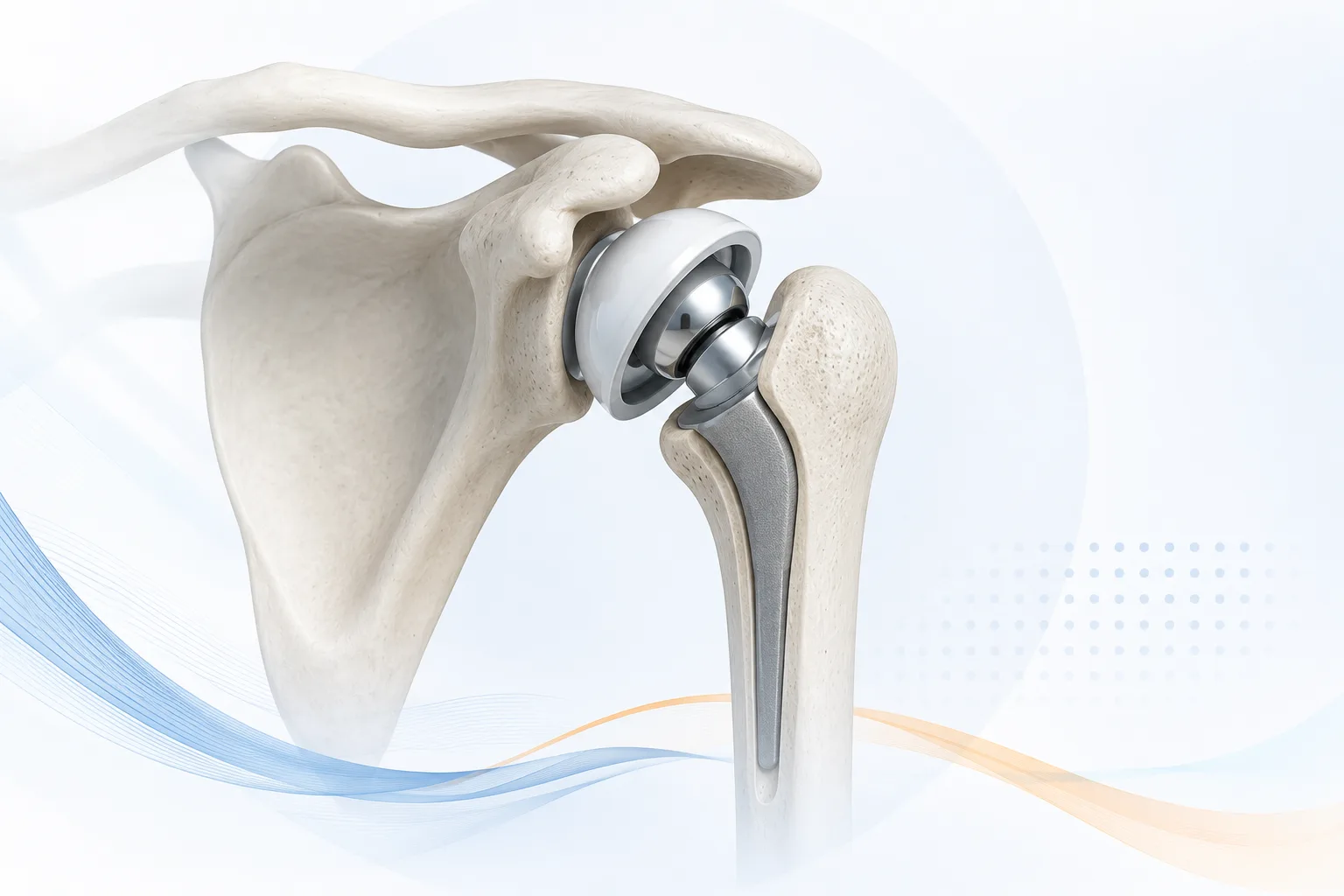
Dr. Ramkinkar Jha, Director, Department of Orthopaedics at CK Birla Hospital, Gurugram, has over 20 years of experience and has performed 12,000+ orthopaedic surgeries, including complex primary and revision joint replacements. Fellowship-trained in the UK, Singapore, and Hong Kong, he offers a structured, evidence-based approach to diagnosing why a shoulder replacement has failed and planning the safest way to fix it.
Book a Consultation with Dr. Ramkinkar Jha, Leading Orthopaedic Surgeon in Gurgaon
What Is Revision Shoulder Replacement Surgery?
Revision shoulder replacement surgery is a procedure to remove and replace all or part of a previously implanted shoulder prosthesis that has failed, loosened, become infected, or stopped functioning well.
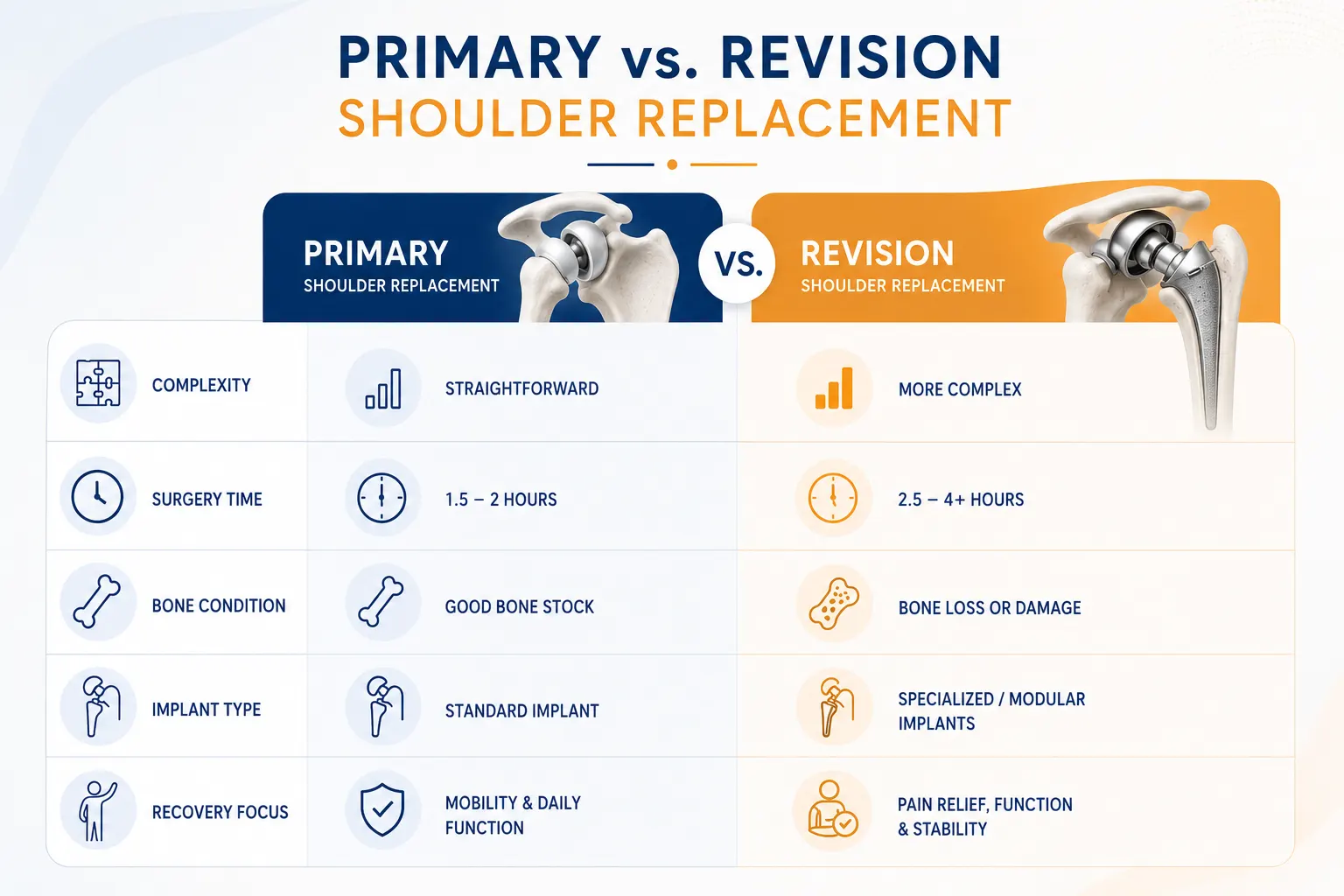
It is recommended when a primary shoulder replacement no longer works properly, and conservative treatment has not resolved the problem. Since it often involves bone loss, scar tissue, and worn components, revision surgery is technically more demanding than a first-time replacement.
Why Do Shoulder Replacements Fail?
Shoulder replacements most commonly fail due to component loosening, joint instability, rotator cuff failure, or infection. A large systematic review of over 5,000 revised shoulder replacements found that component loosening accounted for about 20% of revisions, instability for 19%, rotator cuff failure for 17%, and infection for 16%.
Common reasons a second shoulder surgery becomes necessary include:
- Loosening of the glenoid (socket) or humeral (ball-side) component over time
- Recurrent dislocation or instability of the joint
- Tearing or failure of the rotator cuff tendons supporting the implant
- Deep infection around the prosthesis
- A fracture in the bone surrounding the implant
- Gradual wear of the implant surface after many years of use
Research also shows that younger, more active patients face a notably higher lifetime risk of needing revision surgery than older patients, a factor Dr. Jha discusses with patients even before their first shoulder replacement.
Signs You May Need a Revision Shoulder Replacement
You may need a revision if you experience worsening or returning shoulder pain, a grinding sensation, reduced range of motion, visible swelling, or a feeling that your shoulder is “giving way,” months or years after your original surgery. Other warning signs include:
- Visible change in shoulder shape
- Repeated episodes of the joint popping out of place
- Wound discharge
- Warmth or fever, which can indicate infection.
An X-ray and, if needed, an MRI or CT scan usually confirms the exact cause.
Failed Shoulder Replacement Diagnosis
A failed shoulder replacement is diagnosed through a clinical examination combined with imaging and, where infection is suspected, targeted blood and joint fluid tests. Dr. Jha’s diagnostic workup typically includes:
- Clinical examination: Assessing pain pattern, range of motion, stability, and strength
- X-rays: The first step to check implant position, loosening, or bone changes
- CT scan: Provides detailed views of bone loss and component alignment before planning surgery
- MRI or ultrasound: Used to assess the rotator cuff and surrounding soft tissue
- Blood tests (ESR, CRP): Screen for markers suggestive of infection
- Joint aspiration: Fluid is drawn from the joint and tested when infection is suspected
This combination of tests allows Dr. Jha to confirm exactly why the implant has failed before recommending the most appropriate revision approach.
Types of Revision Shoulder Replacement Surgery in Delhi NCR
The type of revision performed depends on why the original implant failed, ranging from replacing a single component to converting the entire joint. Common approaches include:
- Component exchange: Replacing only the worn or loosened part (glenoid liner, humeral head, or stem) while retaining well-fixed components.
- Conversion to reverse total shoulder replacement: Often used when the rotator cuff has failed, or the joint is unstable, since the reverse design relies on the deltoid muscle instead of the rotator cuff. Learn more about Reverse Shoulder Replacement Surgery →
- Two-stage revision for infection: The infected implant is removed, an antibiotic-loaded spacer is placed, infection is treated, and a new implant is inserted once it has cleared.
- Bone grafting or augmented components: Used to rebuild significant bone loss before a new implant can be securely fixed.
Revision Shoulder Replacement Procedure: What to Expect?
Revision surgery is performed under general or regional anaesthesia and typically takes longer than a primary replacement, since the old implant must be removed carefully and the bone reconstructed before a new prosthesis is fitted.
- Pre-surgical evaluation: Review of X-rays, CT/MRI scans, and blood markers to rule out infection and finalise the revision approach.
- Anaesthesia: General or regional anaesthesia keeps you pain-free throughout.
- Implant removal: The damaged, loose, or infected components are removed with minimal disturbance to healthy bone.
- Bone preparation and grafting: Bone loss is assessed and reconstructed with grafts or augmented implants where required.
- New implant placement: A new component or a full reverse shoulder system is fitted and secured.
- Closure and mobilisation: The incision is closed, and a structured recovery and physiotherapy plan begins soon after.
Revision shoulder replacement is generally more complex, takes longer, and carries higher risk than a primary replacement because it often involves bone loss, scar tissue, and sometimes infection. A large meta-analysis found that complication and reoperation rates after revision shoulder surgery range from 10% to 50%, depending heavily on the surgeon’s experience, which is why choosing a surgeon with focused revision expertise matters.
Struggling with Joint Pain, Sports Injury, or Arthritis?
Who Is a Candidate for Revision Shoulder Replacement?
You may be a candidate for revision surgery if you have persistent pain, instability, or reduced function after a previous shoulder replacement, confirmed on imaging to be related to loosening, wear, instability, or infection. Dr. Jha evaluates several factors before recommending surgery:
- Bone quality and the extent of bone loss around the existing implant
- Condition of the rotator cuff and surrounding soft tissue
- Presence or absence of infection
- Overall health, age, and activity level
- Response to any prior non-surgical treatment
This individual assessment ensures revision surgery is recommended only when it is genuinely the safest and most effective option.
Recovery After Revision Shoulder Replacement Surgery
Recovery after revision shoulder replacement is generally slower than after a first-time replacement, with most patients regaining function over several months. A typical recovery path includes:
- Hospital stay: Around 2-4 days, depending on the extent of surgery
- Weeks 1-2: Arm supported in a sling, with gentle passive movement
- Weeks 3-6: Active-assisted exercises to gradually restore motion
- Weeks 6-12: Progressive strengthening under physiotherapy guidance
- Months 4-6: Full functional recovery for most patients
Following the physiotherapy plan closely is one of the biggest factors in how well a revised shoulder ultimately performs.
Risks and Complications of Revision Shoulder Replacement
Revision shoulder replacement carries a higher risk profile than a primary replacement because of the bone loss, scar tissue, and infection risk often involved. Potential risks include:
- Infection at the surgical site or around the implant
- Nerve or blood vessel injury during surgery
- Recurrent instability or dislocation
- Implant loosening over the long term
- Persistent stiffness despite physiotherapy
Thorough pre-operative screening, careful bone assessment, and an experienced surgical team meaningfully reduce these risks and support better long-term outcomes.
Revision Shoulder Replacement Surgery Cost in Gurgaon
Revision shoulder replacement surgery in Gurgaon typically costs more than a primary Shoulder Replacement Surgery, since it involves greater surgical complexity and additional resources. Costs are influenced by:
- Type of revision required (component exchange, reverse conversion, or two-stage infection revision)
- Whether bone grafting or augmented implants are needed
- Length of hospital stay and ICU requirement, if any
- Advanced pre-operative imaging and infection work-up
- Choice of implant and hospital room category
An exact estimate is provided only after Dr. Jha reviews your imaging and clinical history in detail, ensuring the quote reflects your specific case rather than a generic figure.
Why Choose Dr. Ramkinkar Jha for Revision Shoulder Replacement in Gurgaon?
Patients across Gurgaon and Delhi NCR choose Dr. Ramkinkar Jha for revision shoulder replacement because of his focused revision experience, evidence-based approach, and access to advanced surgical technology. His credentials include:
- 20+ Years of Experience: 12,000+ surgeries performed, including complex primary and revision joint replacements
- Global Fellowship Training: MBBS Gold Medallist, MS from AIIMS New Delhi, MCh with Distinction from the University of Edinburgh, with further training in the UK, Singapore, and Hong Kong
- Advanced Technology: Access to Robotic Joint Replacement systems and modern revision implants at NABH-accredited CK Birla Hospital
- Transparent Care: A clear explanation of why your implant failed and what the revision will involve, with a transparent cost estimate before any decision is made
- Comprehensive Shoulder Expertise: Ongoing management of related conditions such as Rotator Cuff Tears and Shoulder Dislocation
This combination of experience, technology, and transparency is why patients trust him with some of the most complex shoulder cases in the region.
Book a Consultation for Revision Shoulder Replacement Surgery in Gurgaon
If your shoulder replacement is causing pain, instability, or reduced movement, timely evaluation can prevent further joint damage and improve your chances of a successful outcome. To make your consultation with Dr. Ramkinkar Jha as productive as possible, bring along:
- X-rays, MRI, or CT scans of your shoulder, including original operative notes if available
- Details of your original implant, if known
- A list of current medications
- Any history of infection or complications since your first surgery
Schedule your consultation early. It gives you a clear diagnosis and a personalised revision plan before the problem progresses further.

Dr. Ramkinkar Jha's Content Team
Dr. Ramkinkar Jha’s medical content team specialises in producing accurate, clear, and patient-focused orthopaedic content. With a strong foundation in clinical knowledge and expertise in technical writing and SEO, the team translates complex orthopaedic and musculoskeletal information into reliable, easy-to-understand resources. Their work helps patients make informed healthcare decisions while reflecting Dr. Jha’s commitment to high-quality, expert care in joint replacement, trauma, sports injuries, and advanced orthopaedic treatments.
This content is reviewed by Dr. Ramkinkar Jha
Related Treatments

Shoulder Replacement Surgery in Gurgaon
Persistent shoulder pain can gradually limit even the simplest daily activities. Many patients say that the pain started gradually like…
Shoulder Arthritis Treatment in Gurgaon
Shoulder arthritis occurs when cartilage breaks down, causing bone-on-bone pain, stiffness, and grinding. Types include osteoarthritis, rheumatoid, post-traumatic, and rotator…
Related Blogs
Primary vs Revision Joint Replacement: What Patients Need to Know
Joint replacement surgery has given millions of people their lives back, no more waking up…
Read Article →
Orthopaedic Implants: Types, Benefits, Costs & What Patients Must Know
Orthopaedic implants are biocompatible devices used to replace, stabilise, or support bones and joints affected…
Read Article → WhatsApp