
Shoulder Arthritis Treatment in Gurgaon
Shoulder arthritis occurs when cartilage breaks down, causing bone-on-bone pain, stiffness, and grinding. Types include osteoarthritis, rheumatoid, post-traumatic, and rotator cuff arthropathy. Treatment ranges from physiotherapy and injections to shoulder replacement surgery, guided by diagnosis, disease severity, and rotator cuff integrity.
Book a Consultation with Dr. Ramkinkar Jha, Leading Orthopaedic Surgeon in Gurgaon
What Is Shoulder Arthritis?
Shoulder arthritis is the gradual breakdown of cartilage inside the shoulder joint – the smooth, rubbery tissue that allows the bones to glide against each other without friction. When cartilage wears away, bone rubs on bone. The result is pain, swelling, stiffness, and a grinding sensation that worsens over time.
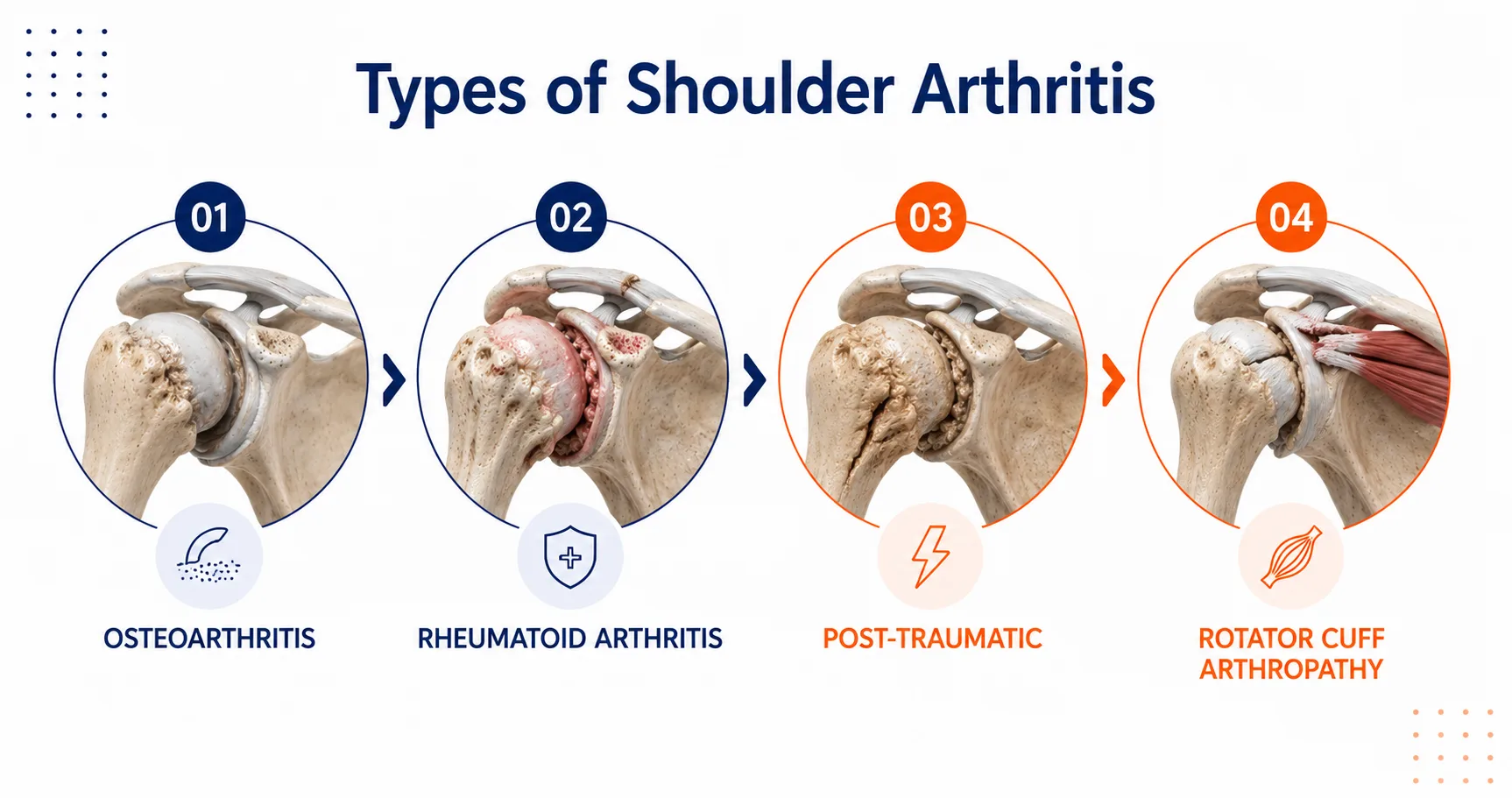
Types of Shoulder Arthritis
Understanding which type of arthritis is present shapes every treatment decision – from the medications used to whether surgery is needed, and which kind.
Osteoarthritis (Wear-and-Tear Arthritis)
Osteoarthritis is the most common form. It develops when cartilage gradually wears down over years of use, often without any single triggering injury. The glenohumeral joint loses its smooth surface, bone spurs (osteophytes) form along the joint edges, and the joint space narrows on X-ray.
It typically affects people over 50, though heavy manual work and high-impact sport can accelerate its onset. Pain is usually worst with movement and eases with rest – at least in the early stages.
Rheumatoid Arthritis of the Shoulder
Rheumatoid arthritis (RA) is an autoimmune condition in which the body’s immune system attacks the joint lining (synovium), causing chronic inflammation. Unlike osteoarthritis, RA often affects both shoulders simultaneously and can strike at any age.
Morning stiffness lasting more than an hour, warmth around the joint, and systemic symptoms like fatigue are characteristic. RA is managed in partnership with a rheumatologist, and controlling the underlying inflammation is central to protecting the joint long-term.
Post-Traumatic Shoulder Arthritis
Post-traumatic arthritis develops after a significant shoulder injury – a fracture of the humeral head, a severe dislocation, or ligament damage that alters joint mechanics. Even injuries that were treated correctly at the time can lead to cartilage damage that progresses over years.
This form of shoulder joint pain in Gurgaon is seen across all age groups and is one reason why a thorough orthopaedic review after any major shoulder trauma is important, not just immediate fracture management.
Rotator Cuff Tear Arthropathy
Rotator cuff tear arthropathy is a specific and severe form of shoulder arthritis that develops when a large, long-standing rotator cuff tear goes untreated. The rotator cuff normally keeps the humeral head centred in the socket. When it fails, the humeral head migrates upward, damages the surrounding cartilage and bone, and the joint progressively collapses.
This is one of the more complex presentations of rotator cuff arthritis because the loss of the rotator cuff changes which surgical option is appropriate – standard anatomic shoulder replacement is not suitable; a reverse shoulder replacement is typically required instead.
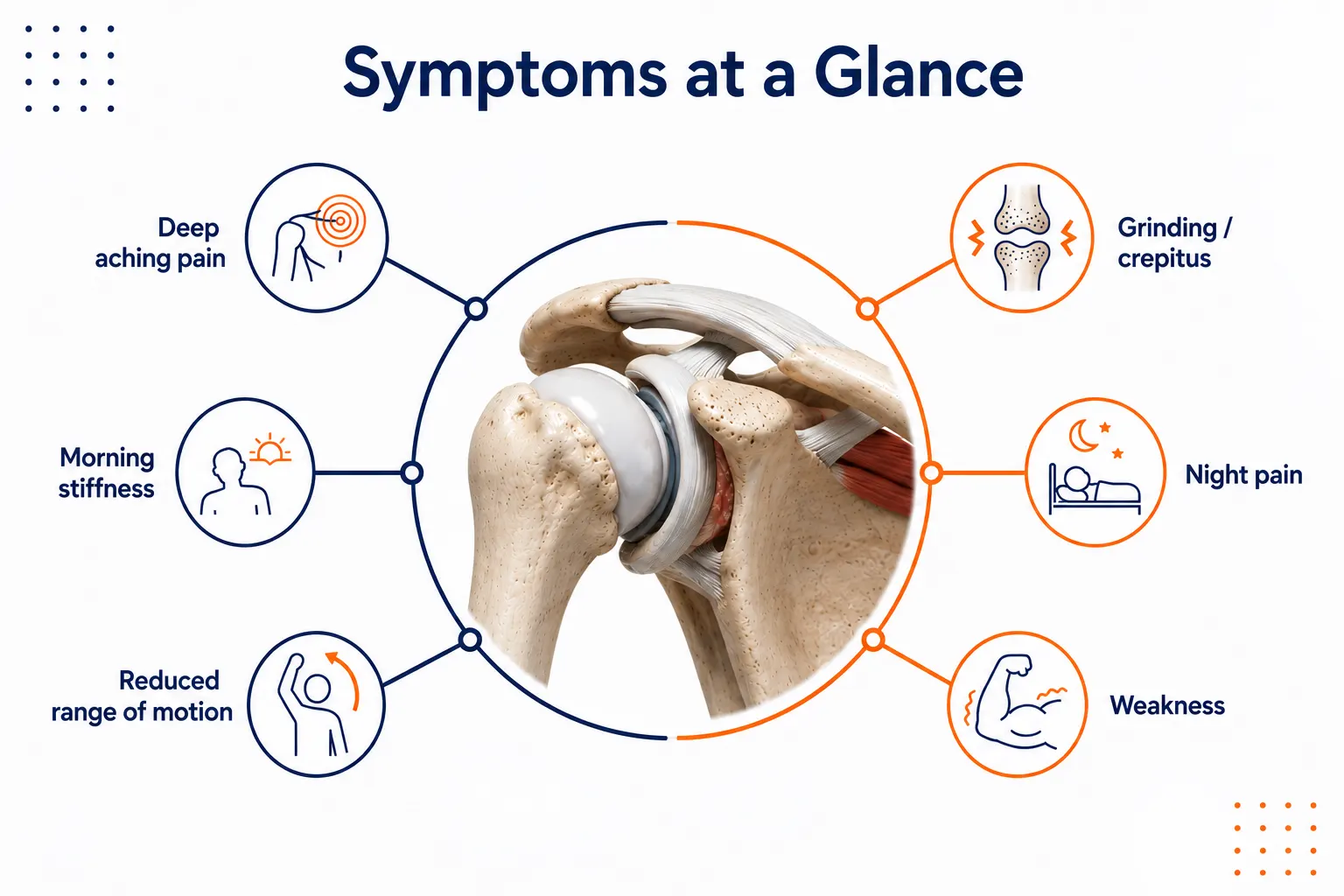
Recognising the Symptoms
Shoulder arthritis does not always announce itself dramatically. It tends to creep up gradually, which is why many patients delay seeking help until the condition is already well advanced.
Common signs to watch for:
- Deep, aching pain in the shoulder, often radiating into the upper arm
- Stiffness – particularly in the morning or after periods of inactivity
- Reduced range of motion – difficulty reaching overhead, behind the back, or across the body
- Grinding or clicking sensation when moving the arm (crepitus)
- Pain at night that disrupts sleep – a hallmark of more advanced disease
- Weakness when lifting or carrying objects
- Swelling around the joint in inflammatory types like RA
If several of these symptoms are present and have lasted more than a few weeks, a proper orthopaedic assessment is the right next step. Shoulder arthritis pain relief is achievable – but the approach depends entirely on an accurate diagnosis.
How Is Shoulder Arthritis Diagnosed?
A thorough diagnosis typically combines clinical assessment with imaging. Here is what the process usually involves:
1. Medical history – duration of symptoms, any previous injuries, family history of arthritis, and how pain affects daily activities
2. Physical examination – assessing range of motion, identifying areas of tenderness, checking for crepitus, and testing rotator cuff strength
3. X-rays – the first-line imaging investigation; shows joint space narrowing, bone spurs, and the overall alignment of the glenohumeral joint
4. MRI scan – provides detailed images of soft tissues, including the rotator cuff, cartilage, and joint lining; essential for planning treatment
5. Blood tests – ordered when rheumatoid arthritis or another inflammatory condition is suspected (ESR, CRP, rheumatoid factor, anti-CCP antibodies)
6. Diagnostic injection – a local anaesthetic injected into the joint can confirm the source of pain when the picture is unclear
The combination of findings from these steps determines both the type of arthritis and its severity – and that directly guides the treatment plan.
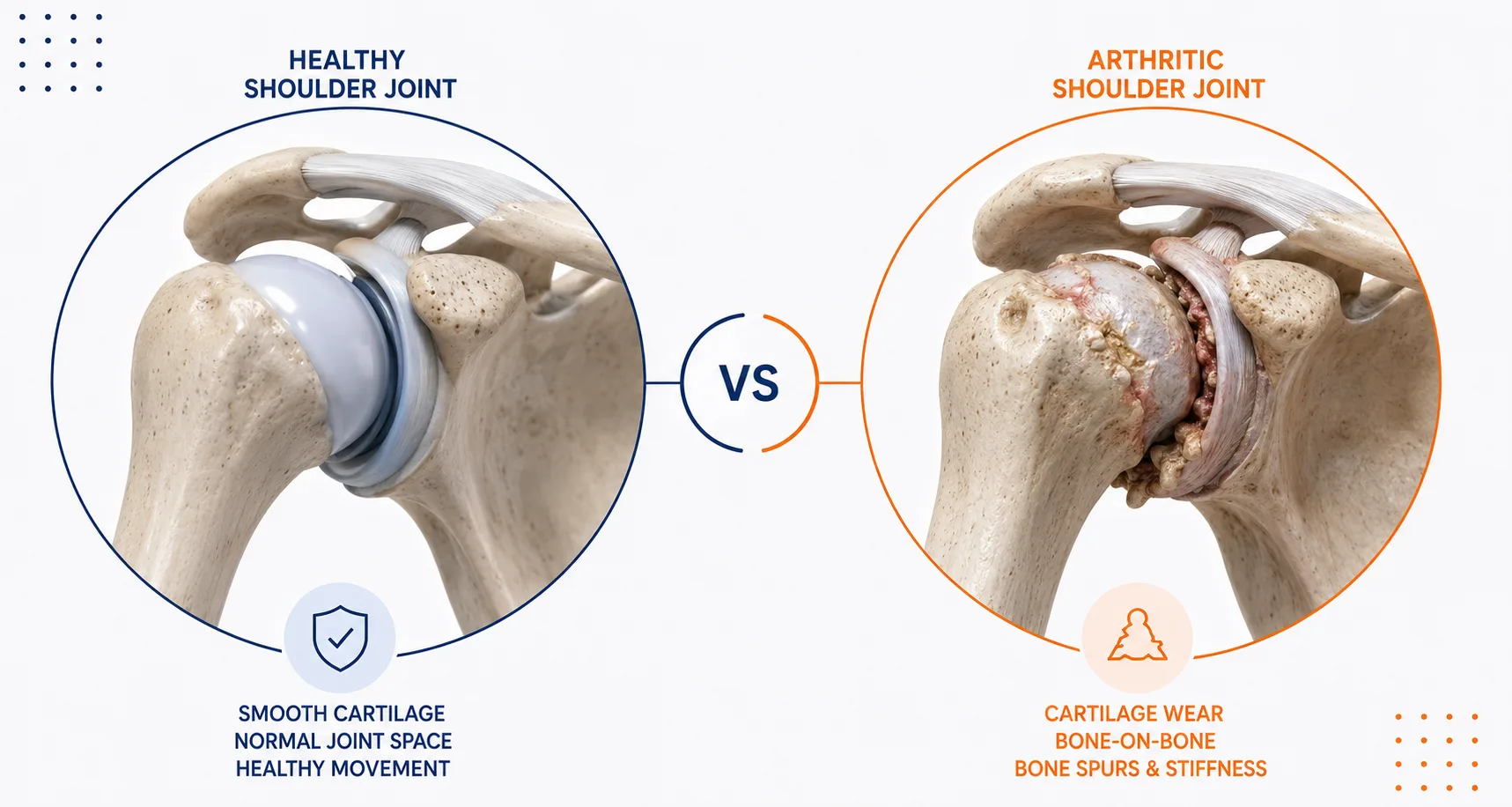
Shoulder Arthritis Treatment Options in Gurgaon
Shoulder Arthritis treatment is almost always staged: non-surgical first, surgery only when conservative care has been genuinely exhausted or the disease is too advanced to respond to it. The goal at every stage is the same – shoulder arthritis pain relief, preserved function, and the best possible long-term outcome.
Non-Surgical Treatments for Shoulder Arthritis
For most patients, especially those in the early to moderate stages, non-surgical management provides meaningful relief and can slow disease progression. Options include:
- Activity modification – avoiding repetitive overhead movements and heavy lifting that aggravate the joint
- Physiotherapy – targeted exercises to maintain range of motion, strengthen the muscles around the shoulder, and reduce mechanical load on the joint
- NSAIDs and analgesics – anti-inflammatory medications (ibuprofen, naproxen) and paracetamol for pain control; used short-term under medical guidance
- Hot and cold therapy – heat for stiffness, ice packs to reduce acute inflammation
- Corticosteroid injections – a steroid injected directly into the glenohumeral joint can provide significant, though temporary, relief – typically lasting weeks to a few months
- Hyaluronic acid (viscosupplementation) injections – used in selected cases to improve joint lubrication
- Disease-modifying drugs (DMARDs) – for rheumatoid arthritis specifically, to suppress the underlying autoimmune process
Non-surgical vs surgical in brief: Conservative care works well when cartilage loss is partial and the joint retains reasonable function. Once cartilage is gone and bone-on-bone contact is confirmed, non-surgical options manage symptoms but cannot restore the joint – that is the threshold where surgery becomes the more effective long-term solution.
Surgical Treatments (Shoulder Replacement Surgery)
When non-surgical treatment no longer controls pain or function has declined significantly, shoulder arthritis surgery in Gurgaon is considered. The main surgical options are:
- Shoulder arthroscopy (debridement): A minimally invasive keyhole procedure to remove loose fragments, inflamed tissue, and bone spurs. Suitable for earlier-stage disease with mechanical symptoms. Recovery is faster than open surgery, but it does not address severe cartilage loss.
- Anatomic total shoulder replacement (TSA): The damaged ball and socket are replaced with prosthetic components that replicate the natural joint anatomy. This is the standard option for glenohumeral arthritis treatment when the rotator cuff is intact. Approximately 95% of patients report little to no pain one year after surgery, according to data from the Hospital for Special Surgery.
- Reverse total shoulder replacement (rTSA): The ball-and-socket positions are deliberately switched, allowing the deltoid muscle to compensate for a non-functioning rotator cuff. This is the preferred procedure for rotator cuff tear arthropathy and for patients where the rotator cuff cannot be repaired. It is also used in revision cases where a prior implant has failed.
- Hemiarthroplasty: Only the humeral head (ball) is replaced, leaving the natural glenoid socket in place. Used in specific cases, particularly younger patients or those with isolated humeral head damage.
Recovery after shoulder replacement in Gurgaon follows a predictable path. Most patients are discharged within 2–3 days. An arm sling is worn for 4–6 weeks. Active physiotherapy begins at 6 weeks, with most patients reaching their functional goals – dressing independently, sleeping without significant pain, reaching overhead – between 3 and 6 months. Full recovery, including return to light recreational activity, typically takes 6–12 months.
Shoulder Arthritis Treatment Cost in Gurgaon
Shoulder Arthritis Treatment costs starts from ₹2,00,000 and vary depending on the procedure, the hospital, and individual clinical factors.
As a general guide:
- Non-surgical management (physiotherapy, injections, medications): approximately ₹5,000-₹25,000+
- Arthroscopic procedures (debridement, keyhole surgery): approximately ₹80,000-₹1,50,000+
- Shoulder replacement surgery (anatomic or reverse): approximately ₹2,50,000-₹5,00,000+
These are indicative ranges. The final cost depends on implant selection, procedure complexity, hospital room category, and length of stay. A detailed written estimate is provided after clinical evaluation and review of imaging – before any decision is made.
Struggling with Joint Pain, Sports Injury, or Arthritis?
Dr. Ramkinkar Jha For Shoulder Arthritis Treatment – Shoulder Specialist in Gurgaon
For patients seeking a shoulder arthritis specialist in Gurgaon, Dr. Ramkinkar Jha is among the most experienced orthopaedic surgeons in the Delhi NCR region. He currently serves as Director, Department of Orthopaedics at CK Birla Hospital, Gurugram, with over 20 years of orthopaedic experience, 12,000+ surgeries performed, and 5,000+ joint replacements to his name.
Dr. Jha completed his MS in Orthopaedics at AIIMS New Delhi and his MCh at the University of Edinburgh, where he was awarded the prestigious Sir Robert Stiles Medal for best performance. His clinical expertise covers both anatomic and reverse shoulder replacement, shoulder arthroscopy, and rotator cuff reconstruction. He has been recognised with the Indian Excellence Award (2022) for Best Orthopaedic Surgeon and the Dr. APJ Abdul Kalam Health Award (2023) for Service Excellence in Joint Replacement – making him one of the most decorated orthopaedic specialists in the region.
Patients across India and internationally choose Dr. Jha for his evidence-based approach, clear communication, and commitment to personalised care.

Dr Ramkinkar Jha's Medical Content Team
Dr. Ramkinkar Jha’s medical content team specialises in producing accurate, clear, and patient-focused orthopaedic content. With a strong foundation in clinical knowledge and expertise in technical writing and SEO, the team translates complex orthopaedic and musculoskeletal information into reliable, easy-to-understand resources. Their work helps patients make informed healthcare decisions while reflecting Dr. Jha’s commitment to high-quality, expert care in joint replacement, trauma, sports injuries, and advanced orthopaedic treatments.
This content is reviewed by Dr. Ramkinkar Jha
Related Treatments

Revision Shoulder Replacement Surgery in Gurgaon
If your shoulder replacement is causing renewed pain, stiffness, or a feeling of instability months or years after your original…
Shoulder Replacement Surgery in Gurgaon
Persistent shoulder pain can gradually limit even the simplest daily activities. Many patients say that the pain started gradually like…
Related Blogs
Primary vs Revision Joint Replacement: What Patients Need to Know
Joint replacement surgery has given millions of people their lives back, no more waking up…
Read Article →
Orthopaedic Implants: Types, Benefits, Costs & What Patients Must Know
Orthopaedic implants are biocompatible devices used to replace, stabilise, or support bones and joints affected…
Read Article → WhatsApp