
Knee Replacement Surgery in Gurgaon
Knee pain that stops you from walking to the next room, climbing a single flight of stairs, or getting a full night’s sleep is not something to simply live with. For patients with advanced knee arthritis, worn-out cartilage, or severe joint deformity, knee replacement surgery in Gurgaon is one of the most reliably effective procedures in all of modern orthopaedics, returning patients to pain-free, independent movement.
Dr. Ramkinkar Jha, Director of Orthopaedics at CK Birla Hospital, Gurugram, has performed over 5,000 joint replacement surgeries across two decades of practice. Trained at AIIMS New Delhi and the University of Edinburgh, and fellowship-trained across the UK, Singapore, Hong Kong, and Switzerland, he brings globally benchmarked surgical precision to every procedure, including robotic-assisted knee replacement and complex revision cases, for patients across Delhi NCR and beyond.
Book a Consultation with Dr. Ramkinkar Jha, Leading Orthopaedic Surgeon in Gurgaon
Understanding Knee Replacement Surgery
To know about the surgery, it is crucial to understand the anatomy and physiology of the knee and knee injury.
The knee is the body’s largest load-bearing joint, responsible for supporting movement during walking, climbing, and daily activities.The knee is the largest and one of the most complex joints in the human body. It is formed by three main bones, the femur (thigh bone), tibia (shin bone), and patella (kneecap), working together to allow smooth movement. Strong ligaments like the ACL and PCL, along with cartilage and menisci, provide stability, shock absorption, and support during walking, running, and jumping.
With time, disorders such as osteoarthritis, rheumatoid arthritis, or joint damage after injury can gradually wear away the smooth cartilage that cushions the knee. As this protective layer breaks down, the joint becomes rough and inflamed, leading to pain, stiffness, swelling, and progressive deformity. In advanced stages, when the joint surfaces become severely damaged, arthritis knee replacement treatment offers the most reliable long-term solution for restoring function and relieving chronic discomfort.
What is Knee Replacement Surgery?
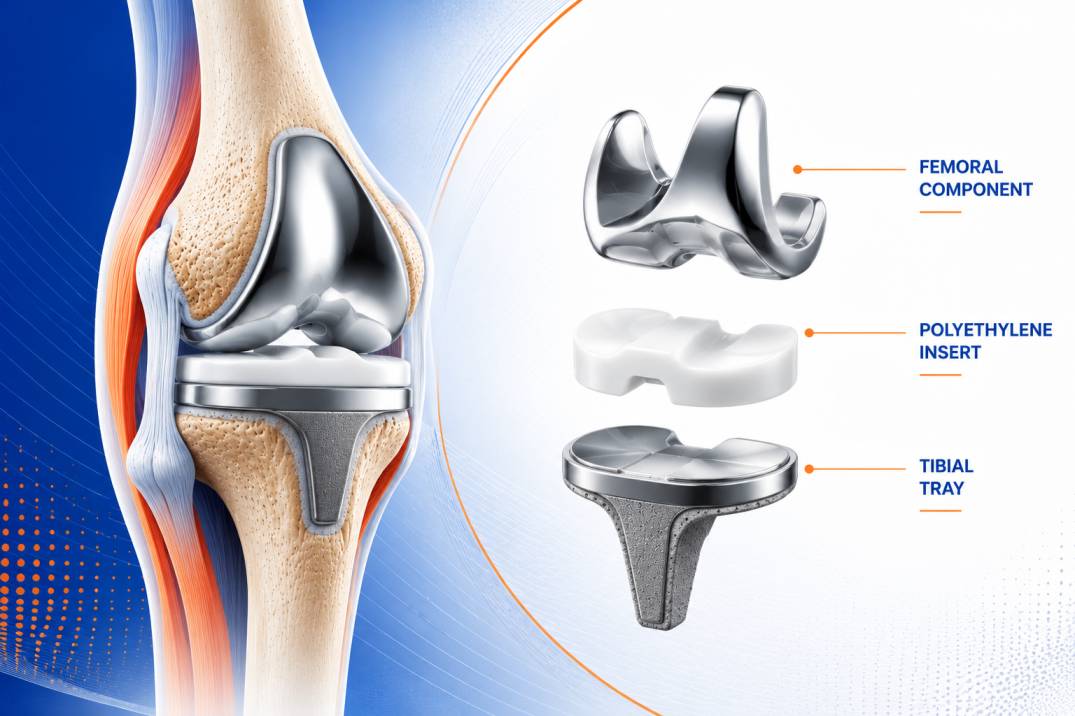
Knee replacement surgery, also called knee arthroplasty, involves resurfacing the worn-out parts of the joint and replacing them with durable artificial components. These implants are typically made from high-grade metal alloys and medical polyethene designed for smooth, stable movement.
A common misconception is that the entire knee is removed. In reality, only the damaged cartilage and a thin layer of underlying bone are carefully reshaped to create a new joint surface.
Knee replacement is recognised globally as one of the most effective orthopaedic procedures, with consistently high patient satisfaction and predictable improvement in mobility when performed at the right stage of disease.
How Knee Replacement Surgery Restores Movement
Arthritis affects not only cartilage but also the alignment and mechanics of the leg. Knee replacement surgery addresses these changes by restoring proper joint balance and stability.
During the operation, the surgeon removes the diseased joint surfaces, prepares the bone ends, and positions precision-designed prosthetic components. A strong plastic insert is placed between them to ensure smooth bending and pain-free movement.
Today’s implant technology has advanced significantly. Most modern knee replacements are built for long-term performance and show excellent durability, often lasting 15-25 years or more with appropriate rehabilitation and follow-up.
The procedure is primarily performed to reduce severe pain, improve walking ability, correct joint deformity, and help patients return to an active and independent lifestyle. Postponing surgery in end-stage arthritis may allow further collapse of the joint and worsening disability.
Types of Knee Replacement Procedures
The choice of joint replacement procedure depends on the severity and location of arthritis, ligament stability, age, and activity level. The most common types of knee replacement procedures include:
Total Knee Replacement (TKR)
Total Knee Replacement Surgery in Gurgaon is the standard treatment for advanced arthritis involving the entire joint. In this procedure, both the femoral and tibial surfaces are resurfaced with implants, restoring smooth joint function. Patients seeking the best knee replacement surgery in Gurgaon most commonly benefit from total knee replacement when arthritis is severe.
Partial Knee Replacement (Unicompartmental)
In some patients, arthritis affects only one compartment of the knee. In such cases, partial knee replacement in Gurgaon may be possible, preserving healthy bone and ligaments while replacing only the damaged area.
Revision Knee Replacement
Revision knee replacement in Gurgaon is required when an older implant loosens, wears out, or becomes infected. These complex procedures require specialised expertise, and Dr. Jha is regarded as an expert joint replacement surgeon in Gurgaon for revision knee arthroplasty.
When is Knee Replacement Surgery Needed?
Knee replacement is recommended when arthritis progresses to the point that daily function becomes significantly impaired. Surgery may be considered when pain persists for months despite treatment, walking distance reduces, stiffness worsens, or pain continues even at rest and during sleep.
Ignoring advanced arthritis can lead to complications of untreated knee arthritis, including severe deformity, muscle wasting, reduced balance, and loss of independence. Consulting a specialist early ensures timely intervention and better long-term outcomes.
Conditions Treated with Knee Replacement
Knee replacement is commonly performed for:
- Osteoarthritis (age-related wear and tear)
- Rheumatoid arthritis (autoimmune inflammation)
- Post-traumatic arthritis after fractures or ligament injuries
- Severe cartilage degeneration
- Deformity, such as bow-leg (varus) or knock-knee
Over 98% of total knee replacement surgeries in India are performed due to osteoarthritis, with a smaller proportion related to rheumatoid arthritis, trauma, or inflammatory joint disease.
Dr. Jha is also a sports injury and joint replacement specialist in Gurgaon, treating younger patients whose arthritis develops after trauma or instability, often managed early with procedures like knee arthroscopy in Gurgaon before progressing to joint replacement.
How to Diagnose Knee Joint Damage Before Surgery
Accurate diagnosis is the foundation of successful knee replacement outcomes. Before proceeding with surgery, Dr. Jha follows a systematic and evidence-based approach to confirm the severity of arthritis, evaluate joint alignment, and ensure the patient is medically fit for the procedure.
A detailed pre-surgical assessment helps determine whether surgery is truly required and allows for precise implant planning.
Indian Joint Registry data has shown that the mean age of knee replacement patients is around 64 years, and nearly 75% of total knee arthroplasty patients are women, reflecting the high arthritis burden in older females.
Key Steps in Diagnosing Knee Joint Damage
| Diagnostic Tests and Procedures | Description |
|---|---|
| Clinical Examination |
|
| Weight-Bearing X-rays (Most Important Test) |
|
| MRI or CT Scan (Only in Selected Cases) |
|
| Medical Fitness & Pre-Anaesthesia Testing |
|
This complete process ensures surgery is planned according to knee replacement treatment guidelines India and global orthopaedic standards.
Advanced Knee Replacement Techniques in Gurgaon
For individuals with advanced cartilage loss and “bone-on-bone” arthritis, non-surgical options like exercises, medications, or injections may offer only temporary relief.
Knee replacement surgery has advanced significantly over the last decade. Modern techniques now allow greater precision, improved implant longevity, faster rehabilitation, and more natural joint movement.
Dr. Jha offers advanced knee replacement techniques in Gurgaon, tailored to each patient’s anatomy, age, activity level, and arthritis severity.
1. Muscle-Sparing Surgical Approaches
Today’s knee replacement procedures increasingly use muscle-sparing methods that minimise disruption to surrounding soft tissues. These techniques can:
- Reduce post-operative pain and swelling
- Support quicker mobilisation after surgery
- Encourage early walking and faster rehabilitation
2. Minimally Invasive Knee Replacement Surgery
Many patients now enquire about minimally invasive knee replacement options. When suitable, these approaches may provide several benefits, including:
- Smaller incision size
- Less blood loss during surgery
- Shorter hospital stay
- Faster return to routine daily activities
Dr. Ramkinkar Jha carefully evaluates each patient to determine whether minimally invasive surgery is appropriate based on joint damage and anatomy.
3. Computer-Assisted and Robotic-Guided Surgery
In selected cases, robotic knee replacement in Gurgaon using computer-assisted navigation systems can enhance surgical accuracy. Robotic technology may help improve:
- Precise implant positioning
- Correction of limb alignment
- Stability in complex arthritis or revision knee surgeries
These advancements contribute to better joint balance and long-term implant performance.
4. Modern Implant Designs for Long-Term Durability
Modern knee implants are available in multiple designs, such as:
- Fixed-bearing and mobile-bearing implants
- Posterior-stabilised implants
- Cruciate-retaining implants
The implant choice depends on joint stability, deformity, and individual patient anatomy. With improved biomaterials and precise placement, today’s implants can often last 15-25 years or longer, especially with proper rehabilitation and follow-up care.
Dr. Jha emphasises evidence-based implant selection and precision-driven surgical techniques to achieve the best functional outcomes and long-term mobility for his patients.
Recovery After Knee Replacement Surgery
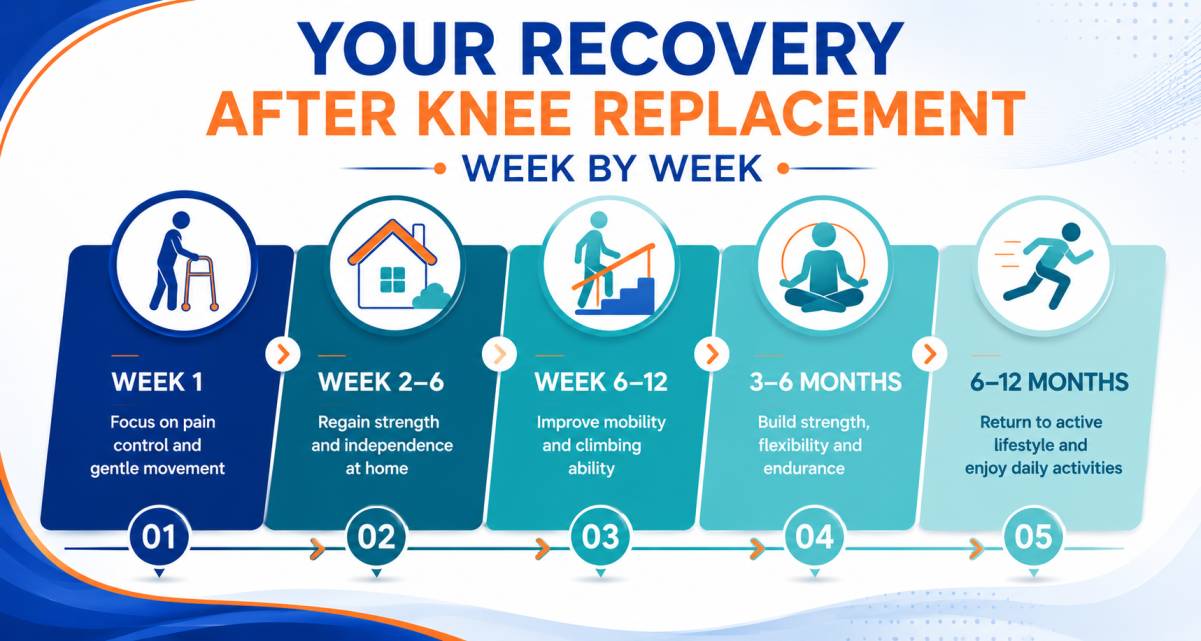
Knee replacement surgery recovery is structured, progressive, and strongly guided by rehabilitation. Early mobilisation and physiotherapy are essential to regain strength, flexibility, and confidence in walking.
Struggling with Joint Pain, Sports Injury, or Arthritis?
Benefits of Knee Replacement Surgery
The benefits of knee replacement are well established and supported by long-term global outcomes. For patients with advanced arthritis, surgery provides dramatic improvement in pain relief and daily function.
Key Benefits include:
- Significant reduction in chronic arthritis pain
- Improved walking ability and mobility
- Correction of leg deformity (bow-leg or knock-knee)
- Better joint stability and balance
- Restoration of independence and quality of life
The overall success rate for knee replacement in India is consistently high, ranging between 90% and 98%, particularly when performed by experienced surgeons with modern implants and structured rehabilitation.
Modern studies show an excellent knee replacement success rate in India, especially when performed by experienced surgeons using advanced implants and structured rehabilitation protocols.
Risks and Complications of Knee Replacement
Knee replacement is one of the safest orthopaedic procedures, but like any major surgery, there are potential risks that patients should understand.
Possible risks and complications of knee replacement treatment Include:
- Blood Clots (DVT)
- Prevented through blood thinners, compression stockings, and early walking.
- Infection (Rare but Serious)
- Managed through strict sterile protocols and antibiotic prevention.
- Temporary Swelling, Stiffness, or Discomfort
- Implant Wear or Loosening Over Time
Common early side effects of knee replacement surgery, usually improving with physiotherapy. Dr. Jha ensures patient safety through evidence-based perioperative care, early mobilisation, and long-term follow-up planning.
Cost of Knee Replacement Surgery in Gurgaon
Knee replacement surgery cost in Gurgaon typically ranges from ₹1,75,000 to ₹6,50,000+ per knee, depending on the procedure type, implant chosen, and hospital facility. A detailed written estimate is provided after clinical evaluation; no hidden charges.
| Procedure | Approximate Cost (per knee) |
| Partial (Unicompartmental) Replacement | ₹1,75,000 – ₹2,50,000 |
| Total Knee Replacement (Standard Implant) | ₹3,00,000 – ₹3,75,000 |
| Premium / High-Flex Implant | ₹4,00,000 – ₹5,50,000 |
| Robotic-Assisted Knee Replacement | ₹4,50,000 – ₹6,50,000+ |
| Bilateral (Both Knees Together) | ₹6,00,000 – ₹9,00,000+ |
The main cost variables are implant type (standard vs. imported premium), surgical complexity (deformity correction, revision surgery), use of robotic technology, and room category. For a full breakdown, visit the knee replacement surgery cost page.
Most health insurance policies cover medically necessary knee replacement. Pre-authorisation documentation can be guided by Dr. Jha’s team.
Why Choose Dr. Ramkinkar Jha for Knee Replacement Surgery in Gurgaon?
Choosing the right surgeon is one of the most important decisions for long-term success after knee replacement surgery. The procedure requires not only technical expertise but also precise implant planning, alignment correction, and structured rehabilitation to ensure lasting mobility and pain-free outcomes.
Dr. Ramkinkar Jha is a senior and highly respected orthopaedic surgeon in Gurgaon, currently serving as Director – Department of Orthopaedics at CK Biral Hospital, Gurugram. With 20+ years of clinical excellence and thousands of successful joint replacement surgeries, he is widely regarded as one of the leading knee replacement specialists in Gurgaon, treating both Indian and international patients with personalised joint care.
- Extensive Experience in Joint Replacement Surgery
Dr. Jha has performed 5,000+ joint replacement procedures, including complex primary and revision knee replacements, delivering consistent long-term functional outcomes. - Advanced Precision with Modern Surgical Techniques
He specialises in robotic and computer-assisted knee replacement, ensuring accurate implant positioning, better alignment, and improved implant longevity. - Expertise in Complex Arthritis and Deformity Correction
Patients with severe bow-leg, knock-knee deformities, stiffness, or advanced osteoarthritis benefit from his expertise in alignment restoration and ligament balancing, which are critical for successful knee arthroplasty. - Globally Trained Surgeon with International Exposure
Trained at premier institutions such as AIIMS New Delhi and the University of Edinburgh (UK), Dr. Jha brings global best practices in joint reconstruction and implant technology to Gurgaon. - Evidence-Based Implant Selection for Long-Term Durability
Dr. Jha uses high-quality implant systems, including cruciate-retaining, posterior-stabilised, fixed-bearing, and mobile-bearing designs, tailored to each patient’s anatomy and activity level. - Patient-Centric Recovery and Rehabilitation Planning
Successful knee replacement is not just surgery—it is recovery. Dr. Jha ensures structured physiotherapy, early mobilisation, and long-term follow-up, helping patients return safely to daily activities with confidence.
Book a Consultation for Knee Replacement Surgery in Gurgaon
If knee pain is limiting your mobility, daily independence, or quality of life, the right first step is an informed consultation, not a rushed decision.
What to bring:
- Recent X-rays (weight-bearing, if possible) and any MRI or CT reports
- Previous orthopaedic records or discharge summaries
- List of current medications
- Insurance documents, if applicable
- Your questions
Knee replacement surgery for international patients in India
You may share your imaging and medical records in advance for a preliminary review before travelling. Dr. Jha’s team can assist with visa invitation letters, pre-travel imaging review, airport and accommodation coordination, and telemedicine follow-up after you return home, ensuring continuity of care regardless of where you are based.
Frequently Asked Questions
Who may need knee replacement surgery? expand_more
Knee replacement surgery is commonly recommended for severe knee arthritis, chronic knee pain, stiffness and difficulty walking that do not improve with medications or physiotherapy.
Is knee replacement surgery safe? expand_more
Yes. Knee replacement is a widely performed orthopaedic procedure with high success rates for pain relief and improved mobility.
How long does a knee replacement implant last? expand_more
Modern knee replacement implants are designed to last for many years with proper rehabilitation, weight management and regular follow-up care.
How long does recovery take after knee replacement surgery? expand_more
Most patients begin walking with support within a day or two after surgery. Recovery and return to daily activities usually improve over several weeks with physiotherapy.
How can I book an appointment with Dr. Ramkinkar Jha for knee replacement surgery in Gurgaon? expand_more
You can book a consultation with Dr. Ramkinkar Jha through the appointment form on this page. Patients may also share their X-rays, MRI scans and medical reports for an initial evaluation before visiting.

Dr Ramkinkar Jha's Medical Content Team
Dr. Ramkinkar Jha’s medical content team specialises in producing accurate, clear, and patient-focused orthopaedic content. With a strong foundation in clinical knowledge and expertise in technical writing and SEO, the team translates complex orthopaedic and musculoskeletal information into reliable, easy-to-understand resources. Their work helps patients make informed healthcare decisions while reflecting Dr. Jha’s commitment to high-quality, expert care in joint replacement, trauma, sports injuries, and advanced orthopaedic treatments.
This content is reviewed by Dr. Ramkinkar Jha
Related Treatments

Revision Knee Replacement Surgery in Gurgaon
In India, as the volume of knee replacement surgeries continues to grow, with estimates exceeding 2.5 lakh procedures annually, the…
Bilateral Knee Replacement Surgery in Gurgaon
When both knees wear down, walking, standing or even sitting can become painful. If medications and physiotherapy are no longer…
Robotic Knee Replacement Surgery in Gurgaon
Robotic knee replacement surgery in Gurgaon uses CT-based 3D planning and VELYS robotic assistance to improve surgical precision and implant…
Related Blogs
Primary vs Revision Joint Replacement: What Patients Need to Know
Joint replacement surgery has given millions of people their lives back, no more waking up…
Read Article →
Orthopaedic Implants: Types, Benefits, Costs & What Patients Must Know
Orthopaedic implants are biocompatible devices used to replace, stabilise, or support bones and joints affected…
Read Article →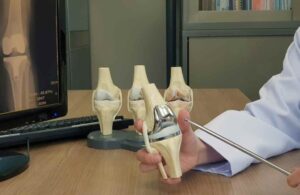
Knee Replacement Surgery – What Patients Should Expect – Dr Ramkinkar Jha
Knee replacement surgery has transformed the lives of millions of patients suffering from severe arthritis and…
Read Article → WhatsApp