
Joint Injections Therapy in Gurgaon
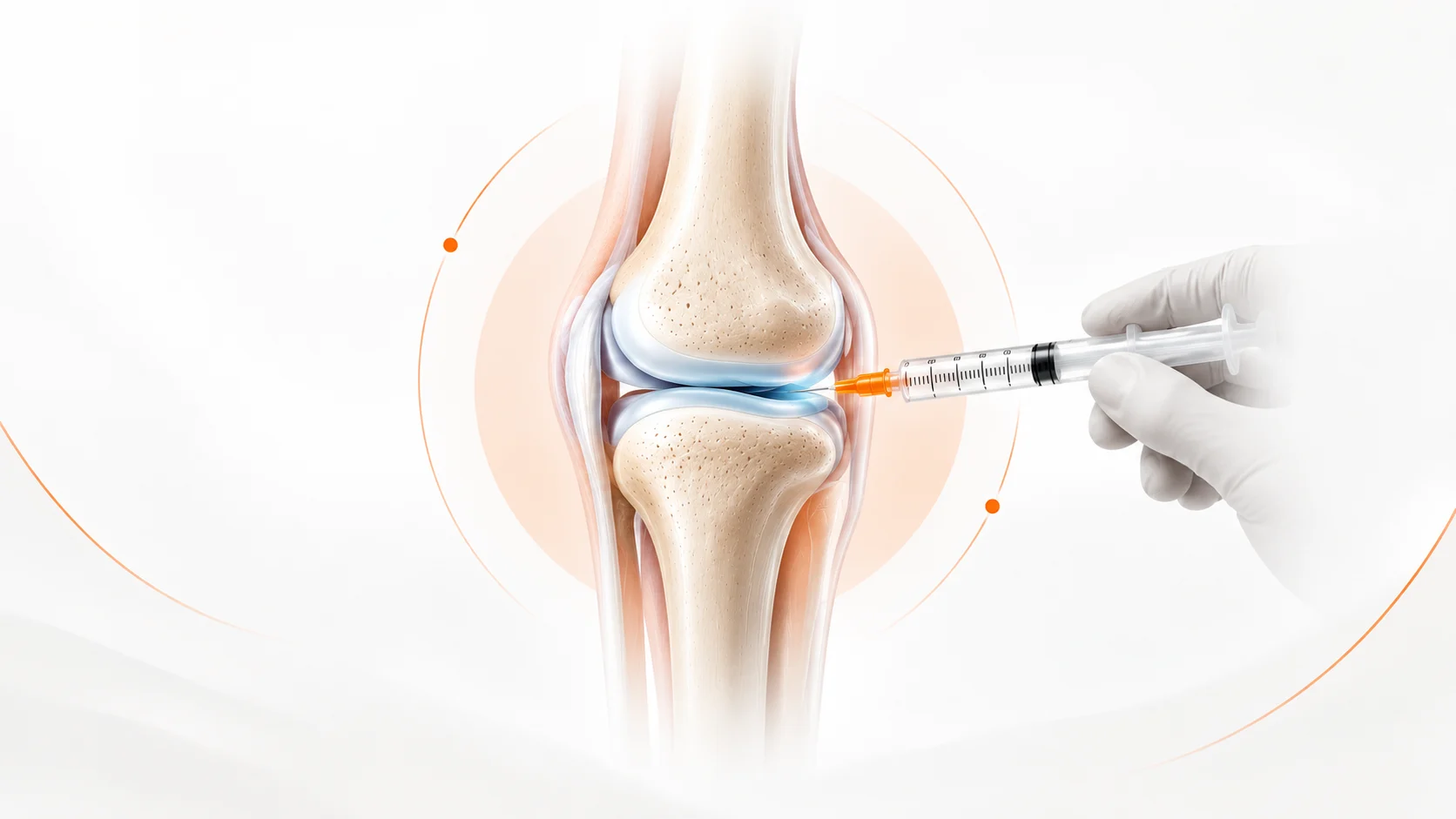
Joint injection therapy delivers corticosteroids, hyaluronic acid, or PRP directly into painful joints to reduce inflammation, restore lubrication, or stimulate healing. Ultrasound-guided precision makes it effective for knee, shoulder, and hip conditions before considering surgery.
Book a Consultation with Dr. Ramkinkar Jha, Leading Orthopaedic Surgeon in Gurgaon
What Is Joint Injection Therapy?
A joint injection delivers medication directly into a painful joint – bypassing the digestive system so the drug works faster, at a much lower dose than oral medication.
- Intraarticular injection means the needle goes into the joint space itself – not the muscle or skin around it
- The goal: reduce inflammation, restore lubrication, or trigger the body’s own healing response
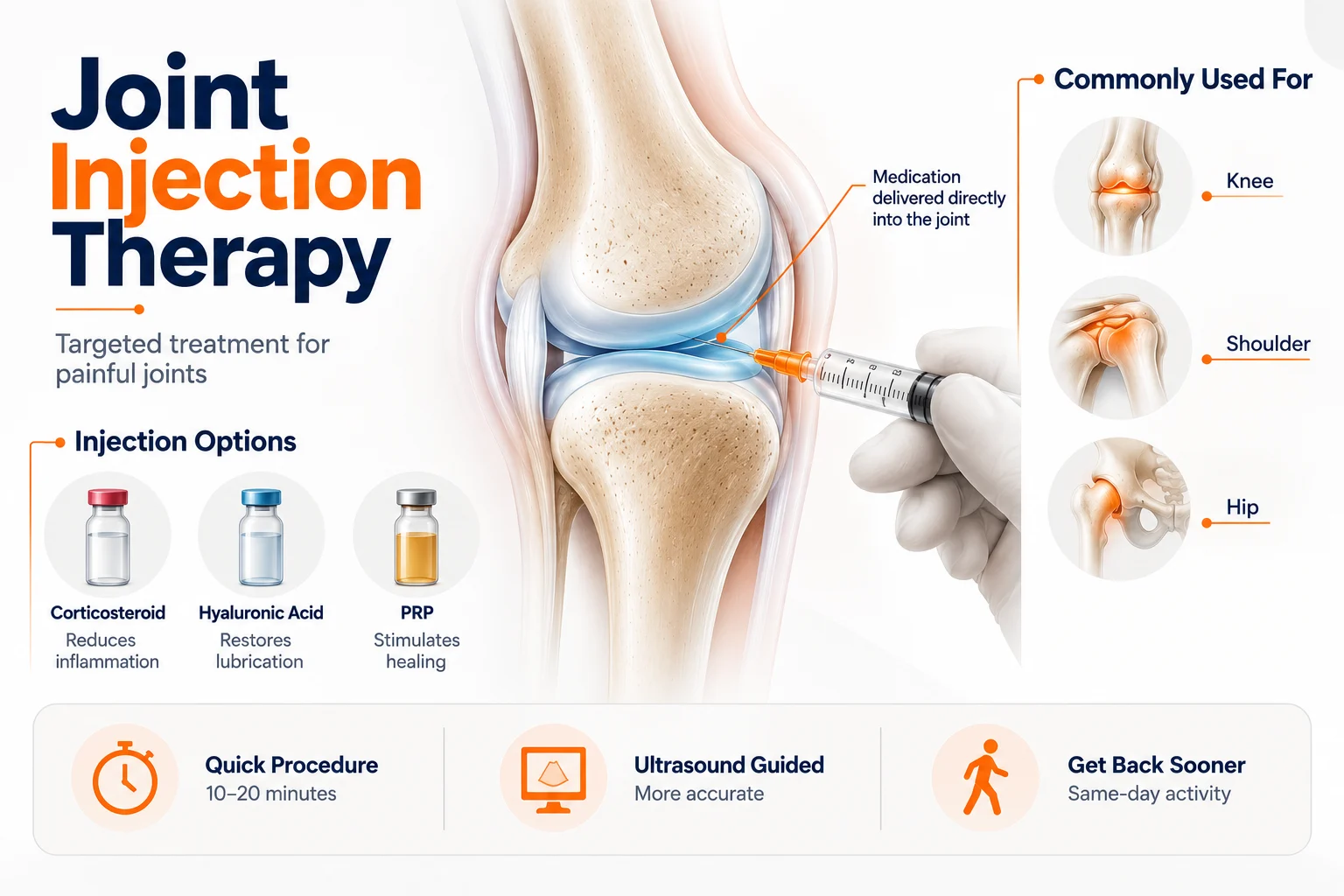
- Procedures typically take 10–20 minutes in an outpatient setting – no hospital admission needed
- Most patients can walk out and return to light activity the same day
- Injections can be used as a standalone treatment or as a bridge before surgery
Types of Joint Injections Available in Gurgaon
Several evidence-based injection options are available, and the right one depends on your diagnosis, joint involved, and how far your condition has progressed.
- Corticosteroid injection – the most widely used; reduces inflammation quickly, with relief often felt within 48–72 hours; best for acute flare-ups and inflammatory arthritis
- Hyaluronic acid injection (viscosupplementation) – a “gel shot” that restores the natural lubricant in the joint; particularly effective for hyaluronic acid injection knee cases in early-to-moderate osteoarthritis
- PRP therapy (Platelet-Rich Plasma) – drawn from your own blood, concentrated, and re-injected; stimulates tissue repair; meta-analyses show PRP often outperforms hyaluronic acid at 6–12 months follow-up for knee osteoarthritis
- Ultrasound-guided joint injection – uses real-time imaging to place the needle with precision; significantly more accurate than “blind” injections, especially for deep joints like the hip and shoulder
- Prolotherapy – a dextrose-based injection that stimulates connective tissue regeneration; used for ligament laxity and chronic joint instability
Conditions Treated with Joint Injection Therapy in India
Joint injections are not a one-size-fits-all fix – but they are remarkably effective across a wide range of musculoskeletal conditions seen every day in orthopaedic practice across India.
- Osteoarthritis of the knee, hip, and shoulder – the most common indication
- Rheumatoid arthritis – injections reduce local inflammation during flares
- Frozen shoulder (adhesive capsulitis) – corticosteroid injections are first-line treatment
- Rotator cuff tendinitis and bursitis – shoulder joint injection relieves impingement-related pain
- Gout and pseudogout – intraarticular steroid rapidly settles crystal-induced inflammation
- Post-traumatic joint pain – after ligament sprains, meniscus injuries, or fractures that have healed but left residual pain
- Sports injuries – PRP therapy accelerates recovery in athletes with cartilage wear or tendon involvement
Which Joints Can Be Treated?
Almost every major joint in the body can be injected – the technique and medication simply change depending on anatomy and depth.
- Knee – the most frequently injected joint; both corticosteroid and PRP are well-established here; knee joint injection in Gurgaon is among the most requested procedures at Dr. Jha’s clinic
- Shoulder – glenohumeral joint and subacromial bursa; shoulder joint injection relieves frozen shoulder, rotator cuff pain, and AC joint arthritis
- Hip – deep joint requiring ultrasound guidance for safe, accurate delivery
- Ankle and foot – subtalar joint, plantar fascia, and first MTP joint (big toe) are common targets
- Wrist and elbow – effective for de Quervain’s tenosynovitis, tennis elbow, and wrist arthritis
- Small finger joints – useful in inflammatory arthritis affecting the hands
How the Procedure Works – Step by Step
Knowing exactly what happens on the day of your injection removes the anxiety. Here is what to expect at Dr. Jha’s practice.
- Step 1 – Consultation and imaging review: Dr. Jha reviews your X-rays or MRI to confirm the diagnosis and select the right injection type
- Step 2 – Skin preparation: The skin over the joint is cleaned with antiseptic; a local anaesthetic may be applied to numb the area
- Step 3 – Ultrasound guidance (when indicated): A real-time ultrasound probe is placed over the joint so the needle position is visible on screen throughout
- Step 4 – Injection: The medication is delivered precisely into the joint space; the procedure takes under 15 minutes in most cases
- Step 5 – Post-injection monitoring: You rest for 10–15 minutes; the team checks for any immediate reaction before you leave
- Step 6 – Aftercare instructions: You receive written guidance on activity, ice application, and follow-up timing
Joint Injection Therapy Cost in India
Joint injection cost in India varies by medication type, joint, and whether imaging guidance is used – but it remains far more affordable than surgery and is often covered under health insurance.
| Injection Type | Approximate Cost (India) |
| Corticosteroid injection | ₹800 – ₹5,000+ per session |
| Hyaluronic acid (gel) injection | ₹6,000 – ₹30,000+ per session |
| PRP therapy | ₹8,000 – ₹25,000+ per session |
| Ultrasound guidance (add-on) | ₹1,500 – ₹3,000+ additional |
- Prices at CK Birla Hospital are transparent; you will receive a full cost breakdown at consultation
- Many health insurance plans cover corticosteroid injections – check your policy for intraarticular procedures
- PRP therapy may require 2–3 sessions spaced 4–6 weeks apart for optimal results
- A single well-placed injection can delay or prevent the need for joint replacement surgery – a significant cost saving
Struggling with Joint Pain, Sports Injury, or Arthritis?
Why Choose Dr. Ramkinkar Jha for Joint Injections in Gurgaon?
Dr. Ramkinkar Jha brings surgical-grade precision to every injection – a level of anatomical knowledge that only comes from performing 12,000+ orthopaedic surgeries and 5,000+ joint replacements over more than two decades.
- 20+ years of orthopaedic experience, with advanced training in UK, Singapore, Switzerland, Hong Kong, and Malaysia
- Director – Department of Orthopaedics, CK Birla Hospital, Gurugram – one of Delhi NCR’s most trusted tertiary care hospitals
- Member: Indian Orthopaedic Association, Royal College of Surgeons (UK), Indian Arthroscopy Society, and AO Trauma Foundation
- Manages 1,000+ sports injury procedures annually – giving him unmatched insight into injection timing for athletes
- Uses ultrasound-guided joint injection technique for all deep joints, ensuring accuracy that blind injections simply cannot match
- Honest, evidence-based approach: if an injection is unlikely to help your specific condition, Dr. Jha will tell you – and explain what will
What to Expect After Your Joint Injection
Recovery is quick for most patients, but knowing the typical timeline helps you plan your week and set realistic expectations for joint pain treatment in Gurgaon.
- First 24–48 hours: Mild soreness at the injection site is normal – this is the needle track settling, not a sign of failure
- Days 2–7: Corticosteroid injections typically begin working within 48–72 hours; PRP and hyaluronic acid injections take longer (2–6 weeks) as they work through biological processes
- Activity: Avoid strenuous exercise for 48 hours; light walking is fine from day one
- Ice vs. heat: Apply ice (not heat) for 15 minutes, 2–3 times a day for the first 48 hours to manage soreness
- Follow-up: Dr. Jha schedules a review at 4–6 weeks to assess response and plan next steps
- Red flags to report immediately: Increasing warmth, redness, or fever within 24 hours – these are rare but need prompt attention
Joint Injection Therapy vs. Surgery – When Each Is Right
Injections and surgery are not competing options – they are different tools for different stages of a condition. Understanding the distinction saves time, money, and unnecessary procedures.
Injections are the right first step when:
- Pain is moderate and joint function is still reasonable
- Imaging shows early-to-moderate cartilage wear (Grade 1–2 osteoarthritis)
- You need rapid relief for an acute flare (e.g., gout, bursitis)
- You are not yet fit for surgery due to other health conditions
- You want to delay surgery while maintaining quality of life
Surgery becomes the right answer when:
- Injections have provided diminishing returns over 12–18 months
- Imaging shows severe joint destruction (Grade 3–4 osteoarthritis)
- Mechanical problems exist – torn ligament, displaced meniscus – that injections cannot fix
- Daily function is significantly impaired despite conservative treatment
Dr. Jha’s approach is always conservative first – injections, physiotherapy, and lifestyle modification before any surgical recommendation.
Frequently Asked Questions
How long does a joint injection last? expand_more
Corticosteroid injections typically provide relief for 4–12 weeks, sometimes longer. PRP therapy results can last 6–12 months or more, particularly in knee osteoarthritis. Hyaluronic acid injections generally last 3–6 months. Individual results vary based on the severity of the condition and the joint involved.
Is the injection painful? expand_more
Most patients describe the sensation as a brief pressure or mild sting - similar to a blood test. For deeper joints like the hip, a local anaesthetic is applied first. Ultrasound guidance also reduces discomfort by ensuring the needle reaches the target in fewer passes.
How many injections will I need? expand_more
For a corticosteroid injection, most patients need one to three sessions per year - more than three in the same joint is generally not recommended due to potential cartilage effects. PRP therapy is typically given as a course of 2–3 injections spaced 4–6 weeks apart.
Can I drive home after a joint injection? expand_more
Yes, in most cases. Joint injections do not require sedation or general anaesthesia. If your knee or ankle is injected, you may feel slightly unsteady for an hour - so arranging a lift for the first appointment is sensible. Dr. Jha's team will advise you specifically based on the joint treated.
Where can I get joint injection therapy in Gurgaon with Dr. Ramkinkar Jha? expand_more
Dr. Jha sees patients at two locations:
1. CK Birla Hospital, Sector 51, Gurugram - OPD: Monday to Saturday, 10 AM – 3 PM
2. Orthopaedics & Sports Injury Clinic, UG 16/R4, M3M Broadway, Sector 71, Gurgaon - Clinic hours: Monday, Wednesday & Friday, 6 PM – 8 PM

Dr Ramkinkar Jha's Medical Content Team
Dr. Ramkinkar Jha’s medical content team specialises in producing accurate, clear, and patient-focused orthopaedic content. With a strong foundation in clinical knowledge and expertise in technical writing and SEO, the team translates complex orthopaedic and musculoskeletal information into reliable, easy-to-understand resources. Their work helps patients make informed healthcare decisions while reflecting Dr. Jha’s commitment to high-quality, expert care in joint replacement, trauma, sports injuries, and advanced orthopaedic treatments.
This content is reviewed by Dr. Ramkinkar Jha
Related Treatments

Revision Shoulder Replacement Surgery in Gurgaon
If your shoulder replacement is causing renewed pain, stiffness, or a feeling of instability months or years after your original…

Bone Infection (Osteomyelitis) Surgery in Gurgaon
Osteomyelitis surgery in Gurgaon involves surgically removing infected, dead bone and tissue, managing dead space, and reconstructing the skeleton –…

Robotic Knee Replacement Surgery in Gurgaon
Robotic knee replacement surgery in Gurgaon uses CT-based 3D planning and VELYS robotic assistance to improve surgical precision and implant…

Elbow Replacement Surgery in Gurgaon
Living with severe elbow pain can make even the simplest tasks, like combing your hair, lifting a cup of coffee,…

Wrist Joint Replacement Surgery in Gurgaon (Wrist Arthroplasty)
Chronic wrist pain can significantly affect a person’s ability to perform even the simplest daily activities. Tasks such as writing,…

PCL Reconstruction Surgery in Gurgaon
PCL reconstruction surgery in Gurgaon is performed arthroscopically by Dr. Ramkinkar Jha, Director, Department of Orthopaedics at CK Birla Hospital,…
Related Blogs
यूरिक एसिड का इलाज (Uric acid Ka Ilaj)
रात के तीन बजे अचानक नींद टूटती है। पैर के अंगूठे में ऐसा दर्द होता…
Read Article →
फ्रोजन शोल्डर का इलाज (Frozen Shoulder Ka Ilaj)
सुबह उठते ही कंधे में ऐसी अकड़न कि हाथ ऊपर उठाना मुश्किल हो जाए, या…
Read Article →
10 Best Knee Strengthening Exercises for Stronger Knees
There’s a moment everyone with knee trouble knows: the pause right before standing up from…
Read Article →
यूरिक एसिड बढ़ने के लक्षण – कारण, डाइट और इलाज
यूरिक एसिड बढ़ने से जोड़ों में दर्द, सूजन, गाउट और किडनी स्टोन हो सकते हैं।…
Read Article →
Foods to Avoid with Arthritis: Indian Diet Guide
Foods to avoid with arthritis include refined sugar (mithai, biscuits, cold drinks), maida-based products, high-salt…
Read Article →
Rheumatoid Arthritis – Medicines, Therapy & Lifestyle Changes
Rheumatoid arthritis (RA) is a long-term autoimmune condition that causes joint pain, swelling, and stiffness.…
Read Article → WhatsApp